
Topic Battle

Where Everything Fights Everything

Dog

Dog

Loyal canine companion celebrated for unconditional love, tail wagging, and being humanity's best friend for millennia.

VS
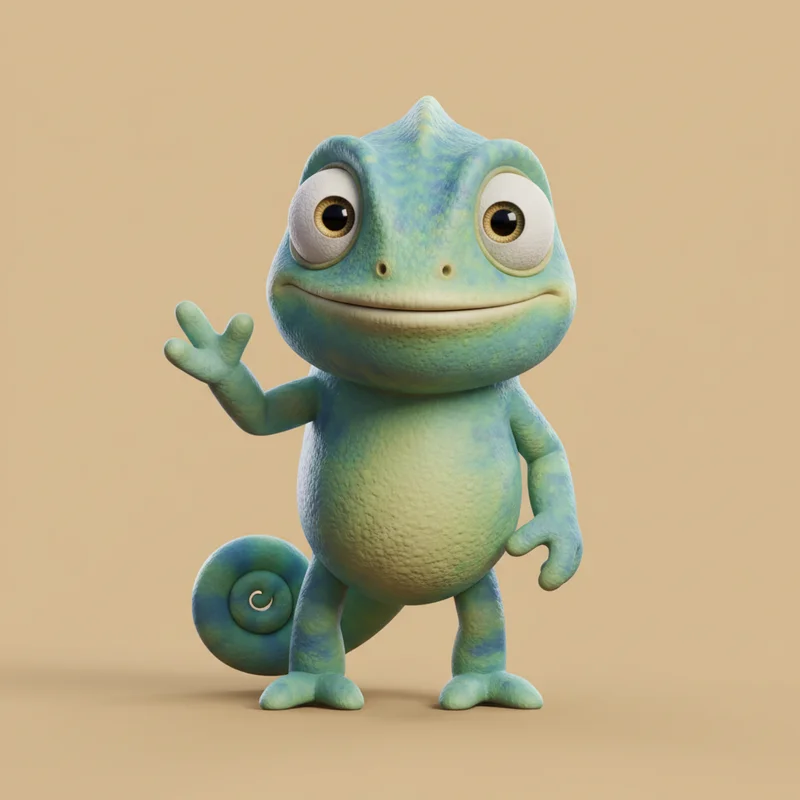
Chameleon

Chameleon

Color-changing lizard with independently moving eyes and ballistic tongue capture of prey.

Battle Analysis

Social utility dog Wins
70%
30%
Dog Chameleon

Dog

The dog functions as a remarkably efficient social catalyst. Research published in Anthrozoos indicates dog owners engage in spontaneous conversation with strangers three times more frequently than non-owners. Dogs provide immediate conversation topics, signal approachability, and create organic community connections through regular walking routes and dedicated social spaces such as dog parks.

Dogs accompany owners to an expanding range of public venues, with many establishments now welcoming well-behaved canines. The dog, quite literally, walks its owner into new relationships through daily excursions requiring human-to-human interaction.

Chameleon

The chameleon's social utility operates within strictly circumscribed parameters. It cannot accompany its owner outside the home in any practical sense. It creates no opportunities for spontaneous public interaction. It does not attract the attention of passersby or facilitate conversations with strangers.

However, chameleon ownership does provide niche social currency within exotic pet enthusiast communities. Online forums, reptile expos, and specialist groups create connections between keepers. The chameleon serves as a conversation piece during home visits, though it cannot participate in the conversation. Its social utility is passive rather than active.

VERDICT

Dogs actively facilitate social interaction in public spaces; chameleons remain confined to domestic display.
Visual interest chameleon Wins
30%
70%
Dog Chameleon

Dog

The domestic dog presents considerable aesthetic diversity across its 471 recognised breeds. Size ranges from the 1.5kg Chihuahua to the 90kg English Mastiff. Coat colours, patterns, and textures vary enormously, as do ear carriage, tail configuration, and facial structure. This variety enables owners to select specimens matching personal aesthetic preferences.

However, individual dogs remain visually static throughout adult life. A golden retriever cannot become a different colour based on mood or environment. What you acquire is what you observe for the subsequent decade.

Chameleon

The chameleon possesses what can only be described as chromatic superpowers. Specialised cells called chromatophores enable colour changes spanning the visible spectrum within seconds. A panther chameleon may display vibrant blues, greens, reds, and oranges in rapid succession. This is not mere camouflage but active communication involving pigment cells, iridophores containing reflective guanine crystals, and melanophores controlling lightness.

The visual experience of chameleon ownership is inherently dynamic and unpredictable. Each observation reveals different colouration based on temperature, social signalling, and physiological state. Additionally, the independently rotating eyes, projectile tongue capable of extending twice the body length, and zygodactyl feet create a creature of remarkable visual fascination.

VERDICT

Chameleons offer dynamic, real-time colour transformation; dogs offer static, if diverse, visual presentation.
Maintenance complexity dog Wins
70%
30%
Dog Chameleon

Dog

Canine husbandry, whilst demanding, operates within well-established parameters. Dogs require two daily meals of commercially available food, regular outdoor exercise, annual veterinary examinations, and periodic grooming depending on coat type. The infrastructure demands are modest: food bowls, bedding, lead, and collar. Average annual costs in the United Kingdom approximate £1,875 including insurance and veterinary care.

Dogs adapt readily to domestic environments, tolerating temperature variations between 10-30 degrees Celsius without supplementary equipment. Their care requirements, whilst non-trivial, fall within the competency of most households.

Chameleon

Chameleon husbandry represents a significantly more technical undertaking. These reptiles require specialised vivariums maintaining precise temperature gradients (basking spots of 32-35 degrees Celsius, ambient temperatures of 24-28 degrees), humidity levels between 50-70%, and full-spectrum UVB lighting operating on strict photoperiod schedules. Failure in any parameter can prove rapidly fatal.

Dietary requirements include live feeder insects (crickets, locusts, dubia roaches) gut-loaded with calcium and vitamin supplements. The vivarium demands daily misting, weekly deep cleaning, and constant monitoring. Initial setup costs range from £300-800 before the animal itself, which may cost £50-500 depending on species. The margin for husbandry error is remarkably narrow.

VERDICT

Dogs tolerate environmental variation; chameleons require precise environmental control with narrow tolerances.
Emotional responsiveness dog Wins
70%
30%
Dog Chameleon

Dog

The domestic canine demonstrates exceptional emotional attunement to human psychological states. Peer-reviewed research published in Learning and Behaviour confirms that dogs can recognise human facial expressions, respond to vocal emotional cues, and demonstrate empathetic behaviours including proximity-seeking when owners display distress. Brain imaging studies reveal that dogs process human faces in a manner analogous to human social cognition.

The average dog greets its owner with measurable physiological excitement: elevated heart rate, tail wagging at frequencies between 4-5 Hz, and oxytocin release in both parties. This bidirectional emotional exchange has evolved over millennia of selective breeding for precisely these traits.

Chameleon

The chameleon's emotional repertoire operates on an entirely different register. These reptiles possess no limbic system in the mammalian sense and demonstrate no capacity for emotional bonding with handlers. Colour changes, often misinterpreted as emotional expression, actually reflect thermoregulation, communication with conspecifics, or stress responses rather than affection.

A chameleon may tolerate handling but derives no apparent pleasure from human interaction. Studies indicate that frequent handling elevates cortisol levels, suggesting the experience represents a stressor rather than a bond. The chameleon does not recognise its owner as distinct from any other large, warm object.

VERDICT

Dogs demonstrate measurable emotional reciprocity; chameleons demonstrate measurable stress from interaction.
Longevity and commitment chameleon Wins
30%
70%
Dog Chameleon

Dog

The domestic dog presents a substantial temporal commitment. Average lifespans range from 8-15 years depending on breed, with smaller breeds typically exceeding larger ones in longevity. This represents a significant portion of human life requiring consistent care, emotional investment, and financial resources. The death of a long-term canine companion frequently triggers grief responses comparable to human bereavement.

For prospective owners uncertain about decade-long commitments, the dog's lifespan may represent either a feature or a limitation depending on personal circumstances.

Chameleon

Chameleon lifespans vary considerably by species, with most commonly kept varieties living 5-10 years in captivity under optimal conditions. The veiled chameleon averages 6-8 years; the panther chameleon 5-7 years. This shorter commitment window may suit owners uncertain about long-term pet ownership.

However, chameleon mortality rates in captivity remain distressingly elevated due to the precision required in husbandry. Many specimens perish within the first year due to inadequate care. The shorter lifespan is thus partially a reflection of keeping difficulty rather than natural biology. Wild chameleons of certain species can exceed 15 years.

VERDICT

Chameleons offer shorter commitment periods, though this partially reflects husbandry challenges.
👑

The Winner Is

Dog

62 - 38

The comparative analysis reveals a fundamental divergence in companion animal philosophy. The dog offers what might be termed active companionship: emotional reciprocity, social facilitation, and genuine interspecies bonding developed across millennia of co-evolution. The chameleon offers passive companionship: visual fascination, minimal interaction, and the satisfaction of successfully maintaining a challenging captive environment.

The dog's victories in emotional responsiveness, maintenance accessibility, and social utility reflect its status as humanity's longest-running domestication experiment. We have literally shaped dogs to fulfil our emotional and social needs. The chameleon, by contrast, remains essentially wild, tolerating captivity rather than embracing companionship. Its victories in visual interest and commitment duration speak to niche appeals rather than broad suitability.

For the majority of prospective pet owners seeking genuine companionship, the dog's 62-38 victory margin reflects its superior capacity to fulfil the emotional contract implicit in pet ownership. The chameleon excels as a living art installation; the dog excels as a family member.

Dog
62%
Chameleon
38%

Share this battle

More Comparisons