
Topic Battle

Where Everything Fights Everything

Dog

Dog

Loyal canine companion celebrated for unconditional love, tail wagging, and being humanity's best friend for millennia.

VS
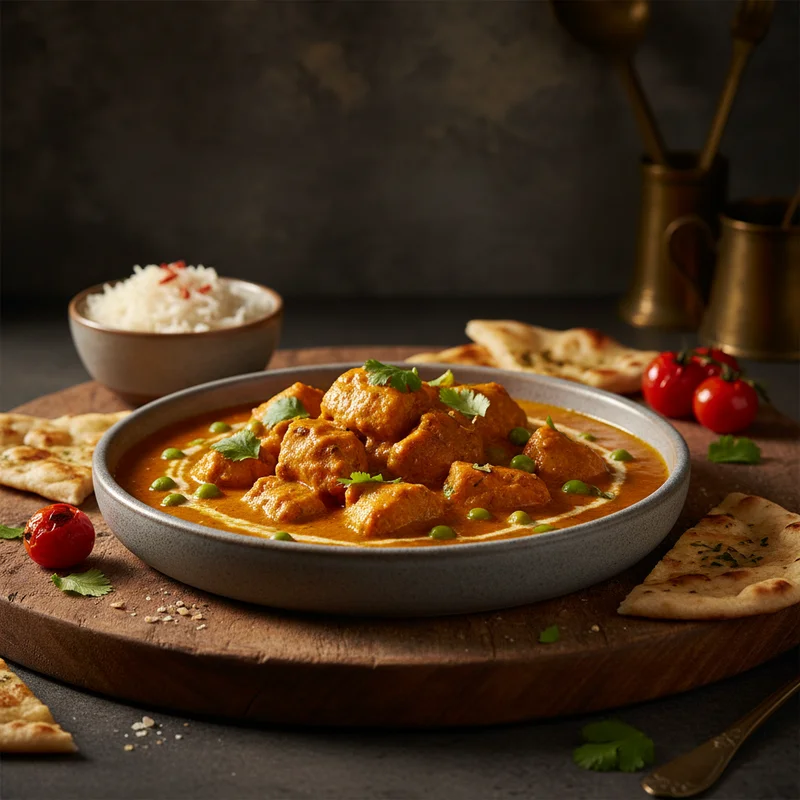
Curry

Curry

Spiced dish spanning Indian, Thai, Japanese, and British cuisines.

The Matchup

In the collective consciousness of the British Isles, two entities occupy positions of almost sacred significance. 12.5 million dogs reside in UK households, whilst the nation consumes approximately 2.5 billion pounds worth of curry annually. Both have been described, without irony, as essential to the national character. Both provide comfort during difficult times. Both have been known to cause significant damage to soft furnishings.

The dog arrived in Britain with Mesolithic hunters some 9,000 years ago. Curry, by comparison, is a relative newcomer, establishing dominance only following post-war immigration from the Indian subcontinent. Yet both have achieved the status of cultural institutions, defended with emotional intensity typically reserved for discussions of the correct method for preparing tea. One greets you at the door after a difficult day. The other awaits delivery to that same door. This analysis examines which provides superior service to the British condition.

Battle Analysis

Comfort provision Dog Wins
70%
30%
Dog Curry

Dog

The domestic dog provides comfort through mechanisms that neuroscience has only recently begun to quantify. Physical contact with a dog triggers oxytocin release in the human brain, the same hormone responsible for parent-child bonding. Studies at Azabu University documented a 300 percent increase in oxytocin levels following sustained eye contact with a pet dog, a phenomenon researchers termed the mutual gaze effect.

Dogs offer comfort that adapts to circumstance. They detect human distress through olfactory cues, responding with proximity-seeking behaviour calibrated to provide maximum warmth without requiring conversation. On a cold evening, a dog positioned against one's legs provides both thermal and emotional insulation against the indignities of existence.

Curry

Curry delivers comfort through chemically mediated sensation. Capsaicin, the compound responsible for chilli heat, triggers endorphin release, creating what researchers describe as a controlled pain-pleasure response. The complex spice profiles of a properly prepared curry activate multiple taste receptors simultaneously, producing flavour experiences that simpler dishes cannot replicate.

A chicken tikka masala, Britain's most ordered dish, combines the familiar comfort of creamy sauce with sufficient complexity to engage the mind. The ritual of curry consumption, the poppadoms, the naan, the strategic selection of side dishes, provides structure to evenings that might otherwise drift into formlessness. One cannot feel entirely defeated whilst considering whether to order an additional portion of pilau rice.

VERDICT

Curry provides temporary chemical comfort. Dogs provide comfort that persists beyond the duration of a single meal, remaining available for deployment during subsequent difficulties.

Social enhancement Dog Wins
70%
30%
Dog Curry

Dog

Dogs function as involuntary social catalysts. Research published in the Journal of Community Psychology demonstrates that dog owners experience five times more social interactions with neighbours than non-owners. The daily walk creates opportunities for connection that would otherwise require the social courage most British people lack. The dog provides a conversational prop, eliminating the awkwardness of approaching strangers without apparent reason.

Dogs also facilitate access to dedicated communities. Dog parks, breed-specific events, and training classes create networks that transcend normal social boundaries. A retired accountant and a tattoo artist may discover friendship through the coincidence of owning Staffordshire Bull Terriers.

Curry

Curry occupies a paradoxical social position. The Friday night curry represents a cornerstone of British group dining, an activity that has bonded colleagues, celebrated occasions, and sealed friendships since the 1970s. The shared ordering process, the inevitable debate over rice versus naan, the competitive assessment of spice tolerance, these rituals strengthen social bonds through minor collective negotiation.

However, curry's social influence operates primarily among existing social networks. One does not make new friends at the curry house. The meal reinforces connections rather than creating them. Solo curry consumption, whilst perfectly acceptable, adds no social dimension whatsoever.

VERDICT

Curry strengthens existing relationships. Dogs create entirely new relationships with strangers who would otherwise remain strangers.

Health implications Dog Wins
70%
30%
Dog Curry

Dog

Dog ownership correlates with measurable health benefits significant enough to attract attention from cardiac researchers. A Swedish study tracking 3.4 million participants over twelve years found dog ownership associated with a 33 percent reduction in cardiovascular mortality risk. The mechanisms appear to involve forced physical activity, stress reduction, and the establishment of routines that impose structure upon otherwise chaotic human behaviour.

Dogs require walking regardless of inclination, weather, or the excellent reasons their owners devise for remaining sedentary. This enforced exercise accumulates into substantial health returns over the fifteen-year average lifespan of the human-canine partnership.

Curry

Curry's health profile presents contradictory evidence. Turmeric contains curcumin, a compound associated with anti-inflammatory properties. Garlic provides allicin. Various spices demonstrate antioxidant activity in laboratory conditions. A home-prepared curry using fresh ingredients and controlled oil quantities can constitute a nutritionally defensible meal.

However, the typical British curry experience involves dishes calibrated for maximum hedonic impact rather than nutritional optimisation. Restaurant preparations frequently employ cream, butter, and oil in quantities that would alarm cardiologists. The accompaniments, fried poppadoms, butter-laden naan, pilau rice glistening with ghee, compound the caloric burden substantially.

VERDICT

Dogs actively improve health outcomes through enforced exercise. Curry, as commonly consumed, represents a health-neutral indulgence at best.

Reliability and consistency Dog Wins
70%
30%
Dog Curry

Dog

Dogs achieve remarkable consistency in their fundamental offerings. A dog's affection does not fluctuate based on the skill of preparation or the source of acquisition. The same greeting enthusiasm occurs whether the owner departed for eight hours or eight minutes. This reliability stems from the evolutionary pressure that shaped dogs for human partnership over 15,000 generations.

However, dogs introduce unpredictability in other dimensions. Veterinary emergencies, behavioural episodes, and the occasional destruction of items with significant sentimental value represent permanent possibilities. A dog's needs override human schedules with the indifference of genuine dependency.

Curry

Curry reliability varies dramatically by source. The same dish ordered from different establishments may range from transcendent to disappointing, a variance that the modern rating system attempts, imperfectly, to address. Even within a single establishment, quality fluctuations occur based on chef presence, ingredient freshness, and the mysterious forces that cause Thursday's lamb bhuna to differ from Saturday's.

Yet curry offers reliability in a different dimension: it arrives when ordered, departs when consumed, and creates no ongoing obligations. Its demands upon the consumer end with the final poppadom.

VERDICT

Curry reliability depends upon external factors beyond consumer control. Dog reliability emerges from evolutionary imperatives that guarantee consistent affection.

Availability and accessibility Curry Wins
30%
70%
Dog Curry

Dog

Dog availability presents significant logistical challenges. Acquisition requires research, breeder vetting or shelter visits, compatibility assessment, and the navigation of waiting lists that for popular breeds can extend beyond eighteen months. Initial costs range from shelter adoption fees of 150 pounds to pedigree prices exceeding 3,000 pounds, before accounting for equipment, veterinary registration, and the immediate destruction of at least one item of furniture.

Once acquired, a dog's availability becomes perhaps too reliable. They cannot be returned when inconvenient. They require presence during holidays, illness, and the precise moments when their owner least wishes to perform maintenance walks in horizontal rain.

Curry

Curry achieves near-perfect accessibility in modern Britain. The density of curry establishments means that 93 percent of the UK population resides within delivery range of at least one provider. Applications on mobile devices have reduced the acquisition process to approximately forty-seven seconds of thumb movement, followed by a waiting period averaging thirty-five minutes.

Curry can be obtained at any hour, in any quantity, with no commitment beyond the immediate transaction. It requires no ongoing care, creates no obligations, and if unsatisfactory, different curry can be obtained from alternative providers without the moral complexity of rehoming a sentient being.

VERDICT

Dogs require years of commitment for acquisition and maintenance. Curry requires only functional internet connectivity and a minimum order value.

👑

The Winner Is

Dog

55 - 45

This analysis reveals competition between entities that serve fundamentally different human needs, yet somehow occupy adjacent positions in British cultural affection. Curry wins on accessibility and convenience, categories where its nature as a consumable product rather than a living commitment provides inherent advantage. Dogs claim victory in comfort provision, social enhancement, health impact, and reliability, domains where sentient companionship cannot be replicated by even the most expertly spiced gravy.

The 55-45 margin reflects practical assessment: curry provides exceptional service within its limited scope, but dogs provide benefits across the full spectrum of human wellbeing. One delivers temporary pleasure; the other delivers persistent partnership. The British household ideally accommodates both, the dog for daily companionship and the curry for weekly indulgence.

The evidence suggests that optimal Friday evening configuration involves both entities: the curry for consumption, the dog for the hope of receiving fallen pieces of naan.

Dog
55%
Curry
45%

Share this battle

More Comparisons