
Topic Battle

Where Everything Fights Everything

Dog

Dog

Loyal canine companion celebrated for unconditional love, tail wagging, and being humanity's best friend for millennia.

VS
Dracula

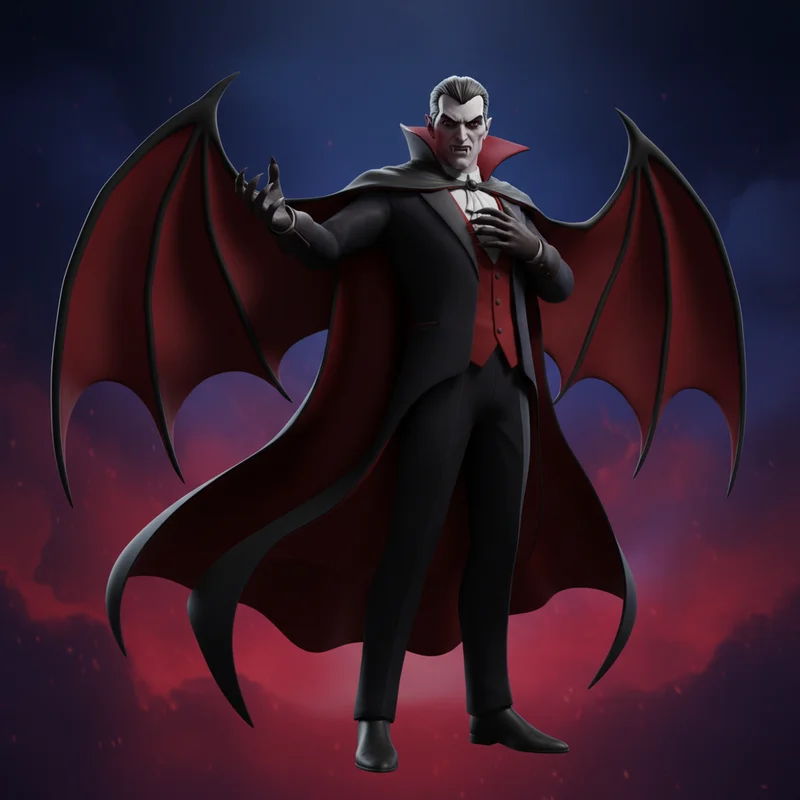
Dracula

Original vampire count from Transylvania.

Battle Analysis

Loyalty dog Wins
70%
30%
Dog Dracula

Dog

The dog's capacity for loyalty borders on the pathologically devoted. Scientific studies indicate canines form attachment bonds comparable in neurochemical intensity to human parent-child relationships. The average dog will wait by a door for 8-10 hours daily anticipating their owner's return, displaying joy indistinguishable from reunification after years of separation. This loyalty persists regardless of the owner's behaviour, financial status, or personal hygiene. Dogs have been documented waiting at gravesites, train stations, and hospital entrances for deceased owners—sometimes for years. The famous Hachiko waited nine years for an owner who was never coming back. This level of devotion, whilst occasionally inconvenient for those attempting to leave rooms, represents perhaps the purest form of loyalty available in nature.

Dracula

Dracula's loyalty operates under rather more conditional parameters. The Count's devotion extends primarily to himself, his ancestral properties, and whatever romantic interest has captured his attention that particular century. His track record with companions—Renfield, the three brides, various thralls—suggests a management style heavy on manipulation and light on employee benefits. When Mina Harker resisted his advances, he did not wait patiently by a door; he attempted to forcibly convert her into an undead servant. This behaviour would receive unfavourable reviews on any companion rating system. Dracula's loyalty, such as it exists, appears contingent upon the other party's usefulness to his broader objectives of territorial expansion and blood acquisition.

VERDICT

Dogs demonstrate unconditional loyalty regardless of circumstances; Dracula's loyalty remains transactional and ultimately self-serving.
Social acceptability dog Wins
70%
30%
Dog Dracula

Dog

The dog occupies a position of almost universal social approval. Surveys indicate 85% of people hold positive views toward dogs, with dog owners receiving elevated trust ratings in social psychology studies. Dogs serve as social facilitators—their presence increases conversation frequency between strangers by 300% and correlates with improved mental health outcomes. Landlords increasingly accept dogs. Cafes welcome them. Airlines accommodate them. The phrase 'I'm a dog person' communicates fundamental values about warmth, loyalty, and emotional availability. Dogs provide legitimate excuses to leave parties early, conversational topics during awkward silences, and a socially acceptable target for excessive affection that might otherwise concern mental health professionals.

Dracula

Dracula's social acceptability remains profoundly compromised by his fundamental nature. Introducing Dracula at social gatherings presents immediate complications: his dietary restrictions preclude participation in shared meals, his inability to appear in mirrors creates awkwardness at nightclub entrances, and his history of murder emerges during even cursory background checks. Religious institutions—representing approximately 85% of global population in some affiliation—hold explicitly hostile views toward undead entities. The phrase 'I've invited Dracula to stay' communicates rather different values than dog ownership: poor judgement, possible death wish, and imminent property devaluation. Even Dracula's romantic appeal, significant in certain Gothic literature circles, cannot overcome the fundamental social obstacle of being technically a corpse.

VERDICT

Dogs enhance social standing and facilitate human connection; Dracula's presence creates legal, religious, and existential complications.
Nocturnal capabilities dracula Wins
30%
70%
Dog Dracula

Dog

The domestic dog maintains crepuscular tendencies, with peak activity during dawn and dusk, though they adapt readily to human schedules. Their night vision, whilst superior to humans, operates through a reflective layer called the tapetum lucidum, providing approximately six times better low-light performance than their owners. Dogs serve as effective nocturnal sentinels, capable of detecting intruders through acute hearing (four times the range of humans) and olfactory systems that can identify individual humans from kilometres away. However, their nighttime activities primarily consist of occasional barking at squirrels, rearranging bedding, and that unsettling habit of staring at corners as though perceiving entities invisible to human eyes.

Dracula

Dracula exists as perhaps the most comprehensively nocturnal entity ever documented. Sunlight proves not merely inconvenient but immediately fatal, necessitating complete daytime dormancy. This limitation, whilst severe, has granted the Count centuries to perfect his night operations. He can transform into a bat, wolf, or mist—all forms optimised for darkness. His night vision appears unlimited. He requires no sleep beyond daytime recuperation, granting him 12-16 hours of peak operational capacity during winter months. His abilities to scale walls, control weather, and command nocturnal creatures suggest a being specifically evolved—or cursed—for existence outside daylight hours. For pure nocturnal supremacy, Dracula operates in a category most organisms cannot comprehend.

VERDICT

Dracula possesses absolute nocturnal mastery including transformation abilities and supernatural night perception; dogs merely adapt to darkness.
Protective capabilities dracula Wins
30%
70%
Dog Dracula

Dog

Dogs have served protective functions for millennia, with breeds specifically developed for guarding livestock, property, and human persons. A barking dog reduces burglary probability by approximately 300%. Larger breeds—German Shepherds, Rottweilers, Belgian Malinois—possess bite forces exceeding 200 PSI and temperaments suited to confrontational protection. Dogs detect threats through sensory capabilities humans lack: they smell fear, hear approaching footsteps from considerable distances, and demonstrate apparent prescience regarding earthquakes and other disasters. Police, military, and security services worldwide rely on canine units. The protective value of a dog derives not merely from physical capability but from the psychological deterrence of their presence and their apparently genuine willingness to die for their owners.

Dracula

Count Dracula's protective capabilities exist on an entirely different scale. His physical strength exceeds human limitations by orders of magnitude—documented abilities include tearing through castle walls and overpowering multiple armed opponents simultaneously. He commands wolves, rats, and weather phenomena. He possesses hypnotic capabilities rendering most human threats irrelevant before they materialise. Bullets and blades prove minimally effective against his undead constitution. However, these formidable capabilities come with a critical limitation: daylight unavailability. Any threat occurring between sunrise and sunset finds Dracula entirely useless, dormant in his coffin whilst intruders operate freely. Additionally, his protection carries the implicit cost of eventually requiring protection from him, as his nature inevitably conflicts with his protectees' continued living status.

VERDICT

Dracula possesses supernatural protective capabilities vastly exceeding canine limitations, despite significant daylight restrictions.
Maintenance requirements dog Wins
70%
30%
Dog Dracula

Dog

Maintaining a dog in optimal condition requires consistent investment across multiple categories. Financially, the average dog costs between 15,000 and 30,000 pounds over its lifetime, encompassing food (500-1,000 pounds annually), veterinary care (200-600 pounds annually), grooming, accessories, and the inevitable replacement of household items destroyed during the first two years. Temporally, dogs require 1-2 hours of daily exercise, regular feeding schedules, and the psychological burden of guilt when leaving them alone. However, these requirements remain entirely predictable, widely understood, and supported by comprehensive infrastructure: pet shops, veterinary clinics, dog walkers, and that remarkable human capacity to discuss dog ownership at exhausting length with other dog owners.

Dracula

Count Dracula's maintenance requirements present significant logistical challenges. His dietary needs—exclusively human blood—create both ethical complications and potential criminal liability. Obtaining 2-3 litres daily (based on typical vampire fiction estimations) requires either a sustainable victim pipeline or uncomfortably close relationships with blood banks. His housing demands include coffins filled with Transylvanian soil, complete daylight exclusion, and sufficient space to accommodate occasional wolf transformations. The psychological maintenance proves perhaps most demanding: centuries of accumulated trauma, isolation, and the existential burden of watching everyone die repeatedly requires therapeutic intervention unavailable through conventional NHS services. Insurance coverage for undead dependents remains, at present, non-existent.

VERDICT

Dogs require manageable, legal, and well-supported maintenance; Dracula's requirements involve criminal activity and logistical impossibilities.
👑

The Winner Is

Dog

58 - 42

This investigation has illuminated a competition between two entities that have, in their distinct ways, devoted themselves to human proximity across centuries. The dog offers reliability, unconditional affection, and seamless integration into human social structures. Dracula offers supernatural power, eternal existence, and the constant low-level threat of eventual exsanguination.

The evidence presents a clear conclusion. The dog's advantages compound across categories that matter most for daily companionship: loyalty without conditions, maintenance requirements within legal parameters, and social acceptability that enhances rather than destroys one's relationships with neighbours. Dracula's superiority in nocturnal capabilities and protective potential cannot compensate for his fundamental unsuitability as a companion—his needs conflict directly with human survival.

What this comparison reveals about humanity's preferences proves instructive. Despite the theoretical appeal of supernatural protection and eternal companionship, humans have overwhelmingly chosen the warm, living creature that greets them enthusiastically each day over the cold, undead entity that views them primarily as sustenance. Dogs number approximately 900 million worldwide; voluntary Dracula companions remain statistically negligible.

The domestic canine emerges victorious through the accumulation of practical advantages that translate into genuine improved quality of life. Dracula remains a fascinating subject for academic study and entertainment consumption, but the dog remains what actually sleeps at the foot of the bed—and notably, without any intention of biting one's neck in the process.

Dog
58%
Dracula
42%

Share this battle

More Comparisons