
Topic Battle

Where Everything Fights Everything

Dog

Dog

Loyal canine companion celebrated for unconditional love, tail wagging, and being humanity's best friend for millennia.

VS
Duck

Duck

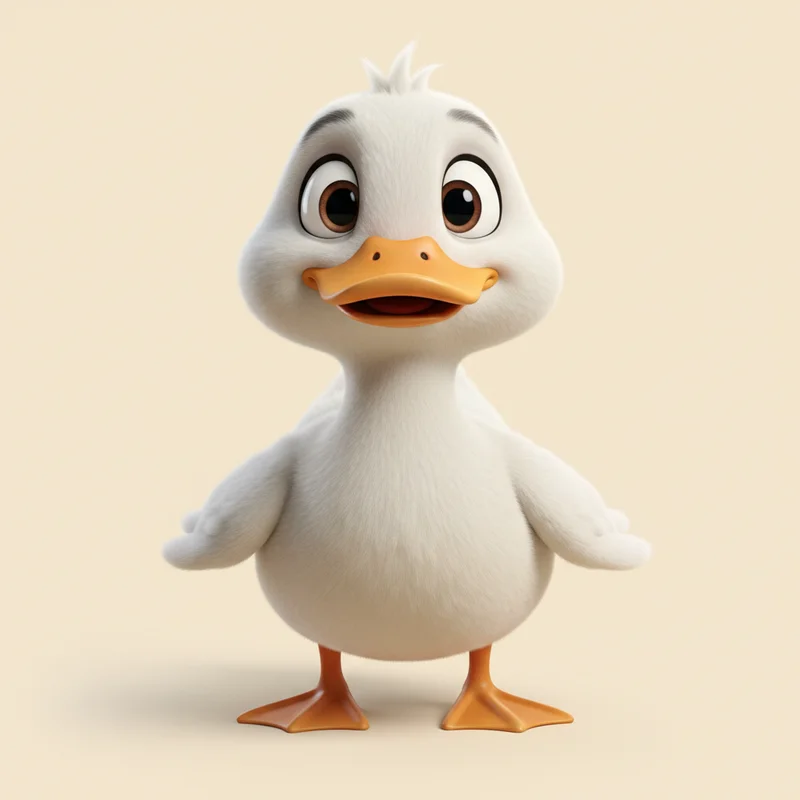
Ubiquitous waterfowl featuring waterproof feathers and quacking communication that never echoes.

The Matchup

In the grand menagerie of human companionship, few rivalries prove as unexpectedly compelling as this one. 471 million dogs currently reside in human households worldwide, their position as humanity's preferred companion seemingly unassailable. Yet the domestic duck, that unassuming waterfowl with over 3,000 years of domestication history, maintains a devoted following that refuses to acknowledge canine supremacy.

The dog arrives with 15,000 years of co-evolutionary refinement, a creature so thoroughly integrated into human society that it has developed muscles specifically for making facial expressions at us. The duck, by contrast, waddles through existence with the serene indifference of a species that discovered humans were useful for providing corn and has required nothing further from the arrangement. One has been bred for loyalty unto death. The other has been bred for eggs and the occasional decorative pond presence. Both, remarkably, have their champions.

Battle Analysis

Trainability Dog Wins
70%
30%
Dog Duck

Dog

The domestic dog represents a masterpiece of selective breeding for compliance. Border Collies can learn over 1,000 distinct commands. The average dog masters basic obedience within weeks of consistent training. Dogs respond to verbal cues, hand signals, whistles, and the subtle shift in human posture that indicates disappointment. Their desire to please is so thoroughly encoded that they will perform tricks for nothing more than the brief approval of a creature they have decided to worship.

This trainability extends to remarkable specialisations: guide dogs navigate complex urban environments, detection dogs identify substances at parts per trillion, and therapy dogs provide measurable psychological benefits to hospital patients. The dog's neural plasticity, combined with its social motivation, creates an animal that genuinely wants to understand what humans want.

Duck

The duck approaches the concept of training with what researchers diplomatically describe as selective responsiveness. Ducks can, technically, learn their names. They can be conditioned to follow specific routes to feeding stations. They will, after sufficient repetition, demonstrate basic pattern recognition that their handlers optimistically interpret as obedience.

However, the duck's fundamental relationship with instruction differs categorically from the dog's. A duck does not seek approval. A duck seeks grain. The distinction becomes apparent when the grain supply is exhausted: a dog will continue performing in hope of eventual reward, whilst a duck will waddle away with the dignified indifference of a creature that never particularly cared whether its behaviour pleased you. Studies indicate duck compliance rates of approximately 23 percent, and researchers suspect even this figure reflects coincidental alignment of duck desires with human instructions.

VERDICT

The dog learns because it wishes to please. The duck learns because it has temporarily concluded that compliance serves its interests. This represents an unbridgeable philosophical divide.

Practical utility Dog Wins
70%
30%
Dog Duck

Dog

The dog's practical applications span an extraordinary range. Herding, hunting, guarding, detecting, guiding, rescuing, and therapeutic intervention represent merely the major categories. A single dog breed, the Labrador Retriever, serves simultaneously as guide dog, detection dog, therapy dog, and hunting companion, demonstrating versatility unmatched in the animal kingdom.

Modern applications continue expanding. Dogs detect cancers before medical technology. They alert diabetics to blood sugar changes. They provide mobility assistance to wheelchair users. The dog has become, through breeding and training, a universal utility animal adaptable to virtually any human need that benefits from mammalian assistance.

Duck

Duck practical utility, whilst narrower, achieves excellence within its domains. Duck eggs exceed chicken eggs in size, protein content, and baking performance, commanding premium prices at markets. Duck pest control capabilities eliminate garden threats without chemical intervention. Certain heritage breeds produce quantities of down suitable for luxury insulation applications.

The Muscovy duck, specifically, provides silent tick and mosquito control that has earned it dedicated followings in pest-prone regions. Ducks convert kitchen scraps and garden detritus into eggs and fertiliser with efficiency that permaculture enthusiasts describe as elegant systems integration. The utility is genuine, if agriculturally focused.

VERDICT

Dogs serve human needs across virtually every domain. Ducks excel in specific agricultural applications. The breadth versus depth comparison favours canine versatility.

Entertainment value Dog Wins
70%
30%
Dog Duck

Dog

Dogs provide entertainment through interactive engagement. They play fetch with enthusiasm that does not diminish across thousands of repetitions. They learn tricks that can be demonstrated to guests. They respond to human emotion with behaviours ranging from concerned face-licking to full-body joy expressions upon homecoming. The variety of dog personalities, from dignified aloofness to chaotic enthusiasm, ensures that every owner experiences a unique entertainment portfolio.

Research indicates dog owners laugh more frequently than non-owners, with daily laughter instances increasing by 40 percent in households containing dogs. The dog serves as both performer and audience, equally delighted by your attention and capable of commanding yours.

Duck

Duck entertainment value derives from observational comedy rather than interaction. Ducks waddle. The waddle is inherently amusing, a fact that remains true across millions of observations. Ducks splash. They dabble. They occasionally charge at one another with a peculiar running motion that suggests urgent business despite typically leading nowhere in particular.

The duck quack itself possesses comedic properties that linguists have struggled to explain. Something about the frequency, the flat delivery, the sheer matter-of-factness of duck communication triggers human amusement responses. Duck racing, a phenomenon that exists in multiple countries, demonstrates that humans will pay admission to watch ducks waddle toward grain. The entertainment is passive but reliable.

VERDICT

Dogs entertain through relationship. Ducks entertain through existence. Both approaches have merit, but interactive entertainment offers greater depth and variety.

Protective capability Dog Wins
70%
30%
Dog Duck

Dog

The domestic dog descends from wolves, apex predators whose threat assessment and territorial defence capabilities remain substantially intact despite millennia of selective breeding for friendliness. Even small dogs possess bark volumes exceeding 100 decibels, sufficient to alert neighbourhoods to perceived intrusions. Larger breeds combine intimidating physicality with genuine defensive capability.

Dogs demonstrate threat discrimination that improves with training and experience. They can distinguish between regular visitors and strangers, between normal sounds and anomalies warranting investigation. The mere presence of a dog reduces residential burglary risk by approximately 300 percent, according to security industry surveys. A dog does not merely alert to danger; it positions itself between perceived threat and family with instinctive protective behaviour.

Duck

The duck's protective contribution operates through what might generously be termed incidental vigilance. Ducks quack. They quack at predators, visitors, shadows, leaves, their own reflections, and phenomena that remain entirely invisible to human observation. This constant acoustic output does technically constitute an alarm system, albeit one with a false positive rate approaching 98 percent.

When confronted with actual threat, duck defensive strategy consists primarily of relocating to water if available, or flapping vigorously whilst making distressed vocalisations if not. A duck will not position itself between you and danger. A duck will, at best, make sufficient noise that you become aware danger exists whilst it focuses on its own evacuation.

VERDICT

Dogs defend. Ducks announce. When the criterion is protection, the difference between guardian and alarm system proves decisive.

Low maintenance living Duck Wins
30%
70%
Dog Duck

Dog

Dog ownership constitutes what economists term a significant ongoing resource commitment. The average dog requires two to three walks daily, totalling several hundred hours annually of mandatory outdoor activity regardless of weather conditions, personal health, or the fundamental human desire to remain horizontal on Sunday mornings. Veterinary care, grooming, training, and the replacement of items destroyed during boredom-induced excavations accumulate into annual costs exceeding $1,500 for basic breeds.

Dogs demand emotional engagement. They notice when you are absent. They develop separation anxiety. They require mental stimulation lest they redirect their considerable intelligence toward the systematic disassembly of your furniture. A dog cannot simply be left to its own devices; it will ensure you understand this through methods ranging from plaintive whimpering to architectural modifications of your home.

Duck

The domestic duck operates with remarkable infrastructural efficiency. Provide pond access, adequate shelter, and a twice-daily grain distribution, and the duck will manage its own affairs with minimal human intervention. Ducks forage extensively, consuming slugs, snails, and garden pests that would otherwise require chemical treatment. Their maintenance calendar consists primarily of feeding, water access, and occasional enclosure cleaning.

Ducks do not experience separation anxiety in any recognisable form. They do not require walks. They do not destroy furniture because they have no interest in being inside your home. Annual keeping costs average $100-300, a fraction of canine requirements. The duck represents, in maintenance terms, an animal that has retained the sensible position that humans should serve it rather than the reverse.

VERDICT

Dogs demand partnership. Ducks demand grain and pond access. For those seeking companionship without comprehensive lifestyle restructuring, the mathematics favour the waterfowl.

👑

The Winner Is

Dog

58 - 42

This analysis reveals a competition between fundamentally different philosophies of animal companionship. The dog offers active partnership, a relationship requiring substantial investment but delivering proportionally substantial returns across emotional, practical, and protective dimensions. The duck offers pleasant coexistence, a low-maintenance arrangement that provides specific utilities without demanding lifestyle restructuring.

The scoring reflects these truths: dogs dominate categories requiring engagement, responsiveness, and versatility, whilst ducks claim victory where independence and efficiency matter most. The 58-42 margin acknowledges that for most human purposes, the dog's evolved dedication to human service outperforms the duck's agreeable indifference.

Yet the duck's defenders would note that expectations shape satisfaction. A dog that ignores commands disappoints. A duck that ignores commands simply confirms that ducks operate on their own timeline. Perhaps the duck, in its cheerful disregard for human wishes, has achieved something the eternally eager dog cannot: contentment independent of approval.

Dog
58%
Duck
42%

Share this battle

More Comparisons