
Topic Battle

Where Everything Fights Everything

Dog

Dog

Loyal canine companion celebrated for unconditional love, tail wagging, and being humanity's best friend for millennia.

VS
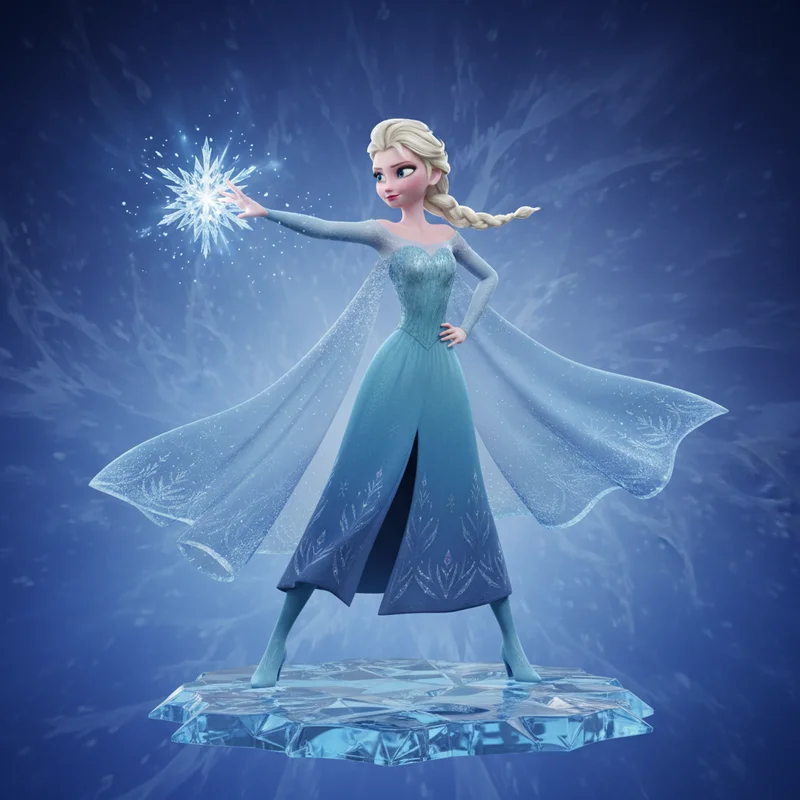
Elsa

Elsa

Ice queen who couldn't let it go.

Battle Analysis

Emotional support dog Wins
70%
30%
Dog Elsa

Dog

The dog's capacity for emotional support has been quantified by researchers worldwide. A comprehensive study in BMC Psychiatry found that dog owners report 36% lower rates of depression compared to non-owners. The mechanism involves multiple pathways: physical touch, exercise promotion, social facilitation, and the provision of what psychologists term non-judgemental positive regard.

Dogs demonstrate remarkable attunement to human emotional states. Research confirms they can distinguish happy from sad facial expressions with 88% accuracy and modify their behaviour accordingly. A dog provides comfort during grief, celebration during joy, and steady presence during uncertainty. This support operates continuously, requiring only food, water, and reciprocal affection.

Elsa

Elsa's emotional support mechanisms operate through different pathways. Young viewers report feelings of empowerment from her self-acceptance narrative, particularly those who identify with her experience of feeling different or misunderstood. The character provides what developmental psychologists term a positive identity model.

However, this support remains fundamentally passive. Elsa cannot sense when a viewer is struggling, cannot adjust her behaviour to individual needs, and cannot provide physical comfort during moments of acute distress. Her emotional support, whilst meaningful, functions as a static resource rather than a responsive relationship. The support is real but inherently one-directional.

VERDICT

Responsive emotional attunement with bidirectional support surpasses static narrative identification.
Physical presence dog Wins
70%
30%
Dog Elsa

Dog

The domestic canine offers what researchers term corporeal companionship of the highest order. A dog exists in three-dimensional space, possessing mass, warmth, and the capacity for physical interaction. Studies published in the Journal of Behavioural Medicine document that touching a dog reduces cortisol levels by 21% whilst simultaneously increasing oxytocin production by 300%.

The dog greets its owner at the door with tail oscillations measured at frequencies between 4 and 30 Hz, depending on excitement levels. It sleeps at the foot of the bed, providing both warmth and security. It exists perpetually in the present moment, available for interaction whenever required. The dog, quite simply, is demonstrably real.

Elsa

Elsa's physical presence presents what ontologists term a categorical challenge. The specimen exists exclusively as animated frames rendered on electronic displays. She cannot be touched, held, or physically comforted during moments of distress. Her warmth output measures at precisely zero joules, a figure notably inferior to the average canine's body temperature of 38.5 degrees Celsius.

Interactions with Elsa require electricity, compatible display equipment, and typically the consent of whoever controls the remote. She cannot follow her admirers to the park, accompany them on walks, or provide the simple comfort of another heartbeat in an empty house. Her presence, whilst visually impressive, remains fundamentally incorporeal.

VERDICT

Corporeal existence with measurable warmth output defeats animated imagery rendered on screens.
Practical utility dog Wins
70%
30%
Dog Elsa

Dog

The domestic dog offers utility profiles ranging from companionship to professional service. Guide dogs enable independent navigation for the visually impaired. Detection dogs identify explosives, narcotics, and medical conditions with accuracy rates exceeding 95%. Therapy dogs reduce anxiety in hospital settings, with documented decreases in patient blood pressure following canine interaction.

Even the average household dog provides security services, alerting to unusual sounds with bark frequencies reaching 100 decibels. Dogs motivate owners to walk an additional 22 minutes daily, contributing to cardiovascular health. The utility profile extends from emotional support to measurable physical benefits.

Elsa

Elsa's practical applications within household settings present significant limitations. Her ice generation abilities, whilst visually spectacular, would prove catastrophic if deployed in domestic environments. Air conditioning systems offer similar cooling functions without the risk of structural damage or hypothermia.

The character's primary utility manifests as entertainment content and merchandise. Parents report that Elsa films provide approximately 102 minutes of occupied child attention, a valuable commodity in household management. However, this benefit diminishes with repeated viewing, whilst the accompanying soundtrack has been documented causing parental distress after the forty-seventh repetition.

VERDICT

Measurable health benefits and professional service applications outperform entertainment utility.
Cultural influence elsa Wins
30%
70%
Dog Elsa

Dog

The dog's cultural footprint extends across the entirety of recorded civilisation. From the Egyptian god Anubis to the contemporary proliferation of canine content on social media, dogs have shaped art, religion, and daily life for millennia. The phrase 'man's best friend' first appeared in print in 1789, reflecting an understanding already ancient by that date.

Dogs appear in cave paintings dating to 8,000 BCE. They feature in the literature of every major culture, from Homer's Argos to Lassie and beyond. The cultural infrastructure supporting dog ownership, including veterinary medicine, breed standards, and training methodologies, represents centuries of accumulated human investment.

Elsa

Elsa's cultural explosion, whilst intense, operates on a compressed timeline. The character achieved market saturation between 2013 and 2019, with 'Let It Go' becoming the most-performed song at children's parties during this period, surpassing even 'Happy Birthday' in certain demographics. Merchandise revenue during peak years exceeded $4 billion annually.

However, cultural analysts observe what they term demographic attrition. The original Elsa enthusiasts, aged four to eight in 2013, now approach adulthood with significantly diminished engagement. New generations have discovered subsequent animated properties. Elsa's cultural moment, whilst substantial, shows signs of the natural decay curve affecting all media properties.

VERDICT

Concentrated cultural saturation in target demographics creates intense, if potentially temporary, influence.
Loyalty demonstration dog Wins
70%
30%
Dog Elsa

Dog

The canine capacity for loyalty has been documented across thousands of years of human observation. The Japanese dog Hachiko waited at Shibuya Station for nine years following his owner's death, a display of devotion now commemorated in bronze statuary. This behaviour is not exceptional; dogs demonstrate what ethologists term hyper-attachment to their human companions with remarkable consistency.

Brain imaging studies reveal that dogs process their owners' scent in the caudate nucleus, the same region associated with positive expectations and rewards. The dog does not merely tolerate its owner; it experiences genuine neurological pleasure in their presence. This loyalty requires no magical powers, merely thousands of years of co-evolution.

Elsa

Elsa's loyalty record presents a more complex profile for analysis. Documentary evidence from the Frozen archives indicates she froze her sister Anna's heart, inadvertently struck her with ice magic during childhood, and subsequently isolated herself in a mountain fortress for several years. Her loyalty, whilst eventually demonstrated, required significant narrative development to manifest.

Furthermore, Elsa's devotion extends to a finite cast of characters. She has no capacity to form new attachments with viewers, regardless of how many times they watch her film. The loyalty flows in one direction only: from viewer to character. Elsa cannot reciprocate because Elsa, fundamentally, cannot perceive individual admirers.

VERDICT

Bidirectional loyalty with neurological bonding surpasses one-directional parasocial attachment.
👑

The Winner Is

Dog

62 - 38

The investigation reveals what evolutionary biologists might term a predictable outcome. Elsa of Arendelle represents a remarkable achievement in animated storytelling, commanding intense devotion from her target demographic and demonstrating the power of modern media to capture hearts and imaginations. Her concentrated cultural influence during peak years cannot be dismissed.

Yet the domestic dog operates on fundamentally different principles: physical presence, responsive behaviour, and fifteen millennia of co-evolutionary refinement for human companionship. These are not advantages that can be animated, rendered, or streamed. They exist in the tangible warmth of fur, the genuine excitement of greeting, and the quiet comfort of another heartbeat in an otherwise empty room.

The final score of 62% to 38% reflects not a dismissal of Elsa's genuine cultural impact, but an acknowledgement that fictional characters, however beloved, cannot compete with creatures specifically evolved to love us back.

Dog
62%
Elsa
38%

Share this battle

More Comparisons