
Topic Battle

Where Everything Fights Everything

Dog

Dog

Loyal canine companion celebrated for unconditional love, tail wagging, and being humanity's best friend for millennia.

VS
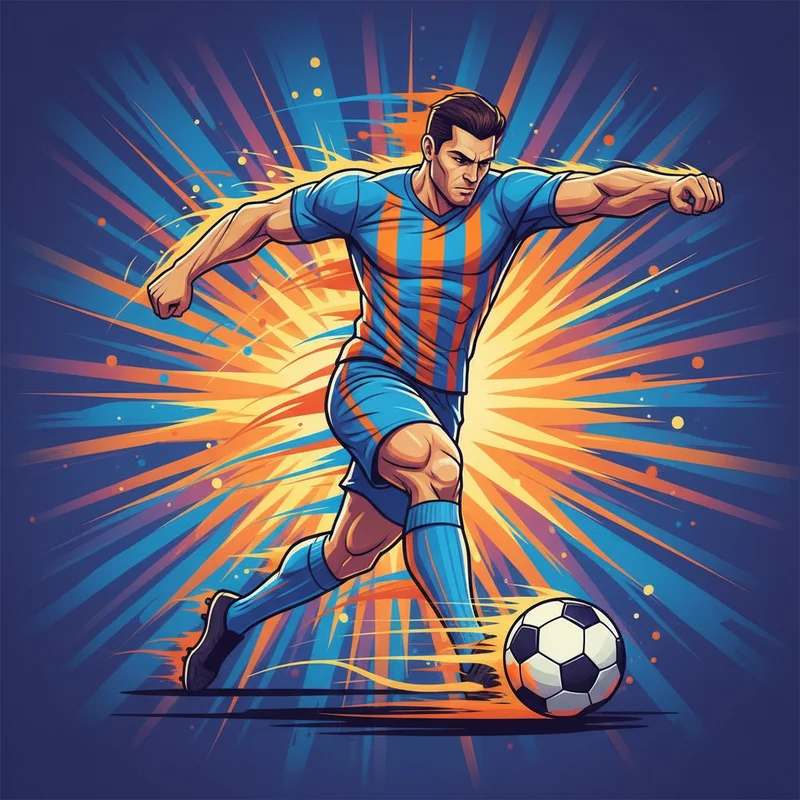
Football

Football

Global sport known as soccer in some countries.

The Matchup

Two phenomena command devotion that defies rational explanation. 471 million dogs share human households worldwide, whilst four billion people identify as football fans, making it the most followed sport in human history. Both inspire emotional investments that economists struggle to quantify and psychologists struggle to explain. Both have been known to reduce grown adults to tears.

The dog offers unconditional positive regard, a psychological concept that Carl Rogers identified as essential for human flourishing. Football offers something rather different: a leather sphere that professional athletes kick whilst millions watch, experiencing vicarious triumphs and devastations that have no logical bearing on their actual lives. One has been selectively bred for 15,000 years to read human emotion. The other has been selectively redesigned by FIFA committees who argue about acceptable circumference measurements.

Battle Analysis

Loyalty and devotion Dog Wins
70%
30%
Dog Football

Dog

The domestic dog exhibits what behavioural scientists classify as hypersocial attachment. Studies utilising functional MRI scanning reveal that dogs experience genuine neurological responses to their owners' scent, with reward centres activating in patterns indistinguishable from those observed during the anticipation of food. A dog's loyalty is not transactional; it persists through financial ruin, social disgrace, and persistent failure to provide the promised walk.

Research from Eotvos Lorand University demonstrates that dogs will choose proximity to their owners over food rewards when given the option. This represents a sacrifice of immediate biological gratification for the abstract benefit of companionship, a behaviour previously thought unique to humans and certain primates.

Football

Football commands devotion that spans generations, with research indicating that 72 percent of fans inherit their team allegiance from family members. This loyalty persists through decades of disappointing performances, administrative scandals, and the departure of beloved players to rival clubs for marginally superior salaries. A football fan's commitment has been described by sociologists as tribal identification, a primal bonding mechanism repurposed for the modern era.

However, football's loyalty flows in one direction only. The sport does not recognise individual fans. It cannot distinguish between supporters who have attended every home match since 1987 and those who purchased a replica shirt last Tuesday. Football accepts devotion without reciprocating it.

VERDICT

Dogs provide bidirectional loyalty. Football provides an asymmetric emotional arrangement in which humans invest deeply in an entity incapable of caring whether they exist.

Emotional availability Dog Wins
70%
30%
Dog Football

Dog

Dogs demonstrate continuous emotional presence. They do not have competing commitments, off-seasons, or international tournament schedules. A dog's availability correlates directly with its owner's presence. Studies utilising cortisol measurements indicate that physical contact with dogs reduces human stress hormones within five to twenty minutes, an effect described as the pet effect in psychological literature.

Furthermore, dogs respond to human emotional states with appropriate behavioural modifications. They approach during distress. They provide warmth during illness. They celebrate return with enthusiasm that suggests each homecoming is the first meeting after prolonged separation.

Football

Football exists according to a schedule determined by governing bodies, broadcasters, and commercial interests. Major competitions occur at fixed intervals. Domestic leagues follow predictable seasonal patterns. Between matches, football offers retrospective analysis and anticipatory speculation, but not the experience itself. The sport is temporally rationed.

During matches, football generates intense emotional engagement, but this engagement is outcome-dependent and unpredictable. The same fixture can produce ecstasy or despair based on events entirely outside the viewer's control. Football, unlike a dog, is equally likely to make you miserable as happy.

VERDICT

Dogs provide reliable, continuous emotional support. Football provides scheduled emotional volatility with outcomes determined by factors unrelated to the viewer's needs.

Global cultural impact Football Wins
30%
70%
Dog Football

Dog

Dogs have shaped human culture across every civilisation. They appear in the mythology of ancient Egypt, the literature of Victorian England, and the social media feeds of contemporary internet users. The phrase man's best friend has achieved linguistic universality. Dogs serve as therapy animals, search and rescue operatives, and detection specialists capable of identifying diseases that human technology cannot yet diagnose.

However, dogs exert cultural influence primarily at the individual and community level. They do not fill stadiums. They do not command television broadcast rights worth billions of pounds. Their cultural footprint, whilst deep, remains distributed rather than concentrated.

Football

Football operates as a global cultural phenomenon of unprecedented scale. The FIFA World Cup attracts cumulative viewership exceeding five billion across its tournament duration. The sport has influenced political movements, shaped urban architecture, and generated economic activity measurable as percentages of national GDP. Football transfers make international news. Football scandals topple governments.

The sport has created a shared cultural vocabulary that transcends linguistic and national boundaries. A Brazilian and a Norwegian with no common language can nonetheless discuss the merits of various formations and the injustice of specific refereeing decisions.

VERDICT

Dogs enrich individual lives profoundly. Football shapes civilisation at scale, influencing billions simultaneously in ways that companion animals cannot match.

Physical health benefits Dog Wins
70%
30%
Dog Football

Dog

Dog ownership imposes what researchers term compulsory physical activity. The requirement for daily walks results in dog owners accumulating 22 additional minutes of daily exercise compared to non-owners. A study published in Scientific Reports found that dog owners were four times more likely to meet recommended physical activity guidelines than their pet-free counterparts.

This exercise occurs regardless of motivation, weather conditions, or the owner's preference for remaining horizontal. The dog operates as an external accountability mechanism, a personal trainer whose fees are paid in kibble rather than currency and whose cancellation policy is non-existent.

Football

Active football participation delivers exceptional cardiovascular conditioning. A ninety-minute match burns approximately 900 calories whilst developing aerobic capacity, muscular strength, and coordination. The sport engages every major muscle group and has been demonstrated to improve bone density, reduce body fat percentage, and enhance metabolic function.

However, the vast majority of football's four billion devotees participate exclusively as spectators. Watching football from a sofa provides no health benefits whatsoever, unless one counts the cardiac stress of penalty shootouts as a form of exercise. The sport's primary global engagement mode involves physical immobility accompanied by snack consumption.

VERDICT

Football offers superior exercise intensity but only for active participants. Dog ownership delivers guaranteed daily physical activity regardless of athletic ambition.

Long term relationship value Dog Wins
70%
30%
Dog Football

Dog

The average canine lifespan ranges from 10 to 13 years, depending on breed and care quality. During this period, dogs provide consistent companionship, establish routines that structure human days, and create memories that owners report recalling with emotional intensity decades after the animal's death. A 2019 survey found that 93 percent of dog owners considered their pet a family member.

However, dog ownership inevitably concludes with loss. The relationship, however profound, carries a predetermined expiration. This grief is so universally recognised that veterinary practices now employ specialised bereavement counsellors.

Football

Football fandom typically spans an entire human lifetime. Supporters who adopt a club in childhood remain attached through adolescence, career establishment, parenthood, and retirement. The relationship persists through the fan's changing circumstances because the fan is essentially irrelevant to its continuation. Football does not require maintenance. It continues regardless of individual attention.

This permanence comes at the cost of intimacy. Football offers decades of engagement but engagement that remains fundamentally one-directional. The club will outlive its supporters and will not notice their absence.

VERDICT

Football offers longer relationships but relationships lacking reciprocal recognition. Dog ownership provides briefer but immeasurably deeper connection.

👑

The Winner Is

Dog

58 - 42

This analysis reveals a competition between different categories of human attachment. Football represents collective belonging, the ancient tribal impulse redirected toward sporting allegiance and expressed through shared ritual. Dogs represent intimate partnership, the evolutionary bond between species refined into a relationship of remarkable psychological complexity.

Football claims victory in cultural impact, a category where its unprecedented global reach cannot be challenged by any individual companion animal. Dogs prevail in loyalty, health benefits, emotional availability, and long-term relationship value, domains where living, responsive companionship proves irreplaceable. The 58-42 margin reflects this distribution of strengths: football's single categorical dominance is substantial but insufficient to overcome dogs' superiority across the majority of criteria examined.

The data suggests that humanity would benefit from both: the collective joy of shared sporting allegiance and the individual comfort of devoted companionship. Those forced to choose, however, would statistically report greater life satisfaction with the entity capable of greeting them at the door.

Dog
58%
Football
42%

Share this battle

More Comparisons