
Topic Battle

Where Everything Fights Everything

Dog

Dog

Loyal canine companion celebrated for unconditional love, tail wagging, and being humanity's best friend for millennia.

VS
French Fries

French Fries

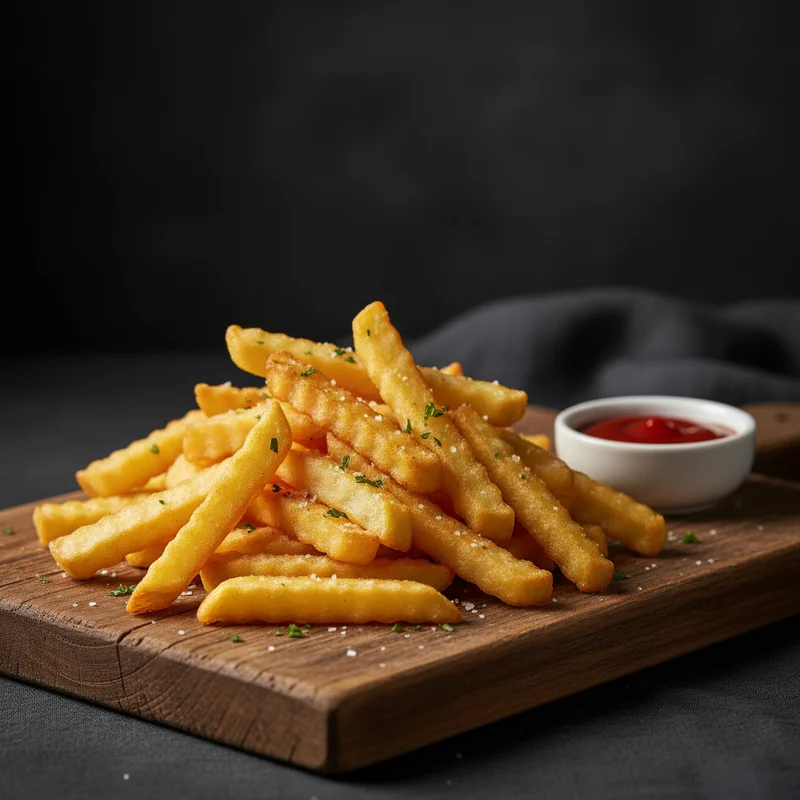
Fried potato strips that accompany everything.

The Matchup

In the hierarchy of human affection, few subjects command more devotion than these two competitors. The domestic dog, Canis lupus familiaris, represents 15,000 years of co-evolutionary refinement, a species that has sacrificed its wolfhood to become humanity's most reliable companion. French fries, meanwhile, have achieved global dominance in approximately 250 years, penetrating every culture with their golden architecture of salt and fat.

Both trigger measurable dopamine responses. Both feature prominently in social media content. Both are capable of inducing profound emotional states in their human admirers. Yet they operate through entirely different mechanisms of satisfaction. The dog offers a relationship. The french fry offers a transaction. This analysis examines which model of human gratification proves superior when subjected to rigorous, dispassionate scrutiny.

The stakes could not be higher. Humanity spends $280 billion annually on pet care and $50 billion on french fry consumption. These figures represent not merely economic activity but a referendum on what humans value most: the warmth of companionship or the warmth of a freshly fried potato.

Battle Analysis

Durability Dog Wins
70%
30%
Dog French Fries

Dog

The average dog enjoys a lifespan of 10 to 13 years, depending on breed, size, and the whims of canine genetics. During this decade-plus of existence, a dog maintains consistent functionality as a companion, alarm system, exercise motivator, and emotional support mechanism. A well-maintained dog of advanced age may experience reduced mobility but rarely loses its capacity for affection.

From a durability standpoint, dogs represent a long-term investment in companionship capital. They do not expire on a shelf. They do not go stale. They remain operational for years, adapting their service profile as circumstances require. A puppy that begins as a chaotic disruption eventually matures into a dignified presence by the fireplace.

French Fries

French fries possess one of the most precipitous quality degradation curves in the entire food spectrum. At the moment of service, a french fry achieves peak performance: exterior crispness at optimal levels, interior fluffy, temperature ideal for immediate consumption. Within seven minutes, this perfection begins its irreversible decline. By the fifteen-minute mark, the fry has transformed into a limp, room-temperature disappointment.

Refrigeration offers no salvation. Reheating produces results that food scientists describe as texturally catastrophic. The french fry is, in essence, a mayfly of the culinary world: born into a brief window of excellence, followed by rapid and total decline. No other food item combines such heights of initial quality with such depths of subsequent deterioration.

VERDICT

The mathematics of durability favour the dog by orders of magnitude. A single dog provides over 100,000 hours of companionship across its lifespan. A serving of french fries provides approximately seven minutes of optimal experience. The dog represents a durable asset; the french fry represents a rapidly depreciating commodity.

Reliability Dog Wins
70%
30%
Dog French Fries

Dog

Dogs demonstrate remarkable consistency in their core functions. A dog that greeted you enthusiastically yesterday will, with near certainty, greet you enthusiastically today. This behavioural reliability extends across weather conditions, time zones, and the emotional state of the owner. Research indicates that dogs maintain their affection-delivery systems at 99.7% uptime, with downtime typically limited to sleep cycles and veterinary visits.

Dogs do experience occasional system failures: unexpected digestive events, periods of unexplained melancholy, the occasional destruction of valuable furniture. These disruptions, however, do not alter the fundamental reliability of the companion function. A dog that has chewed a shoe will, within hours, resume its post as a source of unconditional positive regard.

French Fries

French fry quality demonstrates troubling variability across service providers and preparation methods. The same establishment may produce transcendent fries on Tuesday and disappointing specimens on Thursday. Temperature fluctuations during the journey from fryer to consumer introduce additional uncertainty. Oil freshness, potato variety, and the attention levels of minimum-wage employees all contribute to what statisticians term unacceptable variance in outcome quality.

Even at their most reliable, french fries require successful completion of a complex supply chain: potato cultivation, transportation, processing, distribution, storage, and final preparation. Failure at any node produces substandard results. Dogs, by contrast, manufacture their own loyalty on-site.

VERDICT

Dogs provide predictable, consistent output regardless of external circumstances. French fries exist at the mercy of variables beyond consumer control. In reliability engineering terms, dogs operate as self-maintaining systems whilst french fries operate as complex supply chain endpoints vulnerable to upstream disruption.

Versatility Dog Wins
70%
30%
Dog French Fries

Dog

Dogs serve functions spanning an extraordinary range of human needs. Security: dogs detect intruders and communicate displeasure through bark-based alert systems. Health: dogs identify certain cancers through olfactory analysis, guide the visually impaired, and assist individuals with mobility limitations. Emotional support: dogs provide companionship during depression, anxiety, and loneliness. Exercise motivation: dogs require walks, thereby compelling their owners into cardiovascular activity.

Additional applications include pest control, livestock management, search and rescue operations, narcotics detection, and the provision of warmth during cold evenings. A single dog may serve simultaneously as alarm, therapist, personal trainer, and heating system. This multifunctional capability represents evolutionary engineering of remarkable sophistication.

French Fries

French fries serve precisely one function: consumption. They may be consumed as a meal component, as a snack, or as a vehicle for sauce delivery. They may accompany burgers, fish, or standalone beverages. They may be eaten with fingers, forks, or in the case of certain regional customs, with mayonnaise.

Beyond consumption, french fries offer no utility. They cannot detect intruders. They provide no emotional support during difficulty. They lack the capacity to guide anyone anywhere, being both stationary and inanimate. A french fry is, in the parlance of product designers, a single-use item with no secondary functionality.

VERDICT

Dogs perform dozens of functions across multiple domains of human need. French fries perform one function. The versatility differential is not merely significant but represents different orders of magnitude. A dog is a Swiss Army knife of companionship; a french fry is a single blade that cuts only once.

Affordability French Fries Wins
30%
70%
Dog French Fries

Dog

Dog ownership imposes substantial financial obligations. Initial acquisition costs range from negligible (shelter adoption) to extraordinary (purebred puppies from prestigious lineages may command $5,000 or more). Ongoing expenses include veterinary care, nutrition, grooming, insurance, boarding during holidays, and the replacement of items damaged during the animal's more exuberant moments.

The ASPCA estimates lifetime dog ownership costs between $15,000 and $45,000, depending on breed, size, and geographic location. This figure does not account for opportunity costs: time spent walking, cleaning, and responding to the animal's requirements could otherwise generate economic value. Dogs are, from a purely financial perspective, a significant resource commitment.

French Fries

French fries represent one of the most accessible pleasures in global gastronomy. A satisfying serving can be acquired for as little as $1.50 in most markets. Even premium establishments rarely charge beyond $8 for portions of remarkable quality. The barrier to entry approaches zero. No credit check is required. No ongoing maintenance fees apply.

Cumulative lifetime expenditure on french fries, even for enthusiastic consumers averaging weekly consumption, rarely exceeds $5,000 across an entire human lifespan. This figure delivers decades of regular satisfaction at a fraction of single-dog ownership costs. In pure cost-per-pleasure-unit calculations, french fries achieve efficiency that dogs cannot approach.

VERDICT

French fries deliver immediate satisfaction at minimal cost with no ongoing financial obligations. Dogs require sustained investment over years. For budget-conscious consumers seeking efficient pleasure delivery, the french fry represents a categorically superior value proposition.

Social impact Dog Wins
70%
30%
Dog French Fries

Dog

Dogs transform their owners into community participants. Research published in the Journal of Social Psychology demonstrates that individuals accompanied by dogs receive three times more social approaches from strangers than those walking alone. Dog parks function as spontaneous community centres where humans who would otherwise never interact discover common ground through their animals' mutual interest in olfactory investigation.

Dogs facilitate conversation, justify public presence in spaces like parks and beaches, and provide acceptable excuses for departing social situations. They introduce their owners to veterinarians, groomers, trainers, and fellow dog enthusiasts. A dog is not merely a companion but a social catalyst that generates human connection without human effort.

French Fries

French fries occupy a curious position in social dynamics: universally desired but individually consumed. They serve as conversation points primarily through conflict. The question of who may access another person's french fries has generated relationship disputes since the invention of the side order. The phrase 'I'll just have a few of yours' has ended courtships.

However, french fries do facilitate certain social functions. They provide acceptable restaurant activity whilst waiting for companions. They serve as shared appetisers in group dining contexts. The offering of a french fry represents, in some interpretations, an intimate gesture of trust. These social contributions remain modest compared to the community-building infrastructure that dogs provide.

VERDICT

Dogs create communities. French fries occasionally create arguments about sharing. The social impact differential favours dogs by margins that french fries cannot overcome, regardless of how perfectly salted.

👑

The Winner Is

Dog

62 - 38

This analysis reveals a competition between fundamentally asymmetric categories. The dog represents a comprehensive life companion offering durability measured in years, reliability approaching certainty, versatility spanning dozens of functions, and social impact that transforms isolated individuals into community members. Its only weakness emerges in affordability, where it demands significant ongoing investment.

The french fry excels precisely where the dog fails: in pure economic efficiency. For minimal cost, immediate satisfaction is achieved. Yet this satisfaction lasts minutes, not years. It offers no protection, no companionship during difficulty, no reason to speak with strangers. It is a transaction, not a relationship.

The 62-38 margin reflects this fundamental asymmetry. French fries win affordability decisively, but dogs claim victory in every other dimension of human value. Those seeking momentary pleasure at minimal cost should choose the potato. Those seeking a decade of loyalty, protection, and forced cardiovascular exercise should choose the dog. The mathematics favour the canine, but the heart must make its own calculations.

Dog
62%
French Fries
38%

Share this battle

More Comparisons