
Topic Battle

Where Everything Fights Everything

Dog

Dog

Loyal canine companion celebrated for unconditional love, tail wagging, and being humanity's best friend for millennia.

VS
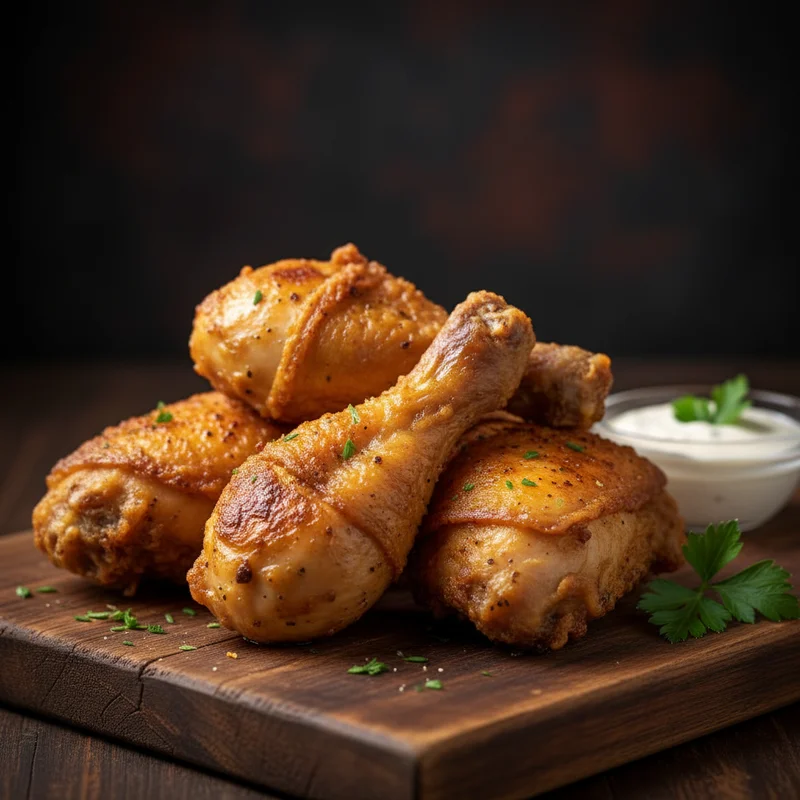
Fried Chicken

Fried Chicken

Crispy coated poultry and Southern comfort classic.

The Matchup

In the grand catalogue of things humanity has deemed essential, few entries appear with such frequency as the domestic dog and fried chicken. The former represents 15,000 years of co-evolution, a partnership forged in prehistoric campfires and refined through selective breeding into over 340 recognised breeds. The latter represents approximately four centuries of culinary innovation, a technique perfected in the American South and exported to every continent where cooking oil and poultry coincide.

Both occupy privileged positions in the human psyche. Dogs are welcomed into homes, granted furniture privileges, and mourned with genuine grief upon their passing. Fried chicken is welcomed into homes, granted privileged seating at celebrations, and mourned with genuine regret when the bucket empties. One wags its tail at your return. The other does not, though its absence from the refrigerator can trigger comparable emotional responses.

This analysis applies rigorous methodology to a question humanity has perhaps been too afraid to ask directly: which of these beloved entities delivers superior value to human existence?

Battle Analysis

Durability Dog Wins
70%
30%
Dog Fried Chicken

Dog

The domestic dog demonstrates remarkable structural resilience when properly maintained. Average lifespans range from 10 to 13 years for most breeds, with smaller varieties occasionally exceeding two decades. The current verified record stands at 29 years, held by an Australian cattle dog named Bluey whose longevity researchers attribute to an active rural lifestyle and favourable genetics.

Dogs possess self-repair capabilities that fried chicken cannot replicate. Minor injuries heal. Illnesses can be treated. A dog who has endured hardship may emerge stronger, having developed what veterinary behaviourists term adaptive resilience. Their durability is renewable, sustained by food, water, and veterinary intervention.

However, this durability requires constant investment. Dogs left without sustenance deteriorate rapidly. Their impressive lifespan is conditional upon human commitment.

Fried Chicken

Fried chicken possesses what food scientists classify as catastrophically limited shelf life. At room temperature, bacterial colonisation renders the product unsafe within two hours. Refrigeration extends viability to approximately four days. Freezing can preserve structural integrity for up to four months, though texture degradation begins immediately upon thermal transition.

The fundamental problem is irreversibility. Fried chicken cannot recover from damage. A piece dropped on the floor is compromised. A piece left overnight is condemned. There exists no veterinary intervention for fried chicken that has exceeded its safe consumption window. Its durability is measured in hours where dogs measure theirs in years.

Furthermore, fried chicken's purpose requires its destruction. It is manufactured to be consumed, a design philosophy fundamentally incompatible with longevity.

VERDICT

The mathematics here admit no ambiguity. A dog provides over 100,000 hours of potential companionship. A batch of fried chicken provides perhaps six hours of safe consumption opportunity. The dog's durability exceeds fried chicken's by approximately four orders of magnitude.

Reliability Dog Wins
70%
30%
Dog Fried Chicken

Dog

Dogs exhibit what behavioural scientists term consistent attachment behaviour. A properly bonded dog will greet its owner with enthusiasm regardless of the owner's professional setbacks, relationship failures, or personal shortcomings. This reliability has been documented across cultures and throughout recorded history. Dogs do not judge. They do not remember the embarrassing incident from last week. Their affection operates on principles uncorrelated with human performance metrics.

Physical reliability varies by breed and individual health, but emotional reliability remains remarkably constant. A dog's capacity to provide comfort does not diminish through repeated deployment. It can be relied upon for morning walks, evening companionship, and the detection of approaching postal workers with near-perfect accuracy.

This reliability does require reciprocal commitment. Dogs who receive inadequate care may develop behavioural irregularities.

Fried Chicken

Fried chicken delivers predictable sensory outcomes within established parameters. A piece of properly prepared fried chicken will be crispy, flavourful, and satisfying with high probability. Global franchises have invested billions in standardisation, ensuring that fried chicken purchased in London resembles that purchased in Lagos or Los Angeles. This consistency represents a triumph of industrial process optimisation.

However, fried chicken's reliability exists only at the moment of consumption. It cannot be relied upon to provide comfort tomorrow, as it will have been consumed today. It cannot be relied upon during emotional crises unless additional fried chicken is procured. Its reliability is episodic rather than continuous.

Furthermore, fried chicken quality varies significantly between providers. Not all fried chicken achieves the reliability standards of premium establishments.

VERDICT

Dogs provide continuous reliable companionship. Fried chicken provides discrete reliable meals. The former integrates into daily existence; the latter punctuates it.

Versatility Dog Wins
70%
30%
Dog Fried Chicken

Dog

The domestic dog has been adapted to perform an extraordinary range of functions throughout human history. Contemporary applications include companionship, security, herding, hunting, search and rescue, medical detection, therapeutic intervention, law enforcement assistance, and the provision of content for social media platforms. A single dog may serve multiple roles simultaneously, offering both home security and emotional support without requiring additional personnel.

Dogs detect seizures before they occur. They identify certain cancers through olfactory analysis with accuracy exceeding 90 percent in controlled studies. They guide the visually impaired through complex urban environments. They locate survivors beneath earthquake rubble. The range of documented dog capabilities continues to expand as researchers discover new applications for their remarkable sensory apparatus.

This versatility stems from biological adaptability. Dogs can be trained, shaped, and specialised for tasks their ancestors never imagined.

Fried Chicken

Fried chicken excels within a narrowly defined operational domain: consumption by humans seeking caloric satisfaction combined with pleasure. Within this domain, it demonstrates considerable flexibility. It may be consumed as a main course, a snack, a component of sandwiches, or the protein element of more complex dishes. It pairs acceptably with a broad range of accompaniments and integrates successfully into cuisines worldwide.

However, fried chicken cannot guard premises. It cannot detect medical emergencies. It cannot provide emotional support during periods of distress. It cannot be trained to perform tasks beyond its fundamental purpose of being eaten. When confronted with challenges outside its culinary role, fried chicken's response is absolute functional failure.

One might argue that fried chicken provides comfort. This is true, but it is comfort that diminishes with each bite until none remains.

VERDICT

Dogs operate across dozens of functional categories. Fried chicken operates within one. This represents a versatility differential that no seasoning blend can overcome.

Affordability Fried Chicken Wins
30%
70%
Dog Fried Chicken

Dog

Dog ownership represents a substantial financial commitment that catches many prospective owners unprepared. Initial acquisition costs range from negligible for shelter adoptions to several thousand pounds for pedigreed specimens. Annual maintenance averages $1,500 to $4,500 encompassing food, veterinary care, grooming, insurance, and the replacement of items destroyed during puppyhood.

Lifetime costs for a medium-sized dog routinely exceed $25,000, with premium breeds and those requiring medical intervention potentially doubling this figure. Dogs also impose indirect costs: accommodation limitations, travel restrictions, and the opportunity cost of time devoted to their care.

This expense is distributed across years, however, rendering individual days of dog ownership surprisingly affordable when analysed as a per-diem investment.

Fried Chicken

Fried chicken operates in a democratically accessible price bracket. A substantial meal from commercial establishments costs between $8 and $20 depending on quantity and venue prestige. Home preparation reduces costs further, with raw materials for a family-sized batch rarely exceeding $15. The global proliferation of fried chicken establishments ensures competitive pricing across virtually all markets.

No insurance is required for fried chicken. It demands no veterinary intervention. It does not restrict housing options or complicate travel arrangements. The total lifetime cost of fried chicken consumption depends entirely upon consumption frequency, placing budgetary control firmly in consumer hands.

However, fried chicken provides value only during consumption. Once eaten, the investment yields no ongoing returns.

VERDICT

From a pure acquisition cost perspective, fried chicken delivers immediate satisfaction at minimal outlay. One cannot purchase a dog for the price of a bucket meal. The economic accessibility of fried chicken is unassailable.

Social impact Dog Wins
70%
30%
Dog Fried Chicken

Dog

Dogs function as powerful social catalysts. Research published in peer-reviewed journals demonstrates that dog owners experience three times more social interactions with strangers than non-owners. Dogs provide conversational entry points, shared experiences with fellow enthusiasts, and membership in an informal community of practitioners. Dog parks serve as de facto community centres where neighbours who might otherwise remain strangers discover common ground.

Dogs also structure family dynamics. They teach children responsibility. They provide elderly individuals with purpose and routine. They give isolated individuals a reason to venture outdoors and interact with the wider world. The social architecture built around dogs represents a significant component of community infrastructure in many societies.

Additionally, dogs confer social status. Certain breeds communicate prosperity, lifestyle choices, or aesthetic sensibilities in ways that transcend verbal communication.

Fried Chicken

Fried chicken occupies a venerable position in social ritual. It appears at celebrations, family gatherings, and sporting events. It serves as the centrepiece of picnics and the comfort food of choice following emotional setbacks. Sharing fried chicken creates momentary community, a collective experience of gustatory satisfaction that bonds participants through simultaneous pleasure.

Certain fried chicken establishments have achieved cultural significance transcending their culinary offerings. They serve as meeting points, landmarks, and markers of neighbourhood identity. Late-night fried chicken runs after social events represent a recognised category of shared experience.

However, fried chicken's social impact is event-based rather than structural. It facilitates gatherings but does not generate them independently.

VERDICT

Dogs create ongoing social infrastructure. Fried chicken enhances existing social events. The generative capacity of dogs exceeds the facilitative capacity of fried chicken.

👑

The Winner Is

Dog

62 - 38

This analysis reveals what intuition perhaps already suggested: the domestic dog and fried chicken serve fundamentally different roles in human existence, and comparing them directly illuminates the categorical superiority of living companionship over consumable satisfaction. Dogs triumph in durability, versatility, reliability, and social impact. Fried chicken claims only affordability, a victory that rings hollow when the bucket empties and nothing remains.

The 62-38 margin reflects this reality whilst acknowledging fried chicken's genuine contributions to human happiness. Fried chicken provides pleasure. Dogs provide meaning. Both are valid human needs, but they operate at different levels of the experiential hierarchy. One satisfies hunger; the other satisfies something deeper that hunger cannot name.

The optimal human existence may well include both entities. But if forced to choose between a companion that will greet you with joy for a decade and a meal that will satisfy you for an hour, the mathematics favour the tail-wagger decisively. Fried chicken is excellent. Dogs are irreplaceable.

Dog
62%
Fried Chicken
38%

Share this battle

More Comparisons