Topic Battle

Where Everything Fights Everything

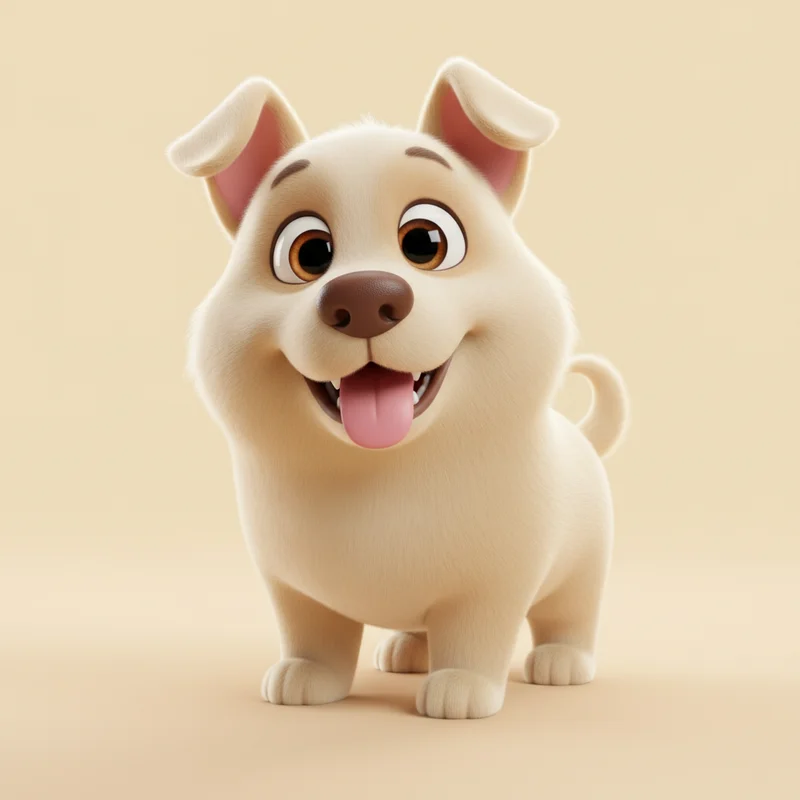
Dog

Dog

Loyal canine companion celebrated for unconditional love, tail wagging, and being humanity's best friend for millennia.

VS
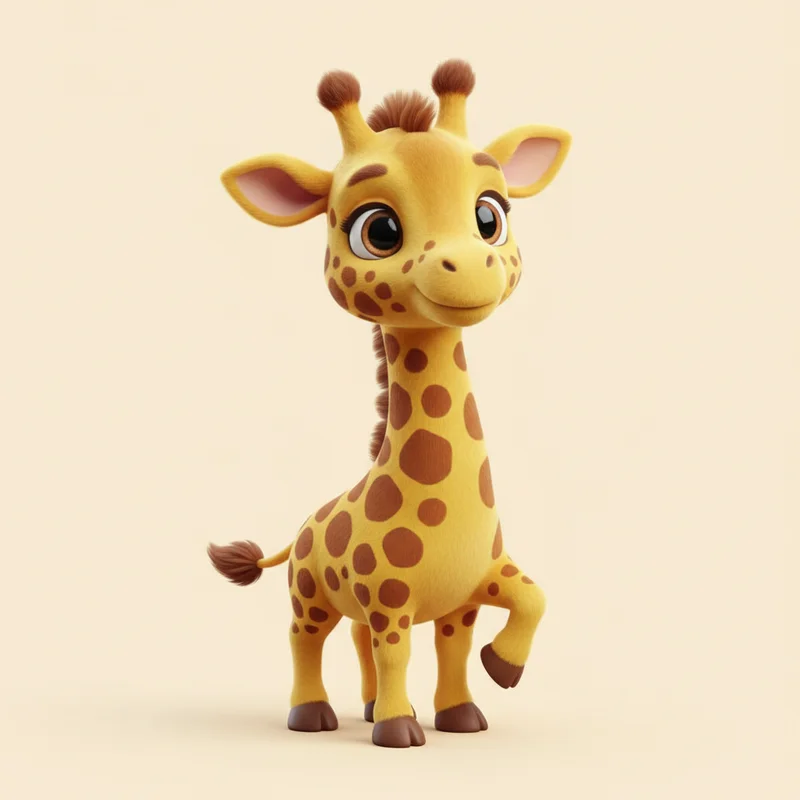
Giraffe

Giraffe

Tallest living terrestrial animal with 6-foot neck and tongue specifically evolved for acacia browsing.

Battle Analysis

Adaptability Dog Wins
70%
30%
Dog Giraffe

Dog

The dog's adaptability defies scientific comprehension. From the frozen tundra of Siberia to the sweltering apartments of Singapore, Canis lupus familiaris thrives in environments that would reduce other species to evolutionary footnotes. More remarkably, dogs have diversified into over 340 recognised breeds, ranging from the 1.5-kilogram Chihuahua to the 90-kilogram English Mastiff. This phenotypic plasticity represents the fastest documented morphological radiation in mammalian history. Whether serving as sled dogs in Alaska, truffle hunters in Italy, or emotional support animals in therapy clinics, dogs adapt their behaviour, diet, and even sleep patterns to match human expectations with uncanny precision.

Giraffe

The giraffe, by contrast, has committed entirely to one environmental niche. Its adaptations are extraordinary but inflexible. The cardiovascular system alone represents an engineering marvel: a heart weighing up to 11 kilograms generates blood pressure twice that of humans to force blood six feet vertically to the brain. Specialised valves prevent cerebral haemorrhage when the giraffe lowers its head. Yet these magnificent adaptations confine the species to African savannahs where acacia trees grow. A giraffe cannot live in a Norwegian winter, nor would it survive a week in the Amazon. Evolution gave it height; it took away options.

VERDICT

While the giraffe's specialised adaptations are genuinely awe-inspiring, the dog's ecological flexibility represents a superior evolutionary achievement. A species that can thrive from sea level to Himalayan monasteries, from Arctic conditions to desert climates, has fundamentally solved the adaptability problem. The giraffe remains a prisoner of its own magnificence.

Cultural impact Dog Wins
70%
30%
Dog Giraffe

Dog

The dog's cultural footprint spans every human civilisation. From the 14,000-year-old Bonn-Oberkassel dog burial to contemporary Instagram accounts with millions of followers, dogs have occupied humanity's consciousness longer than agriculture. They feature in every mythology: Anubis in Egypt, Argos in Greek literature, the Foo Dogs of China. The English language contains over 100 dog-related idioms. Dogs have travelled to space before humans, served in every major war, detected cancer in breath samples, and guided the blind through city streets. No other animal approaches this cultural ubiquity.

Giraffe

The giraffe's cultural presence, whilst significant, remains more distant. Ancient Romans called it camelopardalis, believing it a camel-leopard hybrid. Renaissance Europeans received giraffes as diplomatic gifts, causing public sensation. The giraffe has become an unofficial symbol of Africa, appearing on stamps, in children's books, and as zoo attractions worldwide. Sophie la Girafe, a French teething toy, has sold over 50 million units. Yet the giraffe remains fundamentally exotic, admired from afar rather than woven into daily human existence.

VERDICT

The dog has achieved something unprecedented: full integration into human culture across every continent, social class, and historical period. While giraffes inspire wonder, dogs inspire love, loyalty, and the entire pet industry worth over 200 billion dollars annually. Cultural impact favours the creature that lives beside us rather than the one we visit in zoos.

Conservation status Dog Wins
70%
30%
Dog Giraffe

Dog

With an estimated 900 million dogs worldwide, the domestic dog faces no conservation concerns whatsoever. Indeed, the species might be described as too successful, with feral and stray populations creating ecological problems in regions from Australia to urban India. Dogs benefit from humanity's protective instincts, elaborate veterinary medicine, and laws criminalising cruelty. The species will exist precisely as long as humanity does, making its survival virtually guaranteed short of civilisational collapse.

Giraffe

The giraffe's situation tells a grimmer tale. Listed as Vulnerable by the IUCN, giraffe populations have declined by approximately 40% over three decades. Habitat fragmentation, civil conflict, and poaching have reduced wild populations to fewer than 100,000 individuals across subspecies. Some subspecies, including the Nubian giraffe, number fewer than 3,000. Conservation programmes struggle against expanding human settlement. The giraffe, despite its magnificence, faces an uncertain future that depends entirely on human choices.

VERDICT

From a purely survival-of-the-fittest perspective, the dog has comprehensively won. Its alliance with humanity guarantees perpetual survival and population growth. The giraffe, despite being infinitely more photogenic, approaches each decade with diminishing numbers and shrinking habitat. Evolution rewards different strategies: the dog chose cooperation; the giraffe chose independence. Cooperation, it transpires, was the wiser investment.

Social intelligence Dog Wins
70%
30%
Dog Giraffe

Dog

Dogs possess what researchers term theory of mind for human behaviour. They follow human pointing gestures, interpret facial expressions, and even understand human attention states, distinguishing between humans who can see them and those who cannot. Studies at the Max Planck Institute revealed that dogs outperform chimpanzees, our closest relatives, in reading human social cues. More remarkably, dogs have evolved specific muscles around their eyes that wolves lack, enabling the characteristic puppy-dog expression that manipulates human emotional responses. This represents genuine co-evolution: dogs evolved expressly to communicate with another species.

Giraffe

Giraffe social intelligence operates on an entirely different plane. Recent research has revealed that giraffes maintain complex social networks with relationships lasting decades. Female giraffes preferentially associate with close relatives and show measurable grief behaviours when companions die. Their infrasonic communication, operating below human hearing thresholds, enables coordination across kilometres of savannah. However, a giraffe cannot be trained, will not fetch a ball, and remains fundamentally indifferent to human approval. Its intelligence, while real, evolved for giraffe purposes alone.

VERDICT

The dog's ability to form genuine interspecies relationships represents a cognitive achievement without parallel in the animal kingdom. While giraffe social intelligence serves giraffe society admirably, the dog has cracked the code of human psychology, achieving a symbiosis so complete that humans often prefer canine company to that of their own species.

Physical capabilities Giraffe Wins
30%
70%
Dog Giraffe

Dog

Dog physical capabilities vary so wildly that generalisation becomes nearly impossible. The Greyhound reaches 72 kilometres per hour, making it the second-fastest accelerating land animal after the cheetah. The Bloodhound possesses 300 million olfactory receptors, compared to humans' 6 million, enabling scent tracking over distances and timeframes that seem supernatural. Newfoundland dogs have webbed feet and can rescue drowning swimmers. Border Collies demonstrate spatial memory and problem-solving abilities that rival those of small children. However, no single dog possesses all these traits; specialisation has created excellence at the cost of uniformity.

Giraffe

The giraffe's physical specifications read like fantasy. At up to 5.5 metres tall, it is the planet's tallest living terrestrial animal. Its tongue, at 50 centimetres, is prehensile and melanin-darkened to prevent sunburn during the 12 hours daily spent feeding. A giraffe kick can decapitate a lion. The ossicones (horn-like protrusions) are used in ritualistic neck-fighting called necking, where bulls swing their heads like medieval flails. Most impressively, a giraffe can run at 56 kilometres per hour whilst looking absolutely unhurried, as though merely stretching its legs.

VERDICT

In raw physical terms, the giraffe operates at parameters that seem biologically impossible. No dog breed can achieve 5.5 metres of height, survive lion attacks through superior kicking power, or maintain consciousness whilst bending down from such altitudes. The giraffe wins this category not through versatility but through sheer magnificent improbability.

👑

The Winner Is

Dog

58 - 42

This comparative analysis reveals an uncomfortable truth about evolutionary success. The giraffe represents biological artistry: a creature so improbable, so magnificently specialised, that its existence seems to argue for a universe with aesthetic preferences. Yet this very magnificence has become a vulnerability. The dog, by contrast, pursued an entirely different strategy. By binding its fate to humanity, the dog surrendered independence for security, wildness for warmth, self-sufficiency for supper. The result is a species so thoroughly successful that its population approaches one billion. The final score of 58-42 reflects this fundamental asymmetry: the dog wins not through superiority but through strategy, not through magnificence but through adaptability. In the grand ledger of evolutionary accounting, the dog has made the better wager.

Dog
58%
Giraffe
42%

Share this battle

More Comparisons