
Topic Battle

Where Everything Fights Everything

Dog

Dog

Loyal canine companion celebrated for unconditional love, tail wagging, and being humanity's best friend for millennia.

VS
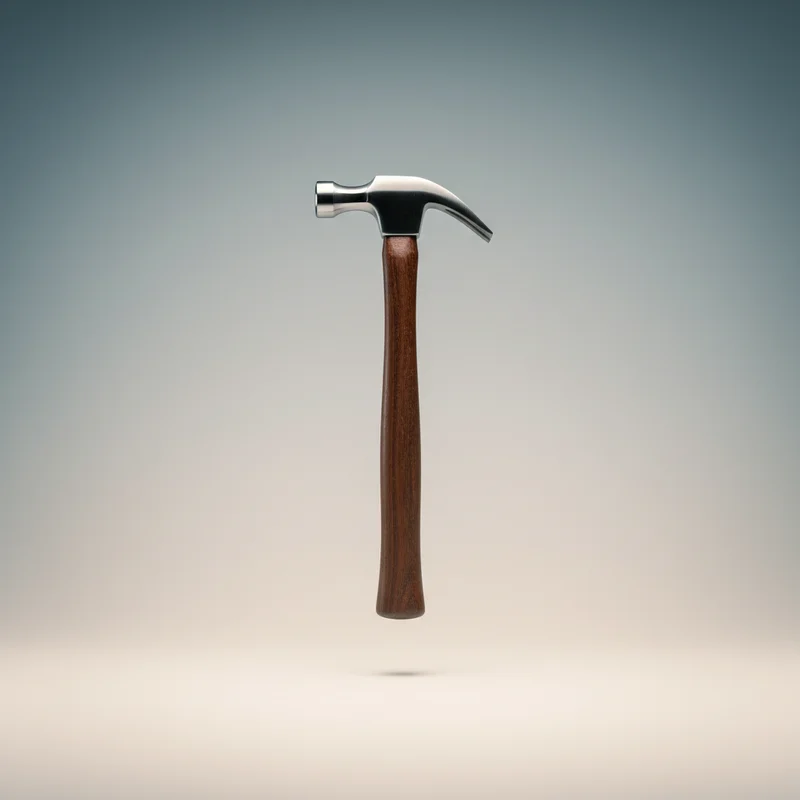
Hammer

Hammer

Striking tool making everything look like a nail.

Battle Analysis

Versatility dog Wins
70%
30%
Dog Hammer

Dog

The domestic dog demonstrates impressive adaptive capacity across contexts. Breeds have been developed for herding, hunting, guarding, detecting, guiding, and providing emotional support. A single dog may serve as security system, exercise partner, social facilitator, and therapy provider. Dogs have been trained to detect medical conditions including seizures, hypoglycaemia, and certain cancers with accuracy exceeding 90%. However, dogs cannot be repurposed between owners as readily as tools, and their versatility depends heavily upon training investment.

Hammer

The hammer's versatility, whilst appearing limited, reveals surprising depth upon examination. Beyond driving nails, the claw end extracts them. The flat surface serves demolition purposes. The handle provides leverage for prying. Emergency applications include breaking glass, self-defence, and percussive maintenance of malfunctioning electronics. Archaeologists note hammers served our ancestors for butchering, crafting, and construction simultaneously. Yet fundamentally, the hammer performs variations of a single action: applying force. Its versatility remains thematic rather than transformative.

VERDICT

Dogs adapt to radically different roles, whilst hammers perform sophisticated variations of hitting things.
Companionship value dog Wins
70%
30%
Dog Hammer

Dog

In the realm of companionship, the dog operates without serious competition. Research published in the Journal of Personality and Social Psychology documents that dog owners report 24% higher life satisfaction than non-owners. The dog greets returning household members with genuine enthusiasm, responds to emotional distress with proximity and physical comfort, and provides a consistent presence through life's uncertainties. The dog remembers birthdays, though admittedly by accident.

Hammer

The hammer offers a form of companionship best described as stoic and professional. It waits silently in the toolbox, emerges when summoned, performs its function with admirable efficiency, and returns to darkness without complaint. There is something reassuring about a well-balanced hammer's presence in the home. However, it has never welcomed anyone at the door, cannot sense when comfort is needed, and its emotional range extends from 'inert' to 'marginally less inert'. The hammer does not judge, though neither does it care.

VERDICT

The dog provides genuine emotional reciprocity, whilst the hammer's companionship remains philosophical at best.
Maintenance requirements hammer Wins
30%
70%
Dog Hammer

Dog

Canine stewardship demands substantial ongoing investment. Annual costs in the United Kingdom average £1,875, encompassing nutrition, veterinary care, grooming, and insurance. The dog requires feeding twice daily, regular exercise regardless of weather conditions, and periodic professional medical attention. Holiday arrangements necessitate kennelling or trusted caregivers. The dog produces waste requiring collection in public spaces, occasionally destroys furniture, and may develop expensive medical conditions. Ownership represents a 10-13 year commitment of considerable magnitude.

Hammer

The hammer's maintenance profile approaches theoretical zero. A quality claw hammer, properly stored, will outlast its owner. The only consumable is the occasional replacement handle, achievable for under £8. The hammer requires no feeding, no exercise, no veterinary intervention, and produces no waste whatsoever. It does not develop separation anxiety when left in the toolbox for months. Storage demands approximately 0.02 cubic metres. The hammer represents perhaps humanity's most efficient tool-to-maintenance ratio.

VERDICT

The hammer requires virtually no maintenance, whilst dogs demand substantial ongoing resources.
Longevity and reliability hammer Wins
30%
70%
Dog Hammer

Dog

The domestic canine presents a predictably finite service life. Average lifespans range from 10-13 years, with smaller breeds occasionally exceeding 15. During this period, reliability varies considerably. Puppies require substantial training investment before achieving functional status. Elderly dogs develop conditions affecting mobility, cognition, and continence. Health emergencies occur without warning. The dog is, fundamentally, a biological system subject to entropy, illness, and the eventual certainty of loss.

Hammer

Quality hammers demonstrate remarkable longevity. Steel heads resist corrosion for decades; modern fibreglass handles may outlast wooden alternatives by centuries under proper storage. Museum collections display functional hammers from the Bronze Age. The hammer does not age in any meaningful sense, does not develop chronic conditions, and cannot die. Its reliability approaches absolute: when swung correctly, the hammer performs its function with perfect consistency. This reliability, however, lacks the emotional weight of a relationship with a mortal companion.

VERDICT

The hammer offers effectively unlimited functional lifespan compared to the dog's biological constraints.
Problem solving capability hammer Wins
30%
70%
Dog Hammer

Dog

The domestic canine approaches problem-solving with what might charitably be described as enthusiastic imprecision. When presented with a stuck drawer, the dog offers moral support, persistent interest, and occasionally attempts to fit its nose into the gap. Guide dogs navigate complex urban environments with remarkable competence. Search and rescue dogs locate survivors beneath rubble with 96% accuracy rates. However, the dog cannot, despite considerable willingness, actually affix a loose shelf bracket.

Hammer

The hammer addresses problems through the elegant application of kinetic energy transfer. A standard 16-ounce claw hammer delivers approximately 750 foot-pounds of force per swing when wielded correctly. This resolves an impressive range of domestic challenges: loose nails, stuck components, and the occasional recalcitrant furniture assembly. The hammer's problem-solving repertoire, whilst narrow, demonstrates perfect execution within its domain. It does not improvise, yet rarely fails when properly applied.

VERDICT

The hammer provides definitive mechanical solutions, whilst the dog's assistance remains largely emotional.
👑

The Winner Is

Dog

57 - 43

The comparative analysis reveals two entities excelling in entirely non-overlapping domains. The hammer dominates practical metrics: maintenance, reliability, and mechanical problem-solving. These victories reflect its fundamental nature as an optimised tool designed for specific tasks. The dog's victories in companionship and versatility, however, address deeper human needs that no implement, however well-engineered, can satisfy.

The decisive factor emerges from a curious asymmetry: the hammer cannot replace the dog, but the dog cannot replace the hammer either. However, if forced to choose, humans consistently demonstrate preference for the canine. Archaeological evidence reveals dogs buried with ceremonial honours whilst hammers received mere storage. This cultural valuation proves instructive.

Dog
57%
Hammer
43%

Share this battle

More Comparisons