
Topic Battle

Where Everything Fights Everything

Dog

Dog

Loyal canine companion celebrated for unconditional love, tail wagging, and being humanity's best friend for millennia.

VS
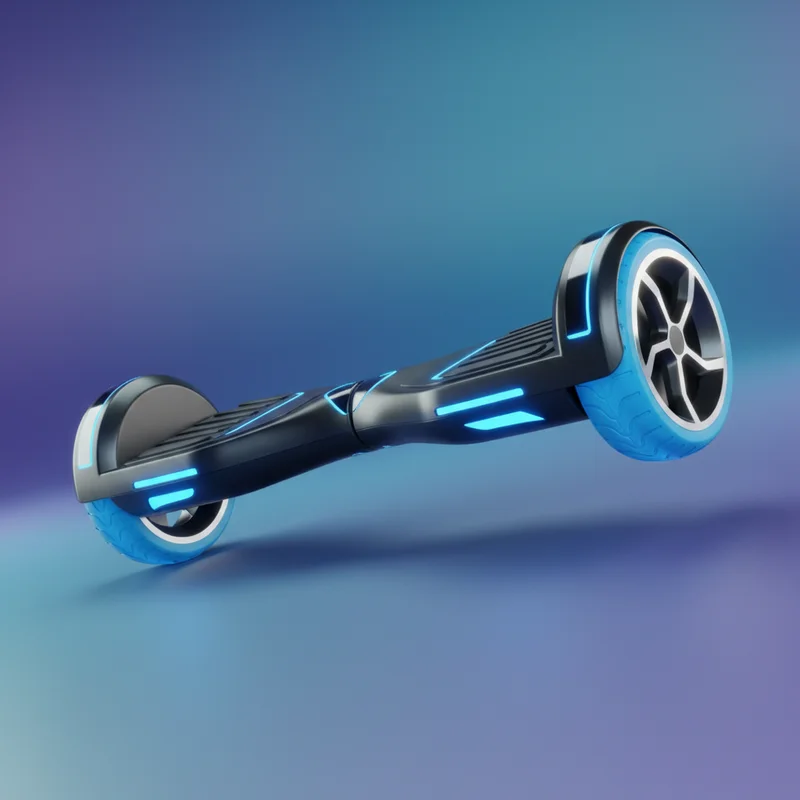
Hoverboard

Hoverboard

Self-balancing scooter that disappointed Back to the Future fans.

The Matchup

In the eternal human quest to get from point A to point B with minimal personal effort, two remarkably different solutions have emerged. The domestic dog, product of 15,000 years of selective breeding, has served as companion, guardian, and occasional transport assistant since the Palaeolithic era. The hoverboard, despite its misleading name suggesting actual hovering, arrived in 2015 and immediately began setting homes and shopping centres ablaze. Both promise to enhance human mobility. Neither, it must be noted, actually hovers.

The dog offers biological reliability, a self-repairing system powered by kibble and affection. The hoverboard offers technological convenience, a self-balancing platform powered by electricity and optimism. One has been depicted in cave paintings at Lascaux. The other has been depicted in YouTube compilation videos titled 'Hoverboard Fails 2015-2024'. This analysis examines which delivers superior value to the mobility-challenged human.

Battle Analysis

Terrain adaptability Dog Wins
70%
30%
Dog Hoverboard

Dog

Dogs demonstrate extraordinary terrain versatility. The same Labrador Retriever that trots across suburban pavement can navigate forest trails, sandy beaches, snow-covered paths, and rocky hillsides without modification or accessory purchases. Four-wheel drive, as it were, comes standard.

Certain breeds have been specifically optimised for challenging environments. Siberian Huskies operate comfortably at minus 50 degrees Celsius. Rhodesian Ridgebacks evolved to track lions across African savannah. The Newfoundland possesses webbed feet for aquatic operations. No terrain upgrade packages or seasonal tyre changes are required.

Hoverboard

The hoverboard's terrain capabilities are best described as profoundly limited. Standard models require smooth, flat, dry surfaces to function. Grass defeats them. Gravel terrifies them. A single pebble at the wrong angle has launched countless riders into unscheduled dismounts.

Off-road variants exist, featuring larger wheels and suspension systems, but these achieve 'off-road' status only in the most generous interpretation of the term. They can manage packed dirt paths. They cannot manage mud, sand, snow, or surfaces with gradient exceeding 15 degrees. Rain transforms them into expensive paperweights with litigation potential.

VERDICT

Dogs operate across every terrain type on Earth. Hoverboards operate across carefully maintained indoor flooring and pristine pavements.

Reliability and uptime Dog Wins
70%
30%
Dog Hoverboard

Dog

The domestic dog operates on remarkably resilient biological architecture. Barring illness or injury, a healthy dog maintains operational status for 10-13 years on average, with some breeds exceeding 15 years of continuous service. The system requires no firmware updates, experiences no software glitches, and has never spontaneously combusted during normal operation.

Dogs do experience downtime, typically requiring 12-14 hours of sleep daily, distributed across multiple napping sessions. However, they boot instantly from sleep mode when stimuli suggest walk opportunities, food availability, or the presence of squirrels. Their reliability has been field-tested across every climate zone on Earth.

Hoverboard

The hoverboard's reliability profile presents what engineers diplomatically term areas for improvement. Battery life ranges from 45 minutes to 3 hours depending on model, weight of operator, and terrain. Charging requires 2-4 hours, during which the unit provides precisely zero mobility assistance.

More concerning is the failure mode distribution. Between 2015 and 2017, the US Consumer Product Safety Commission documented 99 hoverboard fires and over 250,000 unit recalls. The devices have been banned from major airlines, numerous universities, and the London Underground. A mobility solution that cannot board public transport presents obvious limitations.

VERDICT

Dogs have operated successfully for 15 millennia without a single recall notice. Hoverboards achieved multiple recalls within their first 18 months of existence.

Total cost of ownership Hoverboard Wins
30%
70%
Dog Hoverboard

Dog

Dog ownership represents a significant financial commitment. The PDSA estimates annual UK dog ownership costs between $1,500 and $3,000, encompassing food, veterinary care, insurance, grooming, and the mysterious toys that vanish within days of purchase. Lifetime costs for medium-sized breeds range from $15,000 to $35,000.

However, this expenditure purchases more than mobility assistance. It purchases companionship, security, entertainment, and enforced daily exercise that may reduce healthcare costs elsewhere. The dog's value proposition extends far beyond transportation metrics.

Hoverboard

Quality hoverboards range from $200 to $600, with premium models reaching $1,500. The initial purchase is modest compared to canine acquisition. Operating costs are minimal: electricity consumption averages $0.03-0.05 per charge.

The hidden costs emerge in replacement frequency. Average hoverboard lifespan is 2-3 years before battery degradation, motor wear, or physical damage necessitates replacement. Safety recalls may render devices unusable. Repair services are limited. Over a decade, a hoverboard habit may cost $1,500-5,000, still less than dog ownership, but providing only transport, nothing more.

VERDICT

The hoverboard costs substantially less in monetary terms. Whether this represents better value depends entirely on what the purchaser values.

Learning curve and mastery Hoverboard Wins
30%
70%
Dog Hoverboard

Dog

Dogs arrive with pre-installed social intelligence but require training for optimal operation. Basic commands take 4-8 weeks to establish. Reliable off-lead recall may require months. Advanced skills like assistance dog tasks demand 18-24 months of professional training.

However, the training investment compounds. A well-trained dog improves continuously, learning household routines, recognising regular visitors, and adapting to owner preferences. The initial learning curve transitions into a partnership that deepens over years. At no point does the dog suddenly forget how to walk beside you.

Hoverboard

Hoverboard proficiency can be achieved in 30-60 minutes for most adults with functional balance systems. The self-balancing technology handles the difficult physics, leaving the operator to manage acceleration via weight shifts. YouTube tutorials abound. Success feels attainable.

The problem is the confidence gap between perceived and actual mastery. New riders frequently overestimate their abilities, leading to the enthusiastic overcommitment phase that has provided emergency departments with steady custom. Furthermore, hoverboard skills do not transfer. Mastering one model does not guarantee competence on another, and the device teaches nothing about terrain awareness or spatial judgement.

VERDICT

The hoverboard achieves functional competence faster. However, it offers no pathway to deeper mastery, whilst dog partnership rewards continued investment indefinitely.

Social and emotional benefits Dog Wins
70%
30%
Dog Hoverboard

Dog

Dogs function as autonomous social infrastructure. Research from the University of Western Australia demonstrates that dog owners have three times more conversations with neighbours than non-owners. Dog parks serve as community centres. Shared breed enthusiasm creates instant connection. The dog transforms its owner from isolated individual into community member.

Beyond social facilitation, dogs provide documented mental health benefits. Cortisol levels decrease during dog interaction. Oxytocin increases. The presence of a dog has been shown to reduce blood pressure, decrease anxiety symptoms, and provide non-judgemental companionship during difficult periods. Dogs notice when their humans are struggling and respond with proximity and attention.

Hoverboard

The hoverboard provides social benefits of a markedly different character. It attracts attention, certainly. Children point. Adults ask questions. For approximately 18 months following market introduction, hoverboard owners enjoyed celebrity status in public spaces.

However, this attention follows the trajectory of novelty rather than connection. Once the device becomes familiar, it becomes invisible. The hoverboard cannot detect human emotional states. It does not offer comfort during distress. It cannot form a bond. When its battery depletes, it offers precisely nothing until recharged. It is a tool, not a companion.

VERDICT

Dogs create lasting community connections and provide genuine emotional support. Hoverboards create temporary curiosity and offer the emotional range of a luggage trolley.

👑

The Winner Is

Dog

62 - 38

This analysis illuminates a fundamental category error in comparing biological companion to electronic conveyance. The hoverboard excels within its narrow specification: rapid learning curve, low operating costs, novelty appeal during its cultural moment. These are genuine advantages for those seeking simple A-to-B transport in optimal conditions.

Yet the dog operates across dimensions the hoverboard cannot access. Terrain adaptability that shames wheeled technology. Reliability measured in years, not charge cycles. Social and emotional benefits that no gadget can replicate. The 62-38 margin reflects this asymmetry: the hoverboard wins its categories cleanly, but the categories the dog wins matter more profoundly to human flourishing.

The hoverboard answers the question 'How do I travel this smooth surface quickly?' The dog answers the question 'How do I travel through life less alone?' These are not equivalent questions, and the second matters more.

Dog
62%
Hoverboard
38%

Share this battle

More Comparisons