
Topic Battle

Where Everything Fights Everything

Dog

Dog

Loyal canine companion celebrated for unconditional love, tail wagging, and being humanity's best friend for millennia.

VS
Hummingbird

Hummingbird

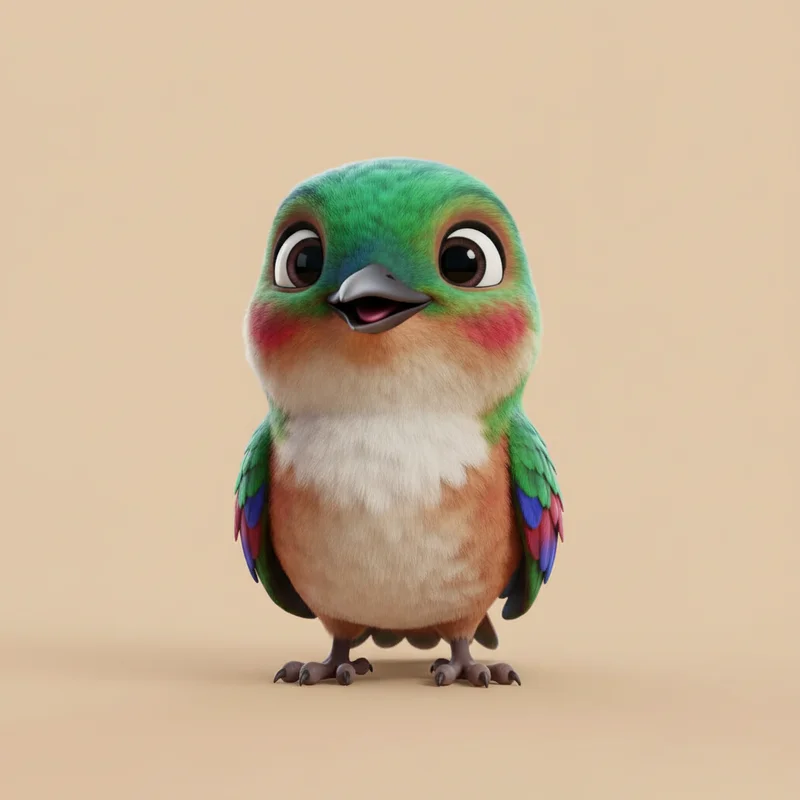
Tiny avian marvel capable of hovering flight and visiting hundreds of flowers daily for nectar.

The Matchup

The animal kingdom presents no starker contrast than that between Canis lupus familiaris and the family Trochilidae. The domestic dog, product of fifteen thousand years of selective breeding, has evolved to interpret human facial expressions and sleep on furniture. The hummingbird, refined over twenty-two million years of independent evolution, has developed the ability to fly backwards and enter a state of torpor that would kill most mammals within minutes.

Globally, 471 million dogs reside in human households, serving roles from companionship to security to emotional support certification fraud. Meanwhile, 366 species of hummingbird occupy the Americas exclusively, visiting feeders, pollinating flowers, and achieving metabolic feats that defy conventional biological understanding. One species has mastered the art of loyalty. The other has mastered the art of remaining airborne whilst consuming twice its body weight in nectar daily.

This analysis applies rigorous criteria to determine which creature represents the more impressive outcome of evolutionary processes, commercial viability, and the capacity to improve human existence through their presence.

Battle Analysis

Economic value Dog Wins
70%
30%
Dog Hummingbird

Dog

The global pet dog industry generates revenues exceeding $150 billion annually, encompassing food, veterinary care, accessories, insurance, and the inexplicable market for costumes that dogs neither request nor appreciate. Purebred puppies command prices from hundreds to tens of thousands of pounds, depending on breed desirability and the purchaser's susceptibility to marketing.

Beyond direct commerce, dogs provide quantifiable economic services. Security applications, assistance functions, and therapy certifications create employment for trainers, handlers, and administrative staff. The emotional support animal industry alone, regardless of one's views on its legitimacy, represents a multi-billion-pound economic sector.

Hummingbird

Hummingbirds participate in human economies primarily through passive observation infrastructure. The feeder market, whilst modest, generates consistent revenues. Ecotourism operations in Central and South America build entire business models around hummingbird viewing, with dedicated lodges charging premium rates for access to reliable sightings.

Their pollination services, however, represent incalculable economic value. Hummingbirds serve as primary pollinators for numerous commercial crops and ornamental species. The agricultural and horticultural industries would face significant disruption were hummingbird populations to decline substantially. This ecosystem service, whilst not directly monetised, underpins billions in economic activity.

VERDICT

Direct economic impact favours dogs by several orders of magnitude. Hummingbirds' ecosystem services, whilst valuable, remain diffuse and unquantified in traditional economic accounting. Dogs generate measurable revenue at every stage of their existence.

Sustainability Hummingbird Wins
30%
70%
Dog Hummingbird

Dog

The environmental footprint of dog ownership presents uncomfortable calculations. A medium-sized dog's annual carbon footprint approximates 770 kilograms of CO2, comparable to a return flight from London to Barcelona. This impact derives primarily from meat-based commercial diets, as dogs require protein-rich nutrition that current agricultural systems deliver through environmentally intensive livestock production.

Dogs also generate waste requiring disposal, consume manufactured products with associated production impacts, and in some regions contribute to wildlife predation that disrupts local ecosystems. Their sustainability credentials depend heavily on ownership practices and diet composition.

Hummingbird

Hummingbirds represent a model of energetic efficiency despite their extreme metabolic rates. They consume nectar and small insects, resources that regenerate naturally without human agricultural intervention. Their pollination activities contribute positively to ecosystem function, supporting plant reproduction cycles that sequester carbon and maintain biodiversity.

Wild hummingbirds leave no waste requiring management, require no manufactured products, and exist within ecological relationships that predate human civilisation by millions of years. Their environmental impact, exclusive of feeder sugar production, approaches net positive through ecosystem services provided.

VERDICT

The hummingbird exists within natural systems. The dog exists despite natural systems, requiring resource inputs that strain planetary boundaries. From a sustainability perspective, the wild bird outperforms the domesticated mammal comprehensively.

Speed and agility Hummingbird Wins
30%
70%
Dog Hummingbird

Dog

The domestic dog demonstrates considerable variation in locomotive capability across its 340 recognised breeds. The Greyhound achieves speeds of 72 kilometres per hour, making it the second-fastest land animal capable of being legally owned without a permit in most jurisdictions. The Basset Hound, by contrast, achieves speeds best described as eventual.

Canine agility extends beyond raw velocity. Dogs navigate complex terrain, change direction whilst maintaining momentum, and can sustain pursuit for distances that would exhaust most prey species. Their stamina derives from an evolutionary heritage as persistence hunters, creatures designed to follow quarry until it collapses from exhaustion rather than capture it through superior speed.

Hummingbird

The hummingbird operates in a realm of aerodynamic capability that other birds cannot enter. Wing beats exceeding 80 per second generate lift through a figure-eight pattern that allows sustained hovering, backward flight, and instantaneous directional changes that would induce unconsciousness in a human pilot. The Anna's Hummingbird executes courtship dives reaching 385 body lengths per second, a relative velocity that makes it the fastest animal on Earth when scaled to size.

This flight capability comes at extraordinary metabolic cost. The hummingbird's heart rate during flight reaches 1,260 beats per minute, a pace that would cause immediate cardiac failure in any mammal. Their wing muscles constitute 25-30 percent of total body weight, a proportion unmatched in the animal kingdom.

VERDICT

Raw speed favours the Greyhound. But the hummingbird's aerial manoeuvrability exists in a category where dogs cannot compete. A dog cannot hover. A dog cannot fly backwards. A dog cannot execute a nine-gravity dive to impress a potential mate. The hummingbird achieves locomotion that appears to violate physical law.

Companionship quality Dog Wins
70%
30%
Dog Hummingbird

Dog

Dogs have evolved specifically to bond with humans. Research demonstrates that mutual gaze between dogs and humans triggers oxytocin release in both species, the same hormone responsible for maternal-infant bonding. This chemical mechanism creates what scientists describe as a co-evolved attachment system unmatched by any other interspecies relationship.

A dog learns its owner's schedule, anticipates their arrivals, and demonstrates observable distress at prolonged separations. They read human emotional states with documented accuracy exceeding 75 percent and modify their behaviour in response. When you are sad, a dog positions itself nearby. When you are happy, a dog shares that enthusiasm. This emotional attunement represents fifteen millennia of selective pressure for human compatibility.

Hummingbird

Hummingbirds do not form bonds with humans. They form geographical associations with reliable nectar sources. A hummingbird that visits your garden feeder does so because you have placed sugar water in a convenient location, not because it values your company or recognises your individual existence. Replace yourself with a cardboard cutout, and the hummingbird's behaviour will not change.

What hummingbirds offer is spectacle rather than relationship. Their iridescent plumage, impossible hovering, and fearless proximity provide aesthetic pleasure that requires no emotional investment from either party. For individuals who prefer wildlife that does not demand walks or attention, this emotional neutrality constitutes an advantage.

VERDICT

The dog's capacity for genuine emotional connection represents a categorically different phenomenon than the hummingbird's transactional feeder visits. One relationship is mutual. The other is tolerated extraction.

Durability and lifespan Dog Wins
70%
30%
Dog Hummingbird

Dog

Canine longevity follows an inverse relationship with body mass that researchers describe as perversely unfair. Small breeds such as the Chihuahua regularly achieve 15-20 years, whilst Great Danes consider their eighth birthday a notable accomplishment. The median lifespan across all breeds settles at approximately 10-13 years, a duration sufficient for deep emotional bonding yet brief enough to guarantee eventual heartbreak.

Dogs demonstrate remarkable physical resilience. They survive falls, recover from surgeries, and adapt to disability with an absence of self-pity that puts human patients to shame. Their healing capacity, whilst not matching reptilian regeneration, exceeds that of most mammals their size.

Hummingbird

The hummingbird's lifespan represents an actuarial anomaly. Operating at metabolic rates that should theoretically accelerate cellular degradation, these birds nonetheless achieve lifespans of 3-12 years depending on species. The Rufous Hummingbird has been documented surviving 8 years and 11 months, a remarkable duration for an organism whose heart beats 20 million times annually.

Their durability during daily operations, however, leaves much to be desired. A hummingbird must feed every 10-15 minutes during waking hours to avoid metabolic collapse. Missing a single day's feeding typically proves fatal. They are, in engineering terms, high-performance vehicles with no fuel reserve.

VERDICT

The dog's combination of absolute longevity and operational resilience surpasses the hummingbird's impressive metabolic endurance. A dog can miss a meal without dying. This represents a fundamental advantage in durability assessment.

👑

The Winner Is

Dog

55 - 45

This analysis reveals two creatures that have achieved excellence through entirely different evolutionary strategies. The hummingbird represents aerodynamic perfection, a biological machine optimised for specific functions that it performs with breathtaking precision. The dog represents social adaptation, a species that traded physical specialisation for the ability to integrate into human society.

The 55-45 victory awarded to the dog reflects not biological superiority but relevance to human existence. The hummingbird wins on physical capability and environmental sustainability. The dog wins on economic impact, companionship, and the practical measure of durability that matters most: surviving a missed meal. Both victories are legitimate within their respective domains.

For pure biological achievement, the hummingbird stands unmatched. For practical contribution to human life, the dog has spent fifteen thousand years optimising for exactly that purpose. The margin is narrow because both creatures excel; they simply excel at fundamentally different things.

Dog
55%
Hummingbird
45%

Share this battle

More Comparisons