
Topic Battle

Where Everything Fights Everything

Dog

Dog

Loyal canine companion celebrated for unconditional love, tail wagging, and being humanity's best friend for millennia.

VS
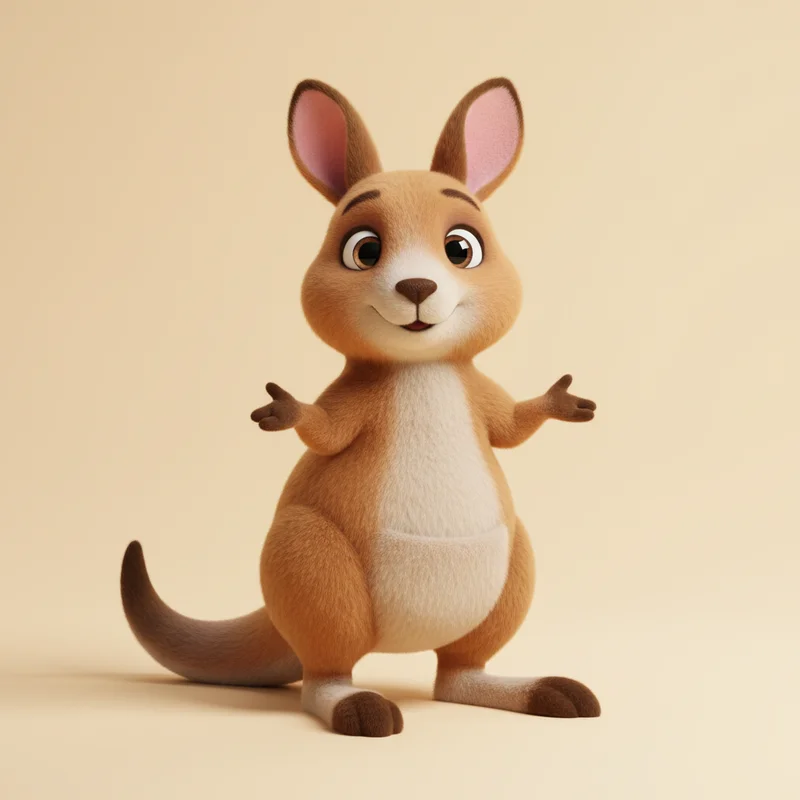
Kangaroo

Kangaroo

Iconic Australian hopping marsupial with powerful legs and built-in baby-carrying pouch.

Battle Analysis

Ecological resilience Kangaroo Wins
30%
70%
Dog Kangaroo

Dog

The domestic dog exists in a state of profound ecological dependency. Without human support, most breeds would perish within weeks. Those that survive as feral animals do so by scavenging human waste or, in rare cases, reverting to pack hunting behaviours. They have traded ecological independence for guaranteed meals and central heating.

Climate change, food system disruption, or civilizational collapse would render the domestic dog critically vulnerable. The species has bet everything on humanity's continued success, a wager that may prove unwise depending on subsequent centuries.

Kangaroo

The kangaroo has survived 20 million years of planetary upheaval, including ice ages, continental drift, and the arrival of humans bearing spears. Its population currently numbers approximately 50 million individuals, a figure that fluctuates with rainfall but demonstrates robust resilience to environmental variability.

The species requires only grass, water, and space, resources that exist in abundance across the Australian continent. Kangaroos have outlasted the megafauna that once shared their habitat, the indigenous hunting cultures that pursued them, and the pastoral agriculture that displaced their grazing lands. They show every indication of continuing to hop across Australia long after whatever concerns us today have become geological footnotes.

VERDICT

Twenty million years of evolutionary success outweighs fifteen thousand years of dependent domestication.
Locomotion efficiency Kangaroo Wins
30%
70%
Dog Kangaroo

Dog

The domestic dog achieves locomotion through a quadrupedal gait that varies according to speed requirements. Walking, trotting, and galloping each represent distinct mechanical patterns, with the gallop permitting speeds up to 72 kilometres per hour in the case of the Greyhound, the canine world's acknowledged speed champion.

However, this impressive velocity comes at significant metabolic cost. Dogs pant extensively during exertion, losing water and requiring frequent rest. Their running efficiency, whilst adequate for pursuit predation, represents a rather conventional approach to terrestrial movement. Four legs touching ground in predictable sequence. Functional, certainly. Revolutionary, hardly.

Kangaroo

The kangaroo has solved the problem of movement in a manner that defies engineering intuition. At low speeds, its pentapedal locomotion, using tail and forelimbs whilst swinging the hindlegs forward, appears comically inefficient. Yet at higher velocities, the animal's elastic tendon system transforms it into a biomechanical marvel.

Research published in Nature demonstrates that hopping becomes more efficient as speed increases, a property unique among terrestrial mammals. The tendons store and return energy at 93% efficiency, permitting sustained travel at 25 kilometres per hour whilst consuming no more oxygen than standing still. A kangaroo can cover 9 metres in a single bound, a figure that renders the dog's dignified trot somewhat pedestrian by comparison.

VERDICT

The kangaroo's hopping efficiency at speed represents a biomechanical innovation that four-legged locomotion cannot match.
Human bonding capacity Dog Wins
70%
30%
Dog Kangaroo

Dog

The dog has spent 15,000 years evolving in tandem with human civilisation, developing an unprecedented capacity for interspecies bonding. Research at Azabu University in Japan revealed that mutual gazing between dogs and their owners triggers oxytocin release in both species, the same hormone responsible for parent-infant bonding. No other animal has hacked human neurochemistry with such precision.

Dogs can read human facial expressions with accuracy exceeding 75%, interpret pointing gestures that confound even chimpanzees, and distinguish between happy and angry human faces. They have been documented waiting at graves, travelling hundreds of miles to reunite with owners, and performing acts of loyalty that inspire both scientific papers and feature films. The bond is not merely affection; it is co-evolution made manifest.

Kangaroo

Kangaroos regard humans with what wildlife biologists diplomatically term cautious tolerance. Whilst they can become habituated to human presence, particularly around tourist facilities, they do not seek human companionship in the manner of domesticated animals.

Attempts to domesticate kangaroos have met with limited success. They do not form the attachment bonds that characterise dog-human relationships, they cannot be trained to perform tasks, and their powerful hindlegs represent a significant safety hazard when startled. A kangaroo raised from infancy may accept human contact but will never gaze adoringly at its caretaker whilst seeking approval. It remains, fundamentally, a wild animal tolerating proximity rather than seeking connection.

VERDICT

The dog's neurochemically verified bond with humans represents an evolutionary achievement the wild kangaroo has never attempted.
Cognitive sophistication Dog Wins
70%
30%
Dog Kangaroo

Dog

Dogs demonstrate exceptional social intelligence, particularly in domains relevant to human interaction. They can learn over 1,000 words when properly trained, understand abstract concepts like 'bigger' and 'smaller', and engage in deceptive behaviour suggesting theory of mind. Border Collies have been documented learning new object names after a single exposure, a capability termed fast mapping previously thought unique to human children.

More remarkably, dogs appear to understand human communicative intent. They follow not merely the direction of a pointed finger but the intention behind the gesture, inferring what humans want them to find. This social cognition exceeds that of great apes in human-relevant contexts, a testament to co-evolutionary pressure.

Kangaroo

Kangaroo cognition remains less extensively studied, though emerging research suggests capabilities beyond previous assumptions. A 2020 study demonstrated that kangaroos intentionally communicate with humans through directed gazing, looking between an unsolvable problem and a nearby human in apparent request for assistance.

However, kangaroo intelligence evolved for different challenges: recognising predators, navigating vast territories, and the complex social calculations of mob hierarchy. They have not developed the human-oriented cognitive tools that dogs possess, because they had no evolutionary pressure to do so. Their minds are optimised for being kangaroos, a task at which they excel.

VERDICT

The dog's human-oriented social cognition represents a specialised intelligence that kangaroo research cannot yet match.
Self defence capabilities Kangaroo Wins
30%
70%
Dog Kangaroo

Dog

The domestic dog retains the predatory heritage of its wolf ancestors, equipped with 42 teeth including formidable canines capable of generating bite forces up to 556 Newtons in larger breeds. A threatened dog employs a graduated defence protocol: warning growls, snapping, and finally sustained attack if provoked.

However, millennia of selective breeding have significantly reduced aggressive capabilities in most breeds. The modern Labrador, whilst theoretically descended from wolves, presents approximately the same threat level as an animated footstool. Even breeds selected for protection work require extensive training to actualise their defensive potential. The instinct has been domesticated into dormancy.

Kangaroo

The male red kangaroo stands at 2 metres tall and weighs up to 90 kilograms of muscle evolved specifically for combat. Males compete for mating rights through boxing matches that showcase grappling, scratching, and the devastating disembowelling kick, delivered from hindlegs capable of generating forces exceeding 850 Newtons.

When threatened, a kangaroo will retreat to water if available, using its superior swimming ability to drown pursuing predators by holding them underwater. On land, it employs its tail as a tripod from which to launch kicks that have hospitalised numerous overconfident humans. Wildlife experts classify the kangaroo as an animal that should not under any circumstances be challenged to physical confrontation.

VERDICT

The kangaroo's combat capabilities remain fully operational, whilst most dogs have had theirs selectively bred into obsolescence.
👑

The Winner Is

Dog

52 - 48

Our analysis concludes with a result as close as any in the comparative sciences: the dog emerges victorious with a score of 52 to the kangaroo's 48, a margin that reflects the profound value of 15,000 years of co-evolutionary investment against 20 million years of independent excellence.

The kangaroo's victories are substantial and should not be understated. Its locomotion efficiency defies conventional biomechanics. Its defensive capabilities remain fully operational. Its ecological resilience suggests it will continue bouncing across Australia long after our current concerns have become prehistory. These are genuine achievements, earned through patient evolution.

Yet the dog's triumphs occur in domains that matter most to the species conducting this assessment: humans. The capacity to bond across species boundaries, to read human intention, to become not merely tolerated but beloved, these represent evolutionary innovations of a different kind. The dog did not merely survive alongside humanity; it wove itself into our neurochemistry, our homes, and our hearts.

The margin is narrow because both creatures represent remarkable success stories. The kangaroo succeeded by being perfectly itself for 20 million years. The dog succeeded by becoming something new: a creature whose very identity is bound up with another species. In the final accounting, that relationship, however dependent, proves marginally more compelling than magnificent independence.

Dog
52%
Kangaroo
48%

Share this battle

More Comparisons