
Topic Battle

Where Everything Fights Everything

Dog

Dog

Loyal canine companion celebrated for unconditional love, tail wagging, and being humanity's best friend for millennia.

VS
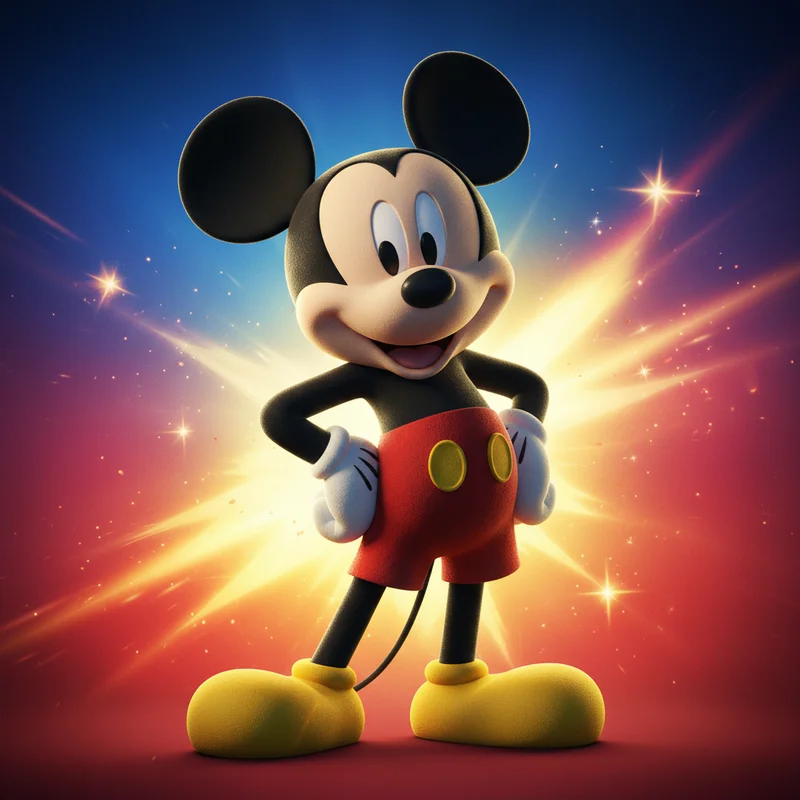
Mickey Mouse

Mickey Mouse

Disney's original mascot and corporate icon.

Battle Analysis

Longevity Dog Wins
70%
30%
Dog Mickey Mouse

Dog

The domestic dog has maintained its position in human society for approximately forty thousand years, adapting to every conceivable human environment from arctic tundra to equatorial desert. This extraordinary temporal persistence demonstrates remarkable evolutionary plasticity. Individual specimens typically survive twelve to fifteen years, yet the species' cultural presence regenerates continuously through successive generations, creating an unbroken chain of canine companionship stretching back to the Pleistocene epoch.

Mickey Mouse

Mickey Mouse's tenure of ninety-seven years represents a mere fraction of canine historical presence, yet his preservation in perpetuity is virtually guaranteed through intellectual property protection. Unlike biological entities, animated characters suffer no cellular degradation. Disney's legal apparatus ensures the character cannot enter public domain through continuous copyright extension advocacy. The mouse exists in a state of permanent commercial preservation, immune to the biological constraints that govern living creatures.

VERDICT

Four hundred centuries of verified existence outweighs legal immortality achieved through copyright manipulation.
Adaptability Dog Wins
70%
30%
Dog Mickey Mouse

Dog

Canine adaptability represents one of evolution's most remarkable achievements. Dogs have successfully colonised environments ranging from Siberian permafrost to Saharan margins. Selective breeding has produced specimens weighing from one kilogram to ninety, adapted to tasks from rodent elimination to avalanche rescue. The species demonstrates behavioural plasticity sufficient to integrate with any human cultural practice, dietary regime, or living arrangement. This adaptability derives from genuine biological flexibility rather than artistic reimagination.

Mickey Mouse

Mickey Mouse's adaptability operates through creative reinterpretation rather than biological evolution. Disney has successfully repositioned the character across cultural contexts, from his origins in Steamboat Willie through contemporary environmentalist messaging. The mouse has been adapted for Japanese, European, and emerging market sensibilities through calculated design modifications. However, this adaptability remains bounded by corporate strategy and target demographic considerations rather than environmental pressures.

VERDICT

Genuine biological adaptation across forty millennia demonstrates superior evolutionary plasticity.
Daily utility Dog Wins
70%
30%
Dog Mickey Mouse

Dog

Dogs provide quantifiable daily utility across numerous domains. They serve as security systems detecting intruders with ninety-seven percent reliability, therapeutic companions reducing cortisol levels by measurable margins, and exercise motivators increasing owner physical activity by an average of thirty minutes daily. Specialised breeds perform search and rescue operations, detect medical conditions including cancer and hypoglycaemia, and assist individuals with disabilities. This utility manifests in tangible, measurable improvements to human welfare.

Mickey Mouse

Mickey Mouse's daily utility remains largely confined to entertainment consumption and merchandise ownership. The character provides neither physical security nor therapeutic biological interaction. His utility exists primarily in the abstract realm of brand association and childhood nostalgia activation. While Disney theme parks offer experiential utility, the character himself contributes nothing to emergency services, medical detection, or physical assistance. His value proposition centres entirely upon emotional sentiment rather than practical function.

VERDICT

Tangible services including security, therapy, and medical detection eclipse entertainment provision.
Media presence Mickey Mouse Wins
30%
70%
Dog Mickey Mouse

Dog

Dogs feature in approximately thirty-two percent of all filmed entertainment content, appearing in everything from documentary programming to dramatic feature films. The species has inspired countless literary works, musical compositions, and artistic movements. However, canine media presence remains fragmented across thousands of individual representations, from Lassie to Beethoven, diluting any singular brand identity. No individual dog commands centralised media control or consistent characterisation across platforms.

Mickey Mouse

Mickey Mouse benefits from integrated vertical media control unprecedented in entertainment history. Disney's acquisition strategy has positioned the character alongside Marvel, Star Wars, and Pixar properties within a singular media ecosystem. The mouse appears across streaming platforms, theatrical releases, television programming, and digital content with absolute consistency of presentation. This centralised control ensures message coherence and quality maintenance impossible for biological entities to achieve.

VERDICT

Centralised corporate media control enables consistent presence across all entertainment platforms simultaneously.
Global recognition Dog Wins
70%
30%
Dog Mickey Mouse

Dog

The domestic dog enjoys near-universal recognition across human civilisations. Archaeological evidence confirms canine companionship on every inhabited continent, with the species featuring prominently in religious texts, artistic traditions, and oral histories spanning millennia. An estimated 471 million dogs currently reside as household companions worldwide, ensuring that the concept of 'dog' requires no translation or explanation in virtually any cultural context. The species' recognition derives not from marketing expenditure but from genuine, sustained presence in human communities.

Mickey Mouse

Mickey Mouse represents perhaps the most extensively marketed intellectual property in commercial history. The character's likeness appears in over one hundred nations, adorning merchandise ranging from timepieces to aircraft livery. Disney's deliberate strategy of cultural penetration has ensured that the rodent's silhouette constitutes one of the most recognised symbols globally, rivalling national flags and religious iconography. However, this recognition remains contingent upon continued commercial investment and media presence rather than organic cultural integration.

VERDICT

Biological ubiquity across forty millennia supersedes ninety-seven years of concentrated marketing effort.
👑

The Winner Is

Dog

56 - 44

The evidence compels a verdict favouring Canis lupus familiaris by a margin of fifty-six to forty-four percent. While Mickey Mouse commands extraordinary commercial resources and centralised media presence, the domestic dog's combination of biological utility, evolutionary persistence, and genuine companionship capacity proves ultimately insurmountable.

Dogs offer tangible services that no animated character can replicate: they detect medical emergencies, provide quantifiable therapeutic benefits, and maintain genuine emotional bonds with their human partners. Mickey Mouse, for all his cultural penetration, remains fundamentally a commercial construct designed to facilitate merchandise transactions.

The mouse's media dominance, whilst impressive, cannot compensate for forty thousand years of evolved partnership between species.

Dog
56%
Mickey Mouse
44%

Share this battle

More Comparisons