
Topic Battle

Where Everything Fights Everything

Dog

Dog

Loyal canine companion celebrated for unconditional love, tail wagging, and being humanity's best friend for millennia.

VS
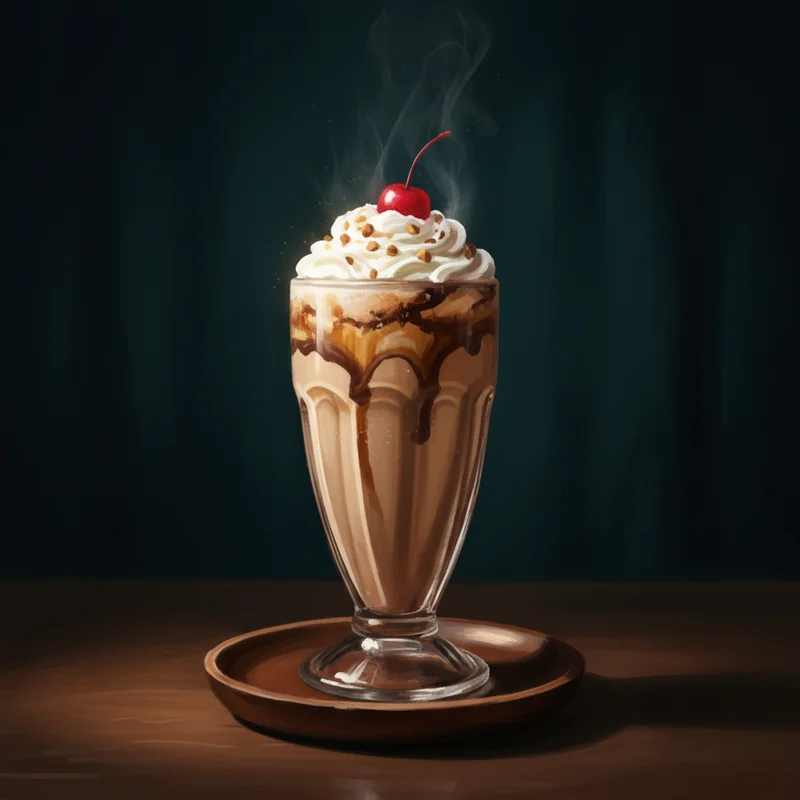
Milkshake

Milkshake

Blended ice cream drink that brings people to yards.

The Matchup

In the pantheon of things that bring humans joy, few comparisons seem more absurd than this one. Yet absurdity has never stopped science. 471 million dogs currently share human homes worldwide, whilst the global milkshake market generates $4.2 billion annually. Both command fierce loyalty. Both have inspired songs. Both have been blamed for ruining perfectly good furniture.

The dog represents Canis lupus familiaris, a species that has co-evolved with humans for fifteen millennia, developing an almost supernatural ability to read human emotion. The milkshake represents sweetened dairy suspension, a concoction that emerged from American diners in the 1930s and proceeded to colonise global consciousness through sheer deliciousness. One wags its tail when you return from work. The other simply waits, cold and patient, making no demands beyond eventual consumption.

Battle Analysis

Cultural impact Dog Wins
70%
30%
Dog Milkshake

Dog

The dog has embedded itself in human culture with an intensity that suggests co-evolution of consciousness. Dogs appear in the earliest human art, in religious texts across civilisations, in literature from Homer to Herriot. The phrase man's best friend has achieved cliche status precisely because it captures something fundamental about the human-canine bond. Dogs have been deified, domesticated, and documented in every medium humans have invented.

Modern culture maintains this obsession. Dog content dominates social media. Dog breeds develop cult followings. The Westminster Dog Show draws millions of viewers to watch animals walk in circles. This is not rational. This is cultural infrastructure built over millennia.

Milkshake

The milkshake occupies a more modest cultural position, though not an insignificant one. Kelis declared that her milkshake brought all the boys to the yard, a claim that launched a thousand confused interpretations and cemented the beverage's position in 21st-century pop consciousness. Diners and milkshakes became inseparable in American nostalgia, representing a simpler era when teenagers shared straws and nobody counted calories.

Yet the milkshake's cultural footprint remains primarily American, primarily nostalgic, and primarily confined to dessert discussions. It has not achieved the universal significance that dogs command across every human society.

VERDICT

Dogs have shaped human civilisation. Milkshakes have shaped American afternoon snacking habits. The scales are not balanced.

Health implications Dog Wins
70%
30%
Dog Milkshake

Dog

Dog ownership correlates with remarkably positive health outcomes. Research published in Circulation found that dog owners experience a 24% reduction in all-cause mortality compared to non-owners. The mechanisms are multiple: enforced physical activity through walks, stress reduction through companionship, cardiovascular benefits from the mere act of stroking fur. The American Heart Association has issued formal statements recognising pet ownership as potentially beneficial for cardiovascular health.

Dogs also appear to support psychological wellbeing, with documented benefits for anxiety, depression, and loneliness. They are, in effect, furry preventive medicine.

Milkshake

The typical milkshake contains between 500 and 1,200 calories, along with quantities of saturated fat and sugar that nutritionists describe using words like concerning and excessive. Regular consumption correlates with weight gain, increased diabetes risk, and the general constellation of metabolic disorders that characterise modern dietary excess.

The milkshake's defenders note that occasional consumption poses minimal risk and provides genuine psychological benefits. However, the scientific consensus remains clear: the milkshake is not a health food. It is a treat that must remain occasional to remain safe.

VERDICT

Dogs extend life. Milkshakes, consumed in excess, may shorten it. This represents a fundamental divergence in long-term utility.

Loyalty and devotion Dog Wins
70%
30%
Dog Milkshake

Dog

The domestic dog has evolved a capacity for loyalty that borders on the pathologically excessive. Consider Hachiko, the Akita who waited at Shibuya Station for nine years after his owner's death, returning daily to the spot where they had once reunited. Consider the countless documented cases of dogs refusing to leave the graves of deceased owners. This is not rational behaviour. This is devotion that transcends utility calculations entirely.

Research indicates that dogs experience separation anxiety at rates suggesting they genuinely cannot conceive of life without their humans. They are not performing loyalty. They are constitutionally incapable of disloyalty.

Milkshake

The milkshake makes no promises it cannot keep. It offers precisely what it is: temporary pleasure, honestly delivered. There is no loyalty because there is no ongoing relationship. The milkshake does not remember you. It does not recognise you when you return to the establishment. It provides identical service to you and to your worst enemy.

Some might argue this represents a form of integrity. The milkshake is consistently transactional, never pretending to emotional depth it cannot provide. This is not disloyalty. This is simply accurate expectation management.

VERDICT

The dog offers loyalty that has reduced grown adults to tears. The milkshake offers consistent indifference dressed as reliability. These are not equivalent.

Maintenance and cost Milkshake Wins
30%
70%
Dog Milkshake

Dog

Dog ownership constitutes a significant ongoing financial commitment. The American Kennel Club estimates lifetime costs between $15,000 and $45,000, encompassing food, veterinary care, grooming, training, and the inevitable destruction of at least one piece of furniture you genuinely valued. Time costs compound financial ones: daily walks, feeding schedules, the social obligations that emerge when your dog attempts to befriend every stranger in the park.

Dogs cannot be paused. They cannot be stored. They represent a commitment that, once made, remains operative regardless of changed circumstances, financial difficulties, or the discovery that you are actually more of a cat person.

Milkshake

A milkshake costs approximately $5-8 and requires no maintenance whatsoever. It does not need walking. It does not require annual veterinary checkups. It will never develop separation anxiety when you travel for work. The total commitment extends from purchase to consumption, a period measured in minutes rather than years.

The only ongoing cost is to the waistline, and even this can be managed through the radical strategy of occasional rather than constant consumption. No such moderation strategy exists for dogs. You cannot own a dog occasionally.

VERDICT

The mathematics are unambiguous. Milkshakes offer pleasure-per-pound ratios that dogs cannot approach. Dogs offer returns that cannot be measured in currency.

Immediate gratification Milkshake Wins
30%
70%
Dog Milkshake

Dog

The dog offers gratification of a fundamentally different temporal structure. When you first meet a dog, there is potential. Sniffing occurs. Tentative tail movements suggest possibilities. But the full reward of canine companionship unfolds over weeks, months, years. The dog that initially seemed merely friendly transforms into the creature that knows your footsteps from fifty metres away, that positions itself by the door precisely three minutes before you arrive home.

This delayed gratification structure means that dogs fail catastrophically at impulse satisfaction. You cannot decide you want a dog at 3 PM and have a satisfying dog experience by 4 PM. The paperwork alone would take longer.

Milkshake

The milkshake represents gratification engineering at its finest. From the moment of first contact, the experience delivers. Cold sweetness hits the tongue. Sugar triggers dopamine release. Fat provides mouthfeel that evolution programmed humans to interpret as calorically significant and therefore desirable. The entire reward cycle completes within minutes.

A study from the Oregon Research Institute found that milkshakes activate the same neural reward pathways as addictive substances, producing measurable pleasure responses in brain imaging studies. This is not metaphorical satisfaction. This is neurochemical gratification, precisely delivered.

VERDICT

For immediate pleasure delivery, the milkshake operates like a precision dopamine instrument. Dogs require patience that impulse cannot provide.

👑

The Winner Is

Dog

62 - 38

This analysis reveals a competition between different categories of satisfaction entirely. The milkshake excels at immediate, bounded pleasure, a treat that asks nothing and delivers sweetness without complication. The dog provides ongoing, complex relationship, a commitment that demands everything and rewards with emotional depth that sugar cannot synthesise.

The 62-38 margin reflects the asymmetry between transactional pleasure and relational fulfilment. Milkshakes win convincingly on practicality: lower cost, simpler maintenance, faster gratification. Dogs claim overwhelming victory in the categories that matter most for long-term human flourishing: loyalty, health, and cultural significance.

The milkshake is a perfect moment. The dog is a perfect companion. When we measure by moments, the milkshake competes. When we measure by life satisfaction, the comparison becomes almost unfair.

Dog
62%
Milkshake
38%

Share this battle

More Comparisons