Topic Battle

Where Everything Fights Everything

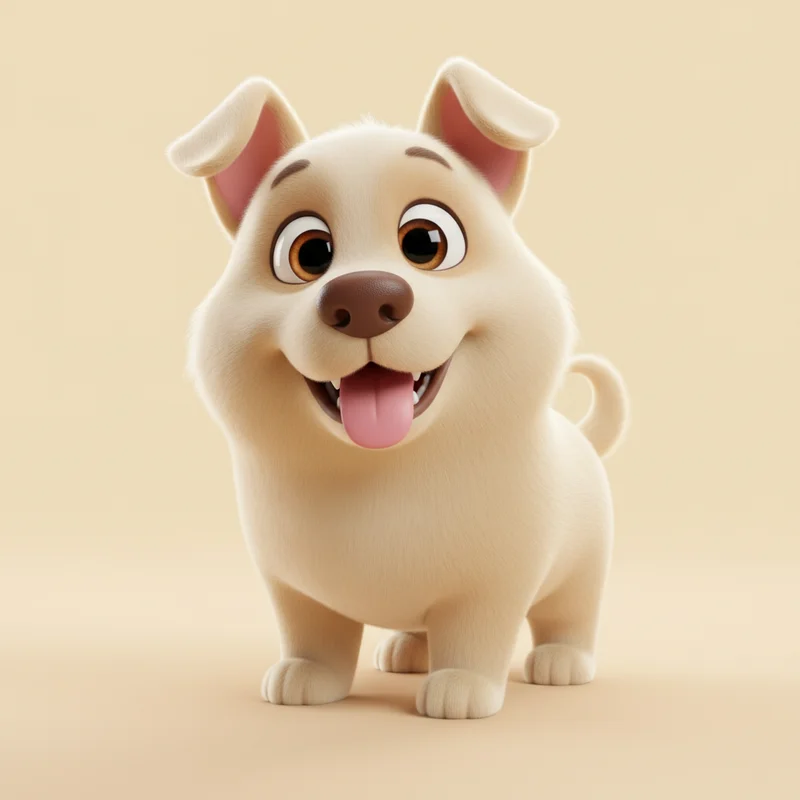
Dog

Dog

Loyal canine companion celebrated for unconditional love, tail wagging, and being humanity's best friend for millennia.

VS
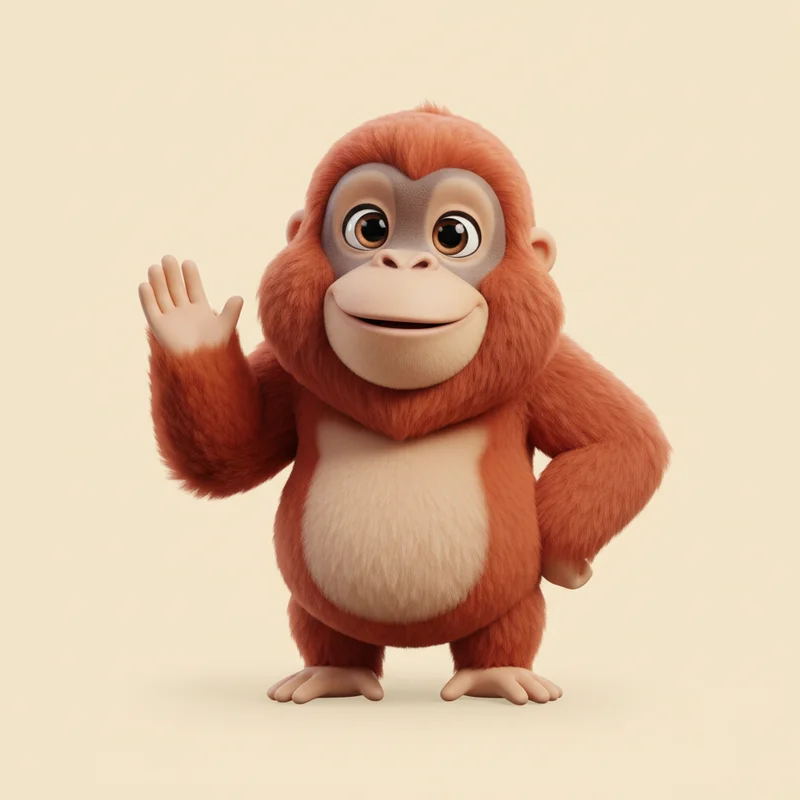
Orangutan

Orangutan

Red-haired great ape of Southeast Asian rainforests, demonstrating remarkable problem-solving abilities.

The Matchup

In the vast catalogue of species that have captured human fascination, few occupy more privileged positions than the domestic dog and the orangutan. 471 million dogs currently share human households worldwide, whilst approximately 104,000 orangutans remain in the wild, making this comparison somewhat asymmetric in terms of accessibility. One species completed the remarkable evolutionary pivot of convincing humans to provide free food and shelter. The other developed the cognitive capacity to use tools, plan for the future, and occasionally outwit zookeepers.

Dogs represent Canis lupus familiaris, a subspecies that diverged from wolves approximately 15,000 years ago through a process of mutual benefit that researchers term co-evolution. Orangutans, belonging to the genus Pongo, share 97 percent of their DNA with humans and possess cognitive abilities that continue to astonish primatologists. Both species demonstrate emotional complexity, problem-solving capacity, and the ability to form meaningful bonds with humans. Yet they approach these achievements through radically different evolutionary strategies.

Battle Analysis

Domestic suitability Dog Wins
70%
30%
Dog Orangutan

Dog

The domestic dog represents 15,000 years of selective pressure for household compatibility. Dogs have evolved reduced fear responses to novel stimuli, extended juvenile behavioural patterns into adulthood, and digestive systems capable of processing the starch-heavy human diet. They recognise human authority structures, respond to training, and demonstrate an apparent willingness to follow rules they did not create.

A well-socialised dog can integrate into human domestic routines with minimal friction. They adapt to apartment living despite ancestral ranges spanning hundreds of square kilometres. They tolerate clothing, leads, and veterinary examinations. They have, in short, surrendered wildness in exchange for guaranteed meals.

Orangutan

The orangutan's domestic potential presents what ethologists term significant challenges. Adult males can weigh 130 kilograms and possess the strength to tear car doors from their hinges. They require vertical space measured in tens of metres and mental stimulation that exceeds anything a typical home can provide. Housing an orangutan legally requires permits available only to accredited zoological institutions in most jurisdictions.

More fundamentally, orangutans retain what researchers describe as complete autonomy of will. They cooperate with humans when cooperation serves their interests and refuse when it does not. Unlike dogs, they cannot be reliably trained through positive reinforcement alone. They make independent assessments of human requests and decline those they find unreasonable.

VERDICT

Dogs have been optimised for cohabitation through millennia of selection. Orangutans remain fundamentally wild animals that merely tolerate human proximity.

Emotional intelligence Dog Wins
70%
30%
Dog Orangutan

Dog

The domestic dog has evolved what researchers at Eotvos Lorand University term hypersocial cognition, a specialised capacity for reading human emotional states that exceeds even that of our closest primate relatives. Dogs can identify human emotions from facial expressions alone with accuracy rates approaching 80 percent. They demonstrate the oxytocin gaze loop, a neurochemical bonding mechanism previously thought unique to human parent-infant relationships.

Dogs respond to human distress with proximity-seeking behaviour, a response so reliable that it forms the basis of therapeutic intervention programmes worldwide. They can detect changes in human body chemistry associated with emotional states, including the cortisol spikes that accompany anxiety and the hormonal shifts that precede epileptic seizures.

Orangutan

Orangutans possess emotional intelligence of a different order entirely. Studies at the Max Planck Institute demonstrate that orangutans can attribute mental states to others, a capacity termed theory of mind that was long considered uniquely human. They remember past interactions and adjust their behaviour accordingly, holding what appear to be grudges for years at a time. Mother orangutans teach their offspring for up to eight years, the longest dependency period of any land mammal after humans.

However, orangutan emotional expression remains opaque to most human observers. Their facial musculature permits subtle signalling that requires extensive training to interpret. Where dogs broadcast their emotional states with tail wags and ear positions, orangutans communicate through microexpressions that untrained humans routinely miss entirely.

VERDICT

Both species demonstrate sophisticated emotional processing, but dogs have calibrated their expression specifically for human comprehension. This represents evolutionary optimisation for the current assessment criteria.

Problem solving ability Orangutan Wins
30%
70%
Dog Orangutan

Dog

Dogs excel at what cognitive scientists term social problem solving. When confronted with an unsolvable task, dogs will seek human assistance within seconds, demonstrating an understanding that humans possess knowledge and capabilities they lack. This strategy, whilst pragmatic, has led to what researchers describe as learned helplessness in problem-solving contexts. Modern breeds can solve puzzles calibrated for canine cognition, but rarely demonstrate the innovative approaches seen in their wolf ancestors.

Border collies, considered the most cognitively capable breed, can learn over 1,000 words and demonstrate inferential reasoning about object categories. Yet even these exceptional individuals require structured training rather than spontaneous discovery.

Orangutan

Orangutans represent solitary genius in the animal kingdom. Unlike their more social great ape relatives, orangutans must solve problems independently, a selective pressure that has produced remarkable cognitive adaptations. Wild orangutans have been documented crafting tools from up to five separate components, planning journeys a day in advance, and transmitting cultural knowledge across generations.

In comparative cognition laboratories, orangutans consistently outperform other great apes in tasks requiring patience and forward planning. One individual at Leipzig Zoo learned to pick locks, requiring staff to redesign enclosure security entirely. They understand cause and effect at a level that permits genuine innovation rather than mere learned response.

VERDICT

The orangutan's capacity for independent problem solving represents cognitive achievement of the highest order. Dogs solve problems by recruiting humans; orangutans solve problems by thinking.

Communication complexity Orangutan Wins
30%
70%
Dog Orangutan

Dog

Canine communication operates through multiple simultaneous channels. Dogs employ vocalisations ranging from barks through whines to growls, each with contextual variations that researchers have catalogued into dozens of distinct meanings. They supplement these with body language signals including tail position, ear orientation, and facial expression, creating what linguists term a multimodal communication system.

Dogs have also developed remarkable capacity for understanding human communication. They follow pointing gestures more accurately than chimpanzees, interpret human gaze direction, and respond to hundreds of verbal commands. This comprehension is largely unidirectional, however; humans struggle to produce signals dogs consistently interpret.

Orangutan

Orangutans possess what researchers at the University of St Andrews term proto-linguistic capacity. Wild populations demonstrate cultural variations in calls that function analogously to regional dialects in human language. They produce over 64 distinct vocalisations and combine these with gestures in ways that suggest genuine compositional communication.

In captive settings, orangutans have learned to use symbolic systems including sign language and lexigram boards. The orangutan Chantek learned over 150 signs and demonstrated the capacity to combine them into novel expressions. Unlike trained dogs, who respond to commands, trained orangutans appear to understand that symbols represent concepts, a cognitive leap of profound significance.

VERDICT

Dogs communicate effectively with humans. Orangutans demonstrate the capacity for genuine symbolic thought, placing them in a different cognitive category entirely.

Conservation practicality Dog Wins
70%
30%
Dog Orangutan

Dog

Dogs face no conservation concerns whatsoever. Indeed, the 900 million dogs estimated to exist globally represent a conservation success of such magnitude that it has become a conservation problem in certain contexts. Feral dog populations threaten endangered species across multiple continents. The carbon footprint of the global dog population exceeds that of many small nations. Dogs are, from an ecological perspective, superabundant.

Supporting dogs requires no special intervention. Market forces ensure continuous supply. The challenge with dogs is not preservation but management of excess.

Orangutan

The orangutan faces extinction within human lifetime horizons. Habitat destruction for palm oil plantations has reduced their range by over 80 percent in the past century. Current population trajectories suggest complete wild extinction within 50 years without significant intervention. Supporting orangutans means supporting rainforest preservation, sustainable agriculture, and international conservation frameworks.

Each interaction with orangutan conservation contributes to preserving one of humanity's closest living relatives and the ecosystems they inhabit. The stakes, both ecological and philosophical, could scarcely be higher.

VERDICT

Dogs require no conservation effort. Orangutans require massive ongoing intervention merely to survive. For practical companionship purposes, the dog's abundance constitutes an advantage.

👑

The Winner Is

Dog

55 - 45

This analysis reveals a competition between two remarkable species that have captured human imagination through entirely different evolutionary strategies. The dog chose partnership, gradually reshaping itself across fifteen millennia to become humanity's most reliable non-human companion. The orangutan chose independence, developing cognitive capacities that rival our own whilst remaining resolutely wild.

Dogs win decisively on emotional accessibility, domestic suitability, and practical availability, the criteria most relevant to actual human-animal companionship. Orangutans claim victory in problem-solving ability and communication complexity, domains where their cognitive sophistication genuinely exceeds canine capacity. The 55-45 margin reflects practical reality: for the purpose of sharing human life, dogs have optimised themselves more completely.

Yet this victory rings somewhat hollow. Dogs are easier to live with precisely because they demand less and offer a more asymmetric relationship. Orangutans challenge us with their intelligence, their independence, and their precarious survival. The easier companion is not necessarily the more profound one.

Dog
55%
Orangutan
45%

Share this battle

More Comparisons