
Topic Battle

Where Everything Fights Everything

Dog

Dog

Loyal canine companion celebrated for unconditional love, tail wagging, and being humanity's best friend for millennia.

VS
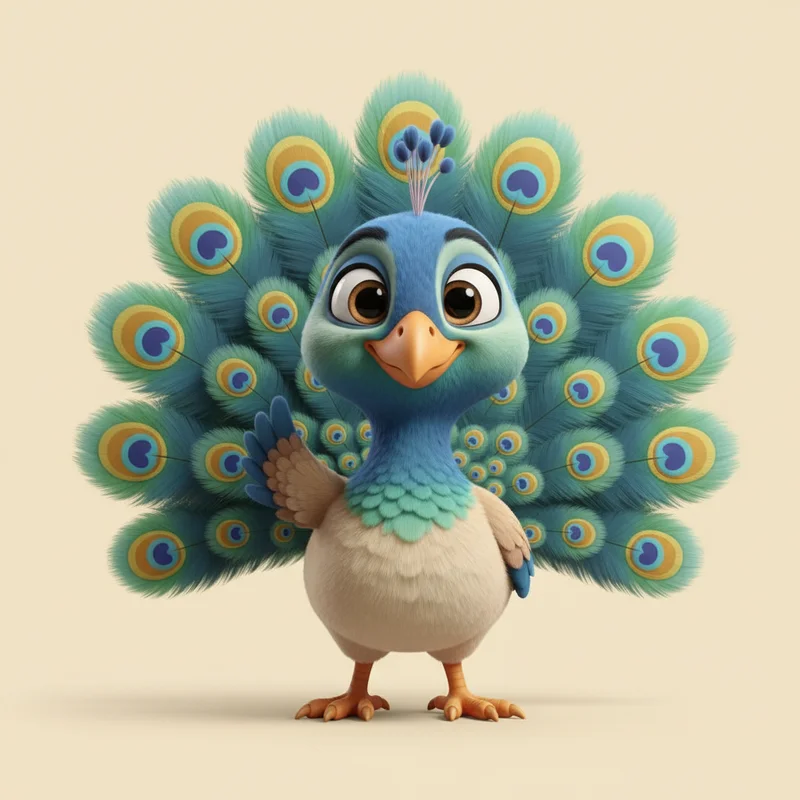
Peacock

Peacock

Spectacularly plumed bird whose elaborate tail displays define the concept of showing off.

The Matchup

In the grand taxonomy of creatures that have inserted themselves into human affairs, few represent more divergent evolutionary strategies than the domestic dog and the Indian peafowl. One has engineered its entire genome around being useful. The other has engineered its entire genome around being beautiful. Both approaches have proven remarkably successful, though they have led to radically different relationships with Homo sapiens.

The domestic dog, Canis lupus familiaris, represents perhaps the most successful instance of interspecies collaboration in natural history. Over 15,000 years of coevolution, dogs have developed the capacity to read human facial expressions, respond to pointing gestures, and experience genuine attachment that triggers oxytocin release in both parties. The peacock, Pavo cristatus, has invested those same millennia developing tail feathers containing up to 200 individual plumes, each featuring an iridescent eye-spot designed to overwhelm the visual processing systems of potential mates.

One animal spent evolution learning to love. The other spent evolution learning to show off. Today, we examine which strategy delivers superior outcomes across criteria essential to human satisfaction.

Battle Analysis

Loyalty Dog Wins
70%
30%
Dog Peacock

Dog

The domestic dog has made loyalty its defining characteristic to a degree that borders on the pathological. Documented cases include dogs maintaining vigil at their deceased owners' graves for over a decade, refusing to relocate despite offers of comfortable accommodation elsewhere. The neurological basis for this devotion has been mapped: dogs experience measurable increases in oxytocin when reunited with their owners, even after separations as brief as twenty minutes.

This loyalty extends to protective behaviour. Dogs routinely place themselves between perceived threats and their human companions, a response that emerges without training and appears to be hardwired into the domesticated canine genome. They do not assess whether the threat is genuine before acting. A dog will bark at a postal worker with the same commitment it would show to an actual intruder.

Peacock

The peacock's relationship with commitment can be characterised as strategically flexible. Male peacocks maintain harems of three to five peahens during breeding season, a number that fluctuates based entirely on the quality of that year's tail display. Should a superior male arrive with more impressive plumage, the existing social structure dissolves with remarkable efficiency. Loyalty, in peacock society, is a concept that exists only until something shinier appears.

Peacocks bonded with human keepers do demonstrate recognition and approach behaviours. However, scientific observation confirms that this response correlates primarily with food availability rather than emotional attachment. A peacock will greet its keeper with apparent enthusiasm. It will greet any human carrying grain with identical enthusiasm. The peacock's affection, such as it exists, is fundamentally transactional.

VERDICT

Dogs offer loyalty as a constitutional characteristic. Peacocks offer loyalty as a negotiating position. The difference is not marginal; it is categorical. A dog's devotion survives poverty, illness, and the complete absence of treats. A peacock's devotion survives precisely until the food bowl empties.

Visual impact Peacock Wins
30%
70%
Dog Peacock

Dog

Dogs present a case study in functional aesthetics. Selective breeding has produced extraordinary variety: from the Chihuahua at 1.8 kilograms to the English Mastiff exceeding 100 kilograms, from the aerodynamic Greyhound to the deliberately compressed Bulldog. This diversity serves purposes beyond appearance. Each morphological variation addresses specific human requirements, whether herding, guarding, retrieving, or providing a warm lap presence during evening television.

Yet purely as visual spectacle, most dogs operate within quotidian parameters. A Golden Retriever is pleasant to observe. It is not, by any objective measure, breathtaking. Dogs have optimised for function, personality, and companionship. Visual magnificence was never the primary selection pressure.

Peacock

The peacock exists as evolution's answer to a question no one asked: what if a bird dedicated its entire existence to being looked at? The train, as the tail display is technically termed, spans up to 1.5 metres and contains over 200 feathers, each featuring an eye-spot that exploits principles of structural colouration to produce iridescence visible from hundreds of metres. When erected in full display, the peacock presents approximately 12 square metres of visual information, a surface area exceeding most advertising hoardings.

The colours themselves result from microscopic structures that interfere with light wavelengths rather than pigmentation. This means peacock feathers maintain their brilliance indefinitely, unlike painted surfaces that fade. A peacock in full display is not merely attractive; it is a demonstration of physical principles typically reserved for optics laboratories.

VERDICT

This category presents no genuine contest. Dogs are charming. Peacocks are transcendent. A dog enters a room and receives attention. A peacock enters a room and reorients the entire room's purpose toward observation of the peacock. Visual impact was the peacock's sole evolutionary objective, and it has achieved that objective with thoroughness that borders on the excessive.

Practical utility Dog Wins
70%
30%
Dog Peacock

Dog

The list of tasks dogs perform reliably is extensive enough to constitute its own catalogue. Herding livestock: Border Collies perform this task with accuracy exceeding most humans. Detection: trained dogs identify contraband, explosives, cancer cells, and drops in human blood sugar with documented sensitivity. Search and rescue: dogs locate survivors in rubble through olfactory capabilities that mechanical sensors cannot replicate. Assistance: guide dogs, hearing dogs, and psychiatric service dogs integrate into their handlers' lives as functional extensions of human capability.

Beyond professional applications, dogs provide security through deterrent barking, exercise motivation through mandatory walks, and social facilitation through their status as conversation initiators. The domestic dog is, in economic terms, a remarkably versatile capital asset.

Peacock

The peacock's practical contributions to human enterprise are, to employ charitable language, specialised. They consume insects, particularly ticks and small snakes, providing modest pest control in environments where such services are required. In their native India, they serve a traditional role as sentinels, their distinctive calls alerting households to approaching visitors or predators. This application has limited relevance in contemporary urban settings.

Primarily, peacocks contribute decorative presence. Stately homes, botanical gardens, and luxury resorts maintain peacocks as living ornaments, their sole function being to exist photogenically while visitors take photographs. This represents legitimate value in the hospitality sector, though it constitutes a rather narrow portfolio of services.

VERDICT

Dogs can be trained to detect cancer. Peacocks can be trained to walk around looking magnificent. Both represent learned behaviours, but their applications differ in significance. A dog's versatility encompasses life-saving interventions. A peacock's versatility encompasses standing in different locations whilst remaining visually impressive.

Social facilitation Dog Wins
70%
30%
Dog Peacock

Dog

Dogs function as social catalysts of remarkable potency. Research published in the Journal of Social Psychology demonstrates that individuals walking dogs receive three times more social approaches from strangers than those walking alone. Dog parks serve as community centres where otherwise unconnected humans discover common ground. The dog provides both reason to approach and topic of conversation, eliminating barriers that might otherwise prevent human interaction.

Furthermore, dogs integrate into human social rituals with practiced ease. They can accompany their owners to pubs, cafes, offices, and public spaces where their presence enhances rather than disrupts social activity. They have learned, through generations of selection, to fit in.

Peacock

The peacock approaches social facilitation from an alternative philosophical position: rather than integrating into existing human social structures, it creates entirely new structures centred upon itself. A peacock in full display arrests conversation, disrupts planned activities, and redirects collective attention toward observation and photography. This represents social impact of considerable magnitude, though whether it constitutes facilitation remains debatable.

Peacocks cannot accompany their owners to social venues. They cannot be walked through parks without creating spectacle that may or may not be desired. Their social contribution is necessarily event-based rather than continuous, spectacular rather than subtle.

VERDICT

Dogs enable social connection as background participants. Peacocks demand social attention as foreground spectacles. The former builds human relationships. The latter temporarily replaces them with collective peacock observation.

Maintenance requirements Dog Wins
70%
30%
Dog Peacock

Dog

Dog ownership entails what economists term non-trivial ongoing commitments. Veterinary care, nutrition formulated for size and activity level, grooming appropriate to coat type, daily exercise regardless of weather conditions or personal inclination. Training requires time investment measured in months. Accommodation must account for the dog's presence, eliminating certain housing options and complicating travel arrangements. The PDSA estimates annual dog care costs in the United Kingdom between GBP 1,600 and 2,500, exclusive of unexpected veterinary emergencies.

The time component proves equally substantial. Dogs require attention, engagement, and physical activity that cannot be indefinitely postponed. A neglected dog develops behavioural problems that compound the original neglect into escalating difficulty.

Peacock

Peacocks present maintenance challenges of a different character. Their dietary requirements are modest: 80% plant matter supplemented with insects they will locate independently. Veterinary needs are minimal for healthy birds. However, peacocks require substantial outdoor space, ideally 80 square metres per bird, and will not thrive in confined environments regardless of how luxuriously appointed. Their calls, while culturally significant in India, have been measured at 100 decibels and will generate neighbour complaints in any residential setting.

Additionally, male peacocks shed their trains annually, depositing feathers across considerable areas. They are territorial, will attack reflective surfaces they interpret as rival males, and cannot be house-trained by any methodology currently available to animal behaviourists.

VERDICT

Dogs demand significant resources but reward investment with trainability and adaptability. Peacocks demand significant space whilst offering no behavioural flexibility whatsoever. A dog can learn to coexist with urban constraints. A peacock simply screams at dawn and accepts no compromise.

👑

The Winner Is

Dog

62 - 38

This analysis reveals a fundamental divergence in evolutionary strategy. The dog invested fifteen millennia becoming indispensable: learning to read human emotion, providing services no machine can replicate, and developing the capacity for genuine attachment that benefits both species. The peacock invested the same period becoming unforgettable: developing visual display systems that trigger involuntary attention capture in any observer within line of sight.

Both strategies have succeeded. Dogs number 900 million worldwide, integrated into human society at every level from working animal to family member. Peacocks occupy a more rarefied position, their numbers smaller but their presence remarkable wherever they appear. The scoring of 62-38 reflects the practical reality that dogs deliver more categories of value more consistently to more humans in more circumstances.

Yet this verdict should not be interpreted as dismissal of the peacock's achievements. Evolution poses no single correct answer. The dog answered with utility and devotion. The peacock answered with beauty and spectacle. Both answers have proven sustainable across millennia. The dog simply proves more useful as a daily companion, whilst the peacock proves more useful as a living work of art.

Dog
62%
Peacock
38%

Share this battle

More Comparisons