
Topic Battle

Where Everything Fights Everything

Dog

Dog

Loyal canine companion celebrated for unconditional love, tail wagging, and being humanity's best friend for millennia.

VS
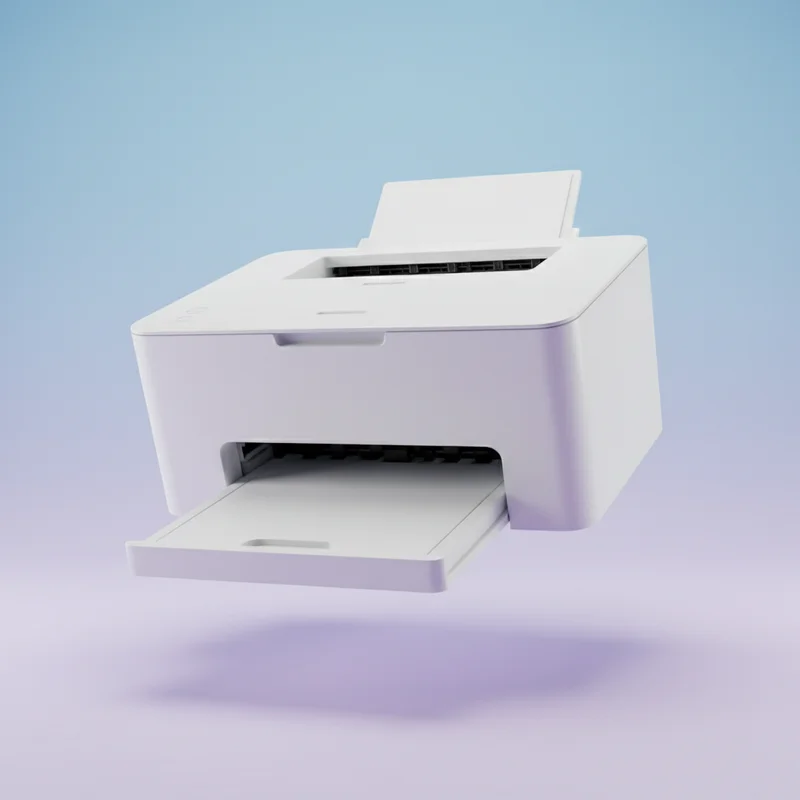
Printer

Printer

Device that knows exactly when you need it most to malfunction.

The Matchup

In homes and offices across the civilised world, two entities compete for human attention with equal persistence and vastly different success rates. 471 million domestic dogs share human dwellings globally, whilst an estimated 350 million printers occupy desks, shelves, and increasingly, landfills. Both demand regular maintenance. Both produce unexpected sounds at inopportune moments. Both have been known to make grown adults question their fundamental life choices.

The domestic dog, Canis lupus familiaris, represents 15,000 years of evolutionary refinement into a companion species capable of detecting human emotion, performing complex tasks, and destroying furniture with remarkable efficiency. The printer, meanwhile, represents six decades of engineering advancement that has somehow failed to produce a device capable of consistently transferring ink to paper without displaying cryptic error messages. One operates on unconditional love. The other operates on what can only be described as malevolent indifference.

Battle Analysis

Cost of ownership Dog Wins
70%
30%
Dog Printer

Dog

The financial commitment of dog ownership spans a spectrum from manageable to astronomical. The RSPCA estimates annual costs between $1,500 and $4,500 for food, veterinary care, insurance, grooming, and the replacement of items destroyed during what experts term exploration and play behaviour. Larger breeds command premium expenditure, whilst emergency veterinary procedures can introduce costs comparable to minor surgical procedures on humans.

However, these costs translate into tangible returns. A dog provides companionship valued by insurance actuaries at significant monetary equivalents in terms of health outcomes and reduced isolation.

Printer

The printer industry operates on what economists describe as the razor and blades model, though a more accurate analogy might be the hostage situation model. Printers retail for implausibly low prices, occasionally less than the cost of replacement ink cartridges. This apparent generosity conceals a long-term extraction strategy of remarkable sophistication.

Premium branded ink costs more per millilitre than vintage champagne, a comparison that has been verified by consumer mathematics enthusiasts worldwide. Third-party alternatives exist but are frequently rejected by firmware updates designed to identify and refuse unauthorised consumables. The average household printer generates lifetime consumable costs five to ten times its purchase price.

VERDICT

Dogs require significant investment but provide proportional return. Printers require ongoing financial tribute in exchange for intermittent functionality.

Communication clarity Dog Wins
70%
30%
Dog Printer

Dog

Dogs communicate through an extensive repertoire of signals that humans can learn to interpret with reasonable accuracy. A wagging tail indicates enthusiasm. Ears pressed flat suggest anxiety or submission. The specific pitch and duration of barks convey different meanings, from territorial warnings to expressions of joy at the return of a family member who departed merely eight minutes prior.

Research at Eotvos Lorand University has demonstrated that dogs possess approximately 19 distinct vocalisations, each associated with specific emotional states. This communication system, whilst not as precise as human language, achieves its fundamental purpose: mutual understanding between species separated by millions of years of evolution.

Printer

Printer communication represents a masterclass in obfuscation. Error codes appear in formats designed by engineers who apparently viewed user comprehension as an obstacle rather than a goal. Error 50.3 might indicate a fuser malfunction, a paper path obstruction, or the printer's philosophical objection to the document you attempted to print. The standard user manual, when consulted, typically recommends turning the device off and on again, a suggestion so universal as to constitute an admission of defeat.

Ink level indicators have been demonstrated to bear only tangential relationship to actual ink levels. Consumer advocacy groups have documented printers refusing to operate when a single colour cartridge shows low, despite the requested print job requiring only black ink.

VERDICT

When a dog sits by its lead, you know it wants a walk. When a printer displays Error 0x00000709, you know only that your afternoon has been ruined.

Emotional contribution Dog Wins
70%
30%
Dog Printer

Dog

Dogs provide emotional support that clinical research has quantified and validated. Interaction with dogs triggers oxytocin release in human subjects, the same hormone associated with maternal bonding and romantic attachment. Dog ownership correlates with reduced rates of depression, lower cortisol levels, and improved outcomes for individuals managing chronic stress conditions.

The dog's capacity for what appears to be unconditional positive regard, whilst potentially a projection of human interpretation onto canine behaviour, nonetheless produces measurable psychological benefits. Dogs do not judge human failures. They greet their owners with identical enthusiasm whether said owners have achieved great success or spent the entire day watching television in pyjamas.

Printer

The emotional contribution of printers falls into a category best described as negative. Surveys of office workers consistently rank printer interaction among the most frustrating aspects of professional life. The printer's tendency to fail at critical moments, its apparent ability to sense deadline pressure, and its cryptic error communications combine to produce stress responses typically associated with more serious life events.

Some users report experiencing brief satisfaction when a print job completes successfully, though this emotion appears closer to relief at the cessation of anxiety than genuine positive affect. The printer gives nothing. It merely occasionally refrains from taking.

VERDICT

Dogs reduce stress hormones through their presence. Printers elevate stress hormones through their existence.

Environmental longevity Dog Wins
70%
30%
Dog Printer

Dog

The domestic dog exhibits a lifespan ranging from 10 to 15 years depending on breed, size, and access to veterinary care. During this period, dogs maintain relatively consistent functionality, with age-related decline typically gradual and predictable. A senior dog may move more slowly and sleep more frequently, but it remains fundamentally operational as a companion throughout its natural lifespan.

Dogs are also, within the context of biological systems, renewable resources. The conclusion of one dog's life permits, for those emotionally prepared, the commencement of companionship with another.

Printer

Printer lifespans operate on a different calculus entirely. Physical components may remain functional for years, yet planned obsolescence ensures that software support, driver updates, and consumable availability progressively diminish. The average inkjet printer reaches effective end-of-life within 3 to 5 years, not through mechanical failure but through the withdrawal of manufacturer support.

Printers also contribute significantly to electronic waste streams. The Environmental Protection Agency estimates that millions of printers enter landfills annually, their plastic housings requiring centuries to decompose whilst leaching potentially harmful compounds into surrounding soil.

VERDICT

Dogs provide a decade of loyal service and return to the earth within biological timescales. Printers provide a few years of intermittent service and haunt landfills for geological timescales.

Reliability of response Dog Wins
70%
30%
Dog Printer

Dog

The domestic dog exhibits remarkable consistency in responding to human interaction. Call a dog's name, and studies indicate a response rate exceeding 90 percent on first attempt, assuming the dog is not engaged in activities it deems more important, such as investigating a particularly compelling scent or pretending to be asleep. Dogs have been selectively bred over millennia to attend to human communication, resulting in a species that genuinely wishes to understand and comply with reasonable requests.

This reliability extends to predictable behavioural patterns. Dogs wake at consistent times, require meals at known intervals, and telegraph their needs through signals that most humans can decode within weeks of cohabitation.

Printer

The printer operates according to principles that defy conventional logic. A printer that functioned flawlessly yesterday may refuse to print today, citing reasons that include but are not limited to: paper jam (no paper is jammed), low ink (ink was replaced this morning), and the perennial favourite, PC Load Letter, a message that has puzzled users since 1981. Studies of office worker stress indicate that printer malfunction ranks among the top five workplace frustrations, ahead of traffic and slightly behind missing lunch.

The phenomenon of printers sensing urgency has been documented anecdotally across cultures. The more critical the deadline, the higher the probability of failure. Scientists have yet to explain this apparent correlation, though quantum spite has been proposed as a theoretical framework.

VERDICT

Dogs respond to their names. Printers respond to nothing, including direct physical intervention and creative profanity.

👑

The Winner Is

Dog

62 - 38

This analysis reveals a competition that should not be close yet somehow generates genuine consideration. The dog emerges as the clear superior across every criterion evaluated, achieving dominance in reliability, communication, emotional contribution, and environmental responsibility. The printer claims only one potential advantage, its ability to produce physical documents, which falls outside our evaluation criteria and which it frequently fails to demonstrate anyway.

The 62-38 margin reflects the printer's baseline utility. Despite its flaws, documented extensively by frustrated users worldwide, the printer performs a function that dogs cannot replicate. When it works, it works. The problem, as millions can attest, is the unpredictable nature of that conditional clause. Dogs win not because printers lack purpose but because dogs fulfil their purpose with consistency and joy, whilst printers fulfil theirs with reluctance and apparent contempt.

The modern household benefits from both entities, ideally positioned in separate rooms to prevent the dog from investigating the printer during its inevitable paper jam.

Dog
62%
Printer
38%

Share this battle

More Comparisons