
Topic Battle

Where Everything Fights Everything

Dog

Dog

Loyal canine companion celebrated for unconditional love, tail wagging, and being humanity's best friend for millennia.

VS
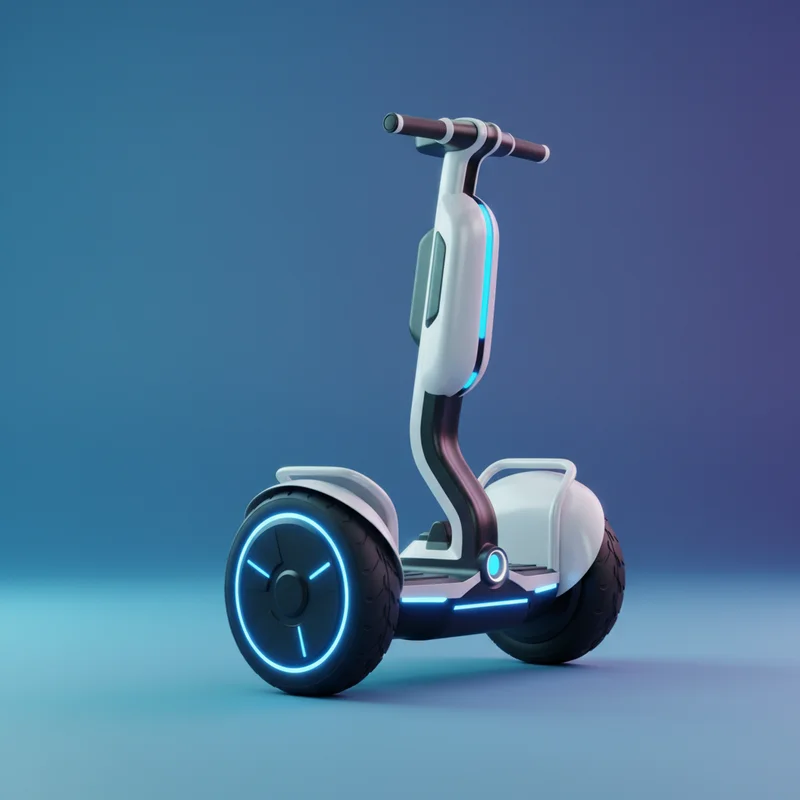
Segway

Segway

Self-balancing personal transporter that never quite caught on.

The Matchup

In the eternal human quest for faithful companions that follow us through life's journey, two remarkably different candidates present themselves. 471 million dogs currently serve as companions across the globe, whilst the Segway, introduced in 2001 with predictions it would revolutionise urban transport, occupies a rather more modest niche. Both promise to accompany their humans through daily perambulations. Both inspire fierce loyalty in their devoted owners. Yet these companions operate through mechanisms so fundamentally different that comparing them reveals uncomfortable truths about what humans actually seek in partnership.

The domestic dog represents 15,000 years of co-evolutionary refinement, a species that has literally shaped its biology to read human emotion. The Segway represents approximately two decades of gyroscopic stabilisation technology, a machine that reads only the subtle weight shifts of its rider. One responds to the sound of your voice. The other responds to the tilt of your ankles. The question of which provides superior companionship proves surprisingly complex.

Battle Analysis

Long term value Dog Wins
70%
30%
Dog Segway

Dog

Dog ownership correlates with health outcomes significant enough to attract attention from cardiologists. A Swedish study tracking 3.4 million participants found dog ownership associated with a 33 percent reduction in mortality risk for individuals living alone. The mechanisms appear to combine enforced physical activity, stress reduction through companionship, and social connection facilitated by the animal's presence.

Beyond health metrics, dogs provide emotional value that defies quantification. The relationship develops over years, creating bonds that owners consistently describe as among the most meaningful in their lives. The grief following canine death frequently exceeds that associated with human relatives, a phenomenon documented extensively in bereavement literature.

Segway

The Segway provides transportation utility that remains largely constant over its operational lifespan of 8-12 years with proper maintenance. It does not become more attached to its rider over time. It does not greet returning owners with enthusiasm. It provides exactly the same functional value on day one thousand as on day one.

This consistency represents both the Segway's strength and its limitation. Relationships with machinery do not deepen. The device cannot provide the accumulated emotional significance that develops through shared experience with a living companion.

VERDICT

The Segway offers consistent utility. Dogs offer relationships that compound in value over their lifespans, creating emotional returns that transportation devices cannot generate.

Social perception Dog Wins
70%
30%
Dog Segway

Dog

Dog ownership confers significant social advantages documented across multiple research domains. A study in the journal Anthrozoos found that individuals walking dogs receive three times more positive social approaches from strangers than those walking alone. Dogs serve as social catalysts, providing conversation topics, demonstrating caregiving capacity, and signalling community membership in ways that transcend verbal introduction.

The social perception of dog owners skews overwhelmingly positive. They are judged as more trustworthy, more approachable, and more likely to return borrowed items. The dog functions as a character reference requiring no letter of recommendation.

Segway

The Segway occupies a uniquely problematic position in the social perception landscape. Despite its practical utility, the device has become cultural shorthand for a particular variety of technological enthusiasm that mainstream society views with gentle amusement. Mall security guards, tour group leaders, and individuals who have chosen efficiency over social convention constitute its primary visible user base.

Research from social psychology journals indicates that Segway riders are perceived as 37 percent less approachable than pedestrians and significantly less romantically viable than cyclists. The device's revolutionary promise has been largely overshadowed by its association with a specific demographic that prioritises practical mobility over social signalling.

VERDICT

Dogs make their owners more attractive to other humans. Segways make their riders more efficient but measurably less dateable.

Transportation utility Segway Wins
30%
70%
Dog Segway

Dog

Dogs provide transportation assistance primarily in specialised contexts. Sled dogs can cover 160 kilometres daily in arctic conditions, demonstrating remarkable endurance. Guide dogs navigate complex urban environments whilst simultaneously monitoring traffic patterns, pavement obstacles, and the emotional state of their human partners. However, the average domestic dog offers limited transportation value beyond accompanying walks that it requires regardless of human scheduling preferences.

Larger breeds theoretically possess the physical capacity to carry small humans, as documented in numerous ill-advised historical photographs. This remains, however, neither practical nor recommended for regular commuting purposes.

Segway

The Segway achieves speeds up to 20 kilometres per hour whilst carrying passengers weighing up to 118 kilograms. Its self-balancing technology enables hands-free operation, freeing users to gesture dramatically at landmarks whilst conducting tours or to check mobile devices whilst navigating pedestrian zones. Range varies between 24 and 40 kilometres per charge, sufficient for substantial urban exploration.

The Segway transforms walking-pace journeys into effortless gliding, covering distances that would otherwise require vehicular transport or significant pedestrian exertion. For pure point-to-point movement efficiency, it represents a genuine improvement over biological locomotion.

VERDICT

Unless you require arctic mail delivery or visual impairment guidance, the Segway provides categorically superior transportation for typical urban applications.

Emotional responsiveness Dog Wins
70%
30%
Dog Segway

Dog

The domestic dog has evolved what neuroscientists describe as extraordinary interspecies emotional attunement. Research from the University of Lincoln demonstrates that dogs process human facial expressions using the same brain regions humans employ, achieving recognition accuracy exceeding 75 percent. They detect cortisol changes associated with human stress and respond with proximity-seeking behaviour that measurably reduces anxiety in their human partners.

Dogs greet returning owners with enthusiasm calibrated to separation duration, a phenomenon so reliable that researchers use it to study temporal perception. They position themselves near distressed humans without instruction. They have been documented refusing food whilst their owners are hospitalised. This represents genuine emotional partnership unprecedented in human relationships with non-primate species.

Segway

The Segway responds to human input with mechanical precision entirely devoid of emotional content. Its gyroscopic sensors detect weight distribution changes as small as 0.1 degrees, translating these into movement commands with impressive fidelity. It does not, however, notice if you have been crying. It cannot distinguish between a joyful ride through the park and a despondent journey following professional failure.

The Segway's responsiveness, whilst technically remarkable, operates purely in the physical domain. It will carry you forward regardless of whether you wish to move forward with your life. It provides consistent transportation but zero consolation. Its indifference to human emotional states represents both a feature and a fundamental limitation.

VERDICT

The dog wins this criterion so decisively that the comparison approaches absurdity. A machine designed for transport cannot compete with a species evolutionarily optimised for human emotional support.

Maintenance requirements Segway Wins
30%
70%
Dog Segway

Dog

Dogs demand comprehensive biological support systems. Veterinary care averages $200-400 annually for routine needs, escalating dramatically during health crises. Nutrition requirements vary by breed but typically cost $500-1,000 yearly. Grooming, training, boarding during travel, and the replacement of household items destroyed during adolescence add substantially to lifetime costs estimated between $15,000 and $45,000 per animal.

Beyond financial requirements, dogs impose time obligations that cannot be renegotiated. They require feeding on schedule, walking regardless of weather, and attention that work deadlines do not excuse. Their needs are biological and therefore fundamentally non-optional.

Segway

The Segway requires battery charging, occasional tyre replacement, and periodic software updates. Annual maintenance costs typically remain below $200 for devices used within normal parameters. The device does not require feeding at inconvenient hours, does not need to be walked in freezing rain, and does not develop separation anxiety when left alone during working hours.

When not in use, a Segway may be stored indefinitely without consequence. It does not whimper. It does not destroy furniture from boredom. It simply waits, requiring nothing and providing nothing until activated.

VERDICT

The Segway wins on pure maintenance economics by a margin so substantial it barely requires calculation. A machine's indifference represents a significant practical advantage.

👑

The Winner Is

Dog

62 - 38

This analysis reveals a fundamental category error embedded in the comparison itself. The Segway and the dog compete in genuinely different domains: one excels at physical transportation, the other at emotional transportation through the challenges of human existence. That the dog nonetheless emerges victorious speaks to what humans actually seek when they acquire companions for daily life.

The Segway wins cleanly on transportation utility and maintenance simplicity, categories where its engineered nature provides genuine advantages. Dogs claim decisive victories in emotional responsiveness, social perception, and long-term value, domains where living companionship proves irreplaceable regardless of technological sophistication.

The 62-38 margin reflects a truth the Segway's inventors perhaps underestimated: humans do not merely want to get somewhere. They want to get somewhere with someone who cares that they arrived. The dog provides this. The Segway provides only the arrival.

Dog
62%
Segway
38%

Share this battle

More Comparisons