
Topic Battle

Where Everything Fights Everything

Dog

Dog

Loyal canine companion celebrated for unconditional love, tail wagging, and being humanity's best friend for millennia.

VS
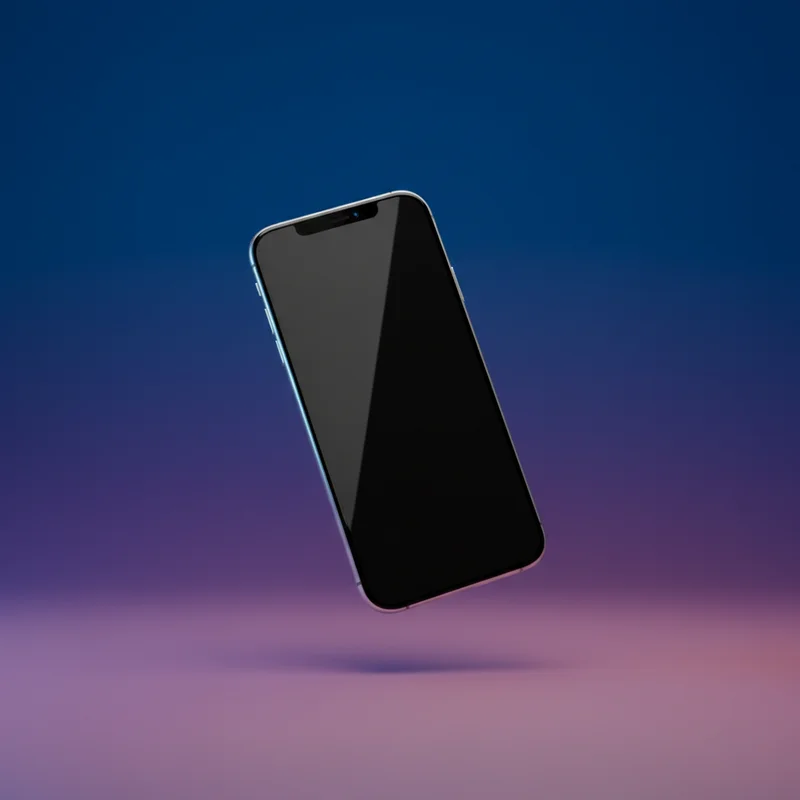
Smartphone

Smartphone

Pocket computer that has replaced cameras, maps, and attention spans.

The Matchup

In the contemporary human household, an ancient rivalry plays out with increasing intensity. 471 million dogs share homes with humans worldwide, whilst 6.8 billion smartphones occupy pockets, handbags, and increasingly, the spaces between human beings. Both demand attention. Both promise connection. Both have fundamentally altered the structure of human daily life.

The dog represents 15,000 years of co-evolutionary refinement, a species that literally transformed its facial muscles to better communicate with humans. The smartphone represents 15 years of aggressive iteration, a device engineered by teams of behavioural scientists to maximise what the industry euphemistically terms 'engagement.' One waits patiently by the door. The other sends notifications at 3 AM about flash sales you never requested. The competition for human attention has never been more asymmetric, nor more revealing.

Battle Analysis

Attention quality Dog Wins
70%
30%
Dog Smartphone

Dog

The domestic dog provides what researchers classify as high-quality attentional demand. When a dog requires attention, it requires full attention. Playing fetch cannot be conducted whilst simultaneously scrolling. Walking demands spatial awareness and present-moment engagement. The dog's needs pull humans into the physical world, away from the abstracted realm of digital content.

Studies from the University of British Columbia demonstrate that interactions with dogs produce sustained attention spans averaging 12-15 minutes per engagement, significantly longer than the 8-second average human attention span documented in the smartphone era. The dog demands presence, and in demanding it, may preserve a cognitive capacity under threat of extinction.

Smartphone

The smartphone has been engineered to capture attention through mechanisms that neuroscientists describe with increasing alarm. Variable ratio reinforcement schedules, the same psychological principle underlying slot machine addiction, drive the pull-to-refresh gesture. Infinite scroll removes natural stopping points. Notification systems exploit the dopamine response associated with social validation.

The average smartphone user checks their device 96 times daily, approximately once every ten minutes of waking life. Each check fragments attention, requiring an average of 23 minutes to fully return to the interrupted task. The smartphone does not seek attention; it harvests it, systematically and without remorse.

VERDICT

The dog demands attention that benefits the human. The smartphone captures attention that benefits advertising revenue streams. These are not equivalent transactions.

Emotional intelligence Dog Wins
70%
30%
Dog Smartphone

Dog

Dogs demonstrate emotional perception capabilities that continue to astonish researchers. Functional MRI studies reveal that dogs process human faces in brain regions analogous to those humans use for the same purpose. They distinguish between happy and angry human expressions with accuracy exceeding 70%, and adjust their behaviour accordingly.

More remarkably, dogs respond to human distress with what can only be described as empathic behaviour. Studies published in Learning and Behaviour demonstrate that dogs will actively work to reach distressed humans, even breaking through barriers to provide comfort. This response appears intrinsically motivated, not conditioned by training or reward expectation.

Smartphone

The smartphone possesses zero emotional intelligence in any meaningful sense. It cannot detect genuine distress. It cannot distinguish between tears of joy and tears of grief. Its algorithms interpret human behaviour through the narrow lens of engagement metrics, measuring clicks and scroll depth rather than wellbeing.

The smartphone's 'smart' features, autocorrect suggestions, predictive text, notification timing, operate through pattern recognition that mimics understanding without achieving it. When a user receives devastating news, the smartphone's response is to suggest emoji reactions. This represents not intelligence but sophisticated mimicry of human communication patterns.

VERDICT

Dogs evolved emotional intelligence through genuine co-evolution with humans. Smartphones simulate it through algorithms optimised for engagement, not care.

Utility and functionality Smartphone Wins
30%
70%
Dog Smartphone

Dog

The domestic dog serves functions that predate recorded history. Herding, guarding, hunting assistance, and detection work demonstrate capabilities that technology struggles to replicate. Dogs detect seizures before onset, identify certain cancers through scent, and locate missing persons in conditions that defeat electronic equipment.

However, a dog cannot perform mathematical calculations, translate languages, or provide directions to unfamiliar destinations. It cannot store photographs, play music, or facilitate video communication across continents. The dog's utility, whilst profound, occupies a narrow functional band.

Smartphone

The smartphone consolidates utilities that previously required separate devices, rooms, or entire buildings. Camera, calculator, music player, navigation system, library, cinema, post office, and bank exist within a single handheld device. The average smartphone contains more computing power than NASA employed for the Apollo moon landings.

This utility continues expanding through software updates and application ecosystems. A smartphone purchased today will acquire capabilities over its lifespan that did not exist at manufacture. No biological companion demonstrates comparable functional plasticity.

VERDICT

For breadth of practical functionality, the smartphone's computational versatility exceeds what evolution has equipped any mammal to provide.

Long term wellbeing impact Dog Wins
70%
30%
Dog Smartphone

Dog

The epidemiological evidence for dog ownership benefits has achieved sufficient consistency to prompt official statements from medical bodies. Dog owners demonstrate lower blood pressure, reduced cardiovascular event rates, and decreased all-cause mortality. A Swedish study tracking 3.4 million participants found single-person households with dogs experienced 33% lower mortality risk than dogless equivalents.

Beyond physical health, dogs provide structure, routine, and enforced social interaction that protect against the epidemic of loneliness that psychiatrists increasingly identify as a public health crisis. The dog demands you leave the house, encounter neighbours, and maintain schedules that anchor daily existence.

Smartphone

Research on smartphone impact presents concerning trends that manufacturers have proven reluctant to address. Screen time correlates with increased rates of depression and anxiety, particularly among adolescents. Social media use demonstrates dose-response relationships with loneliness, the precise opposite of connection these platforms promise.

The smartphone enables sedentary behaviour, disrupts sleep through blue light emission and late-night notification checking, and replaces face-to-face interaction with digital approximations that studies suggest provide inferior emotional nourishment. The device designed to connect humanity may be accelerating its atomisation.

VERDICT

Dogs demonstrably improve human longevity and mental health. Smartphones correlate with measurable declines in both metrics.

Reliability and availability Smartphone Wins
30%
70%
Dog Smartphone

Dog

Dogs offer unconditional availability within the constraints of biology. They require sleep, typically 12-14 hours daily, and cannot accompany humans to certain establishments. Their functionality degrades in extreme temperatures and requires regular maintenance inputs of food and exercise.

However, a dog's availability carries no subscription fees, does not expire after contract periods, and cannot be remotely disabled by manufacturer decisions. A dog from 2010 continues functioning precisely as designed. No dog has ever required a terms of service update that altered its fundamental behaviour without consent.

Smartphone

The smartphone achieves near-constant availability, limited only by battery capacity and signal coverage. Modern devices operate for 24-48 hours between charges and connect to global information networks from virtually any location. The smartphone never sleeps, never requires walks, and fits conveniently in a pocket.

This availability, however, depends upon an infrastructure of remarkable complexity. Cell towers, undersea cables, server farms consuming 2% of global electricity, and software updates that occasionally transform reliable devices into expensive paperweights. The smartphone's availability is contingent on systems beyond user control.

VERDICT

For pure accessibility, the smartphone's pocket-sized omnipresence exceeds what biological constraints permit a dog to achieve.

👑

The Winner Is

Dog

55 - 45

This analysis illuminates a competition between fundamentally different categories of companion. The smartphone excels as a tool, a device of remarkable utility that extends human capability across domains that would have seemed miraculous two decades past. The dog excels as a partner, a living being whose evolutionary history has optimised it specifically for human relationship.

The scoring reflects what research increasingly confirms: utility does not equal benefit. The smartphone wins on availability and functional breadth, categories where computational power provides insurmountable advantages. The dog claims victory in attention quality, emotional intelligence, and long-term wellbeing impact, domains where 15,000 years of co-evolution outperform 15 years of Silicon Valley engineering.

The 55-45 margin acknowledges that whilst the smartphone has become indispensable for modern life, the dog provides something the smartphone cannot simulate: genuine relationship with a being that wants nothing from you except your presence, and offers in return the uncomplicated devotion that has sustained human-canine bonds since the Pleistocene.

Dog
55%
Smartphone
45%

Share this battle

More Comparisons