
Topic Battle

Where Everything Fights Everything

Dog

Dog

Loyal canine companion celebrated for unconditional love, tail wagging, and being humanity's best friend for millennia.

VS
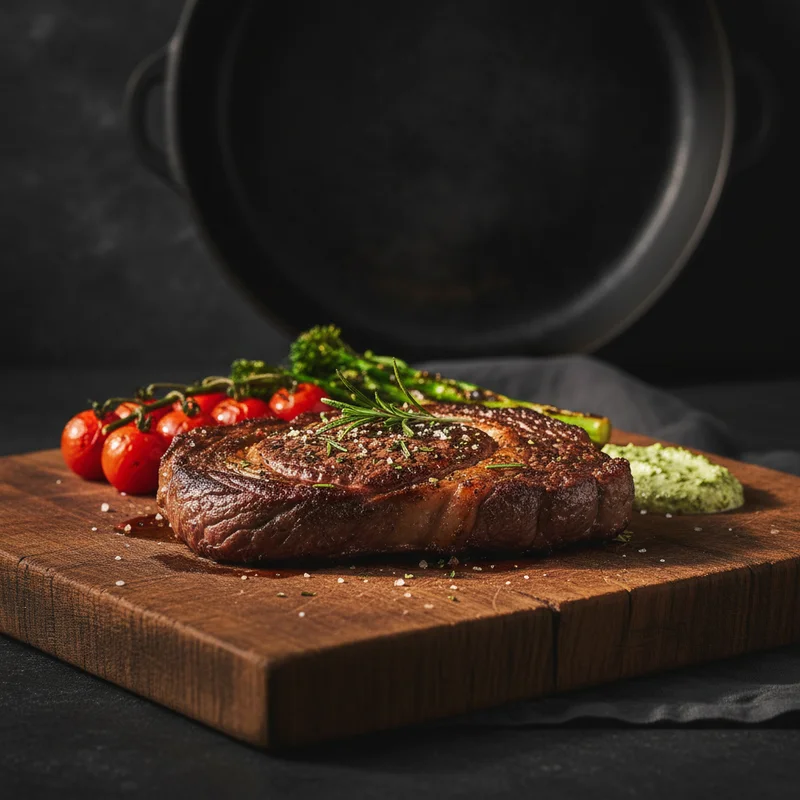
Steak

Steak

Grilled beef and subject of endless doneness debates.

The Matchup

Throughout the annals of human civilisation, few relationships have proven as consequential as those formed with Canis lupus familiaris and Bos taurus. The former has stood beside us for approximately 15,000 years, evolving from wolf to trusted companion through a process of mutual selection that scientists term co-domestication. The latter has sustained human populations since the Neolithic revolution, providing protein dense enough to fuel the construction of empires.

Today, the global dog population exceeds 900 million, whilst humanity consumes roughly 350 million tonnes of beef annually. Both entities occupy privileged positions in human affection, though one typically receives a collar and the other receives a reduction of red wine. This analysis examines which delivers superior overall value to the human condition, employing metrics that transcend the obvious categorical distinctions between animate companions and consumable protein.

Battle Analysis

Nutritional value Steak Wins
30%
70%
Dog Steak

Dog

The domestic dog provides zero direct nutritional value to its owner under standard Western ethical frameworks. Indeed, the relationship operates in reverse: the dog represents a net consumer of resources, requiring approximately 340 to 1,200 kilocalories daily depending upon size and activity level. In economic terms, the dog functions as a nutritional liability rather than an asset.

Indirectly, dogs may contribute to owner nutrition by enforcing physical activity that improves metabolic function and appetite regulation. However, this secondary effect cannot compensate for the fundamental reality that dogs consume food rather than providing it.

Steak

A standard 225-gram ribeye delivers approximately 580 kilocalories, including 46 grams of protein essential for muscle maintenance and cellular repair. The steak provides complete protein containing all nine essential amino acids, along with bioavailable iron, zinc, and vitamin B12. From a purely nutritional standpoint, steak represents one of humanity's most efficient methods for obtaining critical micronutrients.

The Maillard reaction that occurs during proper preparation creates compounds that trigger profound neurological reward responses, ensuring that this nutritional delivery mechanism also functions as a source of significant pleasure. Evolution has, in this instance, aligned necessity with desire.

VERDICT

On the criterion of nutritional provision, the steak's victory is absolute and unchallengeable. One cannot sustain human life through affection alone, however enthusiastically delivered by wagging tails.

Longevity of benefit Dog Wins
70%
30%
Dog Steak

Dog

The domestic dog provides benefit across an average lifespan of 10 to 13 years, with some breeds extending this window to nearly two decades. During this period, the dog delivers continuous returns: daily companionship, security services, emotional support, and the enforcement of exercise routines that their owners would otherwise neglect. The relationship compounds over time, with studies indicating that the human-dog bond strengthens through shared experience.

Furthermore, the memories generated by canine companionship persist well beyond the animal's lifespan. Psychological research documents that recollections of beloved pets continue providing comfort decades after their passing, a form of emotional dividend that few investments can match.

Steak

A steak provides benefit for precisely the duration of its consumption, typically 15 to 45 minutes depending upon the diner's pace and the quality of accompanying conversation. The pleasure derived from a well-prepared ribeye is intense but categorically finite. Once masticated and swallowed, the steak ceases to exist as an experiential entity, transmuting instead into calories, amino acids, and material for subsequent biological processes.

The memory of an exceptional steak may linger, certainly. Gastronomes speak fondly of transcendent dining experiences years after the fact. However, these recollections lack the depth of emotional content associated with companion animals. One does not typically weep at the memory of a sirloin.

VERDICT

The mathematics prove unambiguous. A decade of daily companionship versus forty-five minutes of mastication represents a differential of approximately 5.2 million minutes. Even accounting for the heightened intensity of steak-related pleasure, the dog's cumulative benefit substantially exceeds that of its bovine counterpart.

Maintenance complexity Steak Wins
30%
70%
Dog Steak

Dog

Dogs demand comprehensive ongoing support. Veterinary care averages $400 to $600 annually for healthy animals, escalating dramatically when illness or injury occurs. Food costs range from $250 to $700 per year depending upon size and dietary requirements. Grooming, training, boarding during travel, and the replacement of items destroyed during puppyhood add further expense.

Beyond financial requirements, dogs impose temporal obligations. Multiple daily walks regardless of weather conditions. Feeding schedules that cannot be postponed for professional emergencies. The constant low-level awareness that another living being depends entirely upon your return home. This responsibility cannot be outsourced indefinitely without consequences to the relationship.

Steak

A steak requires precisely twenty to thirty minutes of attention: removal from refrigeration one hour prior, seasoning, cooking to appropriate internal temperature, resting, and service. The steak makes no demands prior to this process and none afterward. It does not require walks. It does not develop separation anxiety. It does not need to be let out at 3 AM during inclement weather.

Storage requirements prove minimal: adequate refrigeration for short-term keeping or freezing for extended preservation. The steak does not object to either arrangement. It maintains its quality quietly, awaiting preparation without complaint or deteriorating behaviour.

VERDICT

The steak's passivity represents a significant practical advantage. Those unwilling or unable to provide decade-long commitments to another living being may find steak's low-maintenance profile considerably more compatible with modern life's unpredictability.

Social enhancement potential Dog Wins
70%
30%
Dog Steak

Dog

Dogs function as involuntary social catalysts. Research published in the Journal of Social Psychology indicates that individuals walking with dogs receive 300 percent more social approaches from strangers than those walking alone. Dogs provide conversation starters, establish common ground between otherwise disconnected individuals, and create communities around breed-specific interests, training methodologies, and local park hierarchies.

The phrase walking the dog has become cultural shorthand for neighbourhood engagement. Dog owners know their neighbours. They develop relationships with veterinary staff, pet shop employees, and the regular attendees at their preferred exercise locations. Dogs impose sociability upon humans who might otherwise retreat into isolation.

Steak

Steak serves as the centrepiece of significant social occasions. The steakhouse dinner marks business deals, romantic milestones, and family celebrations. The backyard barbecue, with steak as its protein anchor, functions as one of Western culture's primary mechanisms for community building. The shared experience of quality beef creates bonds that vegetable platters simply cannot replicate.

However, steak's social function remains episodic rather than continuous. One does not make daily acquaintances through steak ownership. The meat does not introduce you to neighbours. Its social contribution, whilst genuine, occurs within bounded temporal windows rather than as an ongoing feature of daily life.

VERDICT

Both enhance social connection, but through fundamentally different mechanisms. Steak marks occasions. Dogs create them. The dog's continuous social facilitation ultimately exceeds the steak's episodic contribution, generating more total human connection per unit of investment.

Emotional return on investment Dog Wins
70%
30%
Dog Steak

Dog

Dogs have evolved specifically to generate emotional responses in humans. Research from Azabu University documents that gazing into a dog's eyes triggers oxytocin release in both species, creating what neurologists term a positive feedback loop of mutual affection. This biochemical mechanism explains why humans frequently describe their dogs in terms typically reserved for family members.

The emotional services provided by dogs include: unconditional positive regard regardless of the owner's professional failures or interpersonal shortcomings; enthusiastic greetings upon return from even brief absences; and the provision of a judgement-free audience for complaints about colleagues. Therapists charge substantial hourly rates for services dogs provide continuously and without invoice.

Steak

A well-prepared steak triggers the release of dopamine, the neurotransmitter associated with reward and satisfaction. The anticipation of steak consumption, the aroma during preparation, the first cut through properly rested meat, each stage of the experience activates pleasure centres that evolved to encourage calorie-dense food acquisition. This neurological response is genuine and measurable.

However, steaks do not greet their consumers at the door. They do not notice when their owner seems troubled. They cannot be trained to perform tricks or provide security services. The emotional relationship with steak, however satisfying, remains fundamentally unilateral and consumptive.

VERDICT

Dopamine provides pleasure. Oxytocin provides bonding. The distinction matters profoundly. A steak cannot love you back, a limitation that no quantity of bรฉarnaise sauce can remedy. The dog's capacity for reciprocal emotional engagement represents a categorically superior form of return.

๐Ÿ‘‘

The Winner Is

Dog

60 - 40

This analysis reveals a competition between categorically different forms of human satisfaction. The steak excels in domains where immediate gratification and minimal commitment prove paramount: it delivers superior nutrition, requires trivial maintenance, and asks nothing of its consumer beyond a willingness to chew. These are meaningful advantages for those prioritising convenience and caloric efficiency.

Yet the dog triumphs in categories that compound over time: longevity of benefit, emotional return, and social enhancement. The dog's demands, so burdensome when calculated in hours and pounds sterling, generate returns that the steak's passive provision cannot match. A 60-40 victory reflects this assessment: the dog wins not despite requiring more but because, in requiring more, it delivers proportionally greater reward.

The optimal human existence may indeed require both: the dog that provides daily companionship and enforced exercise, and the steak that marks celebrations and delivers essential nutrients. They are not competitors so much as complements, each addressing needs the other cannot satisfy.

Dog
60%
Steak
40%

Share this battle

More Comparisons