
Topic Battle

Where Everything Fights Everything

Dog

Dog

Loyal canine companion celebrated for unconditional love, tail wagging, and being humanity's best friend for millennia.

VS
Sushi

Sushi

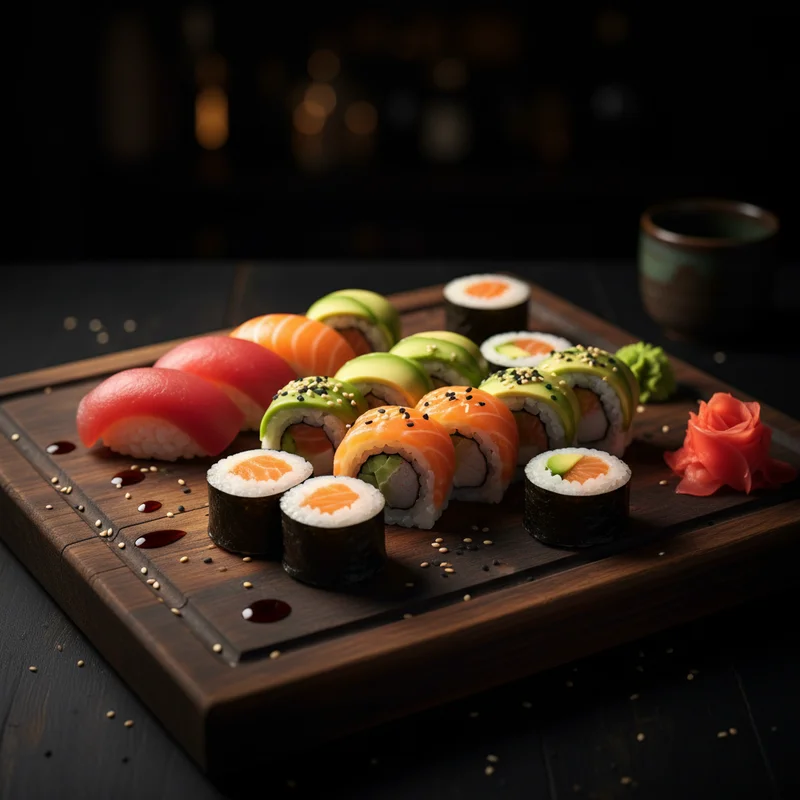
Japanese art form involving raw fish and expert knife skills.

The Matchup

In the annals of human civilisation, few relationships prove as enduring as those between Homo sapiens and the domestic dog. 471 million dogs currently serve as companions worldwide, a testament to a partnership forged over fifteen millennia. Sushi, by contrast, emerged from the rice paddies of Southeast Asia approximately 2,000 years ago, eventually refined by Japanese artisans into the precision-crafted delicacy consumed across six continents today. Both represent pinnacles of their respective categories: the apex of domesticated companionship and the zenith of raw fish preparation.

The comparison may strike some as incongruous. One breathes, barks, and requires veterinary attention. The other is, fundamentally, dead fish on seasoned rice. Yet both compete for finite human resources: time, attention, and disposable income. In metropolitan centres where a single omakase experience costs $300 and annual dog ownership exceeds $2,000, the allocation of these resources represents a meaningful lifestyle decision. This analysis applies rigorous comparative methodology to determine which investment yields superior returns.

Battle Analysis

Health benefits Dog Wins
70%
30%
Dog Sushi

Dog

The cardiovascular benefits of dog ownership have prompted formal acknowledgment from the American Heart Association. Dog owners demonstrate lower blood pressure, reduced cholesterol, and decreased rates of heart attack. A Swedish study tracking 3.4 million participants found dog ownership associated with a 33 percent reduction in mortality risk for individuals living alone.

The mechanisms are multifactorial: enforced physical activity through mandatory walks, stress reduction through companionship, and the establishment of daily routines that structure otherwise chaotic human lives. Dogs do not merely provide health benefits. They impose lifestyle modifications that generate those benefits.

Sushi

Sushi delivers omega-3 fatty acids, compounds associated with cardiovascular health, cognitive function, and reduced inflammation. A typical salmon nigiri provides approximately 1.5 grams of these beneficial fats. The lean protein content supports muscle maintenance whilst the minimal refined carbohydrates avoid the glycaemic disruptions associated with Western dining.

However, sushi also carries risks that responsible analysis must acknowledge. Mercury accumulation in frequent tuna consumers, potential parasitic infection from inadequately handled fish, and the sodium content of soy sauce create health considerations that complicate the nutritional picture. Sushi is healthy in moderation, a qualifier that applies to most things worth consuming.

VERDICT

Sushi provides micronutrients. Dogs provide comprehensive lifestyle restructuring that generates sustained health improvements. The fish offers ingredients; the dog offers a fitness programme.

Cultural prestige Sushi Wins
30%
70%
Dog Sushi

Dog

Dog ownership carries cultural significance that varies dramatically by geography and social context. In Western societies, certain breeds function as status indicators, with French Bulldogs commanding prices exceeding $5,000 and conferring upon their owners an aura of urban sophistication. The act of walking a visually distinctive dog through fashionable neighbourhoods constitutes a form of mobile status display.

However, this prestige proves inconsistent. A Labrador communicates family values; a Chihuahua suggests different priorities entirely. The cultural messaging of dog ownership lacks the universal legibility that true status symbols require.

Sushi

Sushi occupies a unique position in the hierarchy of global cuisine. The transformation from workingman's sustenance in Edo-period Japan to luxury dining experience represents one of history's most successful culinary rebranding campaigns. Today, an omakase dinner at establishments like Sukiyabashi Jiro carries cultural prestige equivalent to opera subscription or contemporary art collecting.

The vocabulary alone confers sophistication. Knowledge of the difference between nigiri and sashimi, the ability to pronounce kohada correctly, the confidence to request less wasabi from an intimidating itamae, these skills signal cultural literacy that dog ownership cannot match. Sushi appreciation has become shorthand for cosmopolitan refinement.

VERDICT

Dog ownership signals warmth and responsibility. Sushi connoisseurship signals worldly sophistication. In status-conscious urban environments, the fish maintains a decisive advantage.

Social facilitation Dog Wins
70%
30%
Dog Sushi

Dog

Dogs transform their owners into public social nodes. Research published in the Journal of Social Psychology demonstrates that individuals accompanied by dogs receive three times more approaches from strangers than those walking alone. Dog parks function as community centres where humans who would otherwise never interact discover common ground through their animals' mutual sniffing investigations.

The dog serves as a conversation initiator that requires no awkwardness, no approach anxiety, no fear of rejection. Strangers who would never speak to each other will readily discuss their pets' breeds, ages, and personality quirks. Dogs break social barriers that human reserve erects.

Sushi

Sushi functions as a social lubricant in professional and romantic contexts. The shared experience of omakase dining creates bonds through mutual appreciation of culinary excellence. Business deals historically sealed over sushi carry an air of sophistication that burger-based negotiations cannot achieve. First dates at respected sushi establishments signal both financial capacity and cultural refinement.

However, sushi consumption is fundamentally a private act conducted in public. One does not approach strangers at the sushi counter to discuss the quality of the hamachi. The social benefits of sushi remain confined to deliberately arranged gatherings rather than spontaneous community formation.

VERDICT

Sushi facilitates planned social occasions. Dogs create spontaneous human connections that no meal can replicate. The dog wins by generating community where none previously existed.

Emotional fulfilment Dog Wins
70%
30%
Dog Sushi

Dog

The domestic dog has evolved specifically to provide emotional support to human companions. Research from the Human-Animal Bond Research Institute demonstrates that dog ownership correlates with reduced rates of depression, decreased anxiety symptoms, and measurable increases in oxytocin levels during human-canine interaction. Dogs possess the documented ability to detect human emotional states and respond with proximity-seeking behaviour calibrated to provide comfort.

A dog will greet its owner with identical enthusiasm whether that owner has been absent for eight hours or eight minutes. This consistency of affection, whilst potentially indicating limited temporal cognition, creates a reliable source of positive reinforcement that mental health professionals increasingly recognise as therapeutically significant.

Sushi

Sushi provides emotional fulfilment through what gastronomes term the pleasure response cascade. The combination of umami-rich fish, perfectly seasoned rice, and wasabi-induced sinus activation triggers dopamine release in the brain's reward centres. A well-crafted piece of otoro can induce what researchers describe as transient gustatory euphoria.

However, this emotional benefit proves fundamentally ephemeral. The joy of sushi consumption lasts precisely as long as the meal itself, typically thirty to sixty minutes. Upon completion, the emotional benefit ceases. Sushi cannot detect human sadness and position itself helpfully nearby. It cannot learn to bring slippers. Its capacity for providing ongoing comfort is, by any reasonable measurement, zero.

VERDICT

Sushi delivers concentrated bursts of pleasure. Dogs deliver sustained emotional infrastructure. In the mathematics of psychological wellbeing, reliable daily support outperforms occasional peaks of gustatory joy.

Maintenance complexity Sushi Wins
30%
70%
Dog Sushi

Dog

Dogs require what economists term comprehensive ongoing investment. Daily feeding schedules must be maintained regardless of owner convenience. Twice-daily walks cannot be postponed due to inclement weather or professional obligations. Veterinary care, averaging $700 annually for healthy specimens, escalates dramatically during illness or injury. Grooming, training, boarding during travel, and the replacement of items destroyed during episodes of separation anxiety add further to the total cost of ownership.

The average dog lives 10-13 years, creating a commitment horizon that exceeds most marriages and many mortgages. This is not a casual undertaking.

Sushi

Sushi requires precisely zero ongoing maintenance from the consumer. The fish was prepared, it was consumed, the relationship concluded. No veterinary appointments demand scheduling. No 6 AM walks interrupt sleep. No boarding arrangements complicate holiday planning. The sushi's maintenance burden falls entirely upon the restaurant, which employs trained professionals to address the matter.

This represents what systems theorists call complete operational outsourcing. The consumer receives all benefits whilst the establishment absorbs all complexity. From a pure convenience standpoint, sushi achieves optimal efficiency.

VERDICT

Dogs demand years of sustained attention. Sushi demands only that you arrive at the restaurant and pay the bill. For time-poor professionals, this differential proves significant.

👑

The Winner Is

Dog

58 - 42

This analysis reveals a competition between fundamentally incompatible categories of human experience. Sushi excels as a transactional pleasure: resources exchanged for gustatory satisfaction, cultural prestige acquired through demonstrated connoisseurship, nutritional benefits obtained with minimal ongoing commitment. Dogs operate as transformative relationships: entities that demand years of sustained investment whilst delivering benefits that compound across time and reshape the very structure of daily existence.

The 58-42 margin reflects practical reality. Sushi wins decisively on convenience and cultural sophistication, categories where its requirements align with modern urban lifestyles. Dogs claim victory in emotional support, health outcomes, and social facilitation, domains where living companionship proves categorically irreplaceable. One might enjoy sushi weekly for decades without fundamental life change. One cannot own a dog for a month without experiencing profound restructuring of priorities, schedules, and relationships.

The optimal life, of course, includes both: the dog that greets you at the door after a long day, and the omakase reservation that celebrates the promotions, anniversaries, and accomplishments that the dog's unconditional support helped make possible.

Dog
58%
Sushi
42%

Share this battle

More Comparisons