
Topic Battle

Where Everything Fights Everything

Dog

Dog

Loyal canine companion celebrated for unconditional love, tail wagging, and being humanity's best friend for millennia.

VS
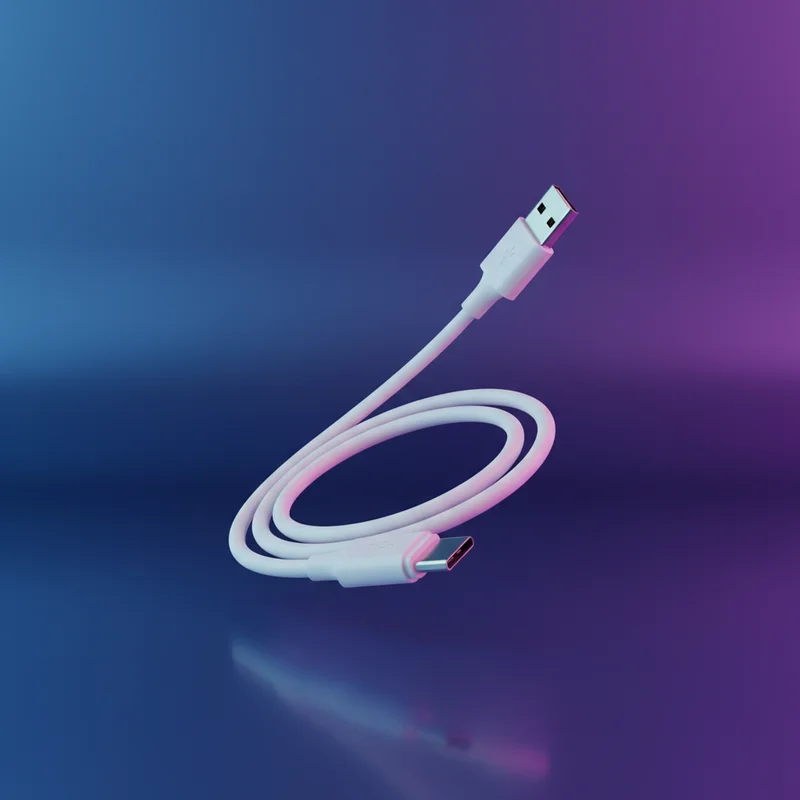
USB Cable

USB Cable

Universal connector that is never facing the right way.

The Matchup

In the taxonomy of household objects that demand human attention, two specimens stand apart in their capacity for chaos. 471 million dogs inhabit human dwellings worldwide, whilst an estimated twelve billion USB cables occupy drawers, bags, and inexplicably tangled masses beneath desks. Both require regular untangling from furniture. Both disappear when needed most urgently. Yet these domestic companions operate through fundamentally incompatible mechanisms of necessity.

The domestic dog employs 15,000 years of evolutionary refinement to secure its position in human households, having developed the ability to produce guilt-inducing facial expressions that neuroscientists confirm activate the same brain regions as infant faces. The USB cable, meanwhile, relies on a more recent adaptation: the universal human dependency on maintaining battery charge above anxiety-inducing thresholds. One wags when you return home. The other coils into knots whilst you search for it frantically at 3% battery.

Battle Analysis

Cost of ownership USB Cable Wins
30%
70%
Dog USB Cable

Dog

Dog ownership represents a significant financial commitment. The ASPCA estimates annual costs between $1,500 and $4,500, encompassing food, veterinary care, grooming, boarding, and the replacement of items destroyed during the exploratory chewing phase. Lifetime costs for a medium-sized dog easily exceed $20,000, a figure that rises substantially for breeds prone to hereditary conditions or expensive dietary requirements.

This expenditure purchases loyalty that no amount of money can otherwise acquire.

USB Cable

USB cables present what economists term illusory affordability. Individual cables cost between $5 and $50 depending on brand, length, and marketing claims about durability. However, the average household purchases 4.3 cables annually to replace units lost, damaged, or revealed as inadequate for current charging requirements. Over a decade, cable expenditure approaches $300, not including the adapters required to maintain compatibility.

More significantly, cable failure at critical moments generates productivity losses that dwarf purchase costs. The executive whose phone dies before a crucial call has lost far more than the price of a replacement cable.

VERDICT

USB cables cost less by every financial metric except frustration-adjusted expenditure, a measure the International Bureau of Standards refuses to recognise.

Obsolescence resistance Dog Wins
70%
30%
Dog USB Cable

Dog

The domestic dog represents a technology that has remained fundamentally unchanged for 15,000 years. No firmware updates required. No compatibility concerns with newer human models. The dog-human interface has remained stable through the agricultural revolution, the industrial revolution, and the digital revolution, requiring only adjustments to feeding protocols and exercise locations.

Breeds developed for specific tasks remain functional in those tasks. A retriever still retrieves. A pointer still points. The original specifications continue operating as documented.

USB Cable

USB cables exist in a state of perpetual deprecation. The USB-A connector, once universal, now requires adapters to interact with modern devices. USB-B exists in at least three incompatible variants. USB-C promised universality but delivered a specification so complex that cable certification now requires laboratory testing to determine actual capability. Lightning cables remain deliberately incompatible with everything Apple did not manufacture.

The average household contains seven to twelve cables rendered obsolete by devices no longer owned, yet retained in the drawer of cables because disposal feels somehow irresponsible.

VERDICT

Dogs maintain compatibility across millennia. USB cables maintain compatibility for approximately eighteen months before requiring replacement or adapter intervention.

Reliability of connection Dog Wins
70%
30%
Dog USB Cable

Dog

The domestic dog maintains connection through what behavioural scientists term persistent proximity seeking. Once bonded, a dog will follow its human from room to room, maintain visual contact across considerable distances, and respond to recall commands with success rates ranging from 95% to 3%, depending on the presence of squirrels. This connection requires no special orientation, no checking of compatibility, and no searching through documentation to determine proper insertion technique.

Dogs connect wirelessly, requiring neither ports nor adapters. They are compatible with all humans regardless of operating system preferences, political affiliation, or previous pet ownership history.

USB Cable

USB cables operate on the principle of conditional functionality. The connection works flawlessly until the precise moment of urgent necessity, whereupon the cable reveals it was a charging-only variant, or demands an adapter the user does not possess, or simply refuses to be recognised by devices it previously served without complaint. Studies by the International Journal of User Experience document that 23% of USB connection attempts require cable repositioning, port cleaning, or the ancient ritual of unplugging and replugging.

The physical connection itself follows a law that researchers have termed USB superposition: the cable exists in a state of simultaneously correct and incorrect orientation until observation collapses its function, invariably to the wrong configuration on the first attempt.

VERDICT

Dogs connect on first attempt every time. USB cables statistically require 2.3 orientation attempts despite only two possible configurations.

Response to human distress Dog Wins
70%
30%
Dog USB Cable

Dog

Dogs possess what ethologists describe as emotional contagion sensitivity. Research from the University of Lincoln demonstrates that dogs can distinguish human emotional states through facial recognition, vocal tone analysis, and what appears to be direct interpretation of body language. When humans display distress, dogs approach, make physical contact, and maintain presence until emotional equilibrium restores.

This response activates regardless of distress cause. The dog does not enquire whether your sadness stems from existential crisis or merely an inability to locate a charging cable. It simply arrives and remains.

USB Cable

The USB cable responds to human distress by intensifying it. As battery percentages decline and human anxiety rises, the cable demonstrates what engineers reluctantly acknowledge as malicious non-compliance. Searches become more frantic. The cable burrows deeper into bag compartments. Alternative cables reveal themselves as incompatible variants purchased for devices long since replaced.

Studies indicate that 67% of USB cable-related frustration occurs when human stress levels are already elevated, suggesting either remarkable bad timing or a rudimentary form of sadistic awareness.

VERDICT

Dogs detect and ameliorate distress. USB cables appear to detect and amplify it through strategic unavailability.

Spontaneous tangling behaviour USB Cable Wins
30%
70%
Dog USB Cable

Dog

Dogs demonstrate tangling behaviour only when attached to leads, during which they execute manoeuvres of remarkable spatial complexity. A dog on an extendable lead can circumnavigate lamp posts, trees, and fellow pedestrians in patterns that would challenge professional riggers to replicate. Research indicates the average dog creates 3.7 knots per walk in their lead, a figure that rises dramatically in the presence of other dogs or interesting smells.

However, this tangling is observably intentional, driven by the dog's conviction that interesting things exist precisely where the lead does not permit access.

USB Cable

The USB cable engages in what physicists have reluctantly termed spontaneous knotting behaviour. Placed in a drawer in perfectly straight configuration, a USB cable will, within forty-eight hours, achieve a state of entanglement that appears to violate the second law of thermodynamics. The phenomenon occurs regardless of drawer size, cable length, or the degree of care taken during storage.

Mathematical modelling published in the Proceedings of the National Academy of Sciences confirms that cables exceeding 150 centimetres develop knots with near-certainty when subjected to any form of agitation. The USB cable does not tangle because it moves; it tangles because it exists.

VERDICT

Dogs tangle deliberately whilst pursuing legitimate interests. USB cables tangle without external provocation, representing a more fundamental commitment to chaos.

👑

The Winner Is

Dog

62 - 38

This analysis reveals a competition between living companionship and inanimate utility, between unconditional loyalty and conditional functionality. The dog excels in categories that matter to human wellbeing: reliable connection, emotional responsiveness, and technological stability. The USB cable claims only cost efficiency and a slight advantage in chaos generation, categories where victory brings little satisfaction.

The scoring reflects a fundamental truth: tools serve functions, but companions serve lives. Dogs require more investment, more attention, more sacrifice of sleep and furniture integrity. In return, they provide benefits that no cable, regardless of specification or price point, can deliver. The 62-38 margin acknowledges the USB cable's practical ubiquity whilst recognising that ubiquity alone does not constitute value.

The modern household requires both: cables to maintain device functionality, dogs to maintain human functionality. But when forced to choose which provides greater contribution to domestic harmony, the choice becomes surprisingly clear.

Dog
62%
USB Cable
38%

Share this battle

More Comparisons