
Topic Battle

Where Everything Fights Everything

Dog

Dog

Loyal canine companion celebrated for unconditional love, tail wagging, and being humanity's best friend for millennia.

VS
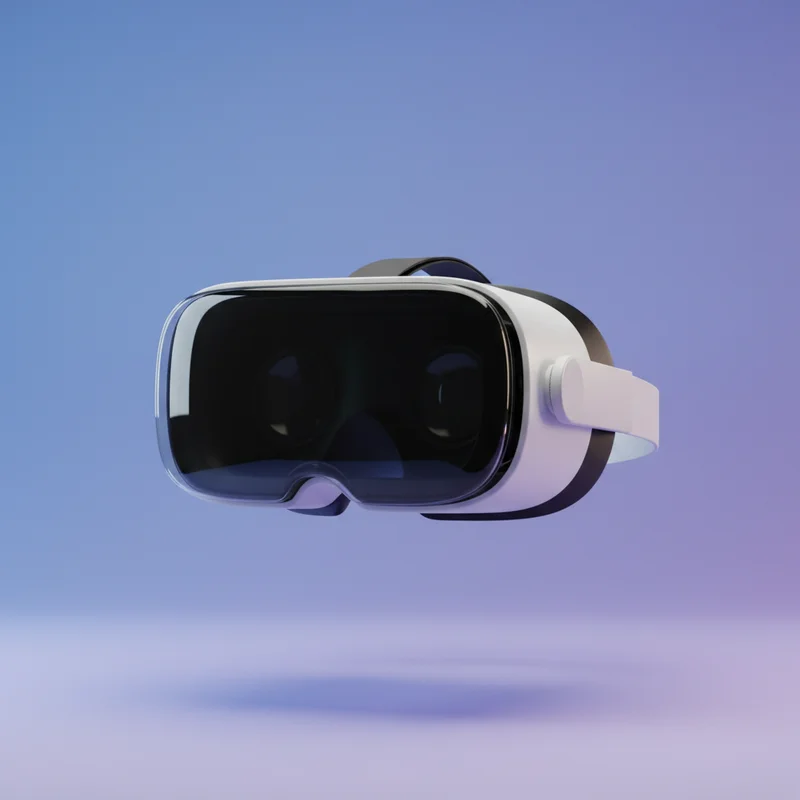
Virtual Reality

Virtual Reality

Immersive technology transporting users to digital worlds.

The Matchup

In the eternal human quest to escape the mundane, two radically different solutions have emerged. 471 million dogs currently serve as companions worldwide, whilst the virtual reality market approaches $27 billion annually and climbing. Both promise transport from ordinary existence. Both deliver experiences unavailable through conventional means. Yet they achieve this through mechanisms so fundamentally different that comparing them requires the suspension of categorical assumptions.

The domestic dog offers escape through authentic biological connection, a relationship refined across millennia of co-evolution that triggers genuine neurochemical responses in human brains. Virtual reality, meanwhile, provides escape through sensory manipulation, hijacking the visual and auditory systems to convince the brain it occupies spaces that do not physically exist. One brings you a tennis ball. The other transports you to distant galaxies. The question of which provides superior value depends entirely on what one seeks to escape from, and what one hopes to escape towards.

Battle Analysis

Immersion quality Virtual Reality Wins
30%
70%
Dog Virtual Reality

Dog

Dogs provide what researchers term unmediated presence. The warmth of a dog sleeping against one's leg, the texture of fur beneath fingertips, the particular smell that dog owners describe as comforting and non-owners describe as concerning, these sensations engage the full spectrum of human sensory apparatus. No calibration required. No firmware updates. The experience arrives pre-optimised by evolution.

The immersion extends beyond the physical. Dogs demand attention in ways that preclude the intrusion of work emails, social media notifications, and the general anxiety of modern connectivity. When playing fetch, one is genuinely present in that moment. The dog insists upon it.

Virtual Reality

Virtual reality offers immersion of a categorically different nature. Modern headsets track head movement at 1000Hz refresh rates, rendering environments with latency below the threshold of human perception. The technology creates what neuroscientists call presence, the genuine sensation of occupying a simulated space. Users report physical vertigo when approaching virtual cliffs and genuine stress during horror experiences.

Yet this immersion remains incomplete. The weight of the headset, the awareness of cables, the occasional reminder from one's inner ear that physical reality continues unchanged beneath the simulation, these elements intrude upon the illusion. VR achieves approximately 87 percent sensory capture according to Stanford's Virtual Human Interaction Lab. The remaining 13 percent proves surprisingly significant.

VERDICT

Virtual reality can transport users to impossible environments: the surface of Mars, the interior of a cell, or the cockpit of a spacecraft. Dogs cannot offer these experiences. They can only offer themselves, which, whilst sufficient for many purposes, cannot compete with unbounded possibility.

Social connection Dog Wins
70%
30%
Dog Virtual Reality

Dog

Dogs function as what sociologists term social catalysts. Research demonstrates that individuals accompanied by dogs receive three times more approaches from strangers. Dog parks create community spaces where humans form connections through shared interest in their animals' activities. The simple act of walking a dog generates daily interactions with neighbours who would otherwise remain strangers.

These connections occur in physical space, with real humans, creating the foundation for relationships that can extend beyond the canine context. Dogs do not merely provide companionship themselves; they generate human companionship through their presence.

Virtual Reality

Virtual reality offers social experiences unconstrained by geography. Platforms like VRChat and Horizon Worlds host millions of users forming communities across continental boundaries. Users can collaborate, play games, attend virtual events, and develop friendships with individuals they may never meet in physical form.

Yet these connections occur through avatars, abstractions of self that may or may not reflect genuine identity. The anonymity that provides freedom also enables deception. Studies indicate that VR social connections translate to physical-world relationships at rates significantly lower than those formed through traditional means.

VERDICT

Dogs create embodied community in physical neighbourhoods. VR creates disembodied community across digital networks. The former proves more durable and more likely to generate tangible support systems.

Emotional authenticity Dog Wins
70%
30%
Dog Virtual Reality

Dog

The emotional bond between humans and dogs rests upon documented biological foundations. When humans and dogs engage in mutual gaze, both species experience elevated oxytocin levels, the same hormone associated with maternal bonding and romantic attachment. This represents a neurochemical handshake across 15,000 years of shared evolution. The love is, by measurable standards, genuine.

Dogs demonstrate loyalty that has been tested across countless documented circumstances. They wait at stations for owners who will never return. They refuse food from hands other than their person's. They grieve. This emotional depth cannot be simulated because it is not, in fact, a simulation.

Virtual Reality

Virtual reality can generate powerful emotional responses. Users report genuine tears during narrative experiences, actual fear during horror applications, and measurable stress responses during threatening simulations. The emotional impact is real even when the stimulus is not.

However, the source of these emotions is fundamentally artificial. Virtual characters, no matter how sophisticated, operate from scripts and algorithms. They do not care whether you return tomorrow. They will not notice your absence. The relationship asymmetry creates what philosophers term pseudo-reciprocity, emotional investment without corresponding emotional return.

VERDICT

Virtual reality can make you feel emotions. A dog can reciprocate them. This distinction proves decisive for sustained emotional wellbeing.

Physical health impact Dog Wins
70%
30%
Dog Virtual Reality

Dog

Dog ownership functions as a covert fitness programme. The requirement for daily walks translates to an average of 30 additional minutes of exercise compared to non-dog-owners. A Swedish study tracking 3.4 million participants found dog ownership associated with 33 percent lower mortality risk for single individuals. The American Heart Association has issued formal statements acknowledging dogs' cardiovascular benefits.

Beyond structured exercise, dogs encourage outdoor time, exposure to natural environments, and the establishment of circadian rhythms aligned with daylight. These factors compound into health benefits that pharmaceuticals struggle to replicate.

Virtual Reality

Virtual reality has developed fitness applications that transform exercise into gaming experiences. Beat Saber players report burning 600-800 calories per hour whilst enjoying the process. VR boxing, dancing, and adventure games provide cardiovascular workouts without the weather dependency of outdoor activity.

However, extended VR use carries documented concerns. The phenomenon of cybersickness, affecting up to 40 percent of users, produces nausea and disorientation. Prolonged headset wear strains neck muscles and disrupts natural eye focusing mechanisms. Most significantly, VR remains a sedentary activity for the majority of its content library.

VERDICT

Dogs impose health benefits through unavoidable daily requirements. VR offers optional fitness applications that many users never launch whilst spending hours in seated experiences.

Accessibility and convenience Virtual Reality Wins
30%
70%
Dog Virtual Reality

Dog

Dog ownership requires what economists term substantial fixed and variable costs. Initial acquisition ranges from free (rescue) to $3,000 (designer breeds). Annual maintenance costs average $1,500 to $4,500 depending on size and medical requirements. Beyond financial considerations, dogs require physical space, time investment of two to three hours daily, and lifestyle compatibility that excludes certain housing situations, travel schedules, and allergic household members.

One cannot pause a dog. One cannot store it in a drawer when convenience demands. The commitment is total and non-negotiable for a period averaging 12 to 15 years.

Virtual Reality

Entry-level VR systems now retail for under $300, with premium experiences available at approximately $1,000. The technology requires no ongoing feeding, no veterinary care, and no walks regardless of weather conditions. When finished, one simply removes the headset and returns to conventional reality, a transition that takes approximately four seconds.

VR experiences can be paused, saved, and resumed. They can be accessed during any hours without concern for biological rhythms. They require only electrical power and sufficient physical space to avoid collision with furniture. The barrier to entry is a single purchase decision.

VERDICT

VR offers commitment-free escapism. Dogs offer escapism wrapped in a 15-year responsibility package. For pure convenience, technology wins decisively.

👑

The Winner Is

Dog

55 - 45

This analysis reveals a competition between ancient biological partnership and cutting-edge sensory technology, each excelling in domains the other cannot approach. Virtual reality wins decisively on immersion capability and convenience, offering experiences physically impossible and requiring commitment measured in hours rather than years. Dogs win on emotional authenticity, health impact, and social connection, domains where biological reality demonstrates advantages that silicon cannot yet replicate.

The 55-45 margin favouring the dog reflects a fundamental asymmetry: virtual reality provides superior experiences, but dogs provide superior relationships. For a single evening's entertainment, VR offers more spectacular possibilities. For a life's worth of companionship, the dog remains unmatched.

The ideal existence, one suspects, includes both: VR headset for journeys to impossible places, and a dog sleeping nearby for the return to what matters.

Dog
55%
Virtual Reality
45%

Share this battle

More Comparisons