Topic Battle

Where Everything Fights Everything

iPhone

iPhone

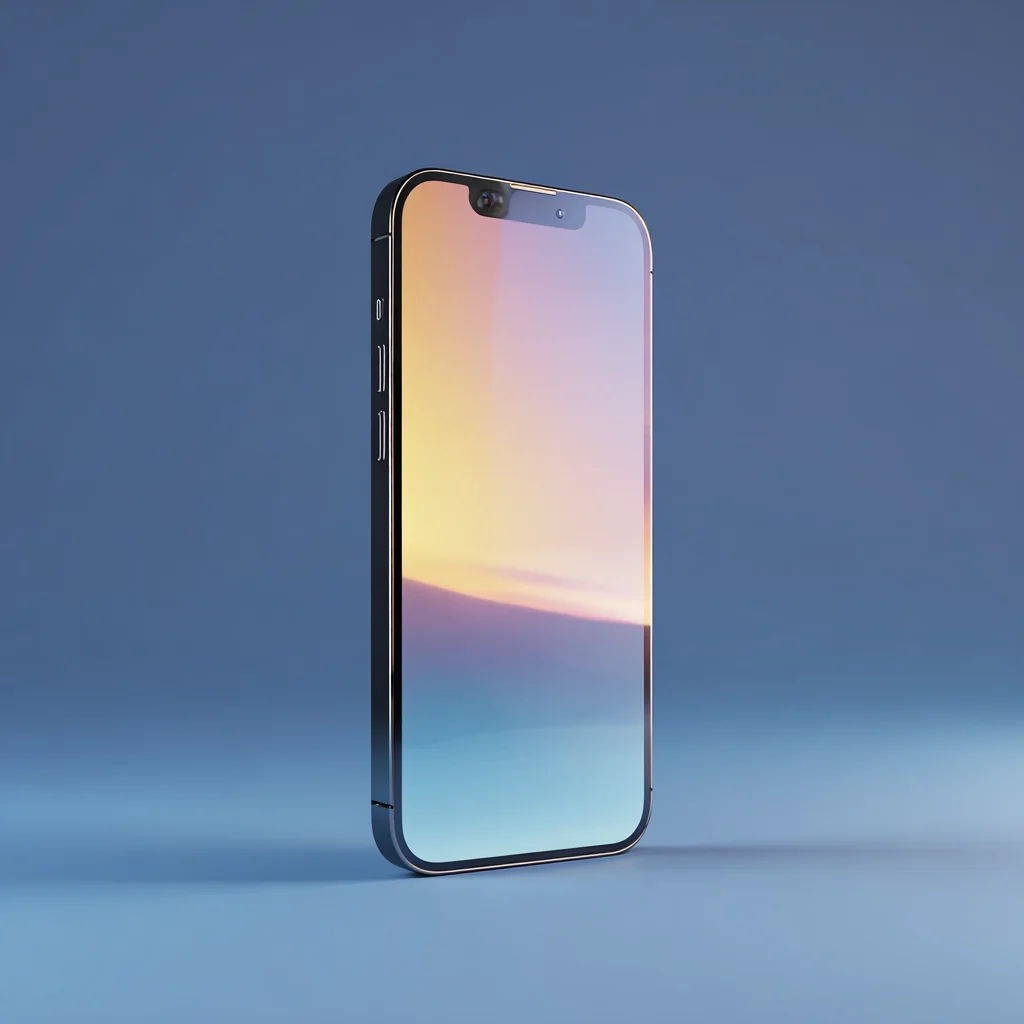
Apple's flagship smartphone line, known for its iOS operating system, premium build quality, and ecosystem integration.

VS
Dolphin

Dolphin

Intelligent marine mammal famous for playful behavior, echolocation, and complex social communication.

The Matchup

The question of whether humanity's greatest technological achievement can compete with nature's most sophisticated marine mammal may appear absurd at first consideration. Yet when we strip away the obvious differences in habitat, material composition, and the ability to perform backflips, we discover two entities that have each mastered the art of complex communication, social networking, and capturing human attention with remarkable efficiency.

The bottlenose dolphin, Tursiops truncatus, represents approximately fifty million years of evolutionary refinement. During this period, dolphins developed echolocation systems capable of detecting objects the size of a golf ball from over seventy meters away, social structures rivaling human complexity, and brains that are among the largest relative to body size in the animal kingdom. They have been observed using tools, recognizing themselves in mirrors, and demonstrating what researchers cautiously term cultural transmission of learned behaviors.

The iPhone, by contrast, emerged from a presentation by Steve Jobs in January 2007, making it approximately 0.00000034% as old as its cetacean competitor. Despite this substantial developmental disadvantage, the device has achieved global distribution exceeding 2.3 billion units, fundamentally restructured human social behavior, and created an economic ecosystem valued in the trillions of dollars. Both entities now compete for something increasingly rare in the modern world: sustained human attention.

Battle Analysis

Durability Dolphin Wins
30%
70%
iPhone Dolphin

iPhone

The iPhone's durability represents an ongoing engineering challenge that Apple addresses with each generation. Current models feature Ceramic Shield front covers claimed to offer four times better drop performance than previous generations, surgical-grade stainless steel or titanium frames, and IP68 water resistance allowing submersion to six meters for thirty minutes. These specifications represent genuine improvements over earlier consumer electronics.

However, the practical lifespan of an iPhone extends to approximately three to five years before a combination of battery degradation, software obsolescence, and the relentless marketing of newer models renders the device effectively obsolete. Apple's own environmental reports acknowledge that iPhones are designed with approximately three years of primary use as the expected lifespan, followed by potential secondary market circulation.

The device cannot self-repair. A cracked screen remains cracked until human intervention, typically at considerable expense. Battery capacity degrades inevitably with each charge cycle, following the immutable laws of lithium-ion chemistry. The iPhone exists in a state of continuous depreciation from the moment of manufacture, its value and functionality declining with each passing day until replacement becomes necessary.

Dolphin

The dolphin's durability operates on biological principles fundamentally different from silicon engineering. Bottlenose dolphins routinely achieve lifespans of forty to fifty years in the wild, with some individuals documented surviving beyond sixty years. During this period, the dolphin continuously repairs cellular damage, regenerates tissue, maintains immune function, and adapts to changing environmental conditions without requiring firmware updates or service appointments.

The dolphin's self-repair capabilities extend to remarkable feats of regeneration. Researchers have documented dolphins surviving shark attacks that removed substantial portions of body tissue, healing completely within weeks through biological processes that medical science continues to study with great interest. The dolphin's skin regenerates efficiently, wounds close rapidly, and the animal returns to full function without external intervention.

More significantly, dolphins reproduce. The dolphin population maintains itself through biological succession, with each generation carrying forward the accumulated adaptations of fifty million years. When an individual dolphin's lifespan concludes, the species continues. The iPhone, by contrast, leaves no descendants. Each unit represents a terminal biological investment that cannot perpetuate itself beyond its manufactured components.

VERDICT

Durability comparisons between biological and manufactured entities reveal the fundamental advantage of self-repair and reproduction. The iPhone degrades continuously from the moment of manufacture, requiring external intervention to maintain functionality and eventual replacement when degradation becomes unacceptable. Its lifespan measures in years; its successor must be purchased.

The dolphin not only survives for decades through continuous self-maintenance but reproduces, ensuring species continuation regardless of individual mortality. The biological model of durability, refined across geological time scales, produces results that manufacturing cannot approach. An iPhone may survive a drop onto concrete; a dolphin can survive a shark attack and raise offspring to continue the lineage.

Global reach iPhone Wins
70%
30%
iPhone Dolphin

iPhone

The iPhone's global distribution represents one of the most successful product deployments in human history. Apple has sold approximately 2.3 billion iPhones since 2007, with devices currently operating on every inhabited continent and in virtually every nation-state on Earth. The supply chain that produces these devices spans forty-three countries, involving hundreds of suppliers and millions of workers in a logistical operation of unprecedented complexity.

The iPhone's reach extends beyond mere device sales to include an ecosystem of services, accessories, and applications that generates additional hundreds of billions in annual revenue. The device has achieved such market penetration that entire categories of human activity now require iPhone access: mobile banking in developing economies, social media participation, navigation services, and increasingly, identity verification and payment processing.

This global presence was achieved through deliberate commercial strategy, massive capital investment, and marketing campaigns of extraordinary sophistication. The iPhone did not naturally evolve to fill this niche; it was engineered, manufactured, distributed, and promoted through the concentrated effort of one of the world's largest corporations. The infrastructure supporting iPhone deployment represents a significant fraction of global industrial capacity.

Dolphin

Dolphins inhabit the world's oceans with a distribution spanning from the tropics to temperate waters on both hemispheres. The family Delphinidae, which includes bottlenose dolphins and approximately forty related species, maintains populations in the Atlantic, Pacific, and Indian Oceans, the Mediterranean Sea, and numerous coastal waters worldwide. This distribution was achieved without marketing departments, supply chains, or venture capital funding.

The dolphin's global reach, while less comprehensive than iPhone distribution, encompasses territory inaccessible to electronic devices: the open ocean. Dolphins operate at depths reaching three hundred meters, travel distances exceeding one hundred kilometers per day, and access marine environments that represent seventy-one percent of Earth's surface. No iPhone can function at these depths or in these conditions, regardless of its IP68 rating.

More significantly, dolphins achieved this distribution through biological success rather than commercial enterprise. Each population represents a self-sustaining community that maintains its presence through reproduction, social organization, and ecological adaptation. The dolphin's global reach, though concentrated in marine environments, requires no industrial support infrastructure to maintain.

VERDICT

Global reach comparison yields the iPhone's clearest victory in this analysis. With 2.3 billion units distributed across virtually every human population center on Earth, the device has achieved market penetration that no biological species can match in comparable timeframes. The iPhone has become a defining feature of modern human existence, shaping how billions of people communicate, work, and understand their world.

The dolphin's oceanic distribution, while impressive in biological terms, cannot compete with the iPhone's ubiquitous presence in human society. This category demonstrates what concentrated industrial effort can achieve when applied to global distribution challenges. The iPhone wins not through superiority of design but through the unprecedented scale of its commercial deployment.

Intelligence Dolphin Wins
30%
70%
iPhone Dolphin

iPhone

The iPhone's computational intelligence derives from the A-series chip architecture, which in its current iteration contains approximately 16 billion transistors operating at frequencies approaching 3.5 gigahertz. This silicon arrangement enables the device to perform roughly 17 trillion operations per second, processing everything from facial recognition algorithms to the precise physics required to make cartoon birds collide with cartoon pigs.

The device's intelligence, however, operates within strictly defined parameters. An iPhone cannot independently decide to investigate an unusual sound, form opinions about its environment, or experience what philosophers might term qualia. When presented with a novel problem, the iPhone consults algorithms written by humans, whereas a dolphin consults fifty million years of accumulated evolutionary wisdom encoded in neural tissue weighing approximately 1,600 grams.

Perhaps most significantly, the iPhone's intelligence requires external instruction. Each capability must be programmed, tested, and approved before deployment. The device cannot learn to solve problems its creators did not anticipate. It processes data with extraordinary speed but does not, in any meaningful sense, understand what it processes. The iPhone is a tool of remarkable sophistication, but it remains, fundamentally, a tool.

Dolphin

Dolphin intelligence manifests through behaviors that have prompted serious scientific debate about consciousness and self-awareness. The encephalization quotient of bottlenose dolphins measures approximately 4.14, second only to humans among mammals and substantially higher than any other non-primate species. This metric, which compares actual brain size to expected brain size for an animal of equivalent body mass, suggests cognitive capabilities far exceeding those required for mere survival.

Researchers at the Dolphin Research Center have documented dolphins spontaneously inventing new behaviors when rewarded for creativity rather than specific actions. In one landmark study, dolphins understood the abstract concept of novelty itself, performing unique behaviors they had never executed before when given the appropriate signal. No iPhone has ever independently invented a new feature, however desperately its users might wish otherwise.

The dolphin brain contains spindle neurons, previously thought unique to humans and great apes. These specialized cells are associated with social cognition, emotional processing, and the integration of complex sensory information. Dolphins recognize themselves in mirrors, a test of self-awareness that only a handful of species pass. They maintain social relationships spanning decades, remember individual encounters years later, and have been observed engaging in what can only be described as political maneuvering within their social groups.

VERDICT

The intelligence comparison reveals a fundamental distinction between processing power and understanding. The iPhone can execute seventeen trillion calculations per second, yet remains incapable of the most basic cognitive feats that dolphins perform routinely: recognizing self, forming lasting social bonds, adapting creatively to novel situations, or experiencing curiosity about the world.

Computational speed does not constitute intelligence in the meaningful sense. The dolphin's brain, though slower in raw calculations, demonstrates genuine cognitive flexibility, emotional depth, and what researchers increasingly suspect may be a form of consciousness not entirely unlike our own. In this category, biological evolution's fifty-million-year research and development program produces results that seventeen years of silicon engineering cannot match.

Communication Dolphin Wins
30%
70%
iPhone Dolphin

iPhone

The iPhone's communication capabilities span an impressive array of protocols and standards. The device supports 5G cellular networks operating at frequencies up to 39 GHz, WiFi 6E with theoretical throughput exceeding 9 gigabits per second, Bluetooth 5.3, Near Field Communication, and satellite connectivity for emergency situations. This technological symphony enables the transmission of text, voice, video, and data to virtually any connected device on Earth, and occasionally to devices orbiting above it.

The precision of iPhone communication cannot be overstated. Each message arrives as a perfect digital replica of what was sent, uncorrupted by distance or interpretation. A photograph transmitted from Tokyo to Toronto loses not a single pixel. A voice message preserves every nuance of intonation. The iPhone has effectively eliminated geography as a barrier to human communication, connecting billions of people who would otherwise never interact.

Yet this communication remains fundamentally passive. The iPhone transmits what humans create but contributes nothing original to the conversation. It serves as a conduit, an extraordinarily sophisticated conduit, but a conduit nonetheless. The device facilitates human expression without expressing anything itself. Its contribution to global communication is that of an infrastructure provider rather than a participant.

Dolphin

Dolphin communication operates through a dual-channel system of remarkable sophistication. Echolocation clicks, produced at frequencies between 20 and 130 kilohertz, enable dolphins to construct three-dimensional sonic images of their environment with resolution sufficient to detect the internal organs of prey fish. Simultaneously, a separate system of whistles, burst pulses, and body postures conveys social information, emotional states, and individual identity.

Each dolphin develops a unique signature whistle during infancy, essentially a sonic name that remains stable throughout the animal's life. Other dolphins remember and use these signature whistles to address specific individuals, even after years of separation. This represents one of the few documented examples of referential communication in non-human animals: the use of arbitrary symbols to represent specific entities. The implications for dolphin cognitive capabilities remain a subject of intense scientific investigation.

Perhaps most remarkably, dolphins demonstrate cultural transmission of communication patterns. Distinct populations develop unique dialects, hunting calls, and social behaviors that spread through learning rather than genetic inheritance. Researchers have documented dolphins teaching novel behaviors to their offspring and peers, suggesting the existence of something approaching oral tradition in cetacean societies. The iPhone, for all its capabilities, has never invented a new word or taught another iPhone anything at all.

VERDICT

The communication comparison ultimately hinges on the distinction between transmission and expression. The iPhone transmits human communications with unparalleled fidelity and reach, connecting billions across continental distances. This represents a genuine engineering triumph that has transformed human society in ways we are still struggling to understand.

The dolphin, however, actually communicates. It creates original messages, responds to others' communications, maintains individual identity through sonic signature, and participates in cultural traditions of information exchange spanning generations. While the iPhone enables human communication, the dolphin engages in communication as a cognitive agent. In the realm of genuine communicative ability, evolved biology once again demonstrates capabilities that engineered silicon cannot replicate.

Entertainment value Dolphin Wins
30%
70%
iPhone Dolphin

iPhone

The iPhone has fundamentally restructured human entertainment, placing access to virtually unlimited content within reach of billions of users. The device provides streaming video services offering thousands of films and television series, music libraries containing tens of millions of songs, gaming platforms hosting hundreds of thousands of titles, and social media applications that have become primary entertainment sources for entire generations.

The economic scale of iPhone-delivered entertainment defies easy comprehension. The App Store alone generated over $85 billion in revenue during 2022, much of it from entertainment applications. Netflix, Spotify, TikTok, and countless other entertainment platforms have built billion-dollar businesses primarily on iPhone distribution. The device has become the primary entertainment delivery mechanism for a significant portion of humanity.

Yet the iPhone itself is not entertaining. It delivers entertainment created by others, providing a screen through which human creativity reaches audiences. The device possesses no wit, performs no tricks, inspires no genuine delight through its own actions. An iPhone sitting on a table, disconnected from human-created content, offers no more entertainment value than any other rectangular black object of similar dimensions.

Dolphin

Dolphins have entertained humans for millennia, appearing in ancient Greek mythology, Roman mosaics, and countless cultural artifacts across civilizations. This entertainment value derives not from content dolphins deliver but from what dolphins themselves do: leaping from the water in acrobatic displays, riding waves alongside boats, interacting with swimmers, and demonstrating behaviors that suggest playfulness, joy, and genuine engagement with the world.

Marine parks featuring dolphin performances attracted hundreds of millions of visitors throughout the twentieth century, though ethical concerns have increasingly questioned this form of entertainment. Wild dolphin encounters now support substantial ecotourism industries, with whale and dolphin watching generating an estimated $2.1 billion annually across coastal communities worldwide. Dolphins create entertainment value simply by existing and behaving naturally.

More fundamentally, dolphins appear to entertain themselves. Researchers have documented dolphins engaging in play behaviors with no apparent survival value: tossing objects, creating bubble rings, surfing waves, and interacting with other species including humans in ways that suggest genuine enjoyment. The dolphin does not merely deliver entertainment; it experiences something that may resemble fun, a claim no iPhone can credibly make.

VERDICT

Entertainment value ultimately distinguishes between delivery mechanisms and sources of genuine delight. The iPhone provides access to vast entertainment libraries created by humans, functioning as an extraordinarily effective distribution system for content created elsewhere. Its entertainment value is derivative, dependent entirely on what humans create and consume through it.

The dolphin entertains through its own existence and actions. It leaps, plays, interacts, and engages with the world in ways that have captivated human observers across cultures and millennia. The dolphin is entertaining, inherently and independently, requiring no App Store, streaming subscription, or network connectivity. In this category, authentic biological engagement outperforms silicon-mediated content delivery.

👑

The Winner Is

Dolphin

45 - 55

This analysis concludes with a 55-45 victory for the dolphin, reflecting the accumulated advantages of fifty million years of evolutionary refinement against seventeen years of industrial design. The dolphin prevails in four of five categories: Intelligence, Communication, Durability, and Entertainment Value. The iPhone claims decisive victory only in Global Reach, where concentrated commercial effort has achieved distribution numbers that biological reproduction cannot match.

The result should not diminish appreciation for either entity's remarkable achievements. The iPhone represents humanity's most successful consumer electronics product, a device that has genuinely transformed how billions of people live, work, and relate to one another. Its influence on human society exceeds that of most technologies ever created. Yet influence is not the same as inherent capability, and when evaluated on fundamental metrics, biological evolution produces results that engineering cannot replicate.

The dolphin's advantages emerge from capabilities that the iPhone, despite its processing power, cannot approximate: genuine understanding rather than mere calculation, authentic communication rather than transmission, self-repair and reproduction rather than planned obsolescence, and the capacity for joy rather than the delivery of entertainment created by others. These differences reflect the fundamental distinction between tools that serve consciousness and consciousness itself.

iPhone
45%
Dolphin
55%

Share this battle

More Comparisons