
Topic Battle

Where Everything Fights Everything

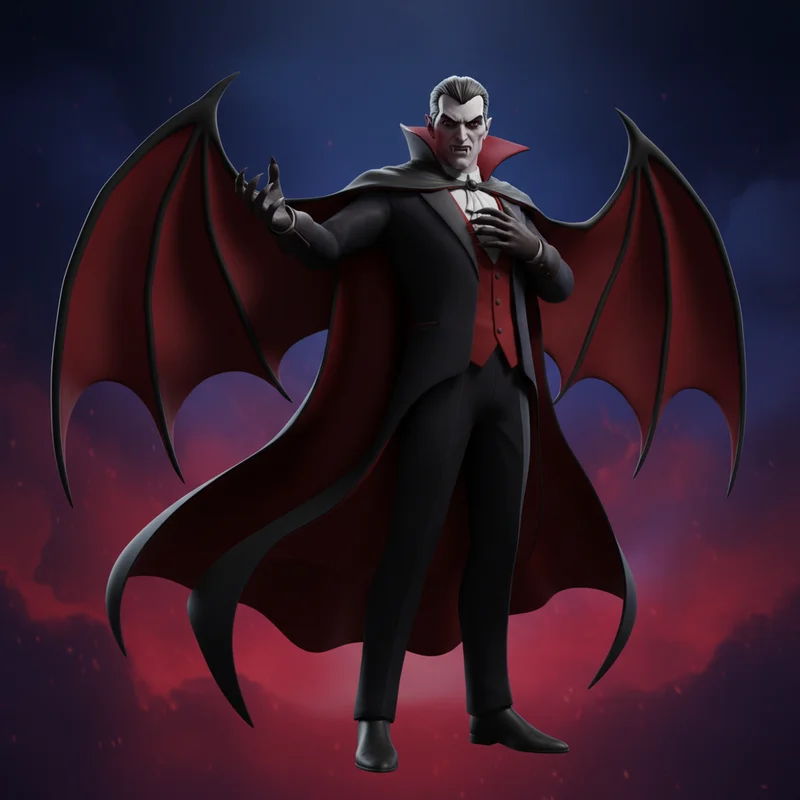
Dracula

Dracula

Original vampire count from Transylvania.

VS
Mario

Mario

Nintendo's mustachioed plumber and gaming icon.

Battle Analysis

Economic influence Mario Wins
30%
70%
Dracula Mario

Dracula

Dracula's economic footprint extends across the global entertainment industry in ways that would impress even the most ambitious venture capitalists. The Count has generated billions in revenue through theatrical productions, major motion pictures, television series, merchandise, and tourism to Transylvanian destinations.

The 1931 Universal Pictures adaptation alone has spawned a franchise empire worth hundreds of millions. Subsequent iterations including Hammer Horror productions, Francis Ford Coppola's 1992 extravaganza, and countless others have collectively established Dracula as one of the most valuable intellectual properties in horror entertainment.

Romanian tourism has benefited substantially from Dracula's cultural cachet, with Bran Castle receiving hundreds of thousands of visitors annually despite only tenuous connections to the historical Vlad the Impaler. This represents an impressive return on Stoker's original creative investment.

Mario

Mario's economic impact operates on a scale that renders most entertainment franchises irrelevant by comparison. As of 2024, the Mario franchise has generated over $40 billion in lifetime revenue, establishing it as one of the most commercially successful entertainment properties in human history.

Individual titles routinely achieve sales figures in the tens of millions. Super Mario Bros. (1985) is credited with single-handedly rescuing the North American video game industry from the crash of 1983. The 2023 animated film grossed $1.36 billion at the global box office, becoming the second-highest-grossing animated film ever produced.

Beyond direct sales, Mario's influence permeates Nintendo's entire corporate valuation. The company's market capitalisation of approximately $80 billion rests substantially upon the continued appeal of a moustachioed plumber and his extensive roster of friends, enemies, and kart-racing companions.

VERDICT

A $40 billion franchise demonstrably outperforms even the most successful vampire-related revenue streams.
Psychological impact Dracula Wins
70%
30%
Dracula Mario

Dracula

Dracula's psychological impact operates through primal fear mechanisms hardwired into human consciousness. The vampire archetype taps into anxieties surrounding death, sexuality, contamination, and the violation of bodily autonomy that resonate across cultures and historical periods.

The Count's influence on the horror genre has been transformative and enduring. Virtually every subsequent vampire representation owes something to Stoker's creation, whether through homage, subversion, or outright imitation. The romantic vampire phenomenon, from Anne Rice to Stephenie Meyer, represents a direct lineage from Dracula's tortured nobility.

Psychologically, Dracula embodies the shadow self in Jungian terms - the repressed desires and forbidden impulses that civilised society demands we suppress. His enduring appeal reflects humanity's complicated relationship with mortality, desire, and the seductive promise of eternal power.

Mario

Mario's psychological impact operates through reward pathway optimisation refined over four decades of game design excellence. The satisfaction of a perfectly timed jump, the dopamine release of coin collection, and the relief of checkpoint activation have been calibrated to maximise player engagement and positive emotional association.

Generational imprinting ensures that Mario carries nostalgic significance for billions of individuals worldwide. For many, Mario represents their first meaningful interaction with interactive entertainment, establishing neural pathways associated with joy, accomplishment, and childhood wonder that persist into adulthood.

The character's design embodies pure optimism in visual form. His permanently cheerful expression, primary colour palette, and enthusiastic vocalisations create a psychological safe space that stands in deliberate contrast to the darkness and moral ambiguity prevalent in contemporary media.

VERDICT

Engagement with primal fears and fundamental human psychology achieves deeper impact than dopamine optimisation.
Cultural adaptability Mario Wins
30%
70%
Dracula Mario

Dracula

Dracula's cultural adaptability represents a masterclass in reinvention whilst maintaining core identity. The Count has successfully transitioned from Victorian Gothic horror to camp comedy to romantic anti-hero to action antagonist, demonstrating remarkable flexibility across tonal registers.

Each generation has reinterpreted Dracula according to its particular anxieties. The 1931 Lugosi portrayal spoke to fears of Eastern European immigration; the 1970s Hammer films explored repressed sexuality; the 1990s Coppola version emphasised tragic romance; and contemporary iterations like Netflix's 2020 series engage with themes of technology and immortality in the digital age.

This chameleonic quality has enabled Dracula to remain relevant across 127 years of dramatic social change, adapting his symbolic meaning whilst retaining essential characteristics: cape, fangs, and an aristocratic disdain for garlic-heavy cuisine.

Mario

Mario's cultural adaptability operates through a different mechanism: genre colonisation. Rather than reinventing his core identity, the plumber has systematically expanded into every conceivable gaming format whilst maintaining consistent characterisation.

The portfolio now includes platformers, racing games, role-playing games, puzzle games, fighting games, sports simulations, educational software, and whatever category Mario Party occupies in gaming taxonomy. Each genre adaptation succeeds whilst preserving Mario's fundamental cheerfulness and moustache.

Cross-cultural penetration is equally impressive. Mario enjoys recognition rates exceeding 95% across virtually all demographics in developed nations, surpassing even Mickey Mouse in certain surveys. His simple, expressive design translates seamlessly across cultural boundaries, requiring no explanation or localisation beyond costume colour specifications.

VERDICT

Genre versatility and universal recognisability provide broader cultural penetration than thematic reinvention.
Physical capabilities Dracula Wins
70%
30%
Dracula Mario

Dracula

The vampire's physical capabilities represent a formidable arsenal of supernatural powers. Dracula possesses superhuman strength sufficient to overpower multiple opponents simultaneously, accelerated healing, and the capacity to scale vertical surfaces with the ease of a gecko navigating a terrarium wall.

His metamorphic abilities expand this repertoire considerably. The Count can transform into a bat for aerial reconnaissance, a wolf for terrestrial pursuit, or mist for infiltration of secured premises. This shapeshifting versatility provides tactical options unavailable to conventional organisms, though each form carries its own operational limitations.

Perhaps most significantly, Dracula's hypnotic gaze enables direct mental control over susceptible individuals, effectively allowing him to command small armies of thralls without requiring formal HR processes or competitive salary packages.

Mario

Mario's physical capabilities, while lacking supernatural origins, demonstrate remarkable consistency and reliability. His vertical leap of approximately five times his own height would, if scaled to human proportions, enable the average person to jump over a three-storey building from a standing start.

The plumber's durability is equally impressive. He can withstand direct impacts from hammers, fireballs, and sentient bullets with faces, resuming normal operations after consuming appropriate power-ups. His sprint speed, while modest compared to certain blue hedgehogs, maintains sufficient velocity to outrun collapsing platforms and advancing walls of lava.

Power-up augmentation expands Mario's capabilities significantly. The Fire Flower enables pyrokinesis, the Super Star grants temporary invincibility, and the Tanooki Suit provides flight capabilities and the inexplicable ability to transform into an inanimate statue. This modular enhancement system offers tactical flexibility rivalling Dracula's shapeshifting.

VERDICT

Innate supernatural powers outperform power-up dependent abilities requiring external consumables.
Longevity and endurance Mario Wins
30%
70%
Dracula Mario

Dracula

Dracula's approach to longevity is refreshingly straightforward: he simply refuses to die. Having achieved biological immortality sometime in the 15th century, the Count has accumulated over five centuries of continuous existence, interrupted only by occasional stakings, decapitations, and exposure to holy water.

The vampire's regenerative capabilities are remarkable from a biomechanical perspective. Complete physical destruction merely results in a temporary inconvenience, with full restoration typically occurring within a generation or two. This cyclical pattern of death and resurrection has been documented across hundreds of literary and cinematic adaptations, each confirming the Count's essential indestructibility.

From a practical standpoint, Dracula's immortality does carry significant lifestyle restrictions. The inability to enjoy a leisurely breakfast, attend daytime social functions, or enter homes without formal invitation represents a considerable trade-off for eternal life. Nevertheless, his track record of 127 years of continuous cultural relevance since Stoker's novel speaks for itself.

Mario

Mario's approach to longevity operates on an entirely different principle: infinite respawning. Rather than avoiding death, the plumber has embraced it as a routine occupational hazard, having perished countless billions of times across four decades of active service.

The statistical analysis is staggering. Conservative estimates suggest Mario has been crushed, burned, drowned, poisoned, and fallen into bottomless pits more times than any entity in recorded history. Yet each death represents merely a temporary setback, followed immediately by cheerful resurrection at the nearest checkpoint. This model of mortality suggests a fundamentally different relationship with existence itself.

Since his debut in Donkey Kong (1981), Mario has maintained an unbroken presence in gaming culture spanning 44 years. His approach requires no blood consumption, imposes no dietary restrictions, and permits full enjoyment of sunlight. The trade-off involves perpetual labour rescuing a princess who demonstrates a concerning inability to maintain her own security.

VERDICT

Mario's infinite respawn system proves more practically sustainable than traditional vampiric immortality.
👑

The Winner Is

47 - 53

This comprehensive analysis reveals two entities who have each achieved a form of cultural immortality through fundamentally different methodologies. Dracula represents the power of darkness, fear, and the eternal human fascination with death and forbidden desire. Mario embodies the opposite impulse: perpetual optimism, simple pleasures, and the universal appeal of a cheerful tradesman who never complains about his working conditions.

Mario's victory, with a final score of 53-47, reflects practical considerations rather than any inherent superiority. His economic impact is genuinely unparalleled in entertainment history, his cultural penetration spans virtually every demographic, and his model of immortality proves considerably more user-friendly than blood consumption and sunlight avoidance.

However, Dracula's narrow defeat should not obscure his remarkable achievements. The Count has maintained cultural relevance for over a century through continuous reinvention, and his psychological resonance with fundamental human anxieties ensures his survival for centuries to come. In the final analysis, both figures have achieved something truly extraordinary: genuine immortality in the collective consciousness of humanity.

Dracula
47%
Mario
53%

Share this battle

More Comparisons