Topic Battle

Where Everything Fights Everything

Dracula

Dracula

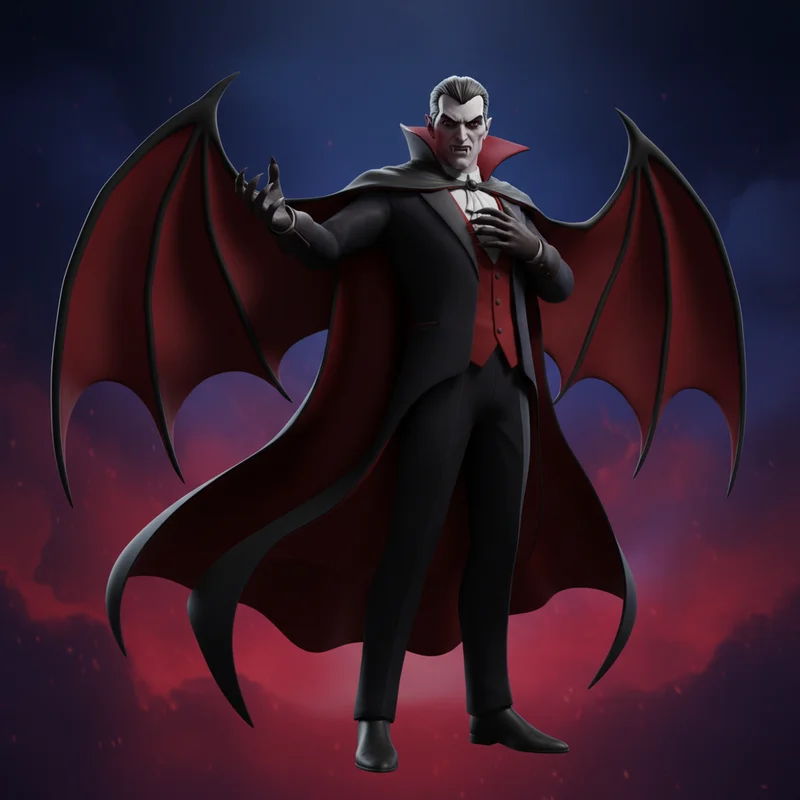
Original vampire count from Transylvania.

VS
Procrastination

Procrastination

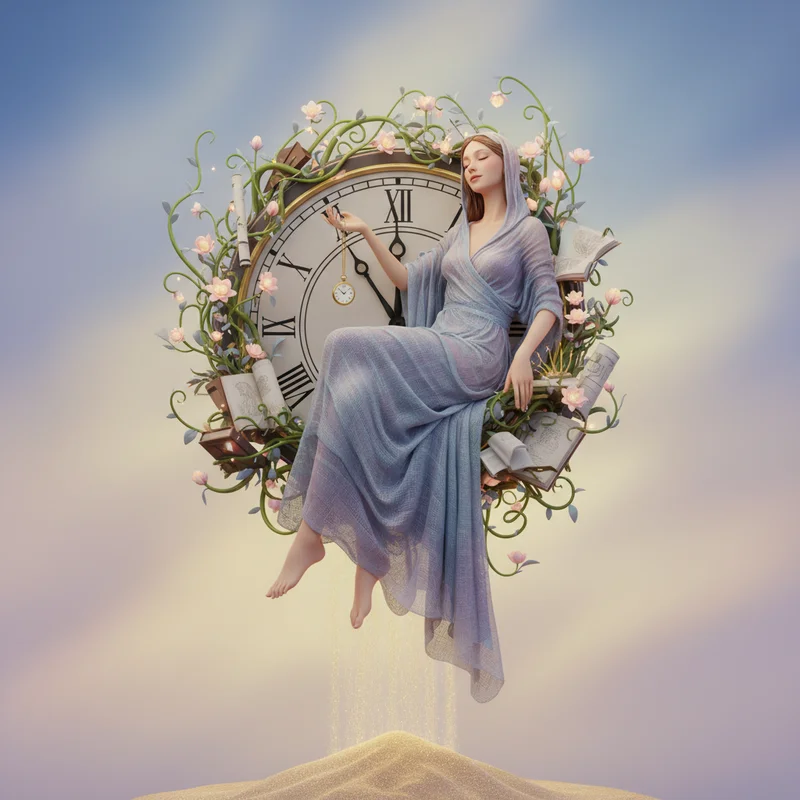
The art of doing everything except the one thing you should be doing. A universal human experience that has spawned more clean apartments, reorganized sock drawers, and Wikipedia deep dives than any productivity method ever could.

Battle Analysis

Longevity procrastination Wins
30%
70%
Dracula Procrastination

Dracula

The literary Dracula traces his origins to 1897, though the vampiric archetype upon which he draws extends considerably further into folkloric history. Count Orlok, Varney the Vampire, and countless regional blood-drinking entities precede Stoker's creation by centuries. The character himself claims an in-universe existence spanning some four hundred years.

As a cultural property, Dracula has demonstrated remarkable staying power, successfully transitioning from Victorian gothic literature through silent cinema, Hammer horror, and contemporary young adult fiction without significant diminution of public interest.

Procrastination

Archaeological evidence suggests procrastination has existed for as long as humanity has possessed the cognitive capacity for temporal planning. Ancient Sumerian tablets contain complaints about workers who consistently failed to complete assigned irrigation projects, whilst Greek philosophers devoted considerable intellectual energy to understanding akrasia, the failure to act according to one's better judgement.

The behaviour predates not merely recorded history but likely predates Homo sapiens itself, with primate researchers documenting delay behaviours in great apes facing unpleasant but necessary tasks. Its evolutionary persistence spans millions of years.

VERDICT

Procrastination's evolutionary origins predate human civilisation by several million years.
Adaptability procrastination Wins
30%
70%
Dracula Procrastination

Dracula

Dracula has demonstrated considerable flexibility in adapting to changing cultural contexts. From the aristocratic predator of Victorian anxieties through the romantic anti-hero of contemporary paranormal romance, the count has successfully reinvented himself for each generation. He has adopted modern technology, infiltrated corporate structures in film, and even sparkled when market conditions demanded.

This adaptability extends to his supernatural abilities, which screenwriters and novelists routinely modify to suit narrative requirements. His core identity remains recognisable despite substantial variation in specific capabilities.

Procrastination

Procrastination exhibits near-perfect adaptability to any technological or social environment humanity devises. Each innovation intended to enhance productivity is swiftly colonised by procrastination. Email became a vector for displacement activity. Social media platforms became procrastination delivery systems of unprecedented efficiency.

The phenomenon adapts not merely to new contexts but actively exploits them. Productivity applications designed to combat procrastination are themselves frequently used to procrastinate about addressing procrastination. This recursive adaptability suggests a level of evolutionary fitness unmatched in behavioural psychology.

VERDICT

Procrastination colonises every productivity innovation humanity creates, demonstrating superior adaptive capacity.
Daily Utility procrastination Wins
30%
70%
Dracula Procrastination

Dracula

The practical applications of Count Dracula in quotidian existence remain, regrettably, somewhat limited. He serves admirably as a costume option during seasonal festivities and provides reliable dramatic tension in entertainment media. His cultural presence enriches the tourism industry of Romania's Transylvania region.

Beyond these niche applications, however, the count offers little of practical value to the average individual. His insistence on nocturnal activity and haemoglobin consumption renders him unsuitable for most domestic or professional contexts.

Procrastination

Procrastination, despite its negative reputation, provides genuine psychological utility. Research indicates that strategic delay allows for unconscious processing of complex problems, often yielding superior solutions compared to immediate action. The behaviour serves as a protective mechanism against burnout and perfectionist paralysis.

Furthermore, procrastination provides reliable employment for an entire industry of productivity consultants, application developers, and self-help authors. Its daily presence in human life, whilst frequently unwelcome, demonstrates an integration into ordinary existence that Dracula cannot approach.

VERDICT

Procrastination maintains constant presence in daily life with documented psychological utility.
Global Recognition procrastination Wins
30%
70%
Dracula Procrastination

Dracula

Count Dracula has achieved remarkable penetration into the collective consciousness of humanity. Since Bram Stoker's seminal 1897 publication, the Transylvanian nobleman has been translated into virtually every written language, inspiring over two hundred theatrical and cinematic adaptations. His distinctive silhouette, complete with evening cape and pronounced canines, requires no explanatory caption in any culture.

The vampire count has successfully established franchise recognition across six inhabited continents, with Halloween merchandise sales alone contributing significantly to global retail economies. His personal branding remains remarkably consistent despite over a century of reinterpretation.

Procrastination

Procrastination transcends all cultural, linguistic, and geographic boundaries with an immediacy that Dracula himself might envy. From Tokyo office workers to Amazonian subsistence farmers, the impulse to delay necessary tasks represents a truly universal human experience, documented in writings dating to ancient Egyptian civilisations.

The phenomenon requires no translation, no cultural context, no prior literary exposure. Every functioning human brain contains the neural architecture for procrastination, making it perhaps the most democratically distributed phenomenon in human psychology. Its recognition is not learned but innate.

VERDICT

Procrastination requires no cultural transmission; it manifests spontaneously in every human population.
Intimidation Factor dracula Wins
70%
30%
Dracula Procrastination

Dracula

Count Dracula embodies the apex predator of supernatural horror. His abilities include superhuman strength, hypnotic control over human minds, transformation into bat or wolf form, and the capacity to create an army of undead servants. He requires no invitation to haunt one's nightmares, though he famously cannot enter a dwelling uninvited.

The psychological terror inspired by Dracula draws upon primal fears of darkness, predation, and the violation of bodily autonomy. Entire religious institutions have developed counter-measures against his kind, testament to the genuine dread he inspires.

Procrastination

Procrastination's intimidation operates through an entirely different mechanism, one arguably more insidious than overt supernatural threat. It does not announce its presence with theatrical cape flourishes but instead quietly accumulates consequences until catastrophic failure becomes inevitable.

The terror of procrastination lies in its delayed manifestation. One may successfully avoid a vampire through garlic and holy water, but no talisman protects against the mounting anxiety of approaching deadlines and the knowledge that one has squandered irreplaceable time.

VERDICT

Dracula's immediate physical threat commands greater primal terror than procrastination's slow accumulation.
👑

The Winner Is

Procrastination

45 - 55

Our exhaustive analysis reveals that whilst Count Dracula commands superior name recognition in popular culture and maintains an undeniable advantage in matters of immediate physical intimidation, procrastination emerges as the more formidable entity in nearly every measurable dimension of human impact.

The count, for all his supernatural prowess, remains ultimately a fictional construct whose influence, though considerable, is mediated through cultural consumption. Procrastination, by contrast, operates directly upon human consciousness with the inevitability of gravitational force. It requires no believers, no cultural transmission, no dramatic adaptation. It simply exists, woven into the very fabric of human cognition, triumphing over every attempt at its eradication with the quiet persistence of entropy itself.

Dracula
45%
Procrastination
55%

Share this battle

More Comparisons