Topic Battle

Where Everything Fights Everything

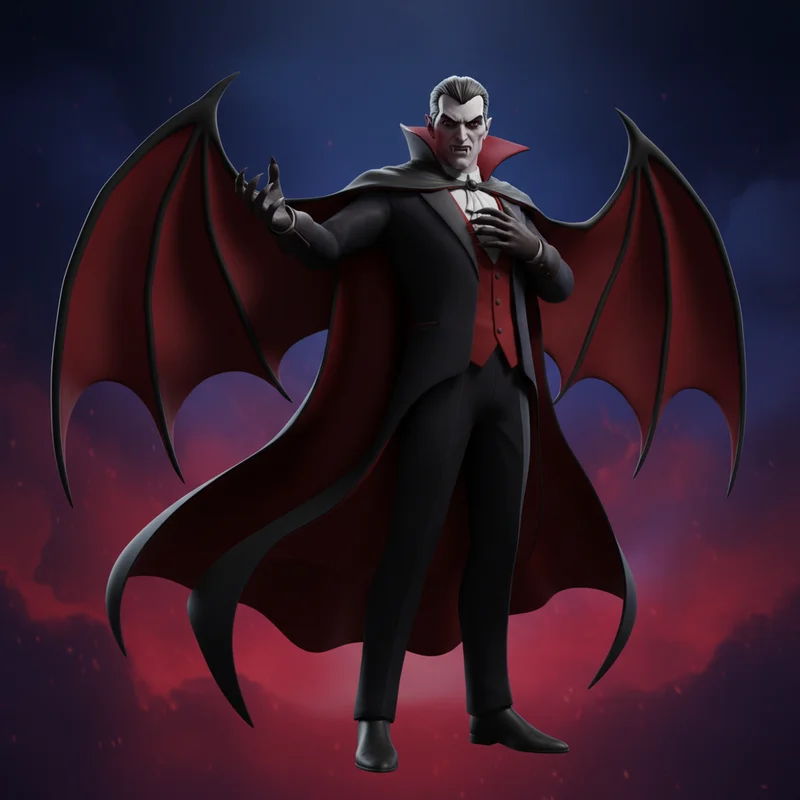
Dracula

Dracula

Original vampire count from Transylvania.

VS
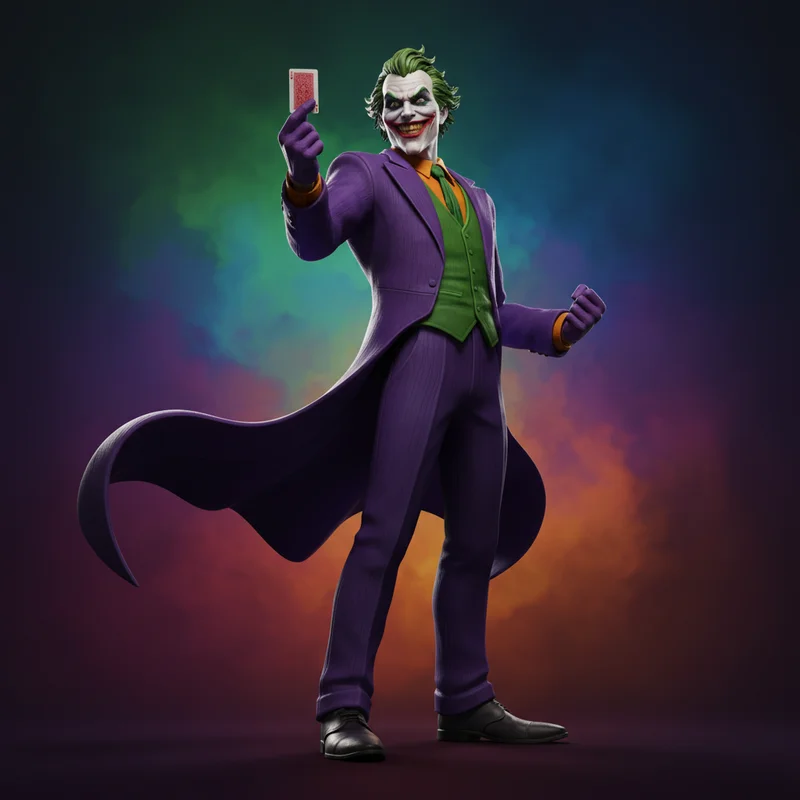
The Joker

The Joker

Chaos-loving clown prince of crime.

Battle Analysis

Longevity Dracula Wins
70%
30%
Dracula The Joker

Dracula

Count Dracula presents documented existence spanning from the fifteenth century to the present day. This five-century tenure establishes him as one of history's most enduring individual entities. Unlike mortal villains who must eventually yield to biological inevitability, the Count has watched generations of adversaries age and perish whilst he remains unchanged.

His immortality requires only periodic biological inputs, haemoglobin extraction proving remarkably sustainable as operational models go. The vampire has survived wooden stakes, holy water, Van Helsing's entire arsenal, and the complete transformation of human civilisation from feudal kingdoms to digital networks. Barring extremely specific countermeasures, his continuity appears genuinely indefinite, a persistence that no mortal villain can approximate.

The Joker

The Joker's longevity, whilst impressive by human standards, remains fundamentally constrained by mortality. His criminal career spans perhaps three to four decades of active terrorisation, depending upon which continuity scholars privilege. During this period, he has survived encounters that would have ended ordinary criminals: beatings from Batman, exposure to his own chemical compounds, and multiple apparent deaths.

Yet the Clown Prince of Crime ages, however slowly his deterioration appears to progress. His psychological resilience masks what must inevitably become biological decline. Whilst the Joker has demonstrated remarkable capacity for resurrection in narrative terms, his existence depends entirely upon continued survival of fragile human physiology. The Count need only wait, patient across centuries, for time to accomplish what direct confrontation cannot.

VERDICT

Five centuries of verified immortality definitively outweighs three decades of mortal persistence
Combat prowess Dracula Wins
70%
30%
Dracula The Joker

Dracula

The Count's physical capabilities operate at levels that render conventional opposition meaningless. His strength, documented as exceeding that of twenty mortal men, allows him to scale castle walls, overpower armed opponents, and tear through barriers that would halt ordinary combatants. His reflexes and speed blur the boundary between movement and teleportation.

Beyond raw physicality, Dracula commands transformative abilities providing tactical options unavailable to any human adversary. He can become mist to pass through sealed barriers, assume wolf form for tracking and pursuit, or take bat shape for aerial reconnaissance and escape. His hypnotic gaze subdues victims before physical confrontation becomes necessary. The combination of superhuman attributes and supernatural versatility creates a combat profile that street-level threats cannot meaningfully challenge.

The Joker

The Joker possesses no superhuman physical attributes. His combat capability relies upon conventional weapons enhanced by chemical expertise: knives, firearms, explosive devices, and his signature Joker Venom. He has been physically bested by Batman in virtually every direct encounter, requiring capture rather than elimination due to Batman's moral constraints.

What the Joker lacks in raw capability, he compensates through utter disregard for personal safety. He enters confrontations expecting injury, using pain as distraction and apparent vulnerability as tactical misdirection. His willingness to deploy concealed weapons, booby traps, and suicide-adjacent strategies makes close engagement unpredictable. However, against an opponent who can transform into mist or hypnotise at a glance, such advantages become irrelevant. The Joker has never faced supernatural opposition on this scale.

VERDICT

Supernatural strength and shape-shifting abilities utterly outclass human combat capability
Cultural impact Dracula Wins
70%
30%
Dracula The Joker

Dracula

Count Dracula represents perhaps the most successful character branding in literary history. Since Bram Stoker's 1897 novel, the character has spawned over two hundred film adaptations, countless theatrical productions, and merchandise sufficient to fill several Transylvanian castles. His name requires no explanation in any major world language.

The vampire's influence extends beyond entertainment into fundamental cultural vocabulary. The word 'Dracula' has become synonymous with vampirism itself. His image adorns breakfast cereals, educational materials, and decorations for an entire Western holiday. Children who cannot locate Romania on a map nonetheless recognise the caped figure with pointed canines. This universal recognition spans social classes, generations, and cultural boundaries with efficiency that marketing professionals study with unconcealed admiration.

The Joker

The Joker has achieved iconic status within popular culture, particularly following Heath Ledger's 2008 portrayal and Joaquin Phoenix's 2019 interpretation. He consistently ranks among the greatest fictional villains in critical assessments and has transcended his comic book origins to become a symbol of anarchic philosophy.

However, the Clown Prince of Crime's cultural penetration remains largely confined to Western entertainment consumption. His recognition depends upon familiarity with Batman mythology, a prerequisite not universally met. Whilst his image has achieved meme status and his philosophy attracts certain subcultural adherents, the Joker lacks Dracula's multi-century head start and cross-cultural accessibility. The vampire entered global consciousness when cinema was young; the clown competes in a saturated attention economy.

VERDICT

One hundred and twenty-seven years of global cultural dominance surpass eight decades of comic book fame
Intimidation factor Dracula Wins
70%
30%
Dracula The Joker

Dracula

Count Dracula's capacity for terror operates at primal psychological depths that bypass rational thought entirely. His mere presence triggers evolutionary fear responses encoded over millennia: the predator emerging from darkness, the violation of bodily autonomy, the corruption of mortality itself. The vampire represents death that refuses its proper boundaries, consumption that transforms victim into perpetrator.

The Count's intimidation extends beyond individual encounters. Entire villages in the Carpathian regions speak his name only in whispers, if at all. His legend has persisted across centuries, outliving empires and surviving every attempt at eradication. The psychological architecture of vampire terror exploits fundamental anxieties about infection, sexuality, and the surrender of individual will. No amount of modern rationalisation diminishes the visceral response to those crimson eyes emerging from shadow.

The Joker

The Joker's intimidation derives from unpredictability rather than supernatural menace. His victims never know whether interaction will produce laughter or death, often experiencing both simultaneously. He has tortured police commissioners, murdered beloved public figures on live television, and committed atrocities broadcast across Gotham with theatrical flourish.

His psychological impact on Gotham represents sustained citywide terror. Citizens fear clown imagery, public gatherings, and seemingly innocuous packages. The mere rumour of his escape from Arkham Asylum triggers measurable increases in emergency psychiatric admissions. However, the Joker's intimidation factor remains geographically circumscribed to those familiar with his reputation. Outside Gotham and perhaps wider American consciousness, he appears as merely a theatrical criminal rather than an existential threat.

VERDICT

Centuries of accumulated terror across continents surpass decades of localised urban menace
Strategic intelligence The Joker Wins
30%
70%
Dracula The Joker

Dracula

The Count's strategic mind has developed across five centuries of survival and predation. His 1897 expedition to London demonstrated considerable planning: years spent studying English law, property acquisition, and shipping logistics before attempting continental migration. He anticipates countermeasures, prepares multiple refuges, and operates with patience unavailable to mortal schemers.

However, Dracula's strategic thinking reflects his aristocratic origins. He plans in terms of territory, dominion, and hierarchical control rather than psychological manipulation. His documented failures often stem from underestimating opponents or proceeding with excessive confidence in his supernatural advantages. The Count thinks like a military commander rather than a psychological tactician, and this categorical limitation has occasionally proved exploitable.

The Joker

The Joker's intellect represents his most formidable weapon, a criminal genius capable of devising schemes that incorporate Batman's interventions as planned variables. He has orchestrated city-wide chaos through interlocking contingencies, predicted responses of Gotham's entire justice system, and escaped Arkham Asylum more frequently than any documented inmate.

His strategic brilliance derives partially from its apparent irrationality. The Joker creates plans that seem nonsensical until execution reveals devastating logic. He understands psychology at an intuitive level, identifying and exploiting emotional vulnerabilities with surgical precision. His manipulation of Harvey Dent, Jason Todd, and countless others demonstrates strategic thinking that operates on psychological terrain rather than conventional tactical parameters.

VERDICT

Multi-layered psychological manipulation exceeds conventional military strategic planning
👑

The Winner Is

Dracula

58 - 42

This analysis concludes with a decisive 58-42 victory for Count Dracula in this confrontation between masters of terror. The vampire's supernatural advantages prove insurmountable: immortality that renders the Joker's entire lifespan a mere interlude, physical capabilities that outclass human combat in every measurable dimension, and cultural recognition spanning continents and centuries.

The Joker secures victory in strategic intelligence, where his psychological manipulation and multi-layered scheming exceed the Count's more conventional aristocratic planning. In a scenario involving extended preparation without direct confrontation, the Clown Prince of Crime might theoretically devise schemes exploiting Dracula's documented weaknesses: sunlight, holy symbols, the requirement for invitation. However, such scenarios assume the Joker survives initial contact with a creature that has eliminated adversaries far more formidable than Gotham's theatrical criminal.

Dracula would terminate the encounter with ruthless efficiency. The hypnotic gaze subdues before struggle begins. The fangs extract what the vampire requires. The Joker joins centuries of victims who believed their cunning might prevail against the night's oldest predator. Chaos proves ultimately insufficient against immortal patience and supernatural power.

Dracula
58%
The Joker
42%

Share this battle

More Comparisons