
Topic Battle

Where Everything Fights Everything

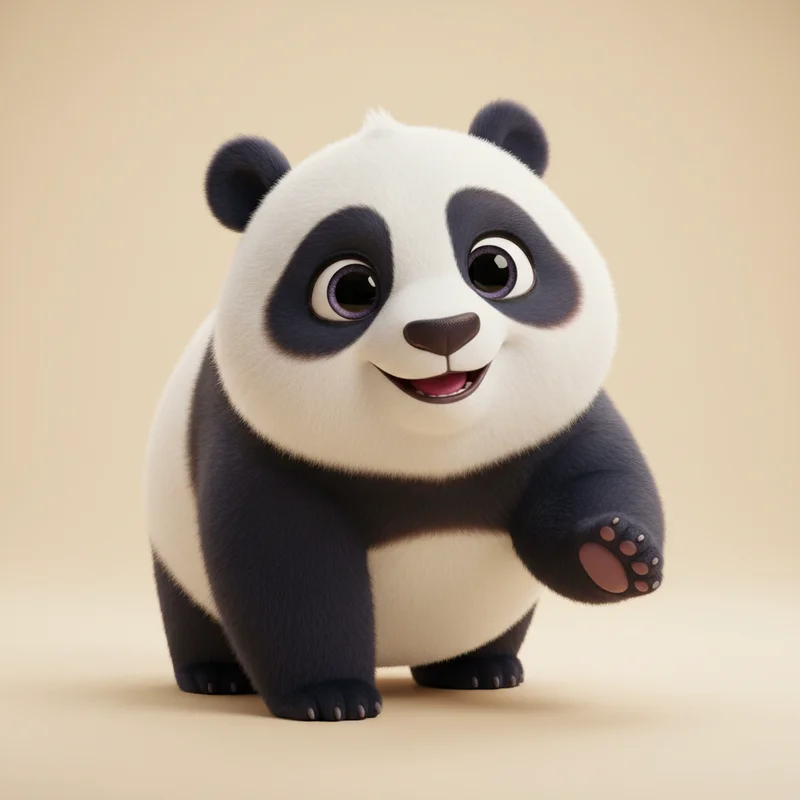
Panda

Panda

Beloved bamboo-eating bear from China, famous for black-and-white coloring and conservation symbolism.

VS
Flamingo

Flamingo

Pink wading bird whose color comes entirely from diet, known for one-legged standing and synchronized displays.

Battle Analysis

Adaptability duck Wins
30%
70%
Panda Flamingo

Panda

The giant panda represents one of evolution's more perplexing decisions. A bear that abandoned the carnivorous lifestyle of its ancestors to subsist almost entirely on bamboo—a plant providing so little nutrition that pandas must consume 12 to 38 kilograms daily merely to survive. Their digestive system remains that of a carnivore, profoundly unsuited to processing cellulose. This dietary commitment restricts pandas to elevations between 1,200 and 3,400 metres in a handful of Chinese provinces. When bamboo forests experience periodic die-offs, pandas cannot simply relocate or switch food sources; they starve.

The species' reproductive rate compounds these limitations. Female pandas are fertile for approximately 24 to 36 hours annually. Cubs are born blind, weighing merely 100 grams—roughly 1/900th of their mother's weight. This combination of dietary inflexibility and reproductive inefficiency has rendered the panda entirely dependent upon human conservation efforts for survival.

Flamingo

VERDICT

Ducks thrive across the planet through genuine adaptability; pandas survive in a single habitat through human intervention.
Self sufficiency duck Wins
30%
70%
Panda Flamingo

Panda

The giant panda's survival depends upon an infrastructure of human support that defies cost-benefit analysis. China operates 67 panda reserves protecting 1.4 million hectares of habitat. Breeding programmes employ hundreds of specialists dedicating careers to coaxing reluctant pandas toward reproduction. When natural mating fails—which it frequently does—artificial insemination intervenes. Cubs born in captivity require round-the-clock monitoring; mortality rates remain substantial despite intensive care.

The financial investment is staggering. Maintaining a single panda costs approximately £1 million annually when all factors are considered. International loans generate revenue for Chinese conservation efforts, but the species remains fundamentally incapable of sustaining itself without continuous human intervention. Remove the conservation infrastructure, and the panda would likely vanish within decades.

Flamingo

VERDICT

Ducks require zero human assistance; pandas survive only through extraordinary intervention.
Practical utility duck Wins
30%
70%
Panda Flamingo

Panda

The giant panda provides humanity with precisely one practical benefit: diplomatic currency. Panda loans facilitate international relations, generate conservation funding, and attract visitors to host institutions. Edinburgh Zoo reported visitor increases of 51 percent following the arrival of pandas Tian Tian and Yang Guang. This economic impact is genuine but narrow.

Beyond diplomacy and zoo attendance, pandas offer limited utility. They cannot be domesticated, farmed, or employed for labour. Their bamboo diet precludes agricultural integration. Even their dung, whilst occasionally marketed as novelty paper, provides negligible practical value. The panda's contribution to human welfare is almost entirely emotional and symbolic—not insignificant, but fundamentally intangible.

Flamingo

VERDICT

Ducks provide food, materials, and agricultural services; pandas provide diplomatic symbolism alone.
Global distribution duck Wins
30%
70%
Panda Flamingo

Panda

Wild giant pandas exist in precisely one location on Earth: the temperate bamboo forests of China's Sichuan, Shaanxi, and Gansu provinces. The total wild population hovers around 1,800 individuals, distributed across approximately 20 isolated populations. This fragmentation poses significant genetic concerns, as mountain ranges and human development prevent interbreeding between groups.

Captive pandas fare only marginally better in terms of distribution. Approximately 600 individuals reside in breeding centres and zoos, with fewer than 30 institutions worldwide currently housing them. The annual loan fee of £750,000 per panda ensures that only the wealthiest zoological institutions can participate in panda diplomacy. For the vast majority of humanity, the panda remains a creature encountered only through screens and photographs.

Flamingo

VERDICT

Ducks occupy six continents autonomously; pandas occupy one habitat through intensive human support.
Cultural significance panda Wins
70%
30%
Panda Flamingo

Panda

The giant panda has achieved cultural saturation disproportionate to its numbers. Its image adorns the logo of the World Wildlife Fund, making it perhaps the most recognisable symbol of conservation worldwide. Panda diplomacy has served Chinese foreign policy interests since at least 685 CE, when Empress Wu Zetian gifted two pandas to Japan. The modern loan programme generates substantial revenue whilst advancing diplomatic relationships.

In popular culture, pandas feature in animated films, soft toy collections, and viral videos with extraordinary frequency. The birth of a panda cub at any zoo commands international news coverage typically reserved for human royalty. This cultural weight stems largely from the panda's apparent vulnerability and its anthropomorphically appealing features: forward-facing eyes, rounded face, and apparent clumsiness that triggers human nurturing instincts.

Flamingo

VERDICT

Pandas command reverence and diplomatic significance; ducks occupy a more utilitarian cultural position.
👑

The Winner Is

Flamingo

42 - 58

This examination reveals a fundamental distinction between survival strategies. The giant panda has achieved celebrity through vulnerability, transforming evolutionary misfortune into international sympathy and diplomatic leverage. The duck has achieved global dominance through competence, requiring no assistance, generating no concern, and consequently commanding less attention despite vastly greater success. By any objective measure—population, distribution, adaptability, self-sufficiency, utility—the duck emerges as the superior organism. The panda's cultural prominence derives precisely from its inability to thrive without help; the duck's relative obscurity stems from its needing none. At 58-42, the duck claims victory not through charisma but through the quiet triumph of genuine evolutionary fitness. The panda may capture hearts, but the duck has captured the planet.

Panda
42%
Flamingo
58%

Share this battle

More Comparisons