
Topic Battle

Where Everything Fights Everything

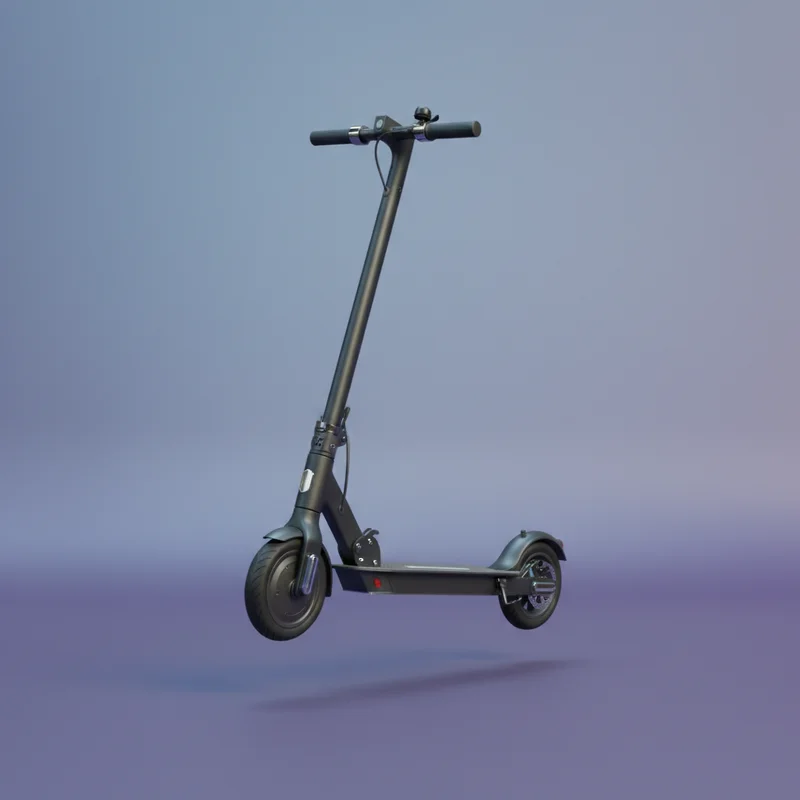
Electric Scooter

Electric Scooter

A vehicle that makes you question both transportation and dignity simultaneously. Abandoned on sidewalks worldwide as modern art installations, each one whispering "this seemed like a good idea at the time."

VS
Capybara

Capybara

The world's largest rodent and unofficial mascot of unbothered living. A creature so chill that every other animal wants to sit on it. Has achieved a level of inner peace most humans will never know.

The Matchup

In a comparison that reveals much about the human condition, we examine two remarkably different approaches to urban mobility and existential contentment. The electric scooter, a lithium-powered emblem of Silicon Valley optimism, faces the capybara, a 50-kilogram rodent whose primary contribution to civilisation appears to be sitting in hot springs looking satisfied. One promises to disrupt your commute; the other has disrupted nothing for approximately 10 million years and seems rather pleased about it.

Battle Analysis

Speed electric_scooter Wins
70%
30%
Electric Scooter Capybara

Electric Scooter

The modern electric scooter achieves speeds of 15-25 miles per hour, a velocity that marketing departments describe as "liberating" and emergency room physicians describe as "concerning." Premium models can reach 40 mph, which represents roughly the speed at which regret becomes permanent.

These machines accelerate with the silent efficiency of a predator, though the predator in question is hunting for available pavement rather than prey. The scooter's speed-to-dignity ratio remains a subject of ongoing sociological study, particularly when observed during rush hour in major metropolitan areas.

Capybara

The capybara, Hydrochoerus hydrochaeris, achieves a maximum land speed of approximately 22 miles per hour when sufficiently motivated, which occurs rarely. Scientists note that capybaras can sustain this pace for short bursts, though most specimens appear philosophically opposed to the concept of hurrying.

In water, these semi-aquatic rodents demonstrate considerably more enthusiasm, swimming at speeds that suggest genuine purpose. On land, however, the capybara moves with the deliberate pace of a creature that has examined the universe and concluded that urgency is largely a human invention. Their preferred velocity appears to be zero miles per hour, ideally whilst partially submerged.

VERDICT

The electric scooter edges ahead on raw velocity, though the capybara's philosophical rejection of speed as a concept demonstrates a wisdom that lithium batteries cannot provide.
Reliability capybara Wins
30%
70%
Electric Scooter Capybara

Electric Scooter

The reliability of electric scooters varies dramatically by price point and use case. Consumer models achieve approximately 500-1,000 charge cycles before battery degradation becomes noticeable, representing roughly 3-5 years of moderate use. Shared scooters, subjected to the unique stresses of public deployment, demonstrate considerably shorter functional lifespans.

Common failure points include battery management systems, motor controllers, and the structural integrity of components designed to balance cost-efficiency against actual durability. The scooter, when functioning, functions admirably. The challenge lies in the conditional nature of that statement. Weather resistance ranges from adequate to optimistic, with rain presenting the combined threats of electrical compromise and reduced traction.

Capybara

The capybara demonstrates a reliability forged across geological time. The species has persisted, essentially unchanged, for 10 million years, suggesting a design robustness that Silicon Valley product cycles cannot match. Individual specimens achieve lifespans of 8-10 years in the wild and up to 12 years in captivity.

Maintenance requirements are minimal: grass, water, and the company of other capybaras. The Hydrochoerus hydrochaeris possesses no battery to degrade, no firmware to corrupt, and no motor to fail. When components do wear, they regenerate automatically through the proven technology of cellular biology. The capybara has experienced zero product recalls across its entire evolutionary history.

VERDICT

Ten million years of operational history versus approximately one decade of mixed consumer reviews represents a reliability gap that no warranty extension can bridge.
Social impact capybara Wins
30%
70%
Electric Scooter Capybara

Electric Scooter

The electric scooter has reshaped urban landscapes with the determination of a creature that cannot read "No Parking" signs. Since 2017, these devices have generated over 50,000 emergency room visits annually in the United States alone, created new categories of municipal ordinance, and inspired heated debates about pavement equity.

Sociologically, the scooter has become a class signifier of peculiar complexity. It suggests environmental consciousness, technological enthusiasm, and a willingness to arrive at professional meetings with helmet hair. In cities from San Francisco to Paris, the scooter has united communities in the shared experience of stepping around discarded units on footpaths.

The devices have also created an entirely new employment category: the "scooter charger," individuals who collect depleted units at night like modern hunter-gatherers, returning them to the ecosystem each morning for approximately three to five dollars per unit.

Capybara

The social impact of the capybara operates on an entirely different frequency. These creatures have achieved something unprecedented in the animal kingdom: universal internet approval. Photographs of capybaras bathing with ducks, befriending cats, or simply existing have generated billions of views across social media platforms.

In their native South America, capybaras serve as a food source classified by the Catholic Church as acceptable during Lent due to their semi-aquatic nature, a theological loophole that speaks to humanity's impressive creativity when motivated by dietary restriction. In Japan, capybara hot spring visits have become tourist attractions generating substantial regional revenue.

Perhaps most remarkably, the capybara has achieved these social outcomes through a strategy of doing essentially nothing with visible contentment. This approach, researchers note, may contain lessons for the personal branding industry.

VERDICT

While the scooter has impacted society through disruption and minor injuries, the capybara has unified humanity through the simple act of existing companionably.
Sustainability capybara Wins
30%
70%
Electric Scooter Capybara

Electric Scooter

The environmental credentials of electric scooters represent a complex equation. Advocates cite zero direct emissions and reduced traffic congestion. Critics point to lithium mining operations, battery disposal challenges, and the average lifespan of 28 days for shared scooters in urban environments before they are thrown into rivers, canals, or decorative fountains.

Manufacturing a single scooter generates approximately 50-100 kg of CO2, a figure that improves only if the device survives long enough to offset its creation. Studies suggest this requires roughly two years of regular use, a milestone achieved by fewer scooters than their manufacturers would prefer to discuss publicly.

Capybara

The capybara exists in a state of near-perfect ecological harmony, serving as a keystone grazer in South American wetland ecosystems. These animals consume 3-4 kg of grasses daily, fertilise waterways through entirely natural processes, and provide transportation for a remarkable variety of smaller creatures who enjoy sitting on them.

Carbon-neutral since the Pliocene epoch, the capybara requires no rare earth minerals, generates no electronic waste, and at end-of-life returns entirely to the ecosystem from which it emerged. Their environmental impact statement would read simply: "existed pleasantly; bothered nothing." The Hydrochoerus hydrochaeris represents 10 million years of sustainable design iteration.

VERDICT

The capybara achieves perfect sustainability through the elegant strategy of being a large, agreeable rodent rather than an assemblage of lithium cells and aluminium.
Entertainment value capybara Wins
30%
70%
Electric Scooter Capybara

Electric Scooter

The entertainment provided by electric scooters operates on two distinct registers. For the rider, there exists genuine pleasure in gliding through urban environments with minimal effort, wind in hair, arriving at destinations with time and energy preserved. The experience has been described as "surprisingly joyful" by researchers studying micromobility adoption.

For observers, the entertainment calculus differs. The sight of adults in business attire piloting small wheeled devices through traffic generates reactions ranging from admiration to amusement. YouTube compilations of scooter mishaps have accumulated hundreds of millions of views, suggesting that the scooter's greatest entertainment contribution may be unintentional.

Capybara

The capybara has achieved entertainment dominance through a strategy of radical passivity. Videos of capybaras permitting smaller animals to sit on them have generated billions of views across platforms. The phenomenon defies conventional content theory: these are not athletic performances, dramatic narratives, or instructional guides. They are simply capybaras, existing.

The entertainment operates through what researchers term "relaxation contagion": viewers observing capybara contentment experience measurable reductions in stress markers. The Japanese capybara hot spring tourism industry generates approximately tens of millions of dollars annually, entirely from the spectacle of large rodents sitting in warm water looking satisfied. No other animal has monetised serenity so effectively.

Internet culture has elevated the capybara to mascot status for the philosophical position that perhaps everything will, in fact, be acceptable. This represents entertainment value of an unusual but undeniable variety.

VERDICT

While the scooter provides entertainment through activity and occasional mishap, the capybara has achieved something rarer: entertainment through the complete absence of effort.
👑

The Winner Is

Capybara

35 - 65

This comparison illuminates a fundamental tension in contemporary existence. The electric scooter represents humanity's eternal faith in technological solutions: that the right combination of motors, batteries, and mobile applications can optimise our daily experience. The capybara represents an alternative hypothesis: that existence requires no optimisation, and that the universe may be navigated successfully through patient acceptance and occasional swimming.

The scooter excels at its intended purpose. It moves humans from point to point with reasonable efficiency and minimal environmental impact relative to automobiles. It has created jobs, generated urban planning discussions, and provided genuine utility to millions of commuters. These are not negligible achievements.

Yet the capybara, through the simple strategy of being a large, agreeable rodent, has achieved something the scooter cannot: universal affection without controversy. No one debates capybara parking ordinances. No emergency rooms track capybara-related injuries. The creature exists, it seems content, and humanity finds this inexplicably reassuring.

In the final analysis, the capybara prevails not through superiority in any conventional metric but through its demonstration that perhaps conventional metrics miss the point. The Hydrochoerus hydrochaeris has survived for ten million years by needing nothing more than water, grass, and companionship. The electric scooter, with its lithium batteries and smartphone integration, promises to enhance human experience. The capybara suggests that human experience may need less enhancement than we suppose.

Electric Scooter
35%
Capybara
65%

Share this battle

More Comparisons