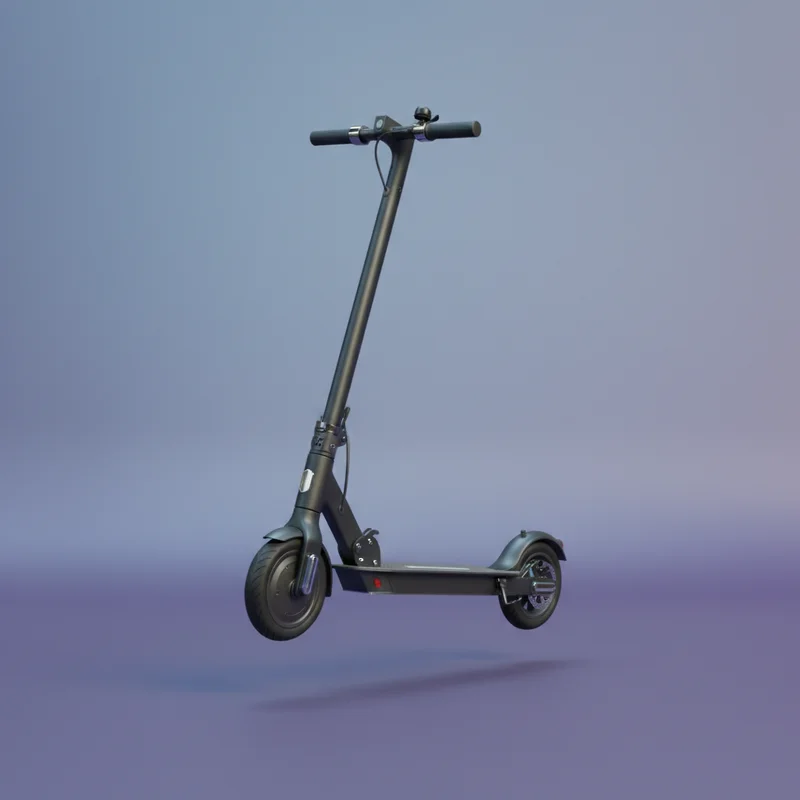

Electric Scooter
The modern electric scooter achieves maximum velocities between 15 and 30 miles per hour, depending on model specifications and local regulatory limitations. The average shared scooter maintains a governed top speed of approximately 15.5 mph, a figure determined through careful negotiation between user demand and municipal liability concerns.
Acceleration metrics prove similarly impressive. A quality electric scooter reaches its top speed within 4 to 6 seconds, providing what engineers term immediate velocity acquisition. This rapid acceleration has contributed to both the device's popularity and its substantial emergency room statistics.
Distance capabilities range from 10 to 40 miles per charge, depending on battery capacity, rider weight, terrain gradient, and the scooter's overall skepticism about continuing. The average urban journey covers approximately 1.2 miles, suggesting that most riders employ these devices for distances that would require roughly 25 minutes of walking.
Monday
Monday approaches at a velocity that physicists describe as one second per second, a rate that has remained constant since the establishment of Coordinated Universal Time. The day neither accelerates nor decelerates, maintaining what temporal theorists call perfect temporal cadence.
The psychological perception of Monday's approach velocity, however, varies significantly from objective measurement. Research published in the Journal of Personality and Social Psychology indicates that 78% of employed adults perceive Sunday evenings as passing more quickly than other evening periods, creating the subjective impression that Monday approaches with predatory swiftness.
Monday demonstrates zero variability in its arrival time, reaching each timezone at precisely the predicted moment regardless of human preference. This constancy, while admirable from an engineering standpoint, provides no mechanism for evasive action. Monday cannot be outrun, outmaneuvered, or delayed through any known technology.
VERDICT
The speed comparison yields a decisive victory for the electric scooter. While Monday maintains perfect temporal consistency, it offers no positive speed characteristics whatsoever. Monday does not transport its occupants anywhere useful; it merely arrives and establishes itself.
The electric scooter, by contrast, provides actual locomotion at velocities that meaningfully reduce commute duration. A journey that requires 25 minutes on foot can be completed in approximately 5 minutes via electric scooter. Monday cannot reduce the duration of anything and, if anything, makes all other durations feel longer. For speed considerations, the electric scooter prevails comprehensively.