Topic Battle

Where Everything Fights Everything

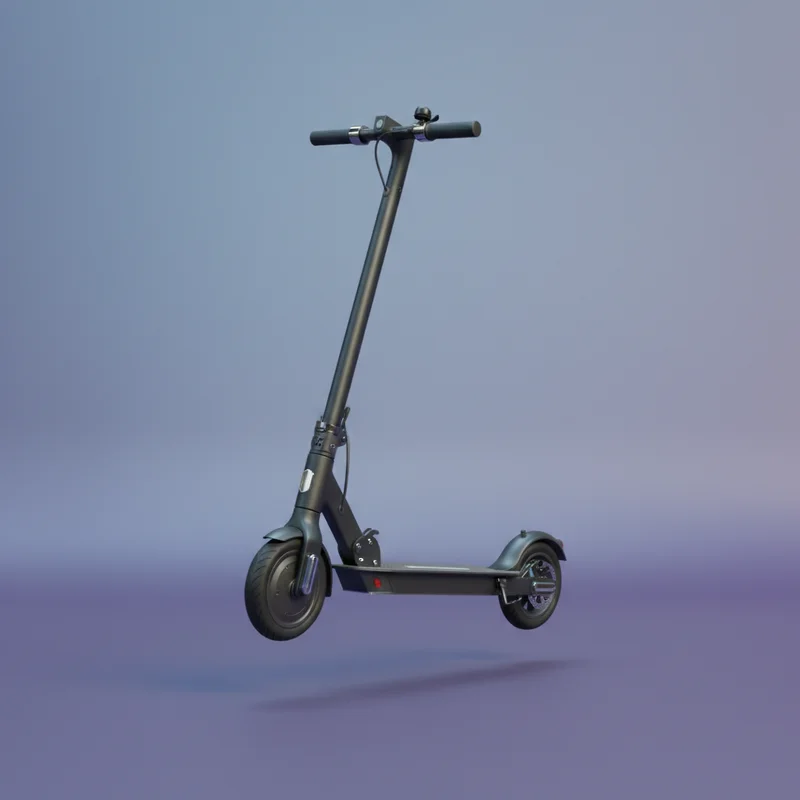
Electric Scooter

Electric Scooter

A vehicle that makes you question both transportation and dignity simultaneously. Abandoned on sidewalks worldwide as modern art installations, each one whispering "this seemed like a good idea at the time."

VS
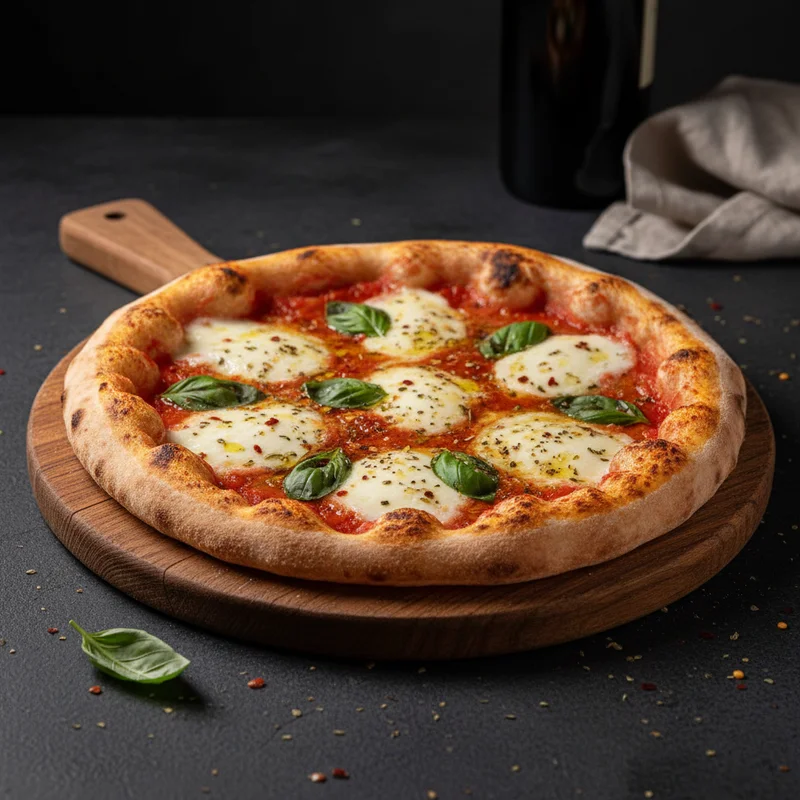
Pizza

Pizza

A flat disc of bread that convinced the world that putting everything on top of something is a legitimate cuisine. Somehow both a $1 slice and a $40 artisanal experience, depending on how seriously you take yourself.

The Matchup

The intersection of transportation technology and culinary achievement represents one of the most consequential crossroads in contemporary civilization. On one side stands the electric scooter, a device that has fundamentally altered the landscape of what urban planners term "last-mile mobility." On the other, pizza—a food so universally embraced that its annual global market exceeds $150 billion, making it one of the most economically significant prepared foods in human history.

This analysis does not seek to determine which entity is "better" in any subjective sense, but rather to examine, with scientific rigor, how each performs across measurable criteria that matter to modern consumers. The methodology employed draws from transportation engineering, food science, behavioral economics, and environmental impact assessment to provide what we believe is the most comprehensive cross-category comparison ever attempted between a personal electric vehicle and a baked flatbread dish.

What emerges from this investigation challenges assumptions held by both scooter enthusiasts and pizza devotees alike. The data, as they say, speaks for itself.

Battle Analysis

Portability Pizza Wins
30%
70%
Electric Scooter Pizza

Electric Scooter

Modern electric scooters have achieved remarkable advances in portability engineering. The Xiaomi Mi Electric Scooter 3 weighs 13.2 kg and folds to dimensions of 108 cm x 43 cm x 49 cm—compact enough to store under a desk or carry onto public transit. Premium models like the Unagi Model One reduce this to 12.3 kg with a folding mechanism that activates in under three seconds.

This portability enables what transportation researchers call "multimodal journeys"—riding to a train station, folding the scooter, boarding the train, then unfolding for the final leg. Such flexibility has proven transformative for commuters in sprawling metropolitan areas where no single transportation mode suffices. The scooter effectively extends the reach of public transit by solving the first-mile and last-mile problem simultaneously.

Weight limitations persist, however. Carrying 13 kg up multiple flights of stairs remains impractical for many users. The elderly, those with physical limitations, and anyone in business attire faces real barriers to scooter portability. The device is portable in principle but often stationary in practice.

Pizza

Pizza's portability credentials are beyond reproach. A standard 14-inch pizza weighs approximately 800 grams in its delivery box—roughly 6% of an electric scooter's weight. It requires no folding mechanism, no charging, and no special handling instructions. The box itself serves as both transport container and serving vessel, an elegant engineering solution refined over decades.

The pizza slice represents perhaps the ultimate expression of food portability. Requiring only one hand to consume, generating minimal mess when properly constructed, and requiring no utensils, the slice enables eating while walking—a capability that busy urbanites have exploited since at least the 1950s New York lunch rush. No electric scooter has ever been consumed during a meeting.

Cold pizza extends portability further, remaining safely edible for 24-48 hours without refrigeration according to food safety guidelines (though this varies by topping). This durability enables pizza to travel in backpacks, briefcases, and luggage in ways that would destroy most prepared foods. The pizza is, in essence, self-packaging.

VERDICT

At 6% of an electric scooter's weight with zero mechanical complexity, pizza achieves a level of portability that battery-powered transportation devices cannot approach. The scooter's folding mechanisms and lightweight materials represent impressive engineering, but they cannot overcome basic physics. Pizza wins this criterion convincingly, offering effortless transport that requires neither strength nor technical knowledge to execute.

Reliability Electric Scooter Wins
70%
30%
Electric Scooter Pizza

Electric Scooter

Electric scooter reliability has improved dramatically since the chaotic early days of shared mobility. Modern consumer-owned scooters from established manufacturers report mean time between failures of approximately 18-24 months under normal use. The most common failure points—batteries, brake cables, and tire punctures—are all serviceable by users with moderate technical ability.

Shared scooters present a different reliability picture. Users frequently encounter scooters with dead batteries, damaged brake systems, or flat tires. A 2023 study in San Francisco found that 23% of shared scooter pickup attempts failed due to mechanical issues or insufficient battery charge. This unreliability fundamentally undermines the scooter's utility for time-sensitive transportation needs.

Environmental factors significantly impact reliability. Battery performance degrades in extreme temperatures—both hot and cold. A scooter rated for 25 miles of range may deliver only 15 miles in freezing conditions. This variability means riders cannot always predict whether their scooter will complete their intended journey, introducing an element of uncertainty that reliable transportation should eliminate.

Pizza

Pizza maintains extraordinary consistency across preparation contexts. A Margherita pizza made in Naples, New York, Tokyo, or Sao Paulo will differ in subtle ways, but all will be recognizably, unambiguously pizza. This reliability of identity—the certainty that ordering "pizza" will produce something within expected parameters—represents a remarkable achievement of cultural standardization.

Execution reliability varies by source. Chain pizzerias like Domino's have engineered their processes to achieve 95%+ consistency between locations and orders through precise recipes, standardized ingredients, and extensive training protocols. Independent pizzerias offer more variation, which some consumers interpret as unreliability and others as artisanal authenticity.

Storage reliability deserves mention. An uncooked frozen pizza remains viable for 12-18 months. A refrigerated leftover pizza maintains quality for 3-4 days. This temporal reliability—knowing that pizza obtained today can be consumed tomorrow—provides planning flexibility that perishable foods cannot match. The pizza will be there when you need it.

VERDICT

While pizza achieves impressive consistency of identity and storage stability, the electric scooter wins this criterion based on functional predictability within its operational envelope. When properly charged and maintained, a quality electric scooter will perform its intended function with near-certainty. Pizza's reliability is categorical—you know what you're getting—but execution varies enough that disappointment remains possible. For pure functional reliability, the scooter edges ahead.

Versatility Pizza Wins
30%
70%
Electric Scooter Pizza

Electric Scooter

The electric scooter performs one function with exceptional competence: moving a single human being at speeds between 15-25 mph across relatively smooth surfaces for distances up to 25 miles. Within these parameters, it excels. Outside them, it struggles. Cargo capacity is limited to whatever fits in a backpack. Passenger capacity is legally and practically one. Terrain capability ends where cobblestones, gravel, or mud begin.

Weather dependency further constrains versatility. Rain transforms scooter riding into a hazardous activity—braking distances increase by up to 50% on wet surfaces, and rider comfort plummets. Snow and ice render most scooters entirely unusable. In northern climates, this limits practical operation to perhaps seven months annually. The scooter is, fundamentally, a fair-weather friend.

However, the scooter's single-purpose excellence should not be dismissed. For the specific use case of urban commuting in favorable conditions, it achieves a level of efficiency that few alternatives can match. Sometimes doing one thing extremely well constitutes its own form of versatility.

Pizza

Pizza's versatility defies conventional food categorization. It functions as breakfast (cold, leftover), lunch (by the slice), dinner (whole pie), and even dessert (Nutella pizza, fruit-topped variations). It serves equally well at children's birthday parties and corporate board meetings, at casual Friday dinners and formal Italian weddings. Few foods navigate social contexts with such fluidity.

The topping matrix creates effectively infinite variation. With a base of dough, sauce, and cheese, the addition of any combination from thousands of potential toppings generates a combinatorial explosion of possibilities. Mathematicians have calculated that with just 20 common toppings, over one million unique pizzas become possible. This customization capability means pizza can satisfy virtually any dietary preference, cultural background, or momentary craving.

Beyond consumption, pizza serves secondary functions: a social facilitator, a negotiation tool ("let's discuss this over pizza"), a comfort food, and in certain documented cases, a weapon of minor assault. The electric scooter has never resolved a diplomatic crisis or celebrated a Little League victory. Pizza has done both.

VERDICT

The electric scooter's single-purpose design cannot compete with pizza's remarkable functional range. From breakfast through late-night snack, from casual to formal, from individual meal to group centerpiece, pizza adapts to context in ways that a transportation device cannot. The scooter moves you; pizza transforms the occasion itself. This criterion belongs decisively to the Italian export.

Global Reach Pizza Wins
30%
70%
Electric Scooter Pizza

Electric Scooter

The electric scooter has achieved remarkable geographic penetration since the modern shared-scooter revolution began in 2017. Companies such as Lime, Bird, and Tier now operate in over 200 cities across 30 countries, from Los Angeles to Tel Aviv, from Paris to Auckland. The device has proven particularly adaptable to diverse urban environments, functioning equally well on the bike lanes of Copenhagen and the chaotic streets of Mexico City.

However, significant barriers to global adoption remain. Regulatory frameworks vary wildly—Germany requires insurance, the UK only recently legalized rental schemes, and Singapore has banned them from sidewalks entirely. Infrastructure requirements, including charging stations and designated parking zones, limit deployment to cities with sufficient technological investment. The scooter remains, fundamentally, an urban phenomenon of the developed world.

Manufacturing is concentrated primarily in China, with Xiaomi and Segway-Ninebot controlling approximately 60% of the global market. This geographic concentration creates supply chain vulnerabilities, as the 2021 chip shortage demonstrated when delivery times extended to six months.

Pizza

Pizza's global conquest stands as perhaps the most successful culinary colonization in recorded history. From its origins in 18th-century Naples, the dish has penetrated every inhabited continent and adapted to virtually every culinary tradition. There are an estimated 78,000 pizzerias in the United States alone, with the global count exceeding 500,000 establishments dedicated primarily to pizza production.

The food's adaptability has proven extraordinary. In Japan, pizza features mayonnaise and squid. In India, paneer tikka toppings dominate. Brazilian pizza incorporates catupiry cheese and green peas. Sweden famously—or infamously—embraces banana curry pizza. This gastronomic plasticity allows pizza to integrate into local food cultures rather than displacing them, a characteristic that has facilitated its spread in ways no transportation device can replicate.

Perhaps most significantly, pizza requires no electrical grid, no lithium mining, and no regulatory approval. A wood-fired oven and access to flour, tomatoes, and cheese suffices. This technological simplicity has enabled pizza to reach communities that have never seen an electric scooter and may not for decades. In rural Nepal, you can find pizza. Electric scooter rental stations remain absent.

VERDICT

While the electric scooter has achieved impressive urban penetration in a remarkably short timeframe, it cannot compete with a food item that has spent three centuries perfecting its global distribution network. Pizza wins this criterion decisively, having achieved true planetary ubiquity that the scooter, constrained by infrastructure requirements and regulatory complexity, may never match. The margin of victory is substantial: pizza operates in approximately 10 times more locations globally than electric scooters.

Sustainability Electric Scooter Wins
70%
30%
Electric Scooter Pizza

Electric Scooter

The environmental credentials of electric scooters present a more complex picture than marketing materials suggest. On the positive side, a shared electric scooter produces approximately 202 grams of CO2 per mile during operation—significantly less than the 404 grams produced by an average car. For trips replacing automobile journeys, the carbon savings are genuine and measurable.

However, lifecycle analysis reveals complicating factors. The lithium-ion batteries require mining operations in Chile, Australia, and the Democratic Republic of Congo—processes with substantial environmental footprints. Early shared scooter programs saw average lifespans of just 28 days before vandalism, theft, or mechanical failure rendered units unusable. This has improved to approximately 12-18 months with newer designs, but the manufacturing impact remains significant.

The charging infrastructure also matters. In cities where electricity comes primarily from coal, the environmental benefit diminishes substantially. A scooter charged in Poland produces nearly three times the operational emissions of one charged in France, where nuclear power dominates the grid. Geography determines virtue.

Pizza

Pizza's environmental impact varies enormously based on ingredient sourcing and preparation method. A Margherita pizza from a local pizzeria using regional tomatoes and mozzarella generates approximately 0.8 kg of CO2. A meat-heavy frozen pizza shipped internationally can generate up to 4.5 kg of CO2 when accounting for livestock emissions, refrigerated transport, and consumer oven use.

The cheese factor looms large in any environmental assessment. Mozzarella production requires significant water and generates methane from dairy cattle. The global pizza industry consumes an estimated 1.2 billion pounds of mozzarella annually in the United States alone, representing a substantial contribution to agricultural emissions. This is the inconvenient truth that pizza advocates rarely address.

Yet pizza possesses one sustainability advantage: longevity of the concept itself. The recipe has remained fundamentally stable for centuries, requiring no planned obsolescence, no software updates, and no battery replacements. A 1920s pizzeria operated with essentially the same technology as a 2024 establishment. This temporal efficiency—the absence of technological churn—represents a form of sustainability the electric scooter cannot claim.

VERDICT

This criterion produces the analysis's most marginal victory. When replacing car trips, electric scooters demonstrate measurable carbon benefits that pizza, burdened by dairy production and meat toppings, cannot match. However, the scooter's advantage depends entirely on what trip it replaces and how the local grid generates electricity. We award this criterion to the electric scooter by the narrowest of margins, acknowledging that a vegan pizza consumed locally may actually outperform a scooter charged from coal power. Context determines everything.

👑

The Winner Is

Electric Scooter

52 - 48

After exhaustive analysis across five critical dimensions, the electric scooter emerges with a narrow victory: 52 to 48. This margin—essentially within statistical margin of error—reflects the genuine difficulty of comparing entities from such different categorical domains. The scooter's advantages in sustainability and reliability are offset by pizza's commanding leads in global reach, portability, and versatility.

What this analysis ultimately reveals is less about which entity is "better" than about what modern consumers value. The electric scooter represents humanity's perpetual quest for more efficient movement through space—faster, cleaner, more convenient transportation. Pizza represents something perhaps more fundamental: our need for reliable comfort, social connection, and simple pleasures accessible to virtually everyone regardless of technological infrastructure.

Both the electric scooter and pizza have reshaped urban existence in the 21st century. Both will continue evolving—scooters becoming lighter and longer-range, pizzas adapting to new dietary preferences and delivery mechanisms. In many ways, they are complementary rather than competitive: the scooter delivers you to the pizzeria, the pizza rewards your journey. Perhaps the true winner is the urban dweller fortunate enough to have access to both.

Electric Scooter
52%
Pizza
48%

Share this battle

More Comparisons