Topic Battle

Where Everything Fights Everything

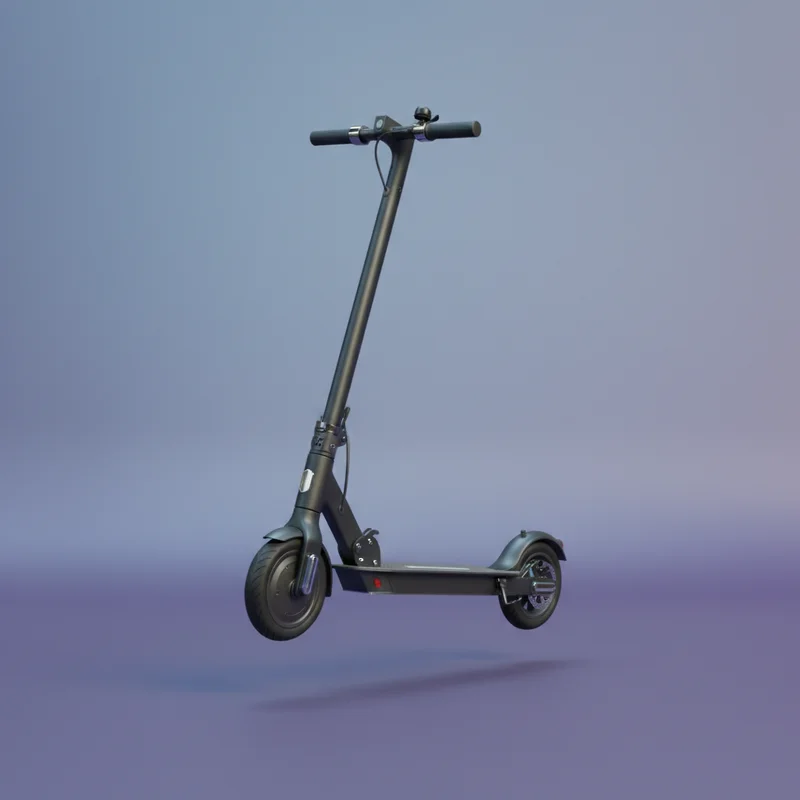
Electric Scooter

Electric Scooter

A vehicle that makes you question both transportation and dignity simultaneously. Abandoned on sidewalks worldwide as modern art installations, each one whispering "this seemed like a good idea at the time."

VS
Rubber Duck

Rubber Duck

A debugging tool for programmers and bathtub companion for everyone else. This hollow yellow bird has solved more software bugs than most senior engineers. Also squeaks.

The Matchup

A rigorous examination of two objects that have, in their respective domains, achieved remarkable ubiquity. The electric scooter represents humanity's tireless pursuit of personal mobility, whilst the rubber duck embodies our equally persistent need for companionship during bathing rituals. Neither invention has received adequate scholarly attention until now.

Battle Analysis

Speed electric_scooter Wins
70%
30%
Electric Scooter Rubber Duck

Electric Scooter

The modern electric scooter achieves speeds of 15 to 25 miles per hour, depending on model specifications and local regulations designed to prevent enthusiasts from treating urban pavements as personal racetracks. In controlled testing environments, premium models have reached speeds exceeding 40 mph, though such velocities are generally discouraged by manufacturers, municipal authorities, and basic survival instincts.

The acceleration profile of an electric scooter follows a predictable curve, with most units reaching their maximum velocity within 8 to 12 seconds. This performance metric has made them particularly popular among commuters who have developed an adversarial relationship with traffic lights.

Rubber Duck

The rubber duck maintains a consistent velocity of precisely zero miles per hour under its own power, a specification that has remained unchanged since the product's introduction in the late 19th century. This represents either a remarkable commitment to design stability or a fundamental limitation, depending on one's philosophical orientation.

When subjected to external forces such as bath currents or the enthusiastic splashing of a small child, rubber ducks have been observed achieving transient velocities of up to 3 feet per second. However, these speeds are neither self-generated nor sustainable, and the duck invariably returns to its default stationary state once perturbations cease.

VERDICT

The electric scooter demonstrates measurable, self-propelled velocity, whilst the rubber duck has apparently made a principled decision to abstain from locomotion entirely.
Durability rubber_duck Wins
30%
70%
Electric Scooter Rubber Duck

Electric Scooter

Electric scooters contain approximately 1,500 individual components, each representing a potential point of failure. The lithium-ion battery pack, typically the most expensive component, degrades predictably over 500 to 1,000 charge cycles. The motor, controller, and display unit each introduce additional failure modes that have kept repair technicians gainfully employed across major metropolitan areas.

Environmental factors pose considerable challenges to scooter longevity. Moisture infiltration, temperature extremes, and the accumulated stress of navigating potholes all contribute to a mean service life of approximately 3 to 5 years under regular use conditions. Units deployed in rental fleets typically survive significantly shorter periods, often measured in months rather than years.

Rubber Duck

The rubber duck represents a triumph of minimalist engineering. With no moving parts, no electrical components, and no software requiring updates, the duck achieves a durability that borders on the philosophical. A rubber duck purchased in 1975 remains functionally identical to one manufactured yesterday, assuming neither has been subjected to deliberate destruction.

The primary degradation mechanism involves ultraviolet radiation, which gradually fades the duck's characteristic yellow pigmentation over decades of exposure. However, this cosmetic deterioration does not meaningfully impact the duck's core functionality as a floating bath companion. Museum specimens from the early 20th century remain structurally sound, if somewhat yellowed.

Perhaps most remarkably, rubber ducks have demonstrated survival capabilities in extreme conditions. In 1992, a shipping container released 28,000 rubber ducks into the Pacific Ocean. Some of these ducks were recovered over 15 years later, having circumnavigated the Arctic and crossed the Atlantic, their structural integrity largely intact despite exposure to conditions that would have destroyed most consumer electronics within hours.

VERDICT

The rubber duck has achieved a form of functional immortality through the elimination of all failure-prone components, whilst the electric scooter's complexity virtually guarantees eventual breakdown.
Global reach rubber_duck Wins
30%
70%
Electric Scooter Rubber Duck

Electric Scooter

Electric scooters have achieved significant market penetration in developed economies, particularly in urban areas where short-distance travel requirements align with scooter capabilities. Major deployment markets include the United States, Europe, China, and select cities throughout Southeast Asia. The global electric scooter market was valued at approximately $20 billion in 2023, with projections suggesting continued growth.

However, geographic distribution remains notably uneven. Infrastructure requirements including charging facilities, paved surfaces, and regulatory frameworks have limited adoption in developing regions. The scooter remains essentially unknown in large portions of Africa, South Asia, and rural areas globally, where terrain conditions, income levels, and practical transportation needs favour alternative solutions.

Rubber Duck

The rubber duck has achieved near-universal global distribution. From Tokyo to Toronto, from Sao Paulo to Stockholm, the yellow bath companion has established presence in virtually every nation with access to running water and basic consumer goods. Estimates suggest over 500 million rubber ducks are currently in circulation worldwide, though precise figures remain elusive due to the product's informal distribution channels.

The duck's infrastructure requirements are minimal: any body of water from a bathtub to a puddle provides adequate operational conditions. This flexibility has enabled penetration into markets that electric scooter manufacturers have not yet addressed, including remote villages, isolated islands, and communities with limited electrical grid access.

Perhaps most significantly, the rubber duck has transcended economic boundaries in ways that premium consumer electronics cannot match. A child in a rural community has essentially the same rubber duck experience as a child in a wealthy suburb, creating a democratic equality of bath-time entertainment that few products can claim.

VERDICT

The rubber duck has achieved market penetration in virtually every nation on Earth, whilst electric scooters remain concentrated in affluent urban corridors with suitable infrastructure.
Affordability rubber_duck Wins
30%
70%
Electric Scooter Rubber Duck

Electric Scooter

Entry-level electric scooters begin at approximately $300 to $500, though models in this price range typically offer limited range, modest speeds, and build quality that could charitably be described as adequate. Mid-tier units suitable for regular commuting range from $800 to $1,500, whilst premium models with enhanced performance specifications may exceed $2,000.

The total cost of ownership extends considerably beyond the initial purchase price. Battery replacement, typically required after 2 to 3 years of regular use, may cost $200 to $600 depending on capacity. Tyre replacement, brake maintenance, and the occasional controller repair contribute to annual maintenance costs averaging $150 to $300 for responsible owners. Electricity costs, whilst minimal compared to fossil fuel alternatives, add approximately $30 to $50 annually.

Rubber Duck

A standard rubber duck retails for approximately $1 to $5 at most retailers, placing it firmly within reach of the global middle class and a significant portion of lower-income households. Premium variants featuring enhanced squeaking mechanisms or novelty designs may command prices of $10 to $15, though such expenditure is generally considered extravagant by serious duck enthusiasts.

The total cost of ownership approaches the purchase price asymptotically. A rubber duck requires no fuel, no maintenance, no insurance, and no software subscriptions. The only recurring cost involves occasional cleaning, which can be accomplished using household soap at negligible expense. A single rubber duck may provide decades of service at a lifetime cost measured in pennies per year of operation.

VERDICT

At approximately one-thousandth the initial cost and effectively zero ongoing expenses, the rubber duck achieves a price-to-longevity ratio that electric scooter manufacturers can only regard with envy.
Entertainment value rubber_duck Wins
30%
70%
Electric Scooter Rubber Duck

Electric Scooter

The electric scooter provides entertainment through the visceral experience of powered mobility. Users report elevated mood states during operation, attributed to the combination of wind exposure, the satisfying hum of electric propulsion, and the dopamine release associated with efficient travel. The experience has been compared to a mild form of flight, accessible to anyone willing to balance on two wheels.

Beyond personal operation, electric scooters have generated considerable spectator entertainment, albeit unintentionally. Online video platforms host thousands of recordings documenting scooter-related mishaps, near-collisions, and the creative interpretation of traffic regulations. This content has accumulated billions of views, suggesting a robust appetite for scooter-adjacent entertainment.

The social dimensions of scooter ownership provide additional entertainment value. Group rides, scooter modification communities, and the general subculture surrounding personal electric vehicles offer opportunities for social connection and shared enthusiasm.

Rubber Duck

The rubber duck has maintained its entertainment credentials for over a century through a strategy of elegant simplicity. The primary entertainment modality involves buoyancy observation: the duck floats, it can be submerged, it returns to the surface. This cycle of displacement and recovery has captivated bath-time observers across generations, suggesting a fundamental appeal that transcends cultural and temporal boundaries.

Secondary entertainment features include the iconic squeaking mechanism present in many models, which produces sounds ranging from endearing to mildly alarming depending on manufacturing quality. The act of squeezing a rubber duck activates deep-seated neural pathways associated with stress relief and childlike joy, even in adult users who might otherwise consider themselves too sophisticated for such pleasures.

The rubber duck has also achieved significant cultural presence as a symbol, appearing in art installations, debugging practices (where programmers explain problems to rubber ducks), and protest movements. A 40-foot inflatable rubber duck has toured the world's harbours as a public art piece, demonstrating the concept's scalability.

VERDICT

The rubber duck has provided consistent entertainment value for over 100 years with zero mechanical failure, whilst electric scooter entertainment often concludes with medical attention.
👑

The Winner Is

Rubber Duck

35 - 65

This analysis has revealed a striking asymmetry between two objects that might initially appear to serve entirely different purposes. The electric scooter represents the contemporary technological approach: complex, powerful, expensive, and dependent on supporting infrastructure. It solves specific problems admirably whilst creating new categories of concern including battery disposal, urban safety, and device obsolescence.

The rubber duck, by contrast, embodies a design philosophy that predates modern product development. Through the radical simplification of removing all unnecessary components, the duck has achieved a form of perfection that iterative improvement cannot meaningfully enhance. A rubber duck from 1920 performs identically to one manufactured today, a claim that no technology product can make.

The duck's victory should not be interpreted as a rejection of technological progress. Rather, it serves as a reminder that fitness for purpose sometimes emerges from simplicity rather than sophistication. The electric scooter excels at powered transportation; the rubber duck excels at being a rubber duck. In a direct comparison of their ability to fulfil their intended functions reliably, affordably, and universally, the duck's proposition proves remarkably compelling.

There is something philosophically instructive in this outcome. Humanity has invested enormous resources in developing increasingly complex solutions to increasingly complex problems. Meanwhile, a hollow yellow duck continues to float, squeak, and provide comfort with the same mechanism it has employed for generations. Sometimes the most advanced technology is no technology at all.

Electric Scooter
35%
Rubber Duck
65%

Share this battle

More Comparisons