
Topic Battle

Where Everything Fights Everything

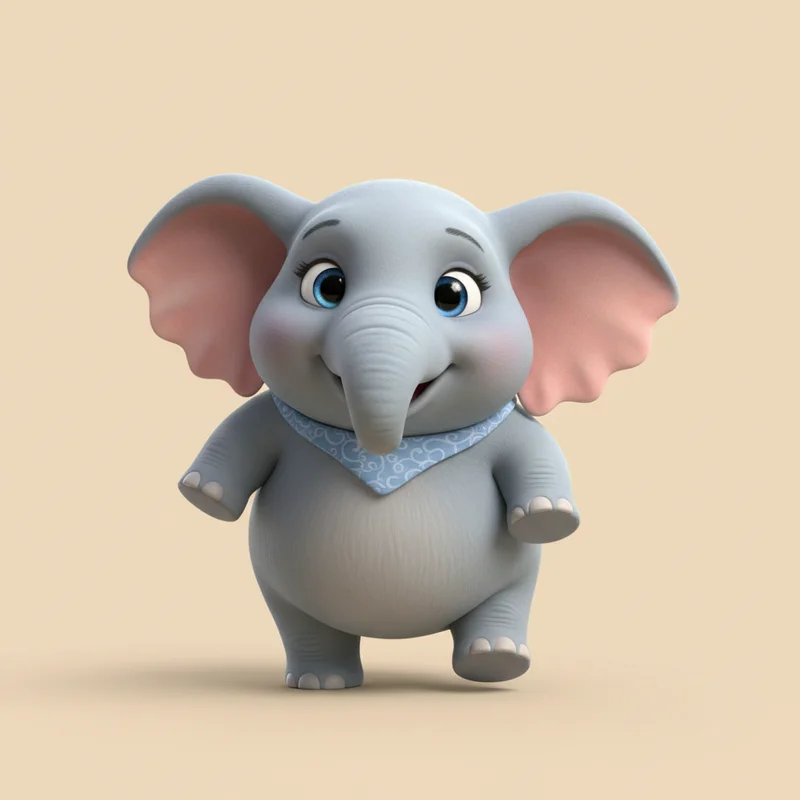
Elephant

Elephant

Earth's largest land mammal with remarkable memory, complex social bonds, and trunk-based problem solving.

VS
Money

Money

Abstract concept that runs the world.

Battle Analysis

Longevity elephant Wins
70%
30%
Elephant Money

Elephant

Individual elephants demonstrate remarkable lifespans, typically reaching 60-70 years in the wild. The species itself has persisted for approximately 5 million years in various forms. Elephants possess generational memory, with matriarchs passing knowledge of water sources and migration routes to descendants. Their biological continuity represents one of evolution's more impressive achievements. However, current extinction trajectories suggest the species may not survive another century without intervention.

Money

The concept of money has existed for approximately 5,000 years, emerging in Mesopotamia as standardised units of exchange. Individual currencies, however, demonstrate alarming mortality rates. The average lifespan of a fiat currency is merely 27 years. The British pound sterling, at over 1,200 years, represents a statistical anomaly. Most currencies collapse through hyperinflation, political upheaval, or deliberate replacement. Money as a concept persists; specific monetary instruments do not.

VERDICT

Elephants have persisted as a species for 5 million years; individual currencies average 27-year lifespans.
Memorability elephant Wins
70%
30%
Elephant Money

Elephant

The elephant's memorability operates on multiple levels. Their physical presence is unforgettable - standing four metres tall with ears spanning two metres, they command immediate attention. The phrase 'an elephant never forgets' has entered common parlance, reflecting documented evidence of elephants recognising individuals after decades of separation. Children worldwide can identify an elephant before they can read. The creature's silhouette is instantly recognisable across all cultures.

Money

Money achieves memorability through ubiquitous presence rather than distinctive form. Whilst specific denominations may be forgotten, the concept of money is inescapable from early childhood. Studies indicate children understand monetary exchange by age four to five years. However, money itself is designed for fungibility, not memorability. One twenty-pound note is indistinguishable from another. The Queen's portrait may be memorable; the note bearing it is deliberately unremarkable.

VERDICT

Elephants are visually distinctive and universally recognisable; money is designed for interchangeability.
Emotional impact elephant Wins
70%
30%
Elephant Money

Elephant

Elephants generate profound emotional responses in human observers. Documented elephant mourning rituals, including returning to the bones of deceased family members, inspire existential reflection on consciousness and grief. The sight of a wild elephant triggers what researchers term 'awe response' - elevated heart rate, expanded perception, and diminished self-focus. Elephants in distress have mobilised international campaigns. Their emotional impact is immediate, visceral, and deeply affecting.

Money

Money's emotional impact, whilst undeniable, operates through secondary mechanisms. It does not inspire awe directly but rather through what it enables. The joy of a lottery win, the anxiety of debt, the satisfaction of charitable giving - these emotions attach to money's consequences rather than to money itself. Research indicates that beyond approximately $75,000 annual income, additional money provides diminishing emotional returns. Money causes stress as readily as it provides relief.

VERDICT

Elephants trigger immediate awe and empathy; money's emotional impact is indirect and often ambivalent.
Global influence money Wins
30%
70%
Elephant Money

Elephant

The elephant's influence operates through ecological and cultural channels. As a keystone species, elephants shape entire ecosystems through their feeding habits, creating pathways through forests and dispersing seeds across vast distances. Their cultural significance spans millennia, appearing in religious iconography from Hinduism's Ganesha to the Republican Party's symbol. However, elephants exert no direct influence over human decision-making beyond conservation contexts. Their power, whilst substantial within natural systems, does not extend to boardrooms or parliaments.

Money

Money's influence permeates virtually every human interaction on the planet. Wars have been waged, marriages dissolved, and governments overthrown in its pursuit. The global financial system processes approximately $6.6 trillion daily in foreign exchange transactions alone. Money determines access to healthcare, education, housing, and indeed, the very survival of elephant populations through conservation funding. Its influence is not merely substantial; it is architecturally fundamental to modern human existence. One cannot opt out.

VERDICT

Money's influence extends to every human transaction, whilst elephants influence primarily ecological systems.
Practical utility money Wins
30%
70%
Elephant Money

Elephant

Historically, elephants served as war machines, construction equipment, and transportation. Hannibal's crossing of the Alps remains militarily legendary. In contemporary contexts, elephants contribute to ecotourism revenue exceeding $25 billion annually in Africa. They provide ecosystem services including seed dispersal and habitat modification. However, practical utility for the average individual is limited. One cannot deploy an elephant to purchase groceries or settle a restaurant bill.

Money

Money's practical utility approaches universality. It facilitates the exchange of virtually any good or service, from essential sustenance to frivolous luxuries. Money enables specialisation of labour, allowing surgeons to operate without growing their own vegetables. It stores value across time, permits investment in future enterprises, and provides quantifiable metrics for comparison. The practical applications of money extend to every aspect of material existence. Its utility is not merely practical; it is civilisationally essential.

VERDICT

Money facilitates universal exchange; elephants provide limited practical utility to individuals.
👑

The Winner Is

Money

45 - 55

This investigation reveals a profound asymmetry between contestants. The elephant dominates dimensions of inherent worth: longevity, memorability, and emotional resonance. These victories reflect the elephant's status as a marvel of biological evolution, a creature that inspires wonder through its very existence. Money, conversely, possesses no intrinsic properties worthy of admiration.

Yet money's victories in global influence and practical utility prove decisively consequential. The elephant's survival itself depends upon money - conservation funding, anti-poaching operations, and habitat preservation all require substantial financial resources. The tragic irony emerges clearly: money killed the elephants for ivory; only money can save them now. This dependency, whilst philosophically troubling, represents material reality.

Elephant
45%
Money
55%

Share this battle

More Comparisons