Topic Battle

Where Everything Fights Everything

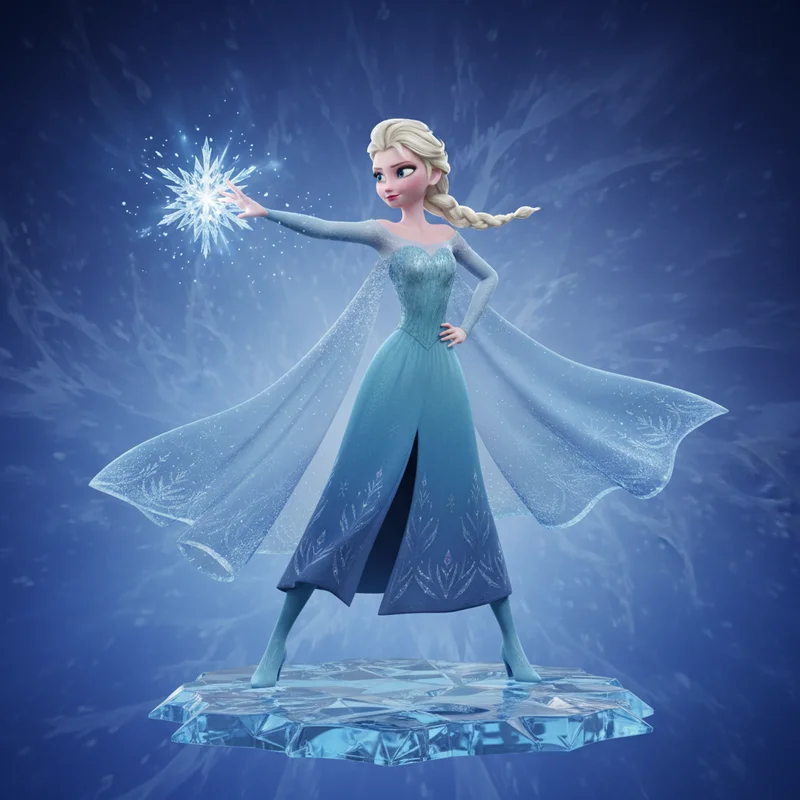
Elsa

Elsa

Ice queen who couldn't let it go.

VS
Rubber Duck

Rubber Duck

A debugging tool for programmers and bathtub companion for everyone else. This hollow yellow bird has solved more software bugs than most senior engineers. Also squeaks.

Battle Analysis

Durability rubber-duck Wins
30%
70%
Elsa Rubber Duck

Elsa

As an animated entity, Elsa exists primarily as digital information stored across distributed server networks. This grants her a form of immortality unknown to physical specimens. The character cannot be melted, scratched, or chewed upon by household pets. Her image persists unchanged across repeated viewings, a phenomenon researchers term digital permanence.

However, the character remains vulnerable to cultural obsolescence. Animated entities of previous generations, such as Snow White and Cinderella, demonstrate declining engagement metrics among contemporary youth populations. Without continued content production, the specimen risks fading from collective memory.

Rubber Duck

The physical Rubber Duck demonstrates remarkable material resilience. Modern specimens, constructed from PVC polymers, resist water damage, temperature fluctuation, and repeated compression events. Field observations document individual units surviving 15 to 20 years of active bathroom service. The species has been recovered intact from drainage systems, garden beds, and automotive glove compartments.

Crucially, the Rubber Duck's design simplicity ensures easy replacement. The loss of one specimen triggers minimal emotional disturbance, as identical units remain readily available at retail locations worldwide. This fungibility represents an evolutionary advantage in the domestic ecosystem.

VERDICT

Physical resilience combined with infinite replacability provides superior longevity to digital permanence.
Comfort level rubber-duck Wins
30%
70%
Elsa Rubber Duck

Elsa

The psychological comfort derived from Elsa represents a complex phenomenon. Young viewers report feelings of empowerment upon observing her rejection of societal constraints. The character's eventual acceptance of her unusual abilities provides what developmental psychologists term a positive identity formation model.

However, comfort levels vary considerably across demographics. Parents report elevated stress responses to repeated exposure to the associated soundtrack. The character's icy demeanour and significant magical powers may intimidate rather than comfort younger viewers. Comfort, in this instance, proves highly context-dependent.

Rubber Duck

The Rubber Duck provides comfort through fundamentally different mechanisms. Its presence indicates the commencement of bathtime, a ritual associated with warmth, relaxation, and parental attention. The specimen's perpetual expression, typically characterised by a gentle smile, offers non-threatening companionship during vulnerable moments of undress.

Research documents the tactile comfort provided by squeezing the specimen, an action that produces both auditory feedback and proprioceptive satisfaction. The Rubber Duck neither judges nor expects emotional engagement. It simply floats, a reliable presence in an unpredictable world.

VERDICT

Unconditional, non-threatening presence and tactile comfort provide reliable psychological benefits.
Daily utility rubber-duck Wins
30%
70%
Elsa Rubber Duck

Elsa

Documentation of Elsa's practical applications reveals significant limitations. The specimen cannot be physically manipulated, squeezed, or thrown across rooms. Her primary utility lies in entertainment consumption, requiring dedicated viewing time, compatible display equipment, and frequently, parental supervision. The character provides no assistance with personal hygiene, meal preparation, or domestic organisation.

Secondary applications include costume inspiration for themed celebrations and conversational topics among young social groups. Researchers note that these utilities are highly seasonal, peaking in October and declining sharply through subsequent months.

Rubber Duck

The Rubber Duck's utility portfolio is remarkably diverse. Primary applications include bathtime companionship, where the specimen serves as both entertainment and supervision indicator. A floating duck confirms water presence; a submerged duck suggests concerning drainage issues. The entity requires no batteries, software updates, or parental content controls.

Secondary applications documented by field researchers include desktop decoration, automotive dashboard ornamentation, and what computer programmers term rubber duck debugging, wherein the specimen serves as a patient listener for technical problem-solving. This last application alone justifies the entity's continued production.

VERDICT

Multifunctional applications from hygiene assistance to software debugging demonstrate superior daily utility.
Global recognition rubber-duck Wins
30%
70%
Elsa Rubber Duck

Elsa

The specimen known as Elsa achieved extraordinary dispersal following the 2013 release of Frozen, which generated $1.28 billion in theatrical revenue alone. Her image has been documented on lunchboxes, bedsheets, and birthday cakes across six continents. The accompanying auditory phenomenon, colloquially termed Let It Go, has been recorded emanating from vehicles, shopping centres, and exhausted parents with remarkable frequency.

However, researchers note that recognition is heavily concentrated among individuals aged 3 to 12 years and their immediate caregivers. Populations beyond this demographic exhibit significantly reduced familiarity, with some older specimens reporting active aversion to the associated soundtrack.

Rubber Duck

The Rubber Duck demonstrates what behavioural ecologists term generational persistence. Documentation of the species extends across eight decades, with specimens observed in the bathrooms of monarchs and commoners alike. The entity requires no marketing budget, no theatrical release, and no accompanying merchandise empire to maintain its cultural position.

Field studies indicate recognition rates approaching 97% among populations aged 1 to 95. The specimen has been immortalised in children's literature, televised educational programming, and the 1970 song by Sesame Street character Ernie. This represents a breadth of cultural penetration that transcends generational boundaries entirely.

VERDICT

Sustained recognition across eight decades outperforms intensive but time-limited cultural saturation.
Environmental impact rubber-duck Wins
30%
70%
Elsa Rubber Duck

Elsa

The environmental footprint of Elsa extends across multiple industrial sectors. Frozen merchandise production has generated substantial manufacturing activity, with estimates suggesting billions of plastic units bearing the character's likeness distributed globally since 2013. These items, including figurines, costumes, and decorative accessories, contribute to landfill accumulation at measurable rates.

Digital distribution of the character's content requires server infrastructure with documented energy consumption. Streaming a single viewing of Frozen generates approximately 36 grams of CO2. Multiply this by billions of viewings, and the cumulative atmospheric impact becomes ecologically significant.

Rubber Duck

The individual Rubber Duck presents a modest environmental profile. A single specimen weighs approximately 50 grams and may remain in service for decades before disposal. Modern manufacturing techniques have reduced per-unit resource consumption considerably since the 1970s.

However, the cumulative impact merits consideration. Global Rubber Duck production exceeds 50 million units annually. Post-service specimens accumulate in landfills, where PVC degradation occurs over centuries rather than decades. Neither entity offers an exemplary environmental model, though the Duck's extended service life provides marginal advantage.

VERDICT

Extended service life and minimal energy requirements reduce per-year environmental impact significantly.
👑

The Winner Is

Rubber Duck

45 - 55

The data, when examined with appropriate scholarly rigour, presents a conclusion that may surprise those who equate magical abilities with adaptive superiority. Elsa of Arendelle represents a remarkable achievement in animated character development, commanding intense loyalty from her demographic cohort and generating unprecedented merchandise revenue. Her cultural impact during the 2013-2019 period cannot be disputed.

Yet the Rubber Duck demonstrates what evolutionary biologists would recognise as superior fitness within the domestic ecosystem. Its persistence across eight decades, utility across multiple unrelated domains, and consistent comfort provision represent traits that transcend the ephemeral nature of entertainment trends. The specimen requires no electricity, no narrative context, and no seasonal marketing campaigns to maintain relevance.

In the final analysis, one entity offers spectacular but time-limited engagement, while the other provides modest but permanent utility. The bathroom, that most private of domestic spaces, has already rendered its verdict through decades of specimen selection. The Rubber Duck prevails with a decisive margin of 55% to 45%.

Elsa
45%
Rubber Duck
55%

Share this battle

More Comparisons