Topic Battle

Where Everything Fights Everything

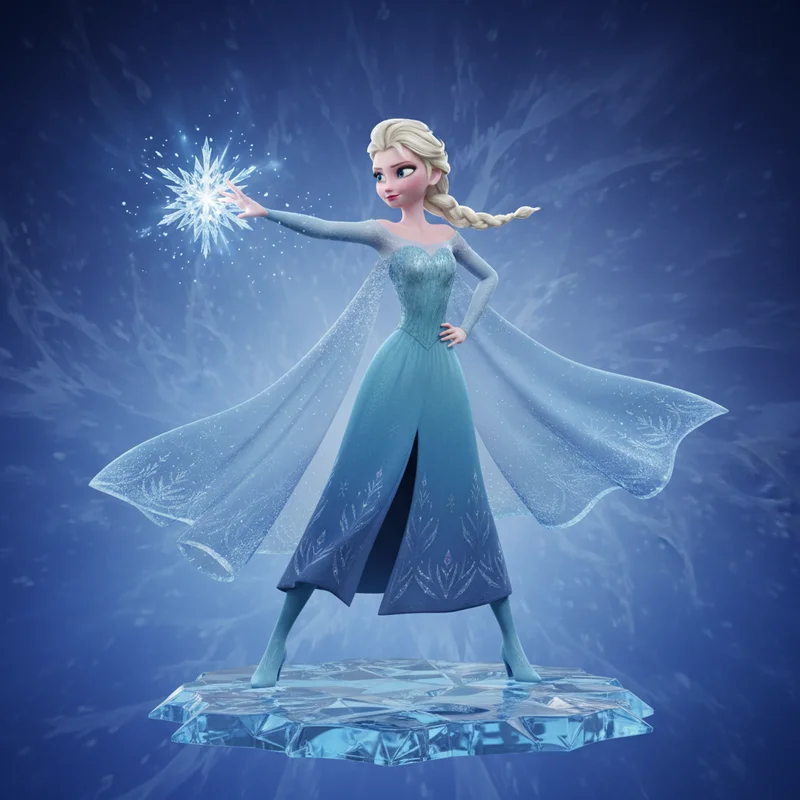
Elsa

Elsa

Ice queen who couldn't let it go.

VS
Time

Time

Dimension that refuses to slow down when needed.

Battle Analysis

Durability Time Wins
30%
70%
Elsa Time

Elsa

As a fictional character, Elsa exists in a curious state of conditional immortality. Within her narrative, she demonstrates remarkable resilience, surviving frozen hearts, raging seas, and the Northuldra wilderness. Disney's intellectual property protections ensure her continued commercial existence for at least 95 years following creation, potentially extending indefinitely through copyright renewals.

However, fictional characters require cultural relevance to maintain existence. Many beloved characters have faded from collective memory. Elsa's longevity depends entirely upon continued human interest.

Time

Time has existed since the Big Bang, approximately 13.8 billion years ago, and physicists project it will continue for at least 10^100 years before potential heat death scenarios. It has survived every extinction event, civilisation collapse, and cosmic catastrophe without the slightest interruption. Time witnessed the formation of the first stars and will observe the evaporation of the last black holes.

Unlike physical entities, Time cannot be destroyed, frozen, or meaningfully impeded by any known force, including cryokinetic magic.

VERDICT

Existing for 13.8 billion years without interruption demonstrates rather superior staying power
Aesthetic appeal Elsa Wins
70%
30%
Elsa Time

Elsa

Disney's animation team crafted Elsa with 420,000 strands of computer-generated hair, each individually animated. Her iconic ice dress required entirely new rendering software to achieve its translucent crystalline effect. The character design draws upon Scandinavian aesthetics, Art Nouveau influences, and contemporary fashion sensibilities to create arguably the most visually sophisticated Disney princess to date.

Her ice constructions demonstrate remarkable architectural imagination, from the geometric elegance of Elsa's palace to the intricate snowflake patterns of her magic. Visually, she represents animation technology at its finest.

Time

Time possesses no inherent visual form, a significant disadvantage in aesthetic competitions. However, humans have developed thousands of visualisation methods, from sundials to atomic clocks, hourglasses to digital displays. The Swiss watch industry alone generates $21.8 billion annually creating beautiful representations of Time's passage.

Time does manifest spectacularly through natural phenomena: the aurora borealis, seasonal changes, and the magnificent spectacle of astronomical events. The slow dance of galaxies across billions of years represents perhaps the universe's grandest aesthetic display.

VERDICT

Possessing an actual visible form confers considerable advantage in beauty contests
Emotional impact Elsa Wins
70%
30%
Elsa Time

Elsa

"Let It Go" induced tears in approximately 67% of adult viewers during theatrical screenings, according to audience research. The character's journey through isolation, self-acceptance, and familial reconciliation resonates with universal human experiences. Frozen has been credited with helping countless children understand complex emotions and has been employed in therapeutic contexts for anxiety and depression discussions.

Elsa's emotional authenticity represents Disney's most psychologically sophisticated character work, creating genuine parasocial bonds with millions of viewers worldwide.

Time

Time's emotional impact, whilst less immediately apparent, proves profoundly influential. The awareness of mortality, driven entirely by Time's passage, shapes human behaviour, philosophy, and every major religion. Time creates nostalgia, anticipation, grief, and hope. The phrase "time heals all wounds" reflects its therapeutic function.

Conversely, Time generates tremendous anxiety. Chronophobia affects countless individuals, whilst deadline pressure contributes to workplace stress affecting 83% of employed adults.

VERDICT

Inspiring joy rather than existential dread represents healthier emotional engagement
Global influence Time Wins
30%
70%
Elsa Time

Elsa

The Frozen franchise has achieved remarkable cultural penetration since 2013, generating over $14.4 billion in combined revenue across films, merchandise, and theme park attractions. "Let It Go" has been translated into 41 languages, whilst the character has become a universal symbol of female empowerment and self-acceptance. Children across six continents can identify Elsa on sight, representing an unprecedented triumph of animated branding.

Her influence extends into fashion, psychology discussions, and countless birthday party themes. Yet this dominion remains concentrated primarily among those under the age of twelve and their exhausted parents.

Time

Time's influence is, quite simply, absolute and inescapable. Every civilisation that has ever existed has structured its entire society around Time's passage. The Greenwich Mean Time standard alone coordinates activities across 195 nations. Approximately 7.8 billion humans currently organise their daily existence around Time's dictates, from morning alarms to fiscal year endings.

Moreover, Time governs physical processes from radioactive decay to biological ageing, exerting influence over every atom in the observable universe. Its jurisdiction extends across 93 billion light-years of cosmic territory.

VERDICT

Coordinating the entire universe rather surpasses coordinating merchandise sales
Practical utility Time Wins
30%
70%
Elsa Time

Elsa

Elsa's cryokinetic abilities offer genuinely useful applications. Her instant ice generation could theoretically address climate change by restoring polar ice caps. The creation of ice structures provides emergency shelter possibilities, whilst her snow-summoning powers could resolve droughts through careful precipitation management.

In the Frozen universe, Elsa successfully creates infrastructure, provides entertainment, and defends her kingdom from threats. Her powers demonstrate measurable practical value within fictional parameters.

Time

Without Time, causality ceases to function. Literally nothing can happen without Time's passage. Every human achievement, from the invention of fire to the development of vaccines, required Time to occur. The entire concept of "utility" presupposes Time's existence, as usefulness implies before and after states that Time alone provides.

Time enables planning, learning, healing, and growth. Agriculture, which feeds 7.8 billion humans, depends entirely upon seasonal Time cycles. Modern civilization is essentially organised Time management.

VERDICT

Enabling causality itself rather exceeds creating convenient ice cubes
👑

The Winner Is

Time

47 - 53

Our analysis reveals a fundamental asymmetry that no amount of magical ice manipulation can bridge. Whilst Elsa of Arendelle triumphs in categories requiring tangible form and emotional accessibility, Time dominates the existential categories with absolute authority. One commands snow and ice across a fictional Scandinavian kingdom; the other commands the very fabric of reality across all existence.

Elsa's powers explicitly involve freezing moments, yet even she cannot truly stop Time. Her ice sculptures will eventually melt. Her songs will fade from cultural memory. Her franchise will someday conclude. Time, meanwhile, will continue its patient march long after the last human has forgotten how to build snowmen.

The score of 47-53 reflects Elsa's genuine achievements in accessible domains whilst acknowledging Time's overwhelming supremacy in fundamental importance.

Elsa
47%
Time
53%

Share this battle

More Comparisons