Topic Battle

Where Everything Fights Everything

Fox

Fox

Cunning canid of folklore fame, adapting successfully to both wilderness and urban environments worldwide.

VS
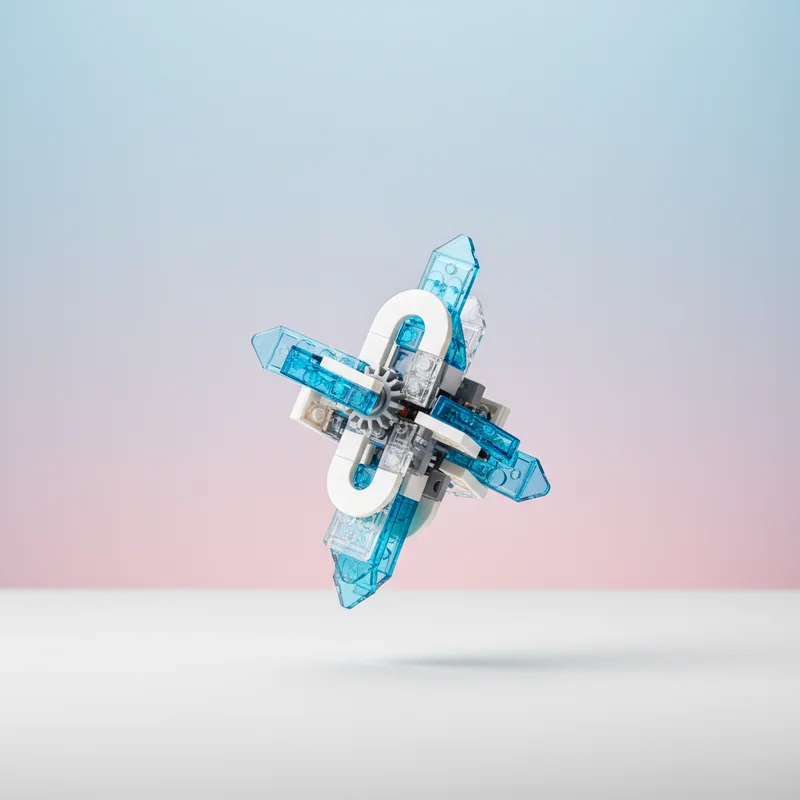
Lego

Lego

Interlocking plastic bricks and barefoot landmines.

Battle Analysis

Adaptability fox Wins
70%
30%
Fox Lego

Fox

The red fox represents one of evolution's most adaptable mammals. Its dietary flexibility encompasses rodents, rabbits, insects, berries, bins, and the contents of unguarded picnics. Urban populations have learned to navigate traffic, exploit restaurant waste schedules, and identify which households maintain insufficiently secured cat flaps.

Most remarkably, foxes have adapted their vocalisations and behaviour patterns to urban environments, becoming increasingly tolerant of human proximity whilst maintaining sufficient wariness to avoid harm. This represents genuine evolutionary adaptation occurring within observable timescales.

Lego

Lego demonstrates adaptability of a fundamentally different character. The standardised brick system permits construction of virtually any object the human imagination can conceive, from functional prosthetic limbs to full-scale automobiles. Over 915 million configurations exist for just six standard 2x4 bricks.

Yet this adaptability requires external agency. A fox adapts autonomously to changed circumstances; a Lego brick awaits instruction. The difference between genuine adaptive intelligence and mere configurational potential remains significant.

VERDICT

Autonomous behavioural adaptation demonstrates true evolutionary fitness.
Educational value lego Wins
30%
70%
Fox Lego

Fox

The fox serves as valuable subject matter for ecological education. Programmes studying urban wildlife adaptation increasingly focus on fox populations as exemplars of human-animal coexistence. Their hunting behaviours demonstrate predator-prey dynamics; their social structures illuminate mammalian family organisation.

However, direct educational engagement with foxes presents considerable challenges. They bite. They carry parasites. They emit a distinctive musk that educational establishments find difficult to accommodate.

Lego

Lego has spawned an entire pedagogical industry. Lego Education operates in over 100 countries, teaching engineering principles, computational thinking, and spatial reasoning through hands-on brick manipulation. The Lego Serious Play methodology has been adopted by Fortune 500 companies for strategic planning workshops.

University engineering departments use Lego Technic sets to demonstrate mechanical principles. Occupational therapists employ bricks for fine motor skill development. No fox has achieved comparable institutional integration into formal education systems.

VERDICT

Systematic global educational integration surpasses wildlife observation opportunities.
Cultural significance fox Wins
70%
30%
Fox Lego

Fox

The fox occupies a uniquely complex position in British cultural consciousness. Aesop's fables established the fox as a symbol of cunning some 2,600 years ago, whilst Reynard the Fox became a medieval literary phenomenon. The hunting debate transformed the fox into a political symbol of considerable potency, invoked by both rural tradition and animal welfare movements.

In Japanese mythology, the kitsune represents supernatural wisdom; in Native American traditions, the fox serves as a trickster deity. Few animals command such cross-cultural symbolic weight.

Lego

Lego has achieved cultural penetration remarkable for a product merely 75 years old. The brand consistently ranks among the world's most valuable, with an estimated worth exceeding six billion pounds. The Lego Movie franchise has grossed over one billion dollars; Legoland theme parks attract millions annually across eight global locations.

Yet Lego remains fundamentally a commercial product rather than a cultural archetype. It represents childhood creativity, certainly, but lacks the mythological resonance accumulated by the fox across millennia.

VERDICT

Millennia of mythological significance outweighs seven decades of commercial success.
Stealth and infiltration fox Wins
70%
30%
Fox Lego

Fox

The red fox has elevated stealth to an art form of considerable sophistication. Its padded feet produce virtually no sound on any surface, whilst its slender frame permits passage through gaps measuring just 10 centimetres in diameter. Urban foxes have been documented infiltrating locked sheds, cat flaps designed to exclude them, and even the occasional kitchen through doors left briefly ajar.

Their crepuscular hunting patterns ensure maximum activity during twilight hours when human vigilance wanes. A fox can strip a chicken coop, redistribute bin contents across a garden, and vanish without triggering motion-activated lighting.

Lego

The Lego brick achieves infiltration through passive dispersal rather than active movement. Children serve as unwitting transport vectors, depositing bricks in locations defying rational explanation: inside shoes, beneath sofa cushions, wedged between mattress and bed frame. Studies suggest the average British household contains approximately 200 Lego bricks, of which roughly 15 per cent remain unaccounted for at any given moment.

Unlike the fox, Lego requires no intent to achieve its positioning. It simply waits, demonstrating the patience of a geological formation, until vulnerable feet present themselves.

VERDICT

Autonomous, intentional infiltration represents superior tactical capability.
Durability and persistence lego Wins
30%
70%
Fox Lego

Fox

The red fox demonstrates remarkable biological resilience across diverse environments. Populations thrive from Arctic tundra to Australian bushland, having successfully colonised every continent except Antarctica. Urban specimens have adapted to diets consisting largely of discarded takeaway food and the occasional domestic pet rabbit, displaying nutritional flexibility that would concern any dietitian.

Individual foxes typically survive three to four years in the wild, though captive specimens have reached fourteen. Their populations recover rapidly from culling programmes, bouncing back with a persistence that has frustrated gamekeepers for centuries.

Lego

The Lego brick achieves durability that renders biological persistence almost quaint. Manufactured from acrylonitrile butadiene styrene (ABS), each brick maintains structural integrity across a projected lifespan of 1,300 years. Bricks from 1958 interlock seamlessly with those produced yesterday, their clutch power undiminished by six decades of service.

A single 2x2 brick withstands compressive forces of 4,240 Newtons before failure. The fox, for all its evolutionary refinement, cannot claim similar resistance to being stepped upon.

VERDICT

Thirteen centuries of projected material permanence exceeds any biological lifespan.
👑

The Winner Is

Fox

52 - 48

The confrontation between Vulpes vulpes and the Danish plastic brick reveals a contest of remarkable philosophical depth. Lego demonstrates superior durability and educational utility, categories that reward engineering precision and institutional integration. These are not trivial accomplishments; they speak to humanity's capacity for creating objects that outlast their creators by considerable margins.

Yet the fox secures victory through qualities no plastic brick can replicate: genuine cunning, autonomous adaptation, and millennia of cultural significance. The fox thinks, plots, and persists through intelligence rather than mere material resilience. When the last Lego brick has crumbled to microplastics in some distant epoch, the descendants of today's foxes may well remain, having adapted to whatever strange world humanity has created.

Fox
52%
Lego
48%

Share this battle

More Comparisons