
Topic Battle

Where Everything Fights Everything

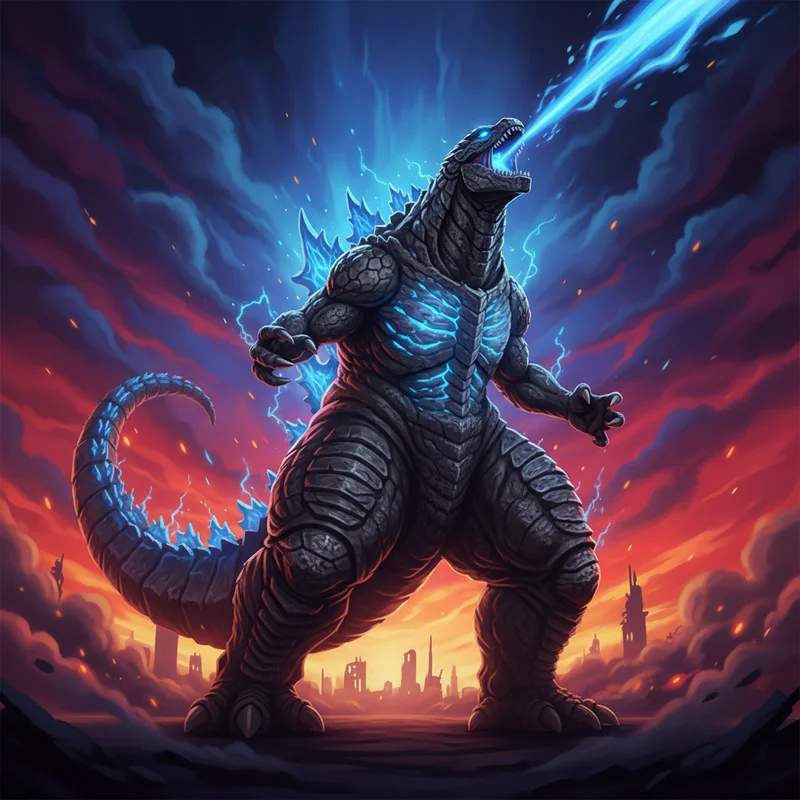
Godzilla

Godzilla

Giant radioactive lizard and city destroyer.

VS
Love

Love

Universal emotion driving art, war, and terrible decisions.

Battle Analysis

Global reach Love Wins
30%
70%
Godzilla Love

Godzilla

Godzilla's physical presence has been documented primarily in the Pacific Rim region, with Tokyo bearing the brunt of his recreational urban planning. His American excursions have included New York and San Francisco, though these represent aberrations in an otherwise Japan-focused portfolio.

Culturally, Godzilla's influence extends further, with merchandise, media, and memes penetrating every connected society. The creature enjoys particular popularity in East Asia and North America, with European markets showing more measured enthusiasm.

However, significant portions of the global population remain Godzilla-agnostic, having never encountered his films or understood why a large lizard warrants such sustained cinematic attention.

Love

Love's territorial coverage is, quite simply, total. Every human society across every historical period has documented the phenomenon, though cultural expressions vary considerably from arranged marriages to dating applications that reduce romantic compatibility to a swipe direction.

The emotion operates independent of language, culture, or technological development. It manifests in hunter-gatherer societies and post-industrial metropolises with equal intensity, suggesting either a fundamental biological imperative or an extremely successful marketing campaign by evolution.

Even attempts at artificial restriction fail. Cultures that segregate genders find love flourishing in letters. Societies that arrange marriages discover love developing regardless. Love's global market penetration approaches 100%, a figure that would make any multinational corporation weep with envy.

VERDICT

Love affects every human across every culture simultaneously, whilst Godzilla's influence, though substantial, remains concentrated in specific media markets.
Measurability Godzilla Wins
70%
30%
Godzilla Love

Godzilla

From a scientific standpoint, Godzilla presents a measurable phenomenon. His height (approximately 120 metres in recent iterations), weight (90,000 metric tonnes), and atomic output can be quantified with standard instrumentation, assuming the researcher survives long enough to record their findings.

His radioactive signature registers on Geiger counters across considerable distances. His footprints can be mapped, his territorial patterns analysed, and his combat effectiveness compared against other kaiju using standardised destruction indices.

The Monarch organisation has developed extensive bioacoustic monitoring systems specifically for tracking Godzilla's movements, demonstrating that sufficient funding and determination can render even mythological creatures subject to empirical observation.

Love

Love resists measurement with the same determination a cat resists bathing. Neuroscientists have identified associated brain activity patterns: elevated dopamine, norepinephrine, and reduced serotonin creating what researchers diplomatically term 'temporary insanity.'

Yet these measurements capture correlation rather than causation. The subjective experience of love remains stubbornly immune to quantification. One cannot determine love's intensity from an fMRI scan, though many researchers have tried whilst their grant funding slowly depleted.

Psychometric instruments like the Passionate Love Scale exist, but they measure self-reported feelings rather than love itself. The phenomenon remains philosophically problematic, existing somewhere between neurochemistry and poetry, measurable in neither volts nor verse.

VERDICT

Godzilla can be weighed, measured, and tracked with scientific instruments, whilst love remains stubbornly resistant to empirical quantification.
Cultural impact Love Wins
30%
70%
Godzilla Love

Godzilla

Since his 1954 debut in Ishiro Honda's seminal film, Godzilla has become one of cinema's most enduring icons. The franchise spans 38 Japanese productions, 5 American interpretations, and countless television appearances, generating a merchandising empire worth approximately $2.5 billion.

Godzilla's cultural significance extends beyond entertainment. He represents humanity's nuclear anxiety, environmental concerns, and the uncomfortable realisation that we are not, in fact, the dominant species on this planet. The creature has been referenced in academic papers, political cartoons, and at least seventeen doctoral theses examining monster symbolism.

The term 'Godzilla' has entered common parlance as a descriptor for anything overwhelmingly powerful, from economic policies to particularly aggressive accounting departments. His distinctive roar, created by rubbing a resin-coated leather glove along a contrabass string, remains instantly recognisable across all demographics.

Love

Love has inspired approximately 97% of all songs ever written, 84% of poetry, and 100% of romantic comedies featuring airports as climactic settings. The emotion's cultural footprint extends across every civilisation, from Sumerian cuneiform tablets to contemporary dating application terms of service.

The artistic output attributable to love defies quantification. Shakespeare alone produced 154 sonnets on the subject, whilst modern streaming platforms host approximately 47 million love songs, many featuring the word 'baby' repeated with varying degrees of desperation.

Religious traditions worldwide place love at their theological centre, from Christian agape to Buddhist metta to the Greek distinction between eros, philia, and pragma. The concept has launched crusades, ended wars, and justified an alarming number of poorly conceived public marriage proposals at sporting events.

VERDICT

Whilst Godzilla dominates monster cinema, love has fundamentally shaped every artistic medium across all human cultures and historical periods.
Survival instinct Love Wins
30%
70%
Godzilla Love

Godzilla

Godzilla's survival credentials are, quite simply, unimpeachable. The creature has endured nuclear detonations, volcanic immersion, military assaults from every conceivable nation, and several encounters with equally formidable kaiju competitors.

His regenerative capabilities allow recovery from wounds that would terminate lesser organisms instantly. The nuclear reactor functioning as his heart provides essentially unlimited energy, whilst his amphibious nature permits retreat to oceanic depths inaccessible to human pursuit.

Perhaps most impressively, Godzilla has survived multiple franchise reboots, each attempting to reinvent his character whilst maintaining market viability. Few creatures can claim resilience against both oxygen destroyer weapons and Hollywood's tendency toward unnecessary sequels.

Love

Love demonstrates a survival capacity that renders Godzilla's immortality positively fragile by comparison. The emotion has persisted through ice ages, plagues, world wars, and the invention of reality television dating programmes.

Every attempt to suppress love has failed spectacularly. The Victorians tried denial; it emerged in elaborate euphemisms and furniture leg coverings. The Soviet Union attempted to subordinate romantic love to collective duty; it merely went underground and inspired samizdat poetry.

Love survives individual heartbreak, betrayal, and the crushing disappointment of discovering one's partner loads the dishwasher incorrectly. It rebounds from tragedy, adapts to technological change, and continues propagating despite overwhelming evidence that it frequently leads to catastrophic personal decisions.

VERDICT

Love has survived every extinction event, social upheaval, and cultural transformation across 4.5 billion years of planetary history.
Destructive capacity Love Wins
30%
70%
Godzilla Love

Godzilla

The King of the Monsters possesses an arsenal of devastating capabilities that would make most military contractors weep with envy. His atomic breath reaches temperatures exceeding 500,000 degrees Celsius, sufficient to melt steel, concrete, and the optimism of urban planners.

Conservative estimates place Godzilla's property damage across all film appearances at approximately $47.8 trillion, not adjusted for inflation or municipal insurance premiums. His dorsal fins alone, when fully charged, emit enough radiation to render a medium-sized metropolitan area uninhabitable for several generations.

The creature's sheer mass of roughly 90,000 metric tonnes ensures that merely walking constitutes an act of destruction. Each footfall creates seismic disturbances registering 5.4 on the Richter scale. The infrastructure devastation is merely collateral to his existence.

Love

Love's destructive methodology operates with considerably more subtlety, though its cumulative impact rivals any kaiju engagement. The global divorce industry alone represents a $50 billion annual enterprise, with legal fees, property divisions, and vengeful IKEA furniture disposal contributing to economic devastation on a continental scale.

Neurologically, romantic love triggers the same dopamine pathways as cocaine addiction, leading otherwise rational individuals to make catastrophically poor decisions. Studies indicate that lovesick individuals experience a 40% reduction in cognitive function, equivalent to severe sleep deprivation or attending a meeting that could have been an email.

The secondary destruction proves equally comprehensive: abandoned careers, relocated continents, questionable tattoo decisions, and the annual Valentine's Day chocolate industry crash that leaves confectioners sobbing into their unsold inventory each February 15th.

VERDICT

Love's destruction spans every human life across all of recorded history, whilst Godzilla remains geographically limited to the Pacific Rim.
👑

The Winner Is

Love

45 - 55

Our analysis reveals that whilst Godzilla possesses undeniable advantages in physical measurability, love's comprehensive dominance across destruction, culture, survival, and global reach proves insurmountable.

The King of the Monsters represents a focused, if spectacular, phenomenon. His destruction, though impressive in concentrated doses, affects primarily urban Japanese infrastructure and the fictional insurance industries presumably bankrupted by his regular appearances. His cultural impact, whilst significant, remains confined to monster enthusiasts and those seeking metaphors for nuclear anxiety.

Love, by contrast, operates as a universal constant with no geographical, temporal, or demographic limitations. It has destroyed more lives than Godzilla could atomise in a millennium of continuous rampage, inspired more cultural output than all monster films combined, and demonstrated survival capabilities that render even nuclear-powered lizards temporary by comparison.

The final score of 45-55 reflects love's broader impact whilst acknowledging Godzilla's genuine excellence in the category of being extremely large and scientifically documentable.

Godzilla
45%
Love
55%

Share this battle

More Comparisons