Topic Battle

Where Everything Fights Everything

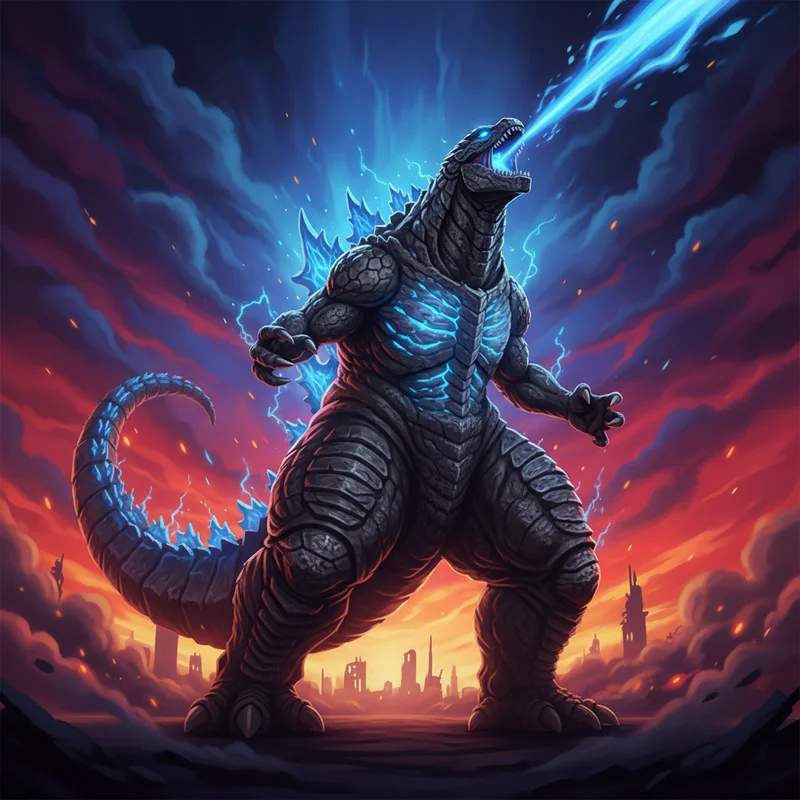
Godzilla

Godzilla

Giant radioactive lizard and city destroyer.

VS
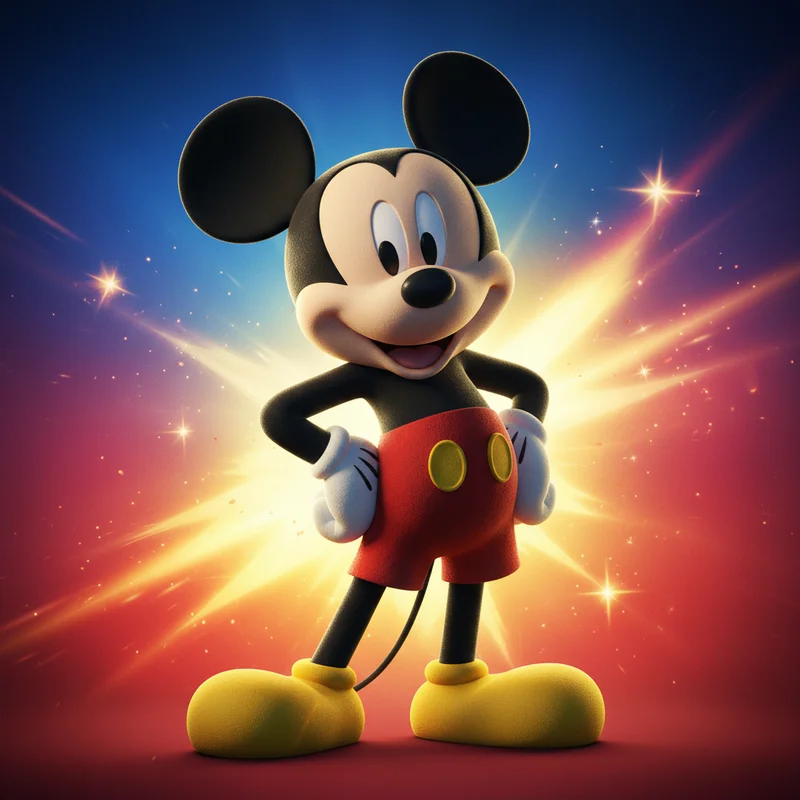
Mickey Mouse

Mickey Mouse

Disney's original mascot and corporate icon.

Battle Analysis

Symbolic resonance Godzilla Wins
70%
30%
Godzilla Mickey Mouse

Godzilla

Godzilla carries extraordinary symbolic weight, functioning as living metaphor for humanity's most profound anxieties. The creature emerged directly from the trauma of Hiroshima and Nagasaki, embodying the uncontrollable consequences of nuclear technology. This origin grants Godzilla a gravitas that purely commercial creations cannot replicate—the monster speaks to genuine historical suffering and ongoing existential concerns.

Beyond nuclear commentary, Godzilla has evolved to represent environmental vengeance, the hubris of technological progress, and the sublime terror of natural forces beyond human control. Academic disciplines including monster studies and ecocriticism employ Godzilla as primary text. The creature's symbolic flexibility—able to function as villain, hero, or morally neutral force—enables continued relevance as cultural anxieties shift across generations.

Mickey Mouse

Mickey Mouse symbolises something altogether different: the optimistic spirit of American entertainment and the commercial democratisation of joy. His symbolic function has remained remarkably consistent across nearly a century—representing childhood innocence, wholesome entertainment, and the magical possibility of animated worlds. These associations, whilst less weighty than nuclear trauma, possess their own cultural significance.

Critics have noted Mickey's evolution into a symbol of corporate hegemony and cultural homogenisation, representing the Disneyfication of global entertainment. This dual symbolism—simultaneously embodying childhood wonder and corporate consolidation—creates interesting tensions. Yet for most audiences, Mickey remains simply the cheerful mouse who makes children smile, a universal signifier of entertainment stripped of darker associations.

VERDICT

Godzilla's emergence from genuine historical trauma grants profound symbolic weight that commercial mascots cannot replicate.
Economic value generation Mickey Mouse Wins
30%
70%
Godzilla Mickey Mouse

Godzilla

The Godzilla franchise represents a significant but bounded economic entity. Toho Studios, the creature's parent company, has generated an estimated two billion dollars in box office revenue across nearly seven decades of filmmaking. Licensing arrangements for merchandise, video games, and collaborative appearances contribute additional revenue streams, though comprehensive figures remain difficult to verify.

Recent Hollywood productions have demonstrated the franchise's capacity for blockbuster returns. The MonsterVerse series has achieved considerable commercial success, with individual films grossing several hundred million dollars globally. Yet these figures, whilst impressive, represent episodic revenue generation rather than continuous economic activity. Godzilla's value manifests primarily during theatrical releases and associated promotional periods.

Mickey Mouse

Mickey Mouse functions not merely as intellectual property but as the cornerstone of the world's largest entertainment conglomerate. The Walt Disney Company, for which Mickey serves as corporate mascot and spiritual centre, generates annual revenues exceeding eighty billion dollars. Whilst not all revenue flows directly from the mouse, his image and associated brand equity underpin valuations across every Disney division.

The economic mechanisms surrounding Mickey demonstrate unprecedented sophistication. Theme park operations alone generate tens of billions annually, with visitors paying substantial premiums specifically to interact with Mickey's environment. The character's licensing revenues rival the GDP of small nations. Disney's market capitalisation, hovering around two hundred billion dollars, rests upon the foundational brand identity that Mickey Mouse established nearly a century ago.

VERDICT

Mickey Mouse anchors a corporate empire generating nearly one hundred billion dollars annually in revenue.
Longevity and adaptability Mickey Mouse Wins
30%
70%
Godzilla Mickey Mouse

Godzilla

Godzilla has demonstrated remarkable staying power since his 1954 debut, surviving numerous cultural shifts and entertainment industry transformations. The franchise has proven adaptable, reimagining the creature for different eras whilst maintaining core identity. Recent entries have incorporated contemporary concerns about climate change and environmental degradation, demonstrating continued thematic relevance.

However, Godzilla's longevity has required periodic reinvention, with the franchise experiencing fallow periods between successful iterations. The creature's appeal appears cyclical rather than constant, dependent upon quality productions to maintain cultural presence. Younger generations often require introduction to Godzilla through new films rather than inheriting familiarity through ambient cultural exposure.

Mickey Mouse

Mickey Mouse has maintained continuous cultural presence since 1928, an achievement virtually unmatched in entertainment history. Unlike franchises requiring periodic revival, Mickey has never truly faded from public consciousness. This permanence stems from Disney's systematic cultivation of the character across every available medium and platform, ensuring each generation encounters Mickey through age-appropriate content.

The mouse has demonstrated extraordinary adaptability, evolving from mischievous prankster to corporate mascot to postmodern icon whilst retaining recognisability. Mickey has survived the transition from theatrical shorts to television to streaming platforms, each medium expanding rather than diluting his presence. The character's ninety-six years of unbroken relevance suggests a structural permanence that transcends individual cultural moments.

VERDICT

Mickey Mouse has maintained unbroken cultural relevance for nearly a century through systematic media adaptation.
Global cultural penetration Mickey Mouse Wins
30%
70%
Godzilla Mickey Mouse

Godzilla

Godzilla's cultural footprint, whilst substantial, remains concentrated within specific demographic and geographic parameters. The creature enjoys tremendous recognition across East Asian markets, particularly in Japan where Godzilla serves as both entertainment icon and national symbol. Western audiences demonstrate familiarity primarily through Hollywood adaptations, which have achieved variable success at establishing the creature's mythology.

The franchise has generated approximately thirty-eight theatrical films, numerous television programmes, and substantial merchandise revenue. Academic institutions have produced scholarly papers examining Godzilla's role as nuclear metaphor and environmental commentary. Yet despite this impressive corpus, Godzilla's appeal remains somewhat niche—beloved intensely by dedicated enthusiasts whilst remaining peripheral to mainstream cultural discourse outside Japan.

Mickey Mouse

Mickey Mouse operates on an entirely different scale of cultural saturation. The character maintains ninety-seven percent global recognition, making him arguably the most identifiable fictional entity in human history. This penetration extends across every inhabited continent, transcending barriers of language, religion, and political ideology. Children in remote villages who have never seen a Disney film nonetheless recognise those circular ears.

The infrastructure supporting Mickey's omnipresence is staggering: twelve theme park resorts across four continents, a media empire encompassing television networks, streaming platforms, and film studios, and merchandise licensing arrangements in virtually every consumer category imaginable. Mickey Mouse has influenced intellectual property law itself, with copyright extensions dubbed the 'Mickey Mouse Protection Act' reshaping legal frameworks. His cultural penetration is not merely wide but structurally integrated into modern civilisation.

VERDICT

Mickey Mouse achieves near-universal recognition and has fundamentally shaped global entertainment infrastructure.
Physical destructive capacity Godzilla Wins
70%
30%
Godzilla Mickey Mouse

Godzilla

The physical specifications of Godzilla represent an extraordinary achievement in destructive potential. Standing at heights ranging from 50 to 120 metres depending on the cinematic iteration, this creature possesses the documented ability to level entire metropolitan centres within hours. The atomic breath—a concentrated beam of thermonuclear energy—has been calculated by enthusiastic physicists to exceed several hundred thousand degrees at point of emission, sufficient to vaporise steel structures instantaneously.

Beyond mere energy projection, Godzilla demonstrates remarkable physical resilience. The creature has survived direct nuclear strikes, volcanic immersion, and combat with equally formidable kaiju adversaries. This regenerative capacity, combined with an apparent imperviousness to conventional military ordinance, establishes Godzilla as a force of nature rather than a mere biological entity. The Japanese Self-Defence Force has expended billions of yen in fictional engagements, all to no discernible effect.

Mickey Mouse

Mickey Mouse presents an altogether different paradigm of physical capability. At approximately seventy centimetres in height with a mass negligible by any industrial standard, the mouse possesses no conventional destructive potential whatsoever. His physical confrontations, when they occur, typically involve household implements and result in comedic rather than catastrophic outcomes.

However, one must consider the metaphysical dimensions of Mickey's existence. As an animated entity, he operates outside the constraints of physical law entirely. He has survived explosions, falls from tremendous heights, and various industrial accidents that would terminate any biological organism. This cartoon immortality grants him a form of invulnerability that Godzilla, despite his considerable durability, cannot claim. The mouse simply cannot be destroyed by physical means, existing instead in a realm where narrative necessity supersedes thermodynamics.

VERDICT

Godzilla's measurable capacity to annihilate infrastructure and defeat military opposition demonstrates superior destructive capability.
👑

The Winner Is

45 - 55

This analysis reveals a competition between two fundamentally different approaches to cultural power. Godzilla represents the sublime—awesome, terrifying, and weighted with genuine historical significance. The creature's nuclear origins and environmental symbolism grant a gravitas that purely commercial creations cannot manufacture. In direct confrontation, no force in entertainment possesses comparable destructive capability.

Yet Mickey Mouse demonstrates mastery over the mechanisms that truly shape modern civilisation: economic systems, legal frameworks, and childhood development. The mouse has achieved something Godzilla never could—structural integration into human society at every level. Disney theme parks function as secular pilgrimage sites. Mickey's image influences purchasing decisions worth billions annually. The character has reshaped intellectual property law itself.

By a margin of 55 to 45, Mickey Mouse emerges as the more consequential entity. Godzilla may destroy cities, but Mickey Mouse has built them.

Godzilla
45%
Mickey Mouse
55%

Share this battle

More Comparisons