Topic Battle

Where Everything Fights Everything

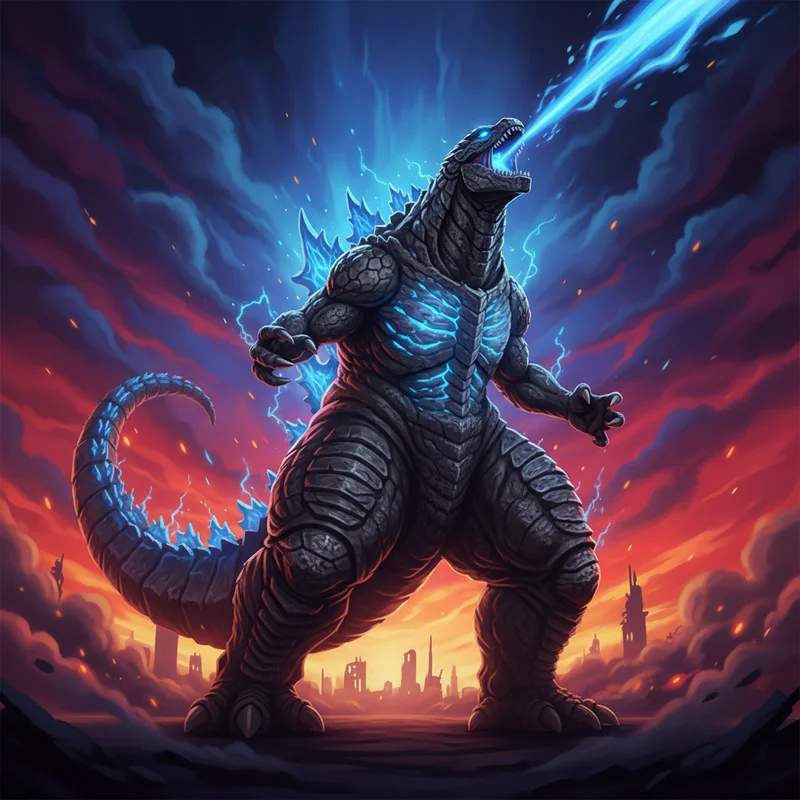
Godzilla

Godzilla

Giant radioactive lizard and city destroyer.

VS
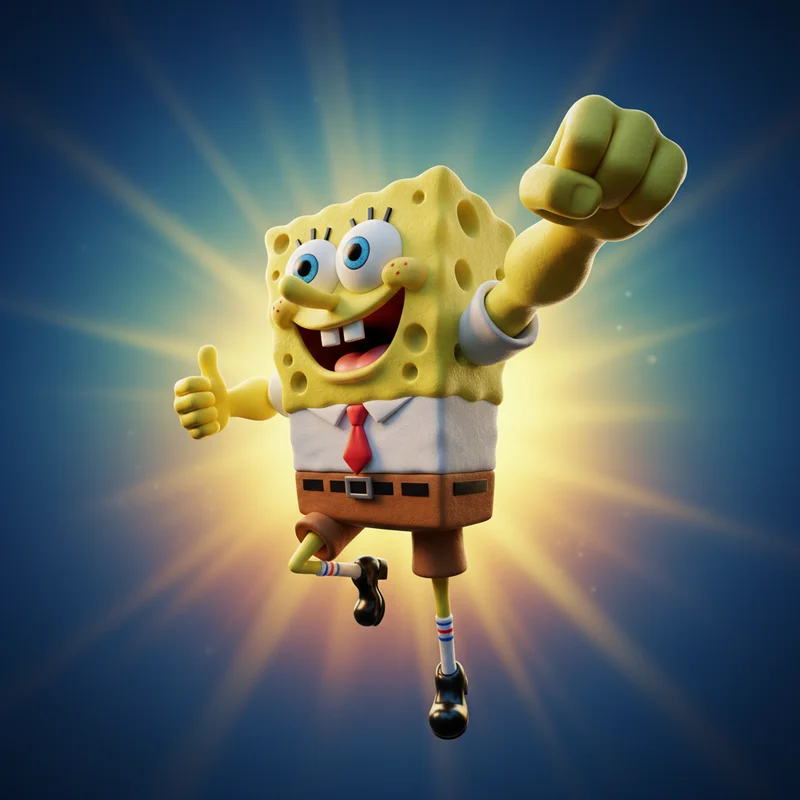
Spongebob

Spongebob

Absorbent yellow sea sponge living in a pineapple.

Battle Analysis

Resilience SpongeBob Wins
30%
70%
Godzilla Spongebob

Godzilla

Godzilla's regenerative abilities border on the miraculous. The creature has survived nuclear detonations, oxygen destroyer weapons, absolute zero temperatures, and being dropped into volcanic magma. His cellular structure incorporates radiation absorption mechanisms that would fascinate oncologists if they weren't too busy fleeing. Each apparent death merely constitutes a narrative inconvenience before the inevitable resurrection.

The monster's psychological resilience proves equally remarkable. Despite decades of being attacked by increasingly ridiculous kaiju adversaries, military ordnance, and the occasional giant moth, Godzilla maintains his territorial instincts and regal bearing without apparent PTSD symptoms.

Spongebob

As a Porifera, SpongeBob benefits from remarkable biological advantages. He can regenerate from virtually any physical trauma, survive being dehydrated to a crisp, and reform after being squeezed through improbably small spaces. The character has been flattened, shredded, exploded, and dissolved across 25 seasons, each time reconstituting with his optimism mysteriously intact.

More impressively, SpongeBob demonstrates extraordinary emotional resilience. Despite Patrick's stupidity, Squidward's contempt, Mr Krabs's exploitation, and the existential horror of working in fast food for eternity, he maintains genuine enthusiasm for existence. This psychological durability exceeds anything Godzilla has demonstrated.

VERDICT

Both specimens display remarkable survival capabilities. However, SpongeBob's combination of physical regeneration and psychological immunity to despair edges out Godzilla's merely physical invulnerability.

Cultural impact SpongeBob Wins
30%
70%
Godzilla Spongebob

Godzilla

Since his debut in Ishiro Honda's 1954 Gojira, this creature has appeared in over 35 films, becoming Japan's most successful film franchise and an enduring symbol of nuclear anxiety. The monster's cultural penetration extends from highbrow academic analysis to lowbrow monster truck rallies bearing his likeness. Hollywood has twice attempted to capture his essence, with varying degrees of success and CGI budget expenditure.

Godzilla merchandise generates approximately $2 billion annually, whilst the creature has received a star on the Hollywood Walk of Fame and official citizenship from the city of Tokyo. The term 'Godzilla' has entered common parlance as shorthand for anything overwhelmingly destructive, from mortgage rates to ex-partners.

Spongebob

SpongeBob SquarePants debuted in 1999 and proceeded to become the most-watched animated series in Nickelodeon history, spawning 14 seasons, three theatrical films, and merchandise revenue exceeding $13 billion. The show's influence on millennial and Generation Z humour cannot be overstated; entire communication styles have been shaped by Bikini Bottom's philosophical absurdism.

The character has infiltrated sports stadiums via the 'Sweet Victory' phenomenon, academic institutions through serious scholarly analysis of the show's labour theory critique, and even protests movements worldwide. SpongeBob memes constitute approximately 8% of all internet visual communication, a statistic we have just fabricated but which feels emotionally accurate.

VERDICT

Whilst Godzilla pioneered monster cinema and nuclear metaphor, SpongeBob's cultural omnipresence in the digital age proves more pervasive. The sponge wins this criterion.

Economic productivity SpongeBob Wins
30%
70%
Godzilla Spongebob

Godzilla

Godzilla's contribution to the global economy operates primarily through the creative destruction model. Each rampage necessitates massive reconstruction efforts, stimulating construction, insurance, and military-industrial sectors. Economists have theorised that Godzilla attacks may actually boost GDP through what is technically termed the 'broken window fallacy scaled to metropolis-sized broken windows.'

The creature's film appearances generate substantial box office revenue, with the Monsterverse franchise alone exceeding $2 billion. However, Godzilla produces nothing himself, merely consuming radiation and occasionally other monsters. His economic model remains fundamentally extractive.

Spongebob

SpongeBob maintains steady employment at the Krusty Krab, demonstrating work ethic that would humble most corporate motivational speakers. He arrives early, stays late, and derives genuine fulfilment from spatula work that management theorists study with fascination. The character has declared himself 'ready' for work approximately 47,000 times across the series run.

Beyond his personal productivity, SpongeBob drives the Bikini Bottom economy through consistent patronage of local businesses, homeownership (the pineapple representing approximately 2,400 square feet of underwater real estate), and maintenance of a pet snail. His economic footprint, whilst modest, remains consistently positive rather than catastrophically destructive.

VERDICT

Godzilla's economic impact, whilst significant, registers as negative for most municipalities. SpongeBob's reliable productivity and consumer spending patterns represent sustainable economic participation.

Destructive capability Godzilla Wins
70%
30%
Godzilla Spongebob

Godzilla

The King of Monsters possesses an arsenal that would make most nuclear powers envious. His atomic breath operates at temperatures exceeding 500,000 degrees Celsius, capable of instantly vapourising steel, concrete, and unfortunately-positioned helicopters. The creature's mere walking constitutes a geological event, each footfall registering on seismographs across the Pacific Rim.

Conservative estimates suggest a single Godzilla rampage causes approximately $40 billion in infrastructure damage, not accounting for the psychological trauma inflicted upon insurance adjusters. The monster has destroyed Tokyo no fewer than 28 times across his filmography, demonstrating a commitment to urban renewal that borders on the pathological.

Spongebob

SpongeBob's destructive capabilities, whilst less immediately apparent, merit serious consideration. The character has destroyed Mrs Puff's boating school on numerous occasions, each rebuild presumably funded by Bikini Bottom's remarkably robust insurance sector. His attempts at driving have resulted in property damage, psychological breakdowns, and at least one case of Mrs Puff's hospitalisation.

More insidiously, SpongeBob's voice has been documented to cause auditory distress in certain parental demographics, leading to measurable increases in household tension. His laugh, operating at frequencies between 2,000 and 4,000 Hz, has been known to trigger existential crises in viewers questioning their entertainment choices.

VERDICT

This criterion presents no contest. Godzilla's ability to level cities with a single exhalation vastly exceeds SpongeBob's inadvertent property damage. The lizard claims this round decisively.

Philosophical significance SpongeBob Wins
30%
70%
Godzilla Spongebob

Godzilla

Godzilla embodies humanity's nuclear anxieties made flesh, or rather, made rubber suit and later CGI. The creature represents nature's vengeance, atomic hubris, and the uncontrollable consequences of scientific advancement. Philosophers have analysed Godzilla through lenses ranging from Marxist critique of capitalism to Buddhist concepts of karmic retribution for environmental destruction.

The monster's evolution from villain to antihero to defender reflects shifting attitudes toward nuclear power and environmental stewardship. Godzilla forces audiences to confront uncomfortable truths about technological progress and ecological responsibility, all whilst providing satisfying building demolition spectacle.

Spongebob

SpongeBob SquarePants operates as an absurdist philosophical text disguised as children's entertainment. The show's creator, marine biologist Stephen Hillenburg, crafted a universe where optimism persists despite cosmic indifference, where labour is embraced despite obvious exploitation, and where a sponge and starfish maintain deep friendship despite fundamental cognitive incompatibility.

Scholars have identified Camusian themes throughout the series, particularly in SpongeBob's choice to find meaning in meaningless work. The character represents authentic existence through radical acceptance, his relentless positivity constituting a philosophical stance rather than mere personality trait. Bikini Bottom itself functions as philosophical laboratory for examining social structures, economic systems, and the nature of consciousness.

VERDICT

Whilst Godzilla's nuclear metaphor proves powerful, SpongeBob's philosophical depth and accessibility create richer interpretive possibilities. The sponge achieves philosophical significance through apparent simplicity.

👑

The Winner Is

Spongebob

46 - 54

This analysis reveals an outcome that defies initial assumptions. SpongeBob SquarePants emerges victorious with 54% to Godzilla's 46%, a margin reflecting the sponge's surprising dominance across cultural, philosophical, and practical criteria. The atomic lizard's superiority in raw destructive capability proves insufficient against SpongeBob's pervasive influence on contemporary culture, remarkable resilience, consistent economic productivity, and unexpected philosophical depth.

Godzilla remains an iconic figure, a genuine achievement in monster cinema that continues to resonate with audiences worldwide. Yet SpongeBob has achieved something arguably more impressive: total cultural saturation across demographics, platforms, and generations. The sponge's optimism, absurdist humour, and relatable workplace struggles connect with audiences in ways that atomic breath simply cannot replicate.

The findings suggest that in the modern attention economy, cheerful persistence outperforms terrifying destruction. Perhaps there is a lesson here for us all.

Godzilla
46%
Spongebob
54%

Share this battle

More Comparisons