Topic Battle

Where Everything Fights Everything

Gorilla

Gorilla

Largest living primate sharing 98% DNA with humans, known for chest-beating and gentle family bonds.

VS
IKEA Furniture

IKEA Furniture

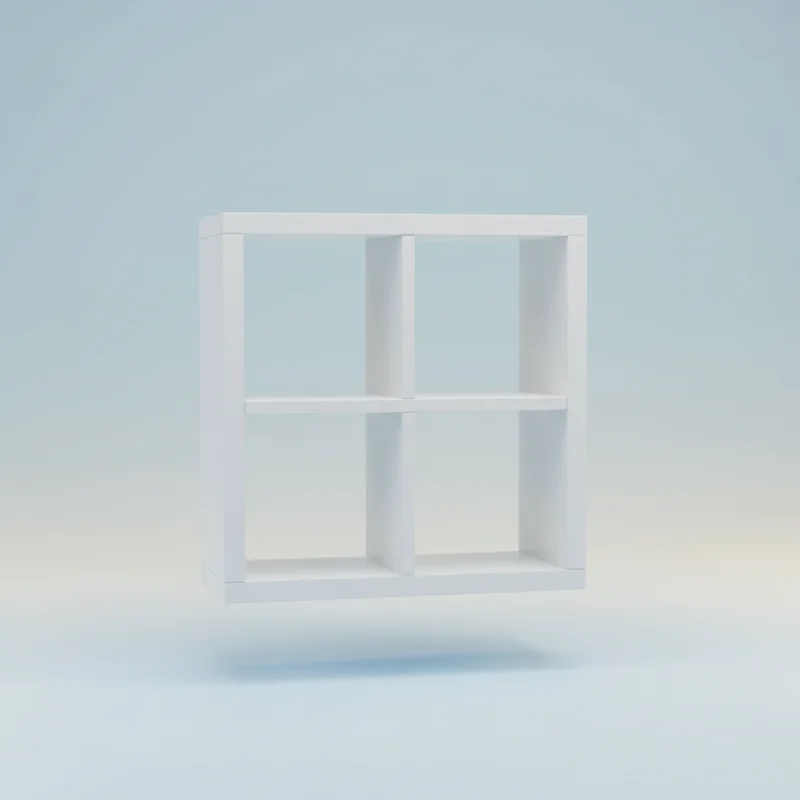
Swedish flat-pack relationship tests sold as affordable home goods. Comes with 47 pieces, one Allen key, and instructions that assume you have transcended the need for words. Marriages have ended over fewer screws.

The Matchup

In the annals of comparative analysis, few subjects demand the rigorous scrutiny we are about to undertake. On one side stands Gorilla gorilla, the largest living primate, a creature of extraordinary intelligence, formidable strength, and surprisingly gentle disposition. On the other sits the accumulated output of Swedish flat-pack engineering, an empire built on Allen keys, particleboard, and the unspoken assumption that modern humans possess both patience and spatial reasoning skills.

Together, these subjects represent two fundamentally different approaches to existence. The gorilla has been refined by approximately 10 million years of evolutionary pressure, each generation tested against the unforgiving criteria of survival in the African forest. IKEA furniture has been refined by approximately 80 years of consumer feedback, each generation tested against the somewhat more forgiving criteria of whether customers return for meatballs.

This analysis will examine both contenders across five critical dimensions, revealing truths about durability, assembly methodology, global influence, and the eternal question of what, precisely, constitutes structural integrity. The results may surprise those who have underestimated either party. Science demands impartiality, and we shall deliver it.

Battle Analysis

Durability Gorilla Wins
70%
30%
Gorilla IKEA Furniture

Gorilla

The silverback gorilla represents one of evolution's most robust engineering achievements. An adult male typically weighs between 300 and 500 pounds, supported by a skeletal and muscular system capable of generating forces that would reduce most human furniture to component particles. The gorilla's bone density exceeds that of humans by approximately 30%, providing a framework built not merely to last, but to dominate.

The average lifespan of a wild gorilla ranges from 35 to 40 years, during which time the animal endures daily physical demands that would hospitalize most organisms. Brachiation, the act of swinging from branch to branch, subjects joints and connective tissues to repeated stress loads. Territorial disputes involve chest-beating displays generating forces equivalent to a small automobile collision. Yet the gorilla persists, repairs, adapts.

Perhaps most remarkably, the gorilla's durability includes a sophisticated immune system refined over millennia and a social structure that provides mutual support during illness or injury. A gorilla does not simply endure; it recovers, regenerates, and returns to full operational capacity. This self-healing capability represents a durability feature that no furniture manufacturer has yet replicated, despite considerable investment in research and development.

IKEA Furniture

IKEA furniture approaches durability through an entirely different philosophical framework. Where the gorilla relies on biological excellence, IKEA relies on statistical probability: produce enough units at sufficient affordability, and durability concerns become somewhat academic. The average BILLY bookshelf has an expected functional lifespan of 15 to 20 years, assuming no house moves, no children, and no moments of frustrated impact during assembly.

The materials employed speak to engineered adequacy rather than exceptional resilience. Particleboard, the foundation of most IKEA construction, consists of wood particles bonded with resin under heat and pressure. It is not designed to outlast empires; it is designed to outlast apartment leases. The veneer surfaces resist scratching admirably until they don't, at which point they resist nothing at all.

Yet IKEA furniture possesses a unique durability characteristic: replaceability. When a MALM dresser finally succumbs to the accumulated indignities of existence, an identical replacement awaits at precisely the same price point in precisely the same showroom location. This is durability through industrial perpetuity rather than individual resilience. The specific unit may perish, but the model lives forever, phoenix-like, rising from the flat-pack ashes of its predecessors.

VERDICT

Self-healing biological systems and 400 pounds of muscle trump particleboard philosophy
Versatility Gorilla Wins
70%
30%
Gorilla IKEA Furniture

Gorilla

The gorilla demonstrates remarkable versatility within its ecological context. Diet flexibility allows consumption of over 100 plant species, supplemented occasionally by insects and small invertebrates. This nutritional adaptability enables survival across varying forest conditions and seasonal availability. The gorilla does not require specific fuel; it adapts to available resources with impressive metabolic flexibility.

Social versatility presents equally compelling evidence. Gorillas navigate complex group dynamics, forming bonds that persist across decades, negotiating hierarchies through displays rather than violence, and demonstrating theory of mind capabilities that suggest genuine understanding of others' mental states. A silverback must simultaneously serve as protector, decision-maker, conflict mediator, and paternal figure. These are not simple role requirements.

Physical versatility completes the assessment. The gorilla's anatomy supports locomotion across ground and canopy, manipulation of objects with considerable dexterity, and communication through vocalizations, gestures, and facial expressions. The same hands that can strip bark from a tree can also cradle an infant with extraordinary gentleness. This range of capability, from maximum force to minimum impact, represents versatility that few organisms achieve and no furniture approximates.

IKEA Furniture

IKEA's product range represents versatility through variety rather than individual adaptability. The catalogue contains approximately 12,000 products, addressing virtually every furnishing need from closet organization to outdoor dining to the inexplicable popularity of giant stuffed sharks. Whatever the domestic requirement, IKEA has likely produced a solution, named it something unpronounceable, and priced it aggressively.

Individual IKEA products demonstrate modest versatility within their design parameters. The KALLAX shelf unit functions as bookshelf, room divider, media console, or bench, depending on orientation and user creativity. The modular philosophy underlying much IKEA design enables combination and reconfiguration, though this flexibility operates within relatively constrained boundaries. A bookshelf remains, fundamentally, a bookshelf.

The PAX wardrobe system epitomizes IKEA versatility, offering sufficient customization options to paralyze decision-making for weeks. Interior fittings, door styles, lighting accessories, and dimensional variations create theoretical combinations numbering in the millions. Yet this versatility requires human agency, careful planning, and a tolerance for showroom visits that test psychological endurance. The gorilla simply adapts; IKEA furniture requires you to select among predetermined adaptation options.

VERDICT

Autonomous biological adaptation across 100+ food sources and complex social roles defeats catalogue selection
Global reach IKEA Furniture Wins
30%
70%
Gorilla IKEA Furniture

Gorilla

The gorilla's global distribution is, by contemporary standards, disappointingly limited. Wild populations exist only in the forests of central Africa, concentrated in the Democratic Republic of Congo, Rwanda, Uganda, and surrounding nations. This represents approximately 0.4% of the Earth's land surface, a modest territorial footprint for such an impressive organism.

However, the gorilla's cultural reach extends far beyond its physical habitat. Gorilla gorilla occupies a prominent position in human consciousness, appearing in films, literature, conservation campaigns, and the occasional insurance advertisement. King Kong, while scientifically inaccurate regarding scale, introduced gorillas to global audiences in 1933. Dian Fossey's research transformed the species into a symbol of conservation necessity. Koko the gorilla learned over 1,000 signs, demonstrating cognitive capabilities that challenged human assumptions about primate intelligence.

The gorilla exists in every major zoo system, every natural history museum, and every child's mental catalogue of 'impressive animals.' This cultural penetration compensates somewhat for limited geographic range. The gorilla has achieved what marketers call 'brand recognition' across virtually every human population, despite never having invested in advertising, public relations, or Swedish meatball-adjacent retail experiences.

IKEA Furniture

IKEA's global reach represents one of the most comprehensive retail expansions in human history. The company operates 462 stores across 62 markets, from the frozen reaches of Scandinavia to the humid tropics of Southeast Asia. Where the gorilla is confined by ecological requirements, IKEA is confined only by the presence of real estate and populations willing to assemble their own furniture.

The scale of IKEA's penetration defies casual comprehension. Approximately one billion homes worldwide contain at least one IKEA product. The BILLY bookshelf alone has sold over 110 million units since 1979, sufficient to circumnavigate the Earth more than eleven times if laid end to end. This is furniture distribution on a geological scale, a sedimentation of particleboard across the surface of human civilization.

IKEA has achieved what empires could not: genuine global cultural homogenization through affordable home goods. A student flat in Stockholm contains the same LACK table as a studio apartment in Sydney, a bedroom in Berlin, a living space in Lagos. The company has created a shared material culture that transcends language, religion, and political system. The gorilla, for all its magnificence, cannot claim to have furnished a billion living rooms with identical side tables priced at precisely 7.50 in local currency equivalents.

VERDICT

462 stores across 62 markets and one billion furnished homes defeats limited central African range
Sustainability Gorilla Wins
70%
30%
Gorilla IKEA Furniture

Gorilla

The gorilla operates within a closed ecological loop that sustainability consultants would recognize as theoretically ideal. Carbon footprint: essentially neutral. Resource consumption: exclusively renewable. Waste products: biodegradable fertilizer that supports forest regeneration. The gorilla has achieved what corporations spend billions attempting to simulate: genuine environmental harmony through evolutionary refinement.

The ecosystem services provided by gorillas extend beyond mere neutrality into active environmental benefit. Seed dispersal through digestive processes supports forest regeneration across substantial territories. A single gorilla group may disperse seeds from over 40 plant species, functioning as a living reforestation program requiring no grant applications, no reporting requirements, and no sustainability certifications. The gorilla simply exists, and forests flourish in consequence.

However, the gorilla faces sustainability challenges of the existential variety. Current population estimates place the total global gorilla population below 300,000 individuals across all subspecies. Habitat destruction, poaching, and disease threaten long-term viability. The gorilla's sustainable lifestyle has not protected it from the unsustainable lifestyles of nearby human populations. This represents a tragic irony that no amount of ecological virtue can resolve.

IKEA Furniture

IKEA has committed substantial resources to sustainability initiatives, navigating the inherent tension between 'affordable furniture' and 'environmental responsibility' with varying success. The company has pledged to use only renewable or recycled materials by 2030, a commitment that approaches with the steady inevitability of furniture assembly reaching the hardware-sorting phase.

The flat-pack format itself provides accidental sustainability benefits. Shipping unassembled components reduces transport emissions by approximately 50% compared to pre-assembled alternatives. The cardboard packaging, while voluminous, is recyclable. The accumulated Allen keys presumably achieve immortality through gradual accumulation in kitchen drawers worldwide, representing a form of material permanence if not exactly circular economy.

Critics note that affordability encourages disposability. Does a 7.50 table receive the care of a 750 table? The environmental calculation must encompass entire lifecycles, from Swedish forest through global shipping to student flat to eventual kerbside abandonment. IKEA has introduced furniture buyback programs, though participation rates suggest humanity remains considerably better at acquisition than divestment. The gorilla produces no waste requiring corporate buyback programs. The comparison illuminates uncomfortable truths about manufactured sustainability versus evolved efficiency.

VERDICT

Zero-carbon closed-loop ecological existence defeats corporate sustainability pledges
Assembly difficulty Gorilla Wins
70%
30%
Gorilla IKEA Furniture

Gorilla

The assembly of a gorilla requires no human intervention whatsoever, representing perhaps the ultimate in autonomous manufacturing. The process begins with a gestation period of approximately 8.5 months, during which cellular machinery of extraordinary complexity executes a genetic blueprint refined over millions of generations. No instruction manual is required. No Allen key is included. No piece is ever missing from the box.

The developmental trajectory of a gorilla infant involves years of learning and maturation, but this post-assembly calibration occurs automatically through interaction with environment and family group. Motor skills emerge through practice rather than through desperate consultation of diagrams. Social behaviors develop through observation rather than through phone calls to customer support lines staffed by individuals who have never assembled anything themselves.

From a pure efficiency standpoint, the gorilla's assembly process converts raw biological materials into a functioning 400-pound great ape with zero packaging waste, zero surplus components, and zero instances of the consumer discovering at step 47 that they attached the left panel where the right panel should go. Evolution's assembly process has a defect rate that would make any manufacturing plant envious. Approximately 98% of genetic code is shared with humans, suggesting the underlying platform is highly versatile.

IKEA Furniture

IKEA furniture assembly has achieved a cultural status that transcends mere instruction-following. It has become a rite of passage, a test of relationships, and a reliable generator of content for social media platforms. The average MALM bed frame contains 63 individual components, each assigned a designation that appears to be the result of a cat walking across a Swedish keyboard. Hardware bag AA contains items for steps 1-14, 23-27, and 45, because linear thinking is for the uninspired.

The wordless instruction manual represents either an ingenious solution to global language barriers or an elaborate psychological experiment. The stick figure known informally as 'IKEA Man' demonstrates each step with an expression of serene competence that actual assemblers find increasingly irritating as hour three approaches. He never struggles. He never weeps. He exists in a dimension where dowels align on the first attempt.

Research indicates that approximately 14% of IKEA furniture is assembled incorrectly on first attempt, requiring partial or complete disassembly. The emotional cost of this discovery, typically occurring at step 52 of 67, has not been adequately quantified by science. Couples therapists report a phenomenon they term 'IKEA Disclosure,' wherein furniture assembly surfaces pre-existing communication issues. The Allen key has ended more relationships than infidelity, though this claim awaits peer review.

VERDICT

Autonomous biological assembly requiring zero human intervention defeats flat-pack existential crisis
👑

The Winner Is

Gorilla

54 - 46

In this extraordinary examination of biological excellence versus industrial achievement, the gorilla emerges victorious across four of five criteria. The great ape claims superiority in durability, assembly, versatility, and sustainability, losing only in global reach to IKEA's formidable retail empire. This outcome may surprise those who expected manufactured products to outperform mere nature, but nature, as so often proves the case, has had considerably longer to optimize.

The gorilla's victories reflect fundamentally different design philosophies. Evolution operates on timescales that dwarf corporate planning horizons. Where IKEA measures product development in years, evolution measures adaptation in millennia. Where IKEA tests furniture against consumer satisfaction surveys, evolution tests organisms against the binary criterion of survival. The gorilla exists because every ancestor successfully reproduced; the BILLY bookshelf exists because market research suggested adequate demand.

Yet declaring the gorilla a simple winner obscures profound truths this comparison reveals. IKEA furniture has furnished one billion homes; the global gorilla population would not fill a medium-sized football stadium. The gorilla may be superior by individual metrics, but IKEA has achieved scale that gorillas cannot approach. This is the eternal tension between quality and quantity, between evolved excellence and manufactured accessibility. The gorilla wins on points; IKEA wins on presence. Both victories are real.

Gorilla
54%
IKEA Furniture
46%

Share this battle

More Comparisons