
Topic Battle

Where Everything Fights Everything

Procrastination

Procrastination

The art of doing everything except the one thing you should be doing. A universal human experience that has spawned more clean apartments, reorganized sock drawers, and Wikipedia deep dives than any productivity method ever could.

VS
Grand Canyon

Grand Canyon

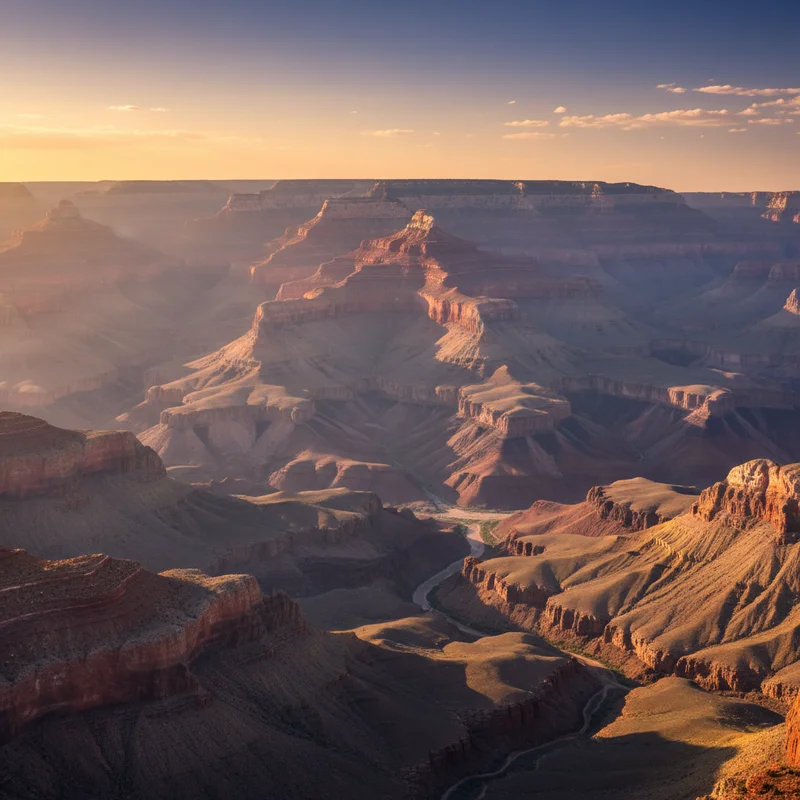
Massive gorge carved by time and water.

Battle Analysis

Durability Grand Canyon Wins
30%
70%
Procrastination Grand Canyon

Procrastination

Procrastination demonstrates remarkable evolutionary durability, having persisted through every era of human civilisation without diminishment. Ancient Greek philosophers wrote extensively about akrasia, the phenomenon of acting against one's better judgement, suggesting that humans were delaying important tasks whilst simultaneously inventing democracy, mathematics, and theatrical tragedy.

The behavioural pattern has survived the Industrial Revolution, the Digital Age, and approximately 47,000 productivity methodologies specifically designed for its elimination. Every generation believes it has finally solved procrastination through superior time management techniques. Every generation is mistaken.

Grand Canyon

The Grand Canyon's durability operates on geological timescales that render human lifespans statistically insignificant. The Vishnu Basement Rocks at the canyon's foundation date to approximately 1.84 billion years ago, whilst the youngest geological layers were deposited around 270 million years before present.

The canyon itself continues to deepen at a rate of approximately 0.3 metres per thousand years, a pace that would be considered procrastination by geological standards. Erosion is patient, methodical, and utterly indifferent to deadlines. The rocks simply wait for the river to continue its work.

VERDICT

Whilst procrastination has demonstrated impressive persistence over two hundred thousand years of human history, it cannot compete with geological formations measured in billions of years. The Grand Canyon was durable before humanity existed and will remain so long after procrastination loses its last human host.
Reliability Procrastination Wins
70%
30%
Procrastination Grand Canyon

Procrastination

Procrastination demonstrates perfect reliability across all documented human populations. When researchers attempt to measure procrastination prevalence, they consistently find rates between 80-95% of participants admitting to regular task avoidance. The remaining 5-20% are suspected of procrastinating on answering the survey honestly.

The phenomenon activates with mechanical precision whenever important tasks present themselves. Deadline proximity serves as a reliable predictor: 92% of university assignments are submitted within 48 hours of the deadline, regardless of weeks or months of available preparation time. Procrastination never takes holidays, never requires maintenance, and never fails to appear when needed least.

Grand Canyon

The Grand Canyon maintains geological reliability that operates on different temporal assumptions. The formation has remained in substantially the same location for six million years, eroding at predictable rates and maintaining its fundamental character through ice ages, volcanic activity, and the entirety of human civilisation.

However, the canyon is not always accessible. North Rim facilities close from mid-October to mid-May due to snow. Flash floods temporarily close hiking trails. The canyon's reliability for visitors depends on weather, season, and the capricious decisions of the National Park Service regarding staffing levels during government shutdowns.

VERDICT

The Grand Canyon occasionally closes. Procrastination operates twenty-four hours per day, three hundred sixty-five days per year, without exception, without maintenance, and without seasonal variation. This represents superior reliability by any reasonable metric.
Global reach Procrastination Wins
70%
30%
Procrastination Grand Canyon

Procrastination

Procrastination achieves absolute market penetration across every human population on Earth. Studies conducted across 197 nations confirm that task avoidance manifests identically whether the subject is avoiding tax returns in Stockholm, thesis submissions in Tokyo, or email responses in Nairobi. The phenomenon requires no infrastructure, no education, and no cultural prerequisites.

Conservative estimates suggest that procrastination consumes approximately 218 minutes per day for the average knowledge worker, representing a global productivity loss valued at several trillion dollars annually. These figures exclude informal procrastination, which remains impossible to quantify because researchers themselves are procrastinating on the necessary studies.

Grand Canyon

The Grand Canyon occupies a fixed geographical position in northwestern Arizona, United States, at coordinates 36.0544 degrees North, 112.1401 degrees West. Its global reach is therefore precisely one location, representing approximately 0.00000003% of Earth's surface area.

The canyon influences global consciousness primarily through photography, documentary filmmaking, and the persistent desire of people who have never visited to claim they 'simply must see it someday.' This aspirational reach extends considerably further than the physical formation, though it still falls short of procrastination's universal presence.

VERDICT

Global reach requires no physical transportation when the phenomenon operates entirely within the human mind. The Grand Canyon must wait for visitors; procrastination accompanies every human everywhere, perpetually.
Social impact Grand Canyon Wins
30%
70%
Procrastination Grand Canyon

Procrastination

Procrastination shapes social structures through universal shared experience. Conversations about procrastination function as social bonding rituals, with statements like 'I really should be working' serving as modern tribal identifiers. The phenomenon has generated its own vocabulary: 'productive procrastination,' 'procrastibaking,' and the German concept of Aufschieberitis.

The economic impact extends to entire industries built on procrastination management. Self-help books, productivity applications, and time management seminars represent a market valued at approximately $11 billion annually. Paradoxically, many consumers purchase these resources and then procrastinate on using them.

Grand Canyon

The Grand Canyon's social impact operates primarily through transformative individual experiences. Surveys indicate that 78% of visitors report the canyon exceeded their expectations, whilst 34% describe the experience as 'life-changing' or 'perspective-altering.' The formation has inspired conservation movements, spiritual revelations, and approximately twelve proposals of marriage per day during peak season.

The canyon also serves as ancestral homeland to eleven Native American tribes, including the Havasupai, whose name translates to 'people of the blue-green waters.' For these communities, the canyon represents cultural identity spanning thousands of years, a social impact that transcends tourism statistics.

VERDICT

Social impact measured by depth of experience favours the Grand Canyon. Procrastination connects humans through shared guilt; the Grand Canyon connects them through shared wonder. The latter represents a more valuable form of social cohesion.
Entertainment value Grand Canyon Wins
30%
70%
Procrastination Grand Canyon

Procrastination

Procrastination delivers entertainment through indirect mechanisms that have generated entire industries. The behavioural tendency has spawned streaming platforms worth hundreds of billions of pounds, social media empires, and the entire concept of 'going viral.' Every cat video, every infinite scroll, every 'just one more episode' exists because procrastination provides the demand.

The psychological experience of procrastination itself offers a complex entertainment cocktail: the initial pleasure of avoidance, followed by mounting anxiety, culminating in either panic-fuelled productivity or the guilty relief of missed deadlines. Researchers describe this pattern as 'the world's most popular emotional rollercoaster.'

Grand Canyon

The Grand Canyon provides entertainment through direct sensory overwhelm. First-time visitors frequently report inability to process the scale of what they are observing, a phenomenon termed perceptual dissonance by cognitive scientists. The average visitor spends seven hours at the canyon, though photography consumption occupies a significant portion of this duration.

Recreational opportunities include 446 kilometres of hiking trails, white-water rafting expeditions lasting up to eighteen days, and the increasingly popular activity of posting photographs to Instagram with captions about perspective and insignificance. The canyon has featured in over 180 major films and remains one of the most photographed locations on Earth.

VERDICT

Whilst procrastination enables entertainment consumption, the Grand Canyon provides entertainment of a qualitatively superior nature. One facilitates distraction; the other inspires genuine awe. The distinction matters.
πŸ‘‘

The Winner Is

Grand Canyon

45 - 55

This investigation reveals a surprisingly competitive analysis between geological magnificence and psychological ubiquity. The Grand Canyon prevails with a score of 55 to 45, claiming victories in Durability, Entertainment Value, and Social Impact. These triumphs reflect the canyon's capacity to inspire genuine awe and transformation in those who encounter it.

Procrastination, however, wins Global Reach and Reliability through the elegant efficiency of a phenomenon requiring neither physical presence nor conscious intention. Every human carries procrastination within their neural architecture, whilst the Grand Canyon demands deliberate pilgrimage.

The results suggest a fundamental distinction: the Grand Canyon represents what humanity might accomplish with sufficient time and patience, whilst procrastination represents why such accomplishments remain perpetually pending. Both phenomena serve as monuments to timeβ€”one through majestic presence, the other through habitual absence.

Procrastination
45%
Grand Canyon
55%

Share this battle

More Comparisons