Where Everything Fights Everything

Harry Potter vs Mickey Mouse

😜 Just for fun — a tongue-in-cheek, gloriously unscientific showdown.

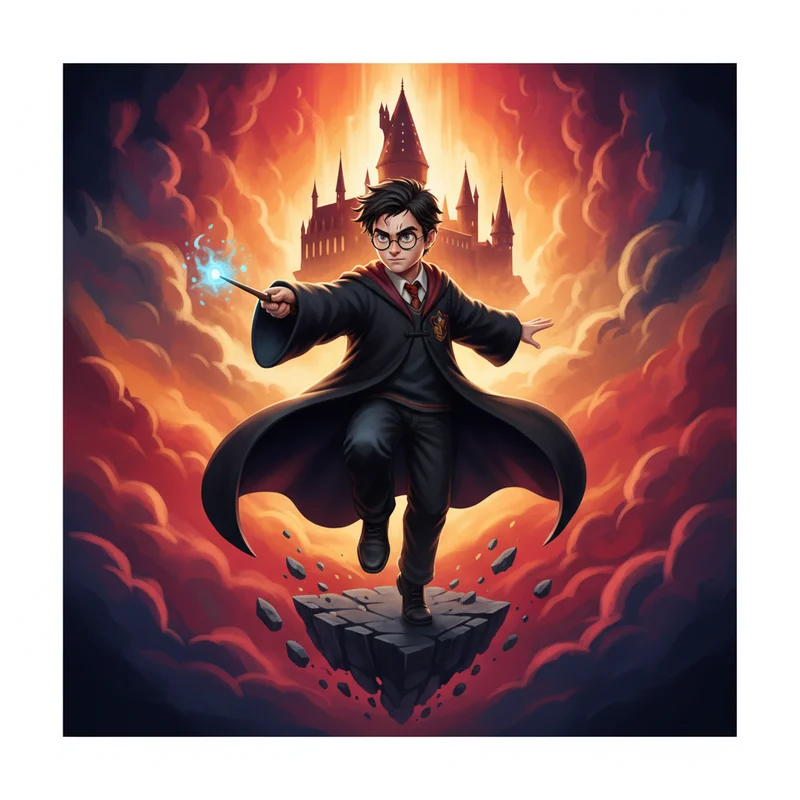
Harry Potter

Harry Potter

Boy wizard who lived and spawned a franchise.

VS
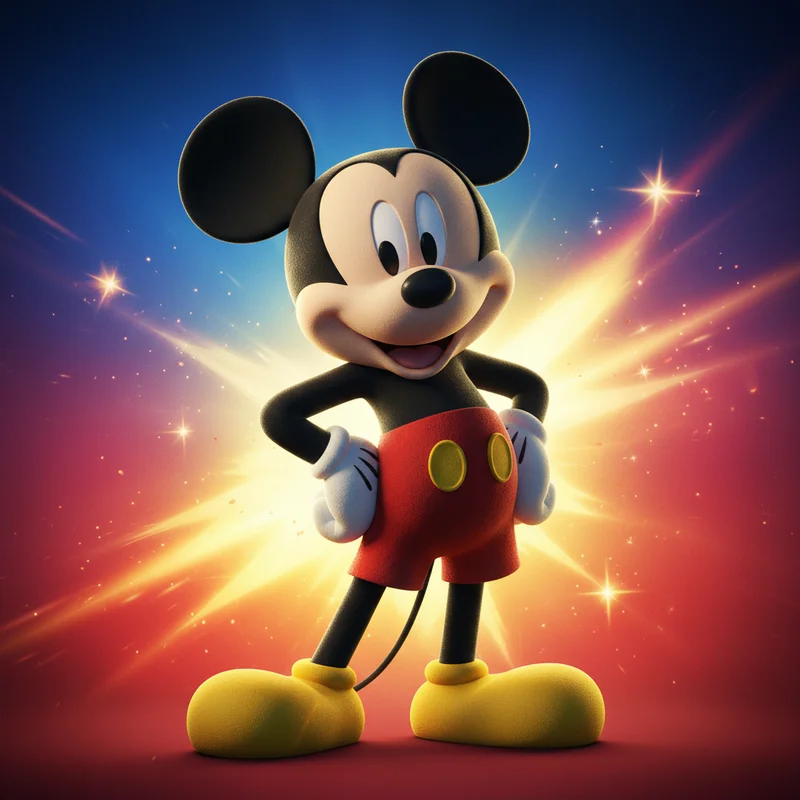
Mickey Mouse

Mickey Mouse

Disney's original mascot and corporate icon.

Battle Analysis

Narrative depth Harry Potter Wins
🏆 Harry Potter takes this round

Harry Potter

The Harry Potter saga spans 1,084,170 words across seven novels, constructing a fictional universe of remarkable intricacy. The Hogwarts educational system, Ministry of Magic bureaucracy, wizarding economy, and intricate pure-blood genealogies create a world of genuine immersive depth.

Harry himself undergoes documented psychological development, from orphaned innocent to traumatised chosen one to sacrificial hero. His relationships with Dumbledore, Snape, and Voldemort explore themes of mortality, sacrifice, and the corrupting nature of power. The character arc satisfies classical heroic journey criteria across multiple analytical frameworks.

Mickey Mouse

Mickey Mouse exists primarily as a vessel for situation-specific characterisation rather than a protagonist of narrative depth. His personality adjusts to serve immediate story requirements: brave when adventure demands, mischievous when comedy permits, romantic when Minnie appears.

The character possesses no canonical backstory, no documented family history beyond Minnie's implied romantic attachment, and no psychological development across his century of appearances. Mickey functions as a brand mascot rather than a character in the literary sense, optimised for recognition rather than narrative engagement.

VERDICT

Harry's seven-novel character arc with psychological complexity vastly exceeds Mickey's situational mascot characterisation.
Cultural longevity Mickey Mouse Wins
🏆 Mickey Mouse takes this round

Harry Potter

The Harry Potter franchise has demonstrated remarkable staying power across its 27-year existence, maintaining relevance through strategic content releases, theme park expansions, and the controversial yet commercially successful Fantastic Beasts prequel series. The 2016 stage production of Cursed Child introduced the property to new audiences.

However, temporal analysis reveals concerning trajectories. Peak cultural engagement occurred between 2001 and 2011, coinciding with film releases. Subsequent years have witnessed diminishing search volume metrics and increasingly polarised discourse surrounding the franchise's creator. The wizarding world, whilst substantial, has yet to demonstrate multi-generational staying power.

Mickey Mouse

Mickey Mouse has maintained cultural relevance across 96 consecutive years, a feat of longevity unprecedented in entertainment history. The character has survived the transition from silent film to sound, from black-and-white to colour, from theatrical shorts to television, and from traditional animation to digital media.

Each generation has received its own Mickey interpretation: the mischievous Steamboat Willie variant, the genial host of the Mickey Mouse Club, the adventure-seeking protagonist of contemporary Disney Junior programming. This perpetual reinvention whilst maintaining core identity represents a masterclass in brand evolution that no literary character has replicated.

VERDICT

Ninety-six years of continuous cultural relevance dwarfs Harry Potter's quarter-century presence in the public consciousness.
Global brand value Mickey Mouse Wins
🏆 Mickey Mouse takes this round

Harry Potter

The Wizarding World represents one of the most valuable entertainment properties ever created, with total franchise revenue estimated at $7.7 billion in book sales, $9.6 billion in film receipts, and additional billions from merchandise, theme parks, and theatrical productions. The combined valuation approaches $25 billion.

Warner Bros. Discovery maintains aggressive exploitation of the intellectual property, with an HBO television series adaptation announced for the 2020s. The franchise demonstrates proven monetisation across virtually every consumer touchpoint, from butterbeer sales to luxury wand replicas.

Mickey Mouse

Mickey Mouse functions as the corporate identity of The Walt Disney Company, an organisation valued at approximately $160 billion. Whilst Mickey himself generates perhaps $8 billion annually in direct merchandise revenue, his true value lies in his role as the symbolic representation of the entire Disney enterprise.

The mouse appears on corporate documentation, serves as the wayfinding icon at twelve global theme parks, and operates as the de facto trademark of the world's largest entertainment conglomerate. Assigning precise value to Mickey proves impossible precisely because he has become inseparable from the corporation itself.

VERDICT

Mickey's symbolic integration with a $160 billion corporation renders direct comparison inadequate; he represents the brand itself.
Merchandise ubiquity Mickey Mouse Wins
🏆 Mickey Mouse takes this round

Harry Potter

Wizarding World merchandise demonstrates impressive category penetration, from the expected wands, robes, and house scarves to increasingly creative applications including Hogwarts-themed LEGO sets, butterbeer-flavoured confections, and the Noble Collection's museum-quality prop replicas.

However, the merchandise ecosystem remains constrained by the franchise's target demographic limitations. Harry Potter products skew toward readers aged 8-35, with limited appeal outside this window. The aesthetic vocabulary of the wizarding world, whilst distinctive, does not translate to infant products, professional accessories, or elderly consumer goods.

Mickey Mouse

Mickey Mouse merchandise achieves a form of commercial omnipresence that defies comprehensive cataloguing. The character appears on products spanning every conceivable consumer category: infant onesies, children's lunchboxes, teenage apparel, adult fashion collaborations with Gucci and Coach, and retirement community memorabilia.

The mouse's simplified graphic form enables reproduction at any scale and on any surface. Mickey appears on watches, handbags, automobiles, household appliances, bedding, stationery, foodstuffs, and bathroom fixtures. No other fictional character has achieved comparable commercial saturation across the full spectrum of consumer goods.

VERDICT

Mickey's merchandise presence spans every age demographic and product category, achieving truly universal commercial application.
Cross-generational appeal Mickey Mouse Wins
🏆 Mickey Mouse takes this round

Harry Potter

The Wizarding World demonstrates exceptional appeal to the millennial generation, who experienced the franchise's emergence during formative years. This cohort maintains fierce brand loyalty, introducing their children to the property and sustaining theme park attendance and merchandise sales.

However, evidence suggests diminishing returns with subsequent generations. Gen Z engagement with Harry Potter trails millennial participation, whilst Gen Alpha appears to favour alternative fantasy properties. The franchise's association with a specific temporal moment may ultimately constrain its inter-generational staying power.

Mickey Mouse

Mickey Mouse has achieved what cultural theorists term trans-generational saturation. Children recognise his silhouette before they can speak; their great-grandparents grew up with his theatrical shorts. No single generation claims ownership of Mickey because all generations share him equally.

This universal temporal distribution eliminates the generational gatekeeping that constrains other properties. Mickey requires no introduction, no nostalgic context, no explanation of cultural significance. He simply exists as a permanent feature of the entertainment landscape, as reliable as traffic lights or popular music.

VERDICT

Mickey's century-spanning presence ensures recognition across all living generations without generational ownership claims.
👑

The Winner Is

Mickey Mouse

Takes 4 of 5 rounds

The comparative analysis yields a 53-47 victory for Mickey Mouse, a margin that reflects the rodent's accumulated advantages in longevity, commercial ubiquity, and trans-generational recognition. Harry Potter's superior narrative depth and character complexity prove insufficient to overcome nearly a century of institutional brand-building and merchandise penetration.

This outcome should not diminish appreciation for Harry Potter's extraordinary cultural achievement. Reaching global phenomenon status within two decades represents a feat of creative and commercial accomplishment that most intellectual properties never approach. The Boy Who Lived has earned his place in the pantheon of beloved fictional characters through genuine literary merit and emotional resonance.

Yet Mickey Mouse operates on a different plane of cultural existence entirely. He has transcended character status to become pure symbol, a graphic shorthand for childhood, entertainment, and corporate America itself. In this rarefied category, Harry Potter cannot yet compete.

Share this battle

More Comparisons