Topic Battle

Where Everything Fights Everything

Hedgehog

Hedgehog

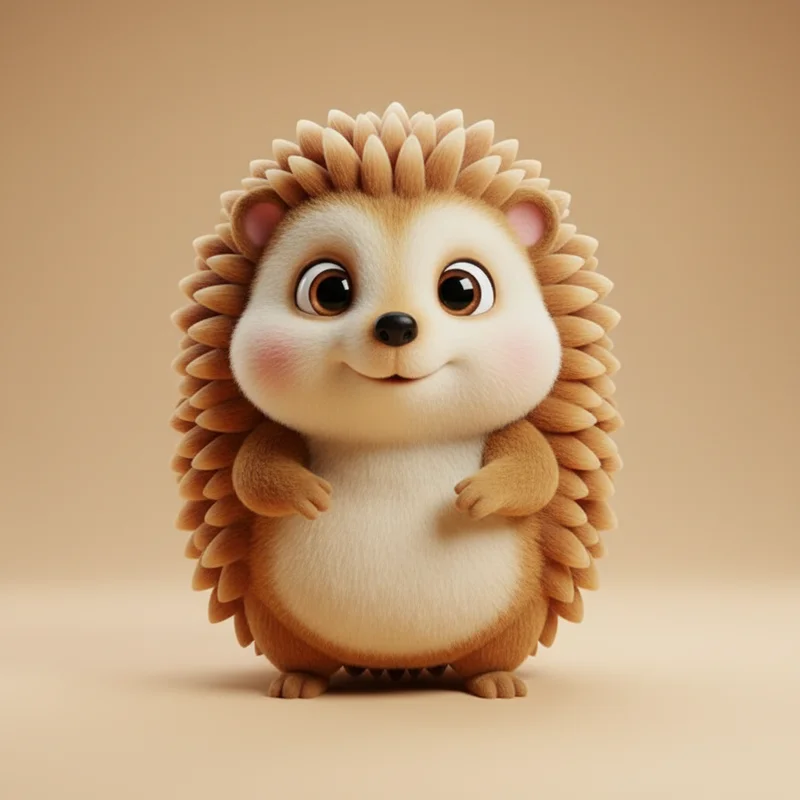
Spiny nocturnal insectivore that rolls into defensive balls and has become an unlikely video game icon.

VS
Harry Potter

Harry Potter

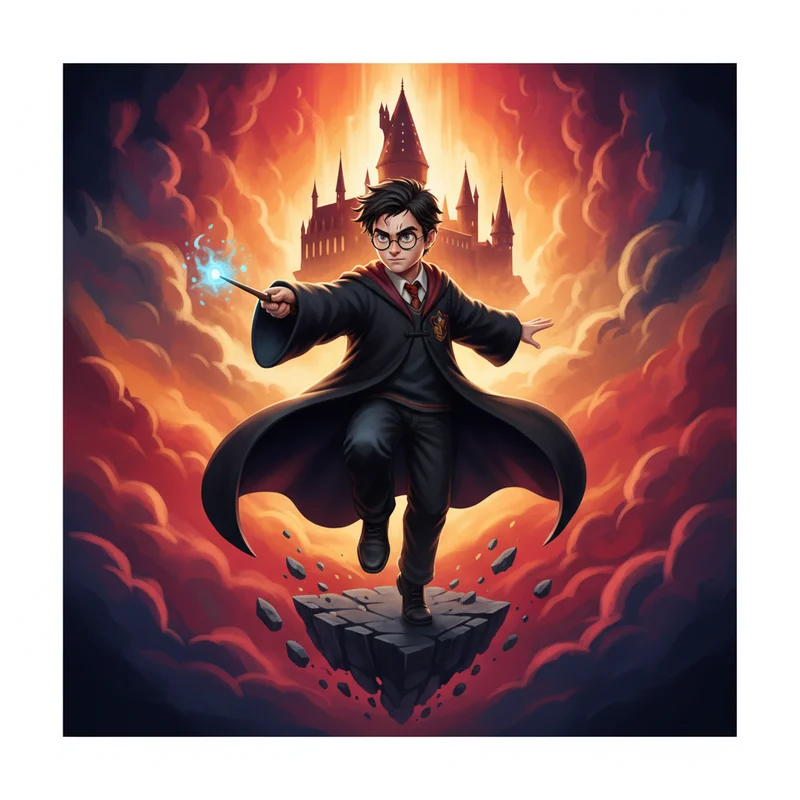
Boy wizard who lived and spawned a franchise.

Battle Analysis

Cultural impact harry_potter Wins
30%
70%
Hedgehog Harry Potter

Hedgehog

The hedgehog occupies a surprisingly prominent position in British culture. Beatrix Potter immortalised the species through Mrs. Tiggy-Winkle in 1905. The animals feature on postage stamps, charity campaigns, and approximately 60% of all 'cute garden wildlife' merchandise. The British Hedgehog Preservation Society commands genuine public attention during its annual awareness initiatives.

However, this cultural footprint remains largely confined to the United Kingdom and portions of Europe. Globally, the hedgehog exists primarily as 'that spiky thing from the garden' or, regrettably, as a video game character bearing little resemblance to actual Erinaceinae physiology. International hedgehog awareness campaigns struggle to compete with more charismatic megafauna.

Harry Potter

Harry Potter's cultural impact operates on a civilisational scale. The franchise has sold over 600 million books in 84 languages, generated $7.7 billion in film revenue alone, and spawned theme parks on three continents. The series introduced terms like 'Muggle' and 'Horcrux' to common vocabulary and convinced an entire generation that boarding school might actually be enjoyable.

Academic studies of the 'Harry Potter phenomenon' number in the thousands. The series demonstrably increased children's reading rates during the late 1990s. Universities offer courses examining its themes. The franchise has, without exaggeration, shaped how hundreds of millions of humans understand storytelling, morality, and the concept of chosen family.

VERDICT

Harry Potter reshaped global literature and entertainment; the hedgehog primarily features on garden centre merchandise.
Defensive capability hedgehog Wins
70%
30%
Hedgehog Harry Potter

Hedgehog

The hedgehog's defensive strategy represents 15 million years of evolutionary refinement. When threatened, the animal engages the orbicularis muscle, drawing its skin around its body like a biological drawstring bag and presenting approximately 5,000 to 7,000 keratin spines to potential predators. This manoeuvre transforms the hedgehog from a vulnerable mammal into what researchers have described as 'a hostile chestnut'.

The effectiveness of this defence is well documented. Badgers and large owls possess the anatomical equipment to overcome it, but most predators sensibly decline the invitation to consume something resembling a medieval weapon. The hedgehog's defence requires no training, no practice, and no magical intervention it exists as standard equipment from birth, requiring only the instinct to curl.

Harry Potter

Harry Potter's defensive capabilities, whilst diverse, suffer from significant dependencies and limitations. His primary protection the sacrificial magic derived from his mother's death requires no active effort but expired upon reaching adulthood. Secondary defences include the Patronus Charm, various defensive spells, and the occasional intervention of phoenix tears.

However, these capabilities require extensive training, a wand, and the mental fortitude to perform under pressure. Harry's documented tendency to act rashly and his admitted mediocrity in certain magical subjects (Potions, History of Magic) suggest a defensive portfolio with notable gaps. He has survived primarily through luck, friendship, and narrative necessity rather than consistent defensive excellence.

VERDICT

The hedgehog's defence is innate, automatic, and functional from birth. Harry's required years of education and frequently failed.
Merchandise potential harry_potter Wins
30%
70%
Hedgehog Harry Potter

Hedgehog

Hedgehog merchandise exists in considerable variety: plush toys, garden ornaments, socks, mugs, and novelty hedgehog-shaped objects whose purpose defies immediate explanation. The animals' inherent cuteness coefficient ensuring round body, small face, tiny feet guarantees baseline consumer appeal.

However, hedgehog merchandise suffers from limited narrative attachment. Consumers purchase hedgehog items because hedgehogs are endearing, not because hedgehogs represent complex emotional journeys or ideological affiliations. The merchandise lacks the depth of meaning that transforms a purchase into an identity statement. One buys a hedgehog mug because one likes hedgehogs, not because one is a hedgehog.

Harry Potter

The Harry Potter merchandise ecosystem represents one of commercial history's most comprehensive exercises in monetising emotional attachment. Consumers purchase not merely products but membership in a cultural phenomenon. Sorting Hat quizzes determine house affiliations; wands are purchased corresponding to specific characters; robes, scarves, and ties signal tribal belonging.

Warner Bros' Wizarding World generates approximately $500 million annually in merchandise revenue alone. The emotional investment fans bring to these purchases transforming functional objects into symbols of identity and community creates price points hedgehog merchandise could never command. A hedgehog plush costs 12; an official Harry Potter wand replica costs 40.

VERDICT

Harry Potter merchandise commands premium pricing through emotional investment; hedgehog products merely appeal to cuteness.
Survival adaptability hedgehog Wins
70%
30%
Hedgehog Harry Potter

Hedgehog

The hedgehog demonstrates remarkable adaptability across diverse European environments. The species thrives in woodland edges, grasslands, suburban gardens, and even urban parks. Their omnivorous diet encompasses beetles, caterpillars, earthworms, fallen fruit, and the occasional abandoned cat food bowl a dietary flexibility that ensures food security across seasonal variations.

Hibernation represents perhaps their most impressive adaptation. By lowering their heart rate from 190 to approximately 20 beats per minute and reducing body temperature to near-ambient levels, hedgehogs survive winter conditions that would kill most mammals of comparable size. They have weathered ice ages, agricultural revolutions, and the invention of the motorcar though admittedly the latter has proved challenging.

Harry Potter

Harry Potter's survival adaptability, whilst narratively impressive, depends entirely upon external support structures. Without Hogwarts, he remains a neglected child in a cupboard. Without Hermione, he fails academically and likely dies in first year. Without Dumbledore's careful orchestration, Voldemort's return proves fatal rather than merely inconvenient.

Harry demonstrates little capacity for independent survival. He cannot hunt, forage, or regulate his body temperature during resource scarcity. His adaptability extends primarily to magical combat scenarios rather than environmental challenges. One suspects that Harry Potter, deposited alone in a British woodland without his wand, would fare rather worse than the average hedgehog.

VERDICT

The hedgehog survives ice ages through biological adaptation; Harry survives primarily through friend intervention.
Nocturnal effectiveness hedgehog Wins
70%
30%
Hedgehog Harry Potter

Hedgehog

The hedgehog represents a masterclass in nocturnal operation. Equipped with acute hearing, a sense of smell capable of detecting earthworms beneath soil, and a total disregard for conventional sleeping hours, the hedgehog has optimised itself for darkness. Nightly foraging routes can cover over two kilometres, navigated primarily through scent memory and acute spatial awareness.

This nocturnal specialisation has proven remarkably successful. The hedgehog has occupied its ecological niche for 15 million years, filling the role of 'small nocturnal insectivore' with quiet efficiency. They require no illumination, no technology, and no magical assistance to function effectively between dusk and dawn.

Harry Potter

Harry Potter's nocturnal capabilities, whilst narratively emphasised, prove distinctly mediocre upon examination. His documented nighttime activities frequently result in detention, near-death experiences, or both. The recovery of the Philosopher's Stone, exploration of the Chamber of Secrets, and various corridor wanderings succeed despite inadequate preparation and excessive noise generation.

Furthermore, Harry requires external assistance for nocturnal operation: the Invisibility Cloak for concealment, the Marauder's Map for navigation, and Lumos for illumination. Without these aids, his nighttime effectiveness drops considerably. The Dursleys' cupboard was chosen specifically because Harry could be contained; a true nocturnal specialist would have escaped far earlier.

VERDICT

The hedgehog has perfected nocturnal existence over 15 million years; Harry merely stumbles around Hogwarts getting caught.
👑

The Winner Is

Harry Potter

46 - 54

Our analysis concludes with Harry Potter claiming victory by a margin of 54 to 46, a result that may disappoint advocates of biological authenticity over narrative construction. The hedgehog's superiority in defensive capability, survival adaptability, and nocturnal effectiveness represents genuine evolutionary achievement the product of millions of years of natural selection against which no wizard, however famous, can compete.

Yet Harry Potter's dominance in cultural impact and merchandise potential proves decisive. The franchise's capacity to generate meaning, community, and commercial value at scale exceeds anything a small spiny mammal might achieve, regardless of how adorable that mammal might be. Hedgehogs have featured in British culture for centuries; Harry Potter has reshaped global culture in decades.

There is something instructive in this outcome. The hedgehog represents nature's patient optimisation for a specific ecological niche successful, sustainable, and requiring no external validation. Harry Potter represents humanity's capacity to construct shared mythologies that unite millions across linguistic and cultural boundaries. Both approaches to existence have merit; only one generates billions in annual revenue.

Hedgehog
46%
Harry Potter
54%

Share this battle

More Comparisons