
Where Everything Fights Everything

Hedgehog vs Hulk

😜 Just for fun — a tongue-in-cheek, gloriously unscientific showdown.

Hedgehog

Hedgehog

Spiny nocturnal insectivore that rolls into defensive balls and has become an unlikely video game icon.

VS
Hulk

Hulk

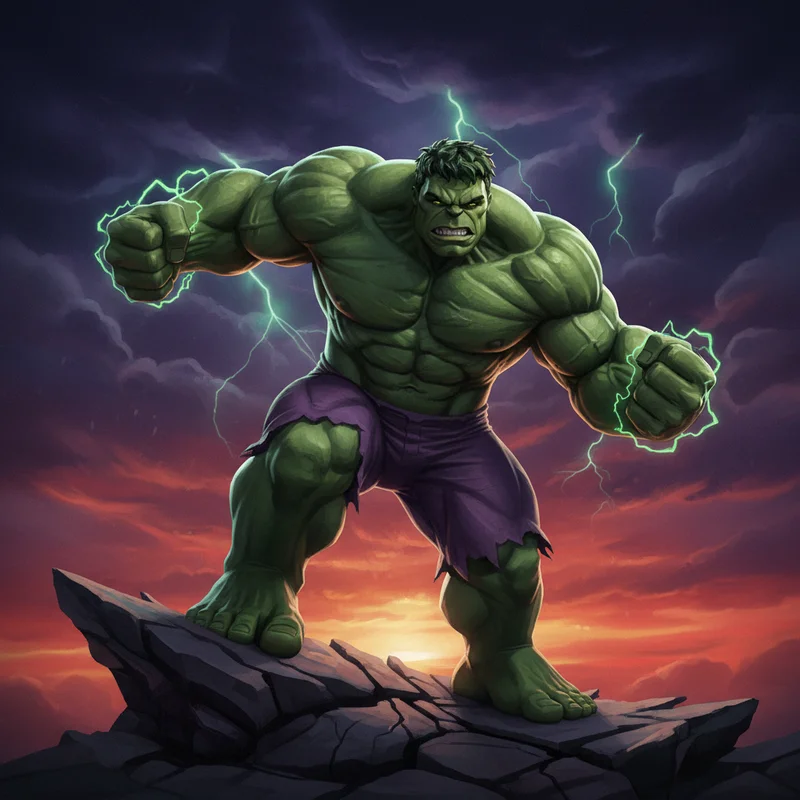
Green rage monster with PhD-level intelligence.

The Matchup

In the grand theatre of defensive evolution, few strategies appear more disparate than the hedgehog's 7,000 keratin spines and the Hulk's unlimited rage-fuelled regeneration. One represents millions of years of careful evolutionary refinement; the other, a catastrophic laboratory accident that somehow worked out rather well. Yet both organisms share a fundamental purpose: survival against overwhelming odds.

This analysis examines two remarkably different approaches to the same existential problem. The hedgehog, weighing approximately 700 grams when fully grown, has thrived across Europe, Asia, and Africa for some 15 million years. The Hulk, by contrast, emerged in 1962 and has since become one of the most formidable entities in any known universe. One hibernates through winter; the other punches gods through mountains.

Battle Analysis

Sustainability Hedgehog Wins
🏆 Hedgehog takes this round

Hedgehog

Operating on approximately 30 calories daily during active periods, the hedgehog represents a triumph of energy efficiency. During hibernation, this drops to nearly zero metabolic expenditure. A hedgehog's carbon footprint is measured in grams. Their diet consists entirely of local invertebrates, requiring no infrastructure, transportation, or ethical debates about factory farming. They are, energetically speaking, nearly perfect.

Hulk

The Hulk's energy requirements remain scientifically inexplicable. He appears to violate thermodynamic laws routinely, generating massive kinetic energy without proportional caloric intake. However, the secondary environmental costs are catastrophic. Each major Hulk incident creates millions of tonnes of debris, displaces thousands of residents, and requires reconstruction budgets exceeding some nations' GDP. The Hulk is not merely unsustainable; he is an economic disaster with anger issues.

VERDICT

If sustainability measures long-term viability without environmental degradation, the hedgehog wins by every conceivable metric. The species has persisted for 15 million years without rendering any ecosystem uninhabitable. The Hulk struggles to visit a city without its insurance premiums doubling. Efficiency triumphs over raw power.

Cultural impact Hulk Wins
🏆 Hulk takes this round

Hedgehog

The hedgehog enjoys significant cultural penetration, from Beatrix Potter's Mrs. Tiggy-Winkle to Sonic the Hedgehog's 30-year gaming franchise. In Britain, they rank among the most beloved wildlife species, prompting legislation, charity organisations, and thousands of rescue centres. The hedgehog appears on stamps, in children's books, and as the subject of genuinely concerned newspaper editorials about population decline. They have achieved national treasure status.

Hulk

Since his 1962 debut, the Hulk has generated billions in media revenue across comics, television, and film. The character has become shorthand for uncontrolled anger, appearing in psychology textbooks and anger management literature. Mark Ruffalo's portrayal alone spans eight major films. The phrase 'Hulk smash' has entered common parlance. However, the Hulk remains fundamentally a cautionary tale rather than an aspirational figure. Nobody wants to be the Hulk. Many want pet hedgehogs.

VERDICT

By raw metrics of recognition, merchandise sales, and media presence, the Hulk dominates. Yet the hedgehog achieves something more nuanced: genuine affection. The Hulk is famous; the hedgehog is loved. Nevertheless, fame must carry this category. The Hulk's cultural footprint, much like his physical one, is simply too large to ignore.

Offensive power Hulk Wins
🏆 Hulk takes this round

Hedgehog

The hedgehog's offensive capabilities are, to employ scientific terminology, negligible. Their primary weapons include small teeth designed for crushing beetles, and the aforementioned spines which function purely defensively. The most aggressive hedgehog behaviour documented involves self-anointing, wherein the creature covers itself in toxic saliva after encountering new substances. This is mildly irritating to predators and deeply unsettling to observers.

Hulk

The Hulk possesses functionally unlimited strength that increases proportionally with emotional distress. He has shattered asteroids, held tectonic plates together, and punched through dimensional barriers. A single footstep registers on seismographs. His clap creates localised sonic booms capable of extinguishing fires and rupturing eardrums simultaneously. The Hulk once held up a 150 billion-ton mountain range. The hedgehog struggles with particularly stubborn earthworms.

VERDICT

This category presents the starkest differential in our analysis. The hedgehog's offensive output could charitably be measured in micro-newtons. The Hulk's output has been measured in astronomical units of destruction. One punches gods; one snuffles for insects. The mathematics are unambiguous.

Defensive capability Hulk Wins
🏆 Hulk takes this round

Hedgehog

The hedgehog deploys approximately 7,000 hollow spines, each measuring 2-3 centimetres in length. When threatened, the orbicularis muscle contracts, transforming the creature into an impenetrable sphere within 0.3 seconds. This defence has proven effective against foxes, badgers, and the occasional confused house cat. However, against a determined predator with sufficient patience, the hedgehog must eventually uncurl. Limitations exist.

Hulk

The Hulk's defensive strategy eschews subtlety entirely. His gamma-irradiated cellular structure provides near-instantaneous regeneration, reportedly capable of recovering from complete molecular disintegration within minutes. His skin has withstood nuclear explosions, adamantium blades, and the accumulated frustration of Bruce Banner's therapists. When defence fails, he simply becomes angrier, which paradoxically improves his defensive capabilities. A rather elegant feedback loop.

VERDICT

Whilst the hedgehog's spines represent a masterwork of evolutionary engineering, they cannot regenerate in real-time, survive nuclear detonation, or become more effective when the hedgehog is cross. The Hulk's defence is, quite literally, anger made manifest. The hedgehog scores points for energy efficiency, but one cannot curl into a ball against gamma radiation.

Environmental adaptability Hedgehog Wins
🏆 Hedgehog takes this round

Hedgehog

The hedgehog demonstrates remarkable flexibility across diverse ecosystems. Found in woodlands, grasslands, and suburban gardens from Britain to New Zealand, these creatures have mastered the art of opportunistic survival. They tolerate temperatures from 0 to 35 degrees Celsius, hibernate through resource-scarce winters, and have successfully colonised human environments, treating gardens as all-you-can-eat slug buffets. Hedgehog populations thrive on five continents.

Hulk

The Hulk's environmental range is theoretically unlimited but practically problematic. He has survived in deep space, alternate dimensions, and the core of a planet. However, his presence tends to dramatically alter any environment he enters, typically through structural demolition. One cannot adapt to an environment whilst simultaneously converting it to rubble. The Hulk is less an inhabitant of ecosystems than an extinction-level event passing through.

VERDICT

The hedgehog achieves something the Hulk cannot: coexistence. Whilst the Hulk survives everywhere, he belongs nowhere. The hedgehog has formed symbiotic relationships with gardeners, pest controllers, and the British public's affection. True adaptability means fitting in, not merely failing to die. The hedgehog wins through diplomatic survival.

👑

The Winner Is

Hulk

Takes 3 of 5 rounds

Our analysis reveals a 65-35 victory for the Hulk, though this numerical superiority masks a more complex reality. The Hulk dominates categories measuring raw capability: defensive regeneration, offensive power, and cultural saturation. These are metrics of force and volume.

The hedgehog, however, excels in wisdom categories: environmental harmony, energy efficiency, and sustainable existence. The hedgehog has survived 15 million years through careful adaptation. The Hulk has survived 60 years through being functionally indestructible. One is a survival strategy; the other is simply refusing to die.

If measuring immediate threat response, the Hulk wins decisively. If measuring long-term species viability, the hedgehog's approach has been empirically validated across geological time scales. The Hulk smashes; the hedgehog endures. Both, in their peculiar ways, have found solutions to the fundamental problem of existence.

Share this battle

More Comparisons