
Topic Battle

Where Everything Fights Everything

Hedgehog

Hedgehog

Spiny nocturnal insectivore that rolls into defensive balls and has become an unlikely video game icon.

VS
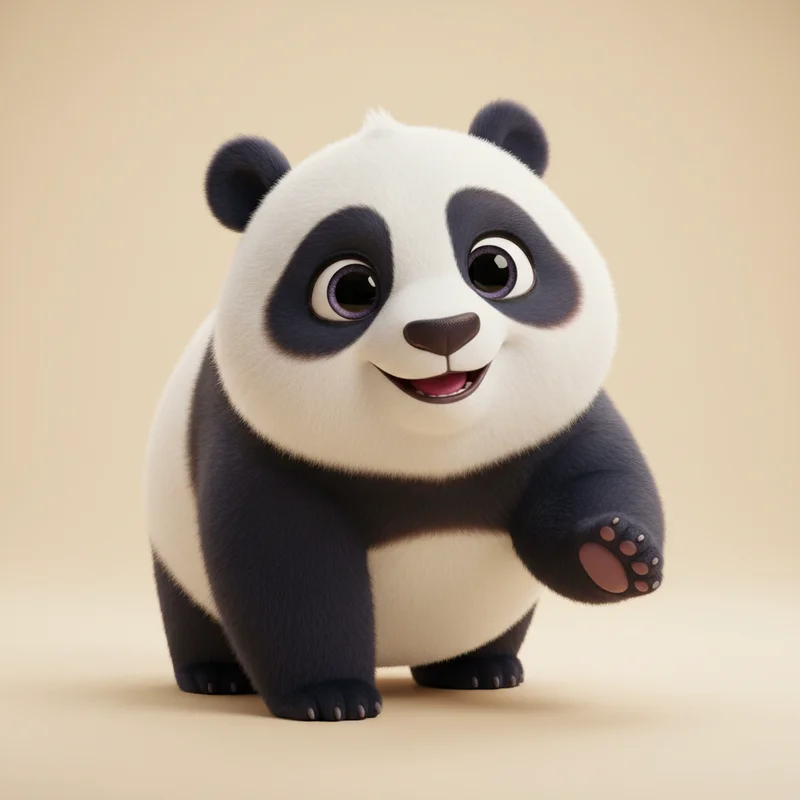
Panda

Panda

Beloved bamboo-eating bear from China, famous for black-and-white coloring and conservation symbolism.

Battle Analysis

Adaptability hedgehog Wins
70%
30%
Hedgehog Panda

Hedgehog

Hedgehogs demonstrate remarkable environmental flexibility. Seventeen species have successfully colonised habitats ranging from European woodlands to African savannas to Asian deserts. The European hedgehog has adapted to suburban environments with impressive efficiency, treating gardens as bountiful hunting grounds and shed bases as premium real estate. Their omnivorous diet—encompassing insects, slugs, frogs, eggs, and the occasional snake—allows exploitation of virtually any ecosystem offering invertebrate prey. Hedgehogs have even adapted their ancient hibernation cycles to accommodate climate change, demonstrating metabolic flexibility that many larger mammals lack.

Panda

The giant panda represents adaptation's opposite trajectory: extreme specialisation. Having evolved as a carnivore, the panda inexplicably abandoned this efficient digestive heritage to consume bamboo exclusively—a food source providing such minimal nutrition that pandas must eat 12 to 38 kilograms daily merely to survive. Their digestive system retains carnivore characteristics, processing bamboo at a mere 17 percent efficiency. This dietary commitment restricts pandas to specific mountain ranges in central China where bamboo flourishes. When bamboo forests flower and die—an event occurring synchronously across entire species—pandas face starvation unless alternative bamboo species exist nearby. The panda has, through evolutionary stubbornness, painted itself into an ecological corner.

VERDICT

Hedgehogs thrive across continents and climates; pandas survive in increasingly narrow ecological niches.
Cultural impact panda Wins
30%
70%
Hedgehog Panda

Hedgehog

The hedgehog occupies a curious position in human cultural consciousness. Beatrix Potter's Mrs Tiggy-Winkle established the creature as a figure of domestic industriousness in children's literature. SEGA's Sonic transformed the hedgehog into a symbol of velocity and attitude for an entire generation, despite real hedgehogs managing a maximum speed of approximately 4 miles per hour. In British folklore, hedgehogs were believed to steal milk from cows and carry apples on their spines—accusations entirely unfounded yet persistent. The creature appears on countless garden ornaments and children's book covers, beloved yet fundamentally misunderstood.

Panda

The giant panda has achieved cultural penetration that few animals can rival. As the World Wildlife Fund's logo since 1961, it became the face of global conservation. Panda diplomacy has shaped international relations for over a millennium, with historical records of panda gifts dating to Tang Dynasty China in 685 CE. The species served as mascot for the 2008 Beijing Olympics, appeared on Chinese currency, and inspired countless films, animations, and merchandise. The panda's image generates estimated licensing revenues exceeding hundreds of millions annually. Its cultural footprint dwarfs its physical one, achieved through a combination of distinctive appearance and calculated scarcity.

VERDICT

The panda has achieved global iconic status; the hedgehog remains a regional curiosity.
Conservation status panda Wins
30%
70%
Hedgehog Panda

Hedgehog

European hedgehog populations have declined by approximately 50 percent since the turn of the millennium. Habitat fragmentation, agricultural intensification, pesticide use, and the curious modern hazard of robotic lawn mowers have contributed to this collapse. In Britain, where the hedgehog once numbered 30 million, current estimates suggest fewer than one million remain. Despite this dramatic decline, hedgehogs receive comparatively limited conservation funding and public attention. No international treaties govern their protection; no zoos pay substantial fees for their loan. The hedgehog's conservation crisis unfolds largely unnoticed, its decline marking gardens rather than headlines.

Panda

The giant panda represents conservation's most expensive and visible success story. From a low of approximately 1,114 individuals in the 1980s, wild populations have recovered to exceed 1,800 today. This achievement required investment exceeding hundreds of millions of pounds, the establishment of 67 protected reserves covering 13,000 square kilometres, and the development of sophisticated breeding programmes that finally overcame the panda's legendary reproductive reluctance. The species' 2016 reclassification from 'endangered' to 'vulnerable' represented a genuine triumph. More significantly, panda conservation functions as an umbrella programme, protecting countless other species within their shared habitat.

VERDICT

Pandas have mobilised unprecedented resources for conservation; hedgehogs decline without equivalent attention.
Defensive capability hedgehog Wins
70%
30%
Hedgehog Panda

Hedgehog

The hedgehog has perfected one of nature's most elegant defensive mechanisms over 15 million years of evolutionary refinement. When threatened, the creature contracts its orbicularis muscle—a specialised band encircling its entire body—transforming itself into an impenetrable sphere of approximately 5,000 to 7,000 spines. Each spine, a modified hair composed of keratin, can withstand forces that would crush lesser defensive structures. This biological fortress proves effective against foxes, badgers, and the majority of European predators. The mechanism requires no external assistance, no learned behaviour, and functions reliably from birth. It is, in essence, the armoured tank of the small mammal world.

Panda

The giant panda possesses defensive capabilities that remain largely theoretical in practice. Equipped with a bite force of 292 pounds per square inch—sufficient to crush bamboo and, hypothetically, any threat foolish enough to approach—the panda rarely deploys these assets. Its bear ancestry provides substantial mass and claws capable of significant damage. However, the panda's primary defensive strategy has evolved beyond physical confrontation entirely. By becoming China's most valuable diplomatic asset, the species has acquired something far more powerful than spines or claws: international legal protection, dedicated conservation programmes, and the emotional investment of billions of humans who would be genuinely distressed by panda harm.

VERDICT

The hedgehog's defence is immediate, autonomous, and proven; the panda's relies entirely upon human goodwill.
Reproductive efficiency hedgehog Wins
70%
30%
Hedgehog Panda

Hedgehog

Hedgehogs approach reproduction with admirable pragmatism. Females produce one to two litters annually, each containing four to six hoglets after a gestation period of merely 35 days. The young are weaned within six weeks and achieve independence shortly thereafter. This efficient reproductive strategy allows hedgehog populations to recover rapidly from localised declines when conditions permit. A single female may produce 30 or more offspring during her lifespan, ensuring genetic continuity despite significant predation pressures and environmental challenges.

Panda

The giant panda's reproductive habits have baffled scientists and frustrated conservation programmes for decades. Female pandas are fertile for precisely 24 to 36 hours annually—a window so narrow that natural conception becomes almost miraculous. Males demonstrate such limited interest in mating that zoos have resorted to showing them 'panda pornography' to stimulate activity. Gestation ranges unpredictably from 97 to 163 days, and mothers frequently produce twins only to abandon one. The species' reproductive stubbornness nearly guaranteed its extinction before human intervention. Scientists have spent decades and millions of pounds essentially teaching pandas to continue existing.

VERDICT

Hedgehogs reproduce reliably and prolifically; pandas require extensive human assistance to maintain populations.
👑

The Winner Is

Panda

46 - 54

This examination reveals two mammals pursuing radically different survival strategies in the modern world. The hedgehog embodies self-reliance: equipped with physical defences, dietary flexibility, and reproductive efficiency, it requires nothing from humanity except to be left alone in functioning ecosystems. The panda embodies co-dependence: having specialised itself into an evolutionary dead end, it has compensated by becoming so culturally valuable that humanity cannot permit its extinction. The hedgehog wins on biological merit—its design is simply superior for long-term species survival. Yet the panda wins on strategic brilliance, having transformed weakness into strength by capturing human hearts so completely that its continued existence has become a matter of international priority. By the narrowest of margins, the panda emerges victorious, not because it is the better animal, but because it has proven better at making humans care. In an era where species survival increasingly depends upon human decision-making, the panda's strategy may represent evolution's cleverest adaptation of all.

Hedgehog
46%
Panda
54%

Share this battle

More Comparisons