
Topic Battle

Where Everything Fights Everything

Hedgehog

Hedgehog

Spiny nocturnal insectivore that rolls into defensive balls and has become an unlikely video game icon.

VS
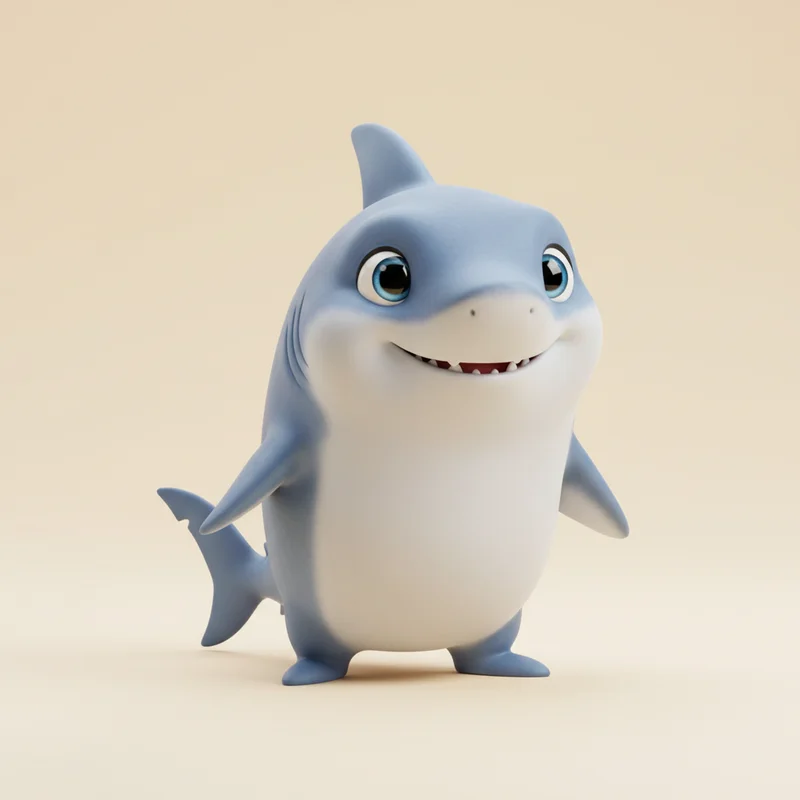
Shark

Shark

Apex ocean predator with 450 million years of evolutionary refinement and unfair movie villain reputation.

Battle Analysis

Public perception hedgehog Wins
70%
30%
Hedgehog Shark

Hedgehog

The hedgehog enjoys overwhelmingly positive public perception that approaches universal affection. Wildlife surveys consistently rank hedgehogs among Britain's most beloved animals, surpassing dogs in some polls. The creature's combination of vulnerability and resilience, its endearing snuffling sounds, and its garden-tidying dietary habits have created a species that humans actively seek to protect. Hedgehog rescue centres operate across Europe with substantial volunteer support. The BBC's Springwatch programme treats hedgehog footage as ratings gold. This perception has translated into tangible conservation action, with hedgehog-friendly gardening becoming a mainstream movement. Negative perceptions are virtually non-existent outside discussions of hedgehog-transmitted ringworm.

Shark

The shark suffers from what marine biologists term 'Jaws syndrome': a fundamental misalignment between actual threat and perceived danger. Despite killing an average of five humans annually worldwide, sharks are feared by an estimated 38% of populations in coastal nations. This fear has enabled the systematic slaughter of approximately 100 million sharks annually, driven partly by fin trade and partly by misguided revenge killings. Conservation efforts struggle against deeply embedded cultural narratives. The phrase 'shark attack' generates media coverage entirely disproportionate to statistical significance. Recent documentaries have attempted rehabilitation of the shark's image, yet primal fear responses prove remarkably resistant to rational information.

VERDICT

Universal affection enabling conservation success definitively surpasses fear-driven perception threatening species survival.
Cultural symbolism shark Wins
30%
70%
Hedgehog Shark

Hedgehog

The hedgehog occupies a uniquely endearing position within human cultural consciousness. Beatrix Potter's Mrs. Tiggy-Winkle established the creature as a symbol of domestic industriousness. Sonic the Hedgehog, SEGA's blue mascot, has generated over $9 billion in franchise revenue, making the hedgehog one of gaming's most recognisable icons. In medieval bestiaries, hedgehogs symbolised prudence and the gathering of spiritual fruits. British households have embraced 'hedgehog highways' with evangelical fervour, cutting holes in fences to facilitate their passage. The creature has become emblematic of conservation awareness, appearing on charitable materials and garden centre merchandise. This cultural footprint, whilst substantial, remains largely confined to Western European and gaming demographics.

Shark

The shark commands a cultural presence that transcends geographic and demographic boundaries through primal psychological resonance. The creature functions as humanity's ur-predator, triggering fear responses in populations that have never encountered ocean water. Jaws (1975) created the summer blockbuster concept and fundamentally altered human relationships with coastal waters. Shark Week has aired for over three decades, commanding premium advertising rates. The creature appears in the mythology of every maritime culture, from Polynesian shark gods to Mediterranean sea monsters. Sports teams, business metaphors, and legal terminology ('loan sharks', 'shark tank') all draw upon the creature's predatory associations. This cultural presence operates upon instinctual rather than learned associations.

VERDICT

Universal archetypal resonance across all cultures surpasses regionally concentrated gaming and conservation symbolism.
Survival efficiency hedgehog Wins
70%
30%
Hedgehog Shark

Hedgehog

The hedgehog's survival strategy achieves remarkable results through minimal energy expenditure. Rather than fleeing predators, which would require sustained cardiovascular capacity, the hedgehog simply stops and curls, a defence so effective that adult hedgehogs experience minimal predation from natural sources. Their nocturnal foraging pattern avoids diurnal predators entirely. Hibernation capabilities allow survival through resource-scarce winters with heart rates dropping to 20 beats per minute. The hedgehog's generalist diet of insects, slugs, and fallen fruit ensures nutritional security across varied environments. This is survival through strategic withdrawal: minimum risk, minimum effort, maximum continuation.

Shark

The shark's survival methodology represents the opposite philosophical approach: dominate the environment so thoroughly that threats become irrelevant. As apex predators, adult sharks face virtually no natural predation beyond other sharks and, occasionally, orcas. Their survival efficiency approaches the thermodynamically optimal, with some species capable of surviving weeks between meals. The ampullae of Lorenzini ensure no viable prey escapes detection. Wound healing occurs with remarkable rapidity, likely due to antimicrobial compounds in their tissue. Yet this efficiency operates within confined parameters; sharks cannot adapt to freshwater environments, temperature fluctuations, or the catastrophic fishing pressures that have reduced some populations by 70% since 1970.

VERDICT

Generalist adaptability and minimal resource requirements prove more sustainable than apex predator vulnerability to environmental change.
Ecological importance shark Wins
30%
70%
Hedgehog Shark

Hedgehog

The hedgehog functions as a valuable but ultimately replaceable component within temperate ecosystem dynamics. Their consumption of pest species provides measurable garden benefits; a single hedgehog consumes approximately 200 grams of invertebrates nightly, including slugs, beetles, and caterpillars. As prey species, they contribute to fox and badger diets, though this relationship has become pathological with badger predation representing a significant hedgehog population pressure. Their role in seed dispersal and soil aeration provides modest ecosystem services. Yet ecosystems lacking hedgehogs continue to function; their ecological niche can be partially occupied by shrews, moles, and ground beetles. This is valuable contribution without systemic dependency.

Shark

The shark's ecological importance approaches the keystone category, with their removal triggering cascading ecosystem effects documented across multiple marine environments. As apex predators, sharks regulate populations of secondary predators, maintaining balance throughout trophic levels. Research in coral reef systems has demonstrated that shark removal correlates with reef degradation through predator release effects. Nutrient cycling through shark carcasses redistributes essential marine nutrients across ocean strata. The collapse of shark populations has been linked to seagrass meadow destruction, shellfish population crashes, and harmful algal bloom increases. This is not participation in an ecosystem; this is architectural responsibility for oceanic health.

VERDICT

Keystone species status with documented cascade effects upon removal vastly exceeds replaceable pest control contributions.
Evolutionary adaptation shark Wins
30%
70%
Hedgehog Shark

Hedgehog

The hedgehog's evolutionary journey represents a masterclass in risk mitigation through architectural innovation. The spine system, developed over approximately 15 million years, consists of modified hollow hairs reinforced with keratin, the same protein found in human fingernails. When threatened, the hedgehog's orbicularis panniculi muscle contracts with remarkable efficiency, transforming the mammal into a near-impenetrable sphere within 0.3 seconds. This defensive innovation has proven so successful that hedgehog populations span Europe, Asia, and Africa across diverse ecosystems. The creature has additionally developed resistance to adder venom, suggesting an evolutionary arms race with serpentine predators. Yet these adaptations remain fundamentally reactive, designed to survive encounters rather than prevent them.

Shark

The shark's evolutionary credentials constitute perhaps the most impressive curriculum vitae in the animal kingdom. Having survived five mass extinction events whilst dinosaurs, trilobites, and 99% of all species that ever lived succumbed, sharks represent evolutionary perfection achieved so comprehensively that further improvement became unnecessary. Their electroreceptive ampullae of Lorenzini detect electrical fields as weak as five nanovolts per centimetre, enabling them to locate heartbeats beneath sand. Multiple rows of self-replacing teeth ensure permanent predatory readiness. Their cartilaginous skeleton provides strength at reduced weight. This is not adaptation; this is biological engineering refined over 450 million years to produce the ocean's supreme predator.

VERDICT

Surviving five extinction events through offensive perfection outweighs 15 million years of defensive specialisation.
👑

The Winner Is

Shark

42 - 58

This examination has illuminated a fundamental truth about evolutionary strategy: there exist multiple paths to success, yet some paths lead further than others. The hedgehog, that beloved garden sphere, has achieved genuine evolutionary and cultural triumph through the elegant simplicity of becoming difficult to eat. Its defensive architecture, energy-efficient lifestyle, and overwhelmingly positive human relations represent survival optimisation of remarkable sophistication. Yet when measured against the shark's 450 million years of apex predation, five mass extinction survivals, and keystone ecological status, the hedgehog's achievements, whilst admirable, occupy a fundamentally different magnitude. The hedgehog has mastered the art of persistence; the shark has mastered the art of dominance. One creature adapted to exist within its environment; the other shaped its environment around itself. In the final accounting, architectural influence outweighs architectural defence.

Hedgehog
42%
Shark
58%

Share this battle

More Comparisons