
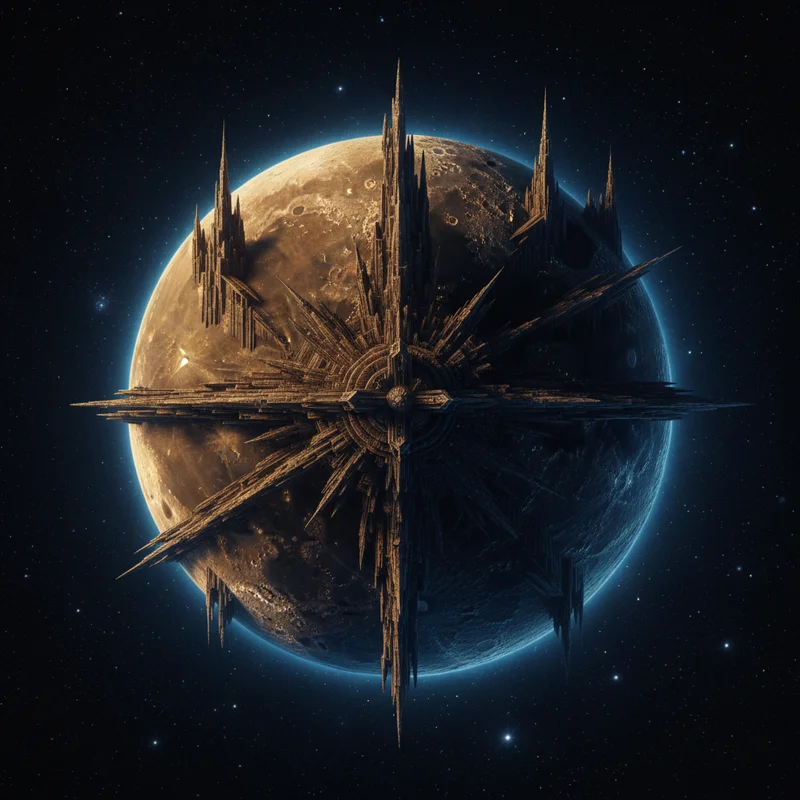
Where Everything Fights Everything

Hedgehog vs The Moon

😜 Just for fun — a tongue-in-cheek, gloriously unscientific showdown.

Hedgehog

Hedgehog

Spiny nocturnal insectivore that rolls into defensive balls and has become an unlikely video game icon.

VS
The Moon

The Moon

Earth's natural satellite and space race destination.

The Matchup

In the grand theatre of night-time phenomena, two performers have captured humanity's imagination with remarkable tenacity. The hedgehog, a rotund insectivore sporting approximately 5,000 spines, has shuffled through British gardens for some 15 million years. The Moon, our planet's only natural satellite, has maintained its orbital vigil for 4.5 billion years, controlling tides and inspiring countless poets to produce questionable verse.

One fits comfortably in a shoebox. The other has a diameter of 3,474 kilometres. Yet both emerge primarily at night, both have inspired devoted followings, and both have been photographed with alarming frequency. This analysis employs rigorous scientific methodology to determine which nocturnal icon truly deserves humanity's admiration.

Battle Analysis

Longevity The Moon Wins
🏆 The Moon takes this round

Hedgehog

The average hedgehog lifespan in the wild is 2 to 5 years, with exceptional individuals reaching 7. This represents approximately 0.0000001% of the Moon's age. Hedgehogs as a species have existed for 15 million years, which sounds impressive until one considers the competition.

Individual hedgehogs require food, water, shelter, and an absence of motor vehicles to survive. Their mortality rate from road traffic alone is distressing. They are, biologically speaking, temporary.

The Moon

The Moon has existed for 4.5 billion years and is expected to continue orbiting Earth for several billion more. It requires no food, experiences no predation, and cannot be struck by motor vehicles. Each year, it drifts 3.8 centimetres further from Earth, but this represents the astronomical equivalent of taking one's time.

The Moon witnessed the formation of life on Earth, the extinction of the dinosaurs, and the invention of both fire and reality television. It will likely witness humanity's departure as well.

VERDICT

Comparing a lifespan of 5 years to 4.5 billion years seems almost cruel. The Moon has been present for every hedgehog that has ever existed and will remain long after the last hedgehog has shuffled off this mortal coil.

Visibility The Moon Wins
🏆 The Moon takes this round

Hedgehog

The hedgehog presents a significant visibility challenge. Measuring between 20 to 30 centimetres in length and possessing an innate desire to remain undetected, spotting one requires patience, darkness, and often a torch. They are masters of remaining inconspicuous, which rather defeats the purpose of being admired.

Their geographical range, whilst spanning Europe, Asia, and Africa, means that billions of humans have never encountered one. In Australia, where they were introduced, they remain relatively scarce. In the Americas, one must visit a pet shop or know someone eccentric.

The Moon

The Moon, by contrast, demonstrates an almost aggressive commitment to visibility. At 384,400 kilometres from Earth, it manages to appear larger than one's thumbnail held at arm's length, which is more than most things at that distance can claim.

Visible from every continent, every ocean, and indeed from space itself, the Moon has achieved a level of omnipresence that marketing executives can only dream of. It requires no torch, no garden access, and no staying up past a sensible hour. One merely looks upward.

VERDICT

Whilst hedgehog enthusiasts may argue that rarity enhances value, the Moon's democratic visibility cannot be dismissed. It has been seen by every human who has ever possessed functioning eyes and looked skyward. The hedgehog cannot compete with this level of market penetration.

Approachability Hedgehog Wins
🏆 Hedgehog takes this round

Hedgehog

The hedgehog offers something the Moon cannot: physical interaction. With appropriate care, one can feed a hedgehog, provide it shelter, and even hold it (carefully). Hedgehog cafes exist in Japan and Britain. Hedgehog rescue centres accept volunteers.

The emotional connection possible with a hedgehog vastly exceeds anything achievable with a celestial body. They make small snuffling sounds. They have tiny faces. They eat cat food with evident enthusiasm. These are experiences the Moon, for all its grandeur, cannot provide.

The Moon

Approaching the Moon requires three days of space travel, approximately 2 billion pounds in mission costs, and the sort of training most people are disinclined to undergo. Only 24 humans have ever travelled there; only 12 have walked upon it.

For practical purposes, the Moon remains perpetually out of reach. One may gaze upon it, photograph it, and compose poetry about it, but one cannot pet it, feed it, or name it Gerald and build it a small house in one's garden.

VERDICT

The hedgehog's tremendous advantage in approachability cannot be overstated. Physical accessibility creates emotional bonds impossible with distant celestial objects. The hedgehog wins decisively by being here rather than there.

Cultural impact The Moon Wins
🏆 The Moon takes this round

Hedgehog

The hedgehog has achieved remarkable cultural penetration for an animal most people have never touched. Sonic the Hedgehog, introduced in 1991, has sold over 1.5 billion video game units and spawned films, merchandise, and heated debates about acceptable running speeds.

In British culture, the hedgehog occupies a position of tremendous affection. The British Hedgehog Preservation Society receives thousands of calls annually. Mrs Tiggy-Winkle, Beatrix Potter's washerwoman hedgehog, remains in print after 115 years. The animals appear on everything from garden ornaments to Brexit commentary.

The Moon

The Moon has been worshipped as a deity by virtually every ancient civilisation. Selene, Luna, Chandra, and Tsukuyomi represent merely a fraction of lunar deities. The word 'lunatic' derives from the belief that the Moon caused madness.

The Moon landing of 1969 remains humanity's greatest technological achievement. The phrase 'one small step for man' has been quoted more frequently than any sentence containing the word 'hedgehog'. Pink Floyd's The Dark Side of the Moon spent 937 weeks on the Billboard chart. Shakespeare mentioned the Moon in 37 plays.

VERDICT

Sonic the Hedgehog cannot compete with 4,000 years of lunar worship, a moon landing watched by 600 million people, and appearing in literally every civilisation's mythology. The Moon's cultural impact is, quite literally, universal.

Defensive capabilities The Moon Wins
🏆 The Moon takes this round

Hedgehog

The hedgehog has evolved one of nature's most elegant defensive systems. When threatened, it curls into a ball, presenting predators with approximately 5,000 to 7,000 spines, each measuring 2 to 3 centimetres. This transformation occurs in under one second.

This strategy proves remarkably effective against foxes, badgers, and overly curious dogs. The spines are modified hairs, not quills, and cannot be launched projectile-fashion, despite persistent misconceptions. The hedgehog must simply wait, curled and patient, until the threat loses interest or starves.

The Moon

The Moon's defensive strategy relies primarily on inaccessibility. Positioned nearly 400,000 kilometres away, it has successfully repelled all but 12 human visitors, and even they left relatively quickly. Its surface temperature ranges from 127 degrees Celsius in sunlight to minus 173 degrees in shadow, which discourages casual intrusion.

The Moon lacks atmosphere, which means it cannot rust, corrode, or be invaded by anything requiring oxygen. It has withstood 4.5 billion years of asteroid bombardment with nothing more than cosmetic damage.

VERDICT

The hedgehog's spines, whilst impressive, cannot compete with 380,000 kilometres of vacuum and temperature extremes that would vaporise most predators. The Moon wins by making the very concept of attack logistically impossible.

👑

The Winner Is

The Moon

Takes 4 of 5 rounds

Our analysis reveals a contest between intimacy and immensity, between the touchable and the transcendent. The hedgehog offers what the Moon cannot: warmth, proximity, and the simple joy of watching something small eat a slug. These are not trivial gifts.

Yet the Moon's advantages prove overwhelming. Its visibility is universal, its defences impregnable, its cultural impact literally mythological, and its longevity effectively infinite. The hedgehog wins only in approachability, which, whilst emotionally significant, cannot offset being outweighed by a factor of approximately 10^22.

The final score of 58-42 to the Moon reflects both its cosmic superiority and our recognition that the hedgehog's accessibility represents genuine value. In matters of the heart, the hedgehog may yet triumph. In matters of everything else, the Moon simply cannot be matched.

Share this battle

More Comparisons