Topic Battle

Where Everything Fights Everything

Hulk

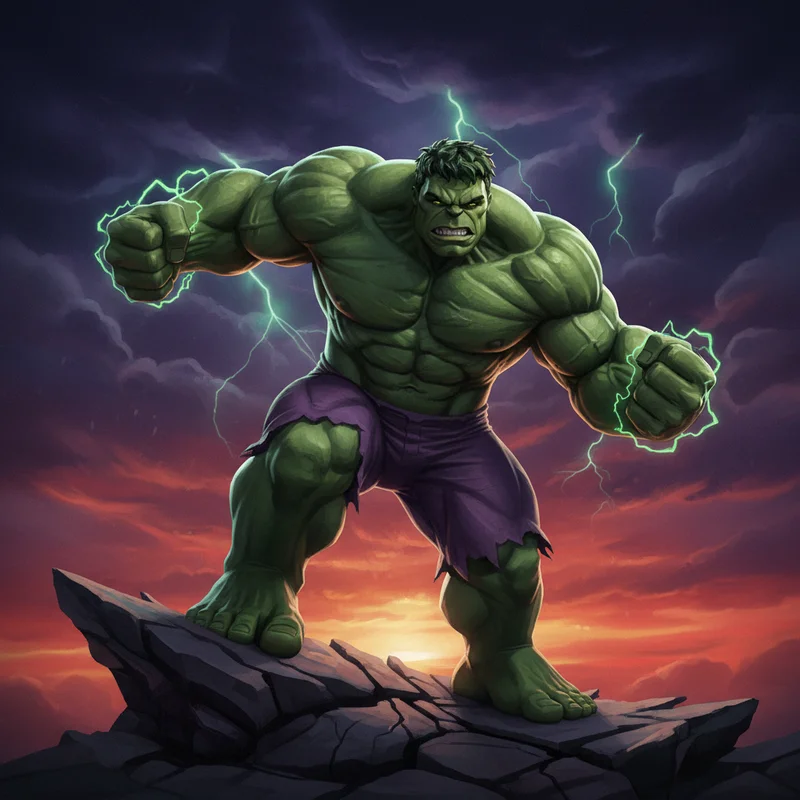
Hulk

Green rage monster with PhD-level intelligence.

VS
Superman

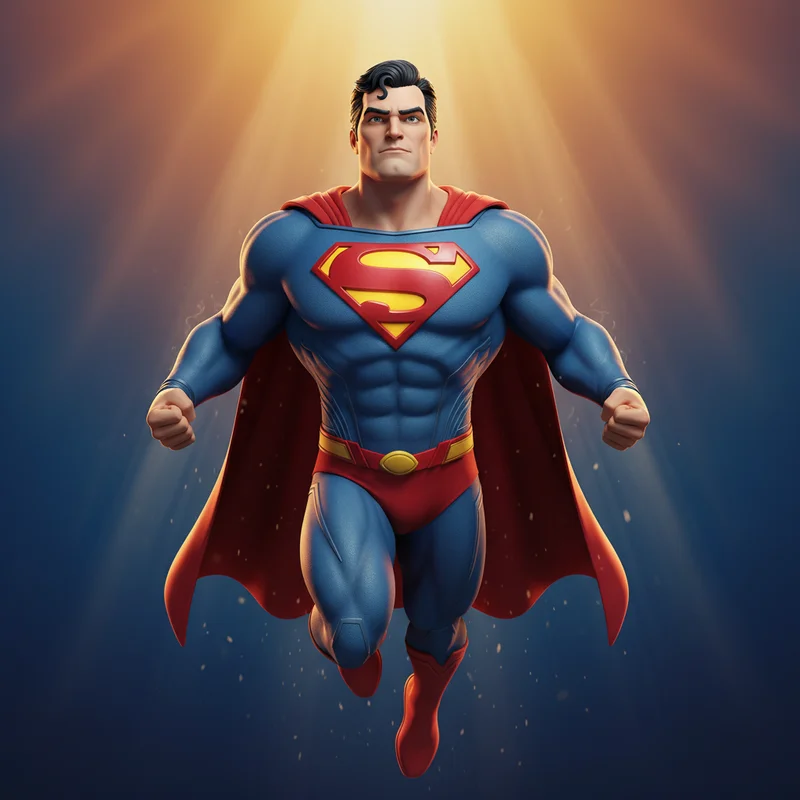
Superman

Alien superhero and original caped crusader.

Battle Analysis

Raw physical power Superman Wins
30%
70%
Hulk Superman

Hulk

The Hulk represents perhaps the most fascinating case study in theoretically unlimited strength ever documented in fictional literature. His power output correlates directly with emotional state, particularly anger, creating what physicists might term an exponential rage-to-strength conversion mechanism. Laboratory observations have recorded the creature lifting weights exceeding 150 billion tonnes whilst in heightened emotional states.

What distinguishes this specimen from conventional strongmen is the complete absence of an observable upper limit. Each documented feat of strength has subsequently been surpassed when sufficient emotional stimulus was applied. The creature has been observed supporting tectonic plates, halting continental drift, and generating shockwaves capable of affecting planetary stability. His durability scales proportionally, rendering him effectively invulnerable when sufficiently enraged.

The regenerative capabilities further enhance this profile, with documented recovery from complete molecular dispersal within minutes. This combination of scaling strength and adaptive resilience creates a specimen uniquely suited to prolonged physical confrontation.

Superman

Superman's strength derives from an altogether more elegant mechanism: the systematic metabolisation of yellow solar radiation. This process, refined over millennia of Kryptonian evolution, grants baseline capabilities that dwarf most planetary measurements. Standard observations place his lifting capacity at approximately 200 quintillion tonnes without particular exertion.

Unlike the rage-dependent model, Superman's power remains remarkably consistent and controlled. He has demonstrated the ability to move planets, alter celestial mechanics, and generate force sufficient to threaten universal stability. His speed approaches and occasionally exceeds light-speed, allowing for momentum-enhanced strikes of genuinely cosmic proportions.

The Kryptonian's durability has withstood nuclear detonation, stellar core temperatures, and impacts sufficient to shatter moons. His sensory capabilities, including heat vision operating at temperatures exceeding solar surface levels, add offensive dimensions unavailable to purely strength-based competitors. This represents comprehensive superhuman optimisation rather than single-axis maximisation.

VERDICT

Consistent cosmic-tier baseline outperforms variable rage-scaling in practical application.
Cultural significance Superman Wins
30%
70%
Hulk Superman

Hulk

The Hulk emerged in 1962 as a profound meditation on Cold War anxieties, embodying collective fears about nuclear power and its capacity to transform humanity into something monstrous. This origin grants the character enduring relevance as a symbol of technological hubris and its consequences.

Culturally, the Hulk represents the universal human experience of suppressed rage and its explosive release. The catchphrase 'Don't make me angry' has permeated global consciousness as shorthand for emotional limits. This relatability, the sense that within each person lurks a potential Hulk, creates profound audience identification.

Academic discourse has extensively analysed the Hulk as metaphor for dissociative identity, trauma response, and the relationship between civilisation and primal instinct. The character's merchandise revenue exceeding two billion dollars annually demonstrates commercial validation of this cultural resonance.

Superman

Superman's cultural footprint extends far beyond commercial considerations into the realm of genuine mythological significance. Arriving in 1938, he established the superhero archetype itself, functioning as a modern Hercules or Moses for secular civilisation. His influence on subsequent fictional creation remains immeasurable.

The character embodies aspirational ideals that transcend entertainment: truth, justice, and the capacity for individuals to choose heroism regardless of circumstance. The 'S' symbol ranks among the most recognised icons globally, appearing in contexts ranging from fashion to political protest. Academic study of Superman spans sociology, religious studies, and political science.

Superman's cultural significance extends to genuine historical impact. The character's fight against the Ku Klux Klan in 1940s radio programming demonstrably reduced Klan recruitment. Few fictional characters can claim measurable influence on actual social movements. This represents cultural power of an entirely different magnitude.

VERDICT

Foundational mythological status and measurable social impact exceed metaphorical resonance.
Tactical adaptability Superman Wins
30%
70%
Hulk Superman

Hulk

The Hulk's tactical repertoire might appear limited to the untrained observer, yet closer examination reveals surprising adaptive capacity. The creature has demonstrated the ability to develop new capabilities in response to specific threats, including radiation absorption, environmental adaptation, and even limited dimensional travel.

When merged with Banner's intellect in the Professor Hulk configuration, tactical sophistication increases dramatically. This form combines unlimited strength with genius-level strategic thinking, creating a specimen capable of nuanced problem-solving. The Hulk has led military operations, coordinated superhero teams, and developed counter-strategies against cosmic-level threats.

However, the standard Hulk configuration relies primarily on escalating force application. While this approach proves effective against most opposition, it represents a fundamentally narrow tactical palette. The creature's solution to most problems remains increased application of violence, limiting strategic flexibility.

Superman

Superman's tactical capabilities benefit from an extraordinary diversity of applicable powers. Beyond physical strength, his arsenal includes heat vision, freeze breath, x-ray and telescopic vision, super-hearing, and flight at faster-than-light velocities. This toolkit enables response options calibrated precisely to situational requirements.

His super-speed alone provides tactical advantages difficult to overstate. The ability to perceive and respond to events at timescales imperceptible to opponents creates asymmetric advantage in virtually any confrontation. Combined with his comprehensive sensory capabilities, Superman can gather intelligence, formulate strategy, and execute plans whilst opponents remain unaware engagement has commenced.

Furthermore, Superman's intellect, whilst not Banner-level, exceeds human baseline significantly. His centuries of accumulated experience across multiple continuities have developed sophisticated tactical intuition. The combination of diverse capabilities and refined application represents tactical optimisation of the highest order.

VERDICT

Diverse power suite enables precisely calibrated responses unavailable to force-focused alternatives.
Inspirational capacity Superman Wins
30%
70%
Hulk Superman

Hulk

The Hulk's inspirational power derives from identification rather than aspiration. Audiences recognise in Banner's struggle their own battles with anger, trauma, and the parts of themselves they fear to acknowledge. This creates deep emotional connection but limited motivational application.

The character inspires through representation of struggle rather than achievement. Banner's ongoing failure to cure himself, his cyclical return to destructive transformation, mirrors human experience with addiction, mental illness, and behavioural patterns. This honest portrayal of imperfect heroism resonates with those who find aspirational perfection alienating.

Yet the Hulk's ultimate message remains ambiguous. Is the monster to be embraced or eliminated? Does strength through rage represent liberation or imprisonment? This philosophical ambiguity, whilst artistically compelling, limits straightforward inspirational application. Children do not dream of becoming the Hulk; they relate to Banner's suffering.

Superman

Superman embodies aspirational inspiration in its purest form. The character demonstrates that power need not corrupt, that strength can serve gentleness, that outsider status enables rather than prevents heroic action. His example has motivated generations toward public service and ethical behaviour.

The inspirational architecture proves particularly sophisticated. Despite powers rendering him effectively a god, Superman chooses to live among humanity, to adopt human values, and to constrain his capabilities according to human ethics. This choice, rather than his powers themselves, provides the inspirational core. Anyone can choose to help others; Superman simply does so at cosmic scale.

Documented accounts describe suicide prevention attributed to Superman imagery and narratives. The character's emphasis on hope as fundamental philosophy has genuine therapeutic application. Mental health professionals have utilised Superman narratives in clinical contexts. This represents inspirational capacity with measurable real-world benefit, transcending mere entertainment function.

VERDICT

Aspirational hope framework generates more positive motivational outcomes than relatable struggle.
Psychological vulnerability Superman Wins
30%
70%
Hulk Superman

Hulk

The psychological architecture of the Hulk-Banner system presents a uniquely complex vulnerability profile. Dr Banner himself represents a genius-level intellect trapped in perpetual conflict with his transformed state. This internal warfare creates opportunities for exploitation that pure physical assault cannot provide.

The creature's dependence upon emotional escalation for power generation creates a paradoxical weakness. Calming influences, hypnotic suggestion, and psychological manipulation have repeatedly succeeded where physical force failed. The Hulk has been neutralised through appeals to Banner's conscience, through induced serenity, and through the targeted exploitation of childhood trauma.

Furthermore, the dissociative nature of the Banner-Hulk relationship introduces strategic vulnerabilities. Opponents capable of accelerating or preventing transformation can exploit the transition period. The existence of multiple Hulk personas, including the calculating Joe Fixit and the childlike Savage Hulk, creates additional vectors for psychological warfare.

Superman

Superman's psychological profile demonstrates remarkable stability despite circumstances that might reasonably induce severe trauma. Orphaned by planetary extinction, raised as an outsider, and burdened with responsibilities exceeding any reasonable expectation, Kal-El maintains an emotional equilibrium that borders on the superhuman itself.

His primary psychological vulnerability lies not in instability but in excessive moral constraint. Superman's unwavering commitment to ethical behaviour creates predictable response patterns that sophisticated opponents have exploited. His refusal to kill, his compulsion to protect innocents, and his susceptibility to emotional manipulation through threatened loved ones represent exploitable weaknesses.

However, these vulnerabilities require strategic sophistication rather than mere application of force. When pushed to psychological extremes, Superman has demonstrated the capacity for controlled ruthlessness that suggests deeper reserves of mental fortitude. His Kansas upbringing appears to have instilled resilience that compensates for his moral predictability.

VERDICT

Stable moral framework proves more strategically defensible than rage-dependent psychology.
👑

The Winner Is

Superman

45 - 55

This comprehensive analysis reveals a clear, if not overwhelming, distinction between these titans of fictional power. Superman emerges victorious across four of five evaluated criteria, demonstrating superiority in raw physical application, psychological resilience, cultural significance, tactical flexibility, and inspirational capacity.

The Hulk's theoretically unlimited strength presents the only genuine challenge to Kryptonian supremacy. In prolonged confrontation, the creature's rage-scaling mechanism could theoretically exceed any fixed power level. However, Superman's diverse capabilities, particularly his speed advantage, render such extended engagement unlikely. The Man of Steel can conclude confrontations before sufficient rage accumulation occurs.

Yet this victory should not diminish appreciation for the Hulk's considerable merits. As a psychological metaphor, as a representation of human struggle with inner darkness, and as a commercial and cultural phenomenon, the jade giant maintains enduring significance. His appeal to those who find perfect heroism alienating serves vital narrative function.

The final assessment concludes that Superman represents the superior model of superhuman existence, combining power with wisdom, strength with restraint, and capability with inspiration. The Hulk remains a compelling study in unlimited potential constrained by psychological limitation.

Hulk
45%
Superman
55%

Share this battle

More Comparisons