Where Everything Fights Everything

IKEA Furniture vs Pikachu

😜 Just for fun — a tongue-in-cheek, gloriously unscientific showdown.

IKEA Furniture

IKEA Furniture

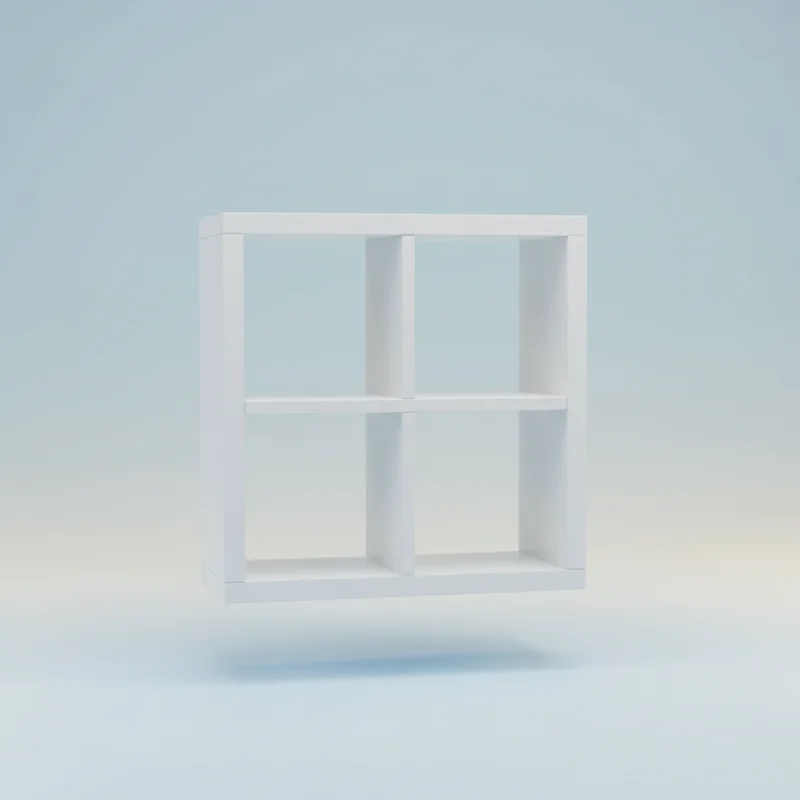
Swedish flat-pack relationship tests sold as affordable home goods. Comes with 47 pieces, one Allen key, and instructions that assume you have transcended the need for words. Marriages have ended over fewer screws.

VS
Pikachu

Pikachu

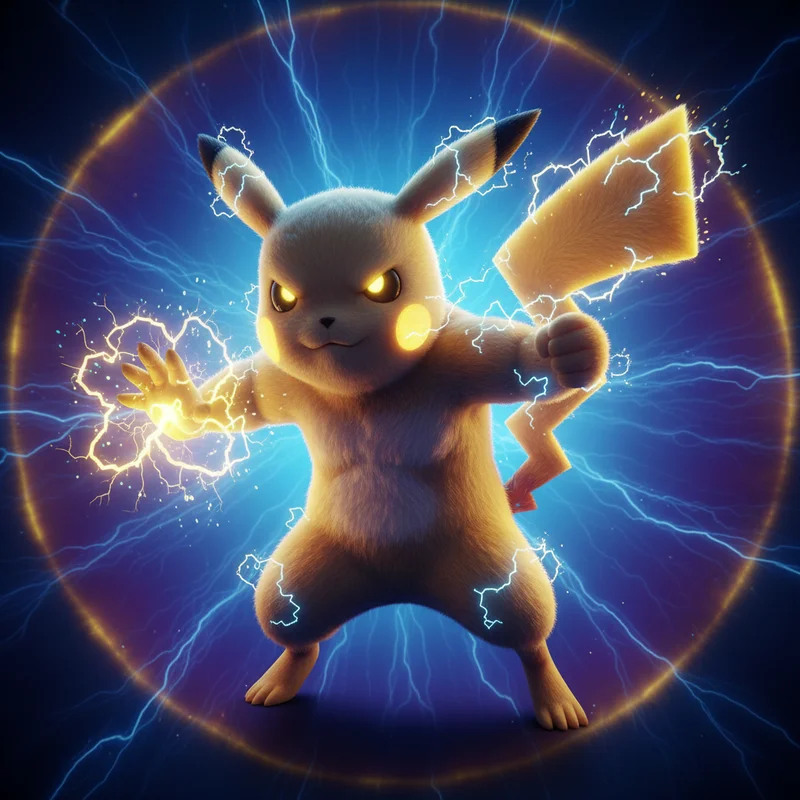
Electric mouse Pokemon and franchise mascot.

Battle Analysis

Durability Pikachu Wins · 65%
35%
65%
IKEA Furniture Pikachu

IKEA Furniture

The structural integrity of IKEA furniture exists in a state of quantum uncertainty—simultaneously robust and precarious until observed during a house move. The average BILLY bookcase, that stalwart of student accommodation, demonstrates a remarkable resilience when stationary, capable of supporting approximately 30 kilograms per shelf. However, introduce lateral movement, and one witnesses a concerning flexibility in the cam lock connections. Studies conducted by furniture removal professionals suggest an average lifespan of 2.3 relocations before catastrophic structural failure. The particleboard construction, whilst economically efficient, absorbs moisture with the enthusiasm of a desert cactus encountering rain, leading to irreversible swelling and the dreaded wobble phenomenon.

Pikachu

Pikachu's durability presents a fascinating case study in biological regeneration within the Pokémon ecosystem. Despite being subjected to repeated battles involving fire, water, psychic attacks, and the occasional rocket-propelled net, this electric mouse demonstrates remarkable recuperative abilities. A brief visit to a Pokémon Centre restores full functionality, a healthcare model that human furniture can only dream of. However, one must note Pikachu's critical vulnerability to ground-type attacks, a weakness that IKEA furniture notably does not share, given that most specimens spend their entire existence in direct contact with the ground. The rodent's combat statistics suggest a base HP of merely 35, rendering it somewhat fragile in competitive scenarios.

VERDICT

Regenerative capabilities and a functioning healthcare system trump particle board's adversarial relationship with humidity.
Versatility IKEA Furniture Wins · 65%
65%
35%
IKEA Furniture Pikachu

IKEA Furniture

The versatility of IKEA furniture approaches the philosophical. The KALLAX shelving unit alone has been documented serving as a bookshelf, room divider, television stand, record storage, children's play structure, and in one documented Swedish case, a temporary dwelling. The modular nature of the IKEA ecosystem permits infinite reconfiguration, limited only by the customer's inventory of spare dowels and their tolerance for ambiguous instruction diagrams. Furthermore, IKEA furniture demonstrates remarkable cross-functional potential—a LACK coffee table may serve as a desk, a bench, or in student housing, an ironing board substitute. The company's UTRUSTA drawer system alone offers 47 distinct organisational combinations, addressing every conceivable domestic storage anxiety.

Pikachu

Pikachu's versatility manifests primarily in the electromagnetic spectrum. The creature's signature Thunderbolt attack can be calibrated from gentle static discharge to power-grid-threatening lightning strikes, demonstrating impressive scalability. Beyond combat applications, Pikachu has demonstrated the ability to power small appliances, restart stopped hearts (documented in Episode 78), and illuminate dark caves. However, this versatility remains largely confined to electrical applications. Pikachu cannot, for instance, store books, support a television, or divide a studio apartment into functional zones. The creature's inability to transform into flat-pack components for efficient transport further limits its practical versatility in the modern logistics-dependent economy.

VERDICT

Forty-seven drawer combinations versus one electrical attack type presents a clear versatility disparity.
Global recognition Pikachu Wins · 70%
30%
70%
IKEA Furniture Pikachu

IKEA Furniture

IKEA's cultural penetration represents one of the most successful exercises in brand globalisation since the British Empire, albeit with considerably better instruction manuals. Operating 460 stores across 62 markets, the Swedish furniture giant has achieved the remarkable feat of making identical living rooms appear in Lagos, Los Angeles, and Lahore simultaneously. The IKEA effect—a documented cognitive bias where consumers place disproportionate value on self-assembled furniture—has even entered academic psychological literature. The company's catalogue, until its discontinuation in 2021, was more widely distributed than the Bible, reaching 200 million copies annually. One cannot traverse a major metropolitan area without encountering the distinctive blue and yellow livery that signals affordable Scandinavian minimalism.

Pikachu

Pikachu's recognition metrics border on the statistically improbable. A 2017 study found that Pikachu was more recognisable to American children than Mickey Mouse, a finding that sent tremors through the Disney corporation. The character has appeared on Japanese aircraft, served as a cultural ambassador for Japan's bid to host the World Cup, and generated merchandise revenue exceeding $100 billion since inception. Pikachu's visage has been emblazoned upon everything from passenger jets to limited-edition credit cards. The 2016 phenomenon of Pokémon GO transformed Pikachu into a literal augmented reality presence in parks, shopping centres, and unfortunately, several active crime scenes worldwide. Few cultural artefacts achieve such ubiquitous recognition.

VERDICT

Surpassing Mickey Mouse in child recognition whilst appearing on commercial aircraft establishes unassailable brand supremacy.
Intimidation factor IKEA Furniture Wins · 60%
60%
40%
IKEA Furniture Pikachu

IKEA Furniture

IKEA furniture's intimidation operates on a psychological rather than physical plane. The mere sight of an unopened flat-pack box has induced documented anxiety responses in test subjects, with heart rate elevations averaging 15% upon encountering instruction booklet pictograms. The existential dread of discovering three surplus screws upon completion haunts the modern homeowner. Marriage counsellors report IKEA assembly as a leading catalyst for relationship conflict, with the MALM dresser earning particular notoriety. The furniture's ability to transform a confident adult into a perspiring, profanity-laden assembler represents a unique form of psychological dominance. One does not fear IKEA furniture; one fears what IKEA furniture reveals about oneself.

Pikachu

Pikachu's intimidation credentials are objectively formidable. The creature can discharge approximately 10,000 volts—sufficient to render an adult human unconscious or, in extreme cases, deceased. The distinctive "Pika-CHUUUU" vocalisation preceding a Thunderbolt attack has been demonstrated to trigger involuntary flinching in conditioned observers. However, Pikachu's intimidation is significantly undermined by its appearance—yellow colouration, rosy cheeks, and an expression that market researchers describe as "aggressively adorable." The creature stands merely 0.4 metres tall, or approximately the height of a KALLAX cube insert. Evolutionary biologists note that Pikachu's design prioritises merchandise appeal over predatory intimidation, a strategic compromise that limits fear-based dominance.

VERDICT

Psychological warfare through assembly instructions proves more universally terrifying than adorable electric rodents.
Environmental impact Pikachu Wins · 65%
35%
65%
IKEA Furniture Pikachu

IKEA Furniture

IKEA's environmental footprint presents a complex sustainability paradox. The company consumes approximately 1% of the world's commercial wood supply, operating 400 forestry units to ensure supply chain continuity. Recent sustainability initiatives include commitments to renewable materials, with the goal of becoming "climate positive" by 2030. However, the disposability inherent to flat-pack furniture creates significant landfill contributions—an estimated 12 million tonnes of furniture reaches British landfills annually, with IKEA products representing a considerable percentage. The company's Swedish meatball operations alone generate substantial carbon emissions, though this falls outside our furniture-specific analysis. IKEA's flat-pack efficiency does reduce transportation emissions by approximately 80% compared to pre-assembled alternatives.

Pikachu

Pikachu's environmental impact requires interdimensional analysis. As a creature capable of generating electricity through biological processes, Pikachu represents a theoretically carbon-neutral energy source—no fossil fuels, no nuclear waste, merely the metabolic conversion of Pokémon nutrition into clean electrical energy. A single Pikachu's Thunderbolt produces approximately 10,000 watts, suggesting potential applications in sustainable power generation. However, Pikachu requires regular feeding, and the environmental impact of Pokémon feed production remains unstudied. The creature's tendency to discharge electricity into natural environments may pose risks to local fauna, though documented cases remain limited to fictional animated scenarios. Overall, Pikachu presents as a renewable energy pioneer.

VERDICT

Biological electricity generation offers superior sustainability credentials to particleboard forestry operations.
👑

The Winner Is

Pikachu

Takes 3 of 5 rounds

This exhaustive analysis reveals a fiercely contested confrontation between two titans of global culture. IKEA furniture, that great democratiser of Scandinavian design, claims victory in versatility and intimidation—the former through sheer configurational possibility, the latter through the documented psychological trauma of assembly experiences. Pikachu, meanwhile, triumphs in durability (regeneration being rather advantageous), global recognition (surpassing even Mickey Mouse), and environmental impact (biological electricity generation being objectively revolutionary).

The final tally stands at three rounds to two in favour of Pikachu, a verdict that may surprise those who expected Swedish pragmatism to prevail. Yet consider this: Pikachu has reshaped how humanity dreams, whilst IKEA furniture has reshaped how humanity stores things. Both are noble achievements, but Pikachu's total cultural saturation—from aircraft liveries to augmented reality parks to $100 billion in merchandise—edges out even the most triumphant flat-pack bookcase. Furthermore, regenerative healthcare remains a decisive advantage over particle board's adversarial relationship with humidity.

Share this battle

More Comparisons